
When your child is sick, you want them to feel better fast. But giving them the wrong medicine-or the wrong dose-can do more harm than good. Kids aren’t just small adults. Their bodies process drugs differently. Their kidneys, liver, and brain are still developing. That’s why age-appropriate medications aren’t optional-they’re essential.
Why Kids Need Different Medicines
A child’s body doesn’t handle medicine the same way an adult’s does. Their organs are still growing. Their metabolism is faster. Their ability to break down and get rid of drugs changes dramatically as they grow. A dose that’s safe for a 10-year-old could be dangerous for a 2-year-old. And what works for a 12-month-old might be completely wrong for a newborn. The FDA and WHO now recognize six distinct pediatric age groups for drug development: preterm neonates, term neonates (0-27 days), infants (28 days-23 months), children (2-11 years), adolescents (12-16 years), and young adults (17-21 years). Each group needs different formulations, concentrations, and dosing rules. For example, neonates often need medications at concentrations 10 to 100 times lower than adults. Why? Because their livers and kidneys can’t clear drugs efficiently. Give them a standard adult dose, even cut in half, and you risk toxicity. That’s why liquid formulations with precise concentrations are critical.What Forms of Medicine Are Safe for Kids?
Not all pills or syrups are made for children. The right formulation makes a huge difference in safety and compliance. - Infants and toddlers (under 5): Need liquids, chewable tablets, or orally disintegrating tablets. Pills are too hard to swallow, and adult-sized tablets are dangerous if accidentally broken. - Children (2-11): Can often handle chewables or regular tablets, but taste still matters. Bitter antibiotics are a major reason kids refuse treatment. - Adolescents (12+): Can usually take adult tablets, but dosing still must be adjusted by weight. The World Health Organization’s 2023 Essential Medicines List for Children (EMLc) stresses that medicines must be easy to give. That means low volume, good taste, and simple dosing. A 2022 CDC study found that fruit-flavored oseltamivir increased adherence by 58% in kids aged 2-7. Taste isn’t just a nice-to-have-it’s a treatment success factor.Pain Relief: What’s Safe and What’s Not
For fever and pain, most parents reach for acetaminophen or ibuprofen. But even these common drugs need careful handling. - Acetaminophen: Safe for all ages, but the maximum dose is 75 mg per kg per day, capped at 3,750 mg daily. Too much can cause liver failure. Always check the concentration-some liquids are 160 mg/5 mL, others are 80 mg/0.8 mL. Mixing them up is a common error. - Ibuprofen: Approved for kids over 6 months. Dose is 4-10 mg/kg every 6-8 hours, max 40 mg/kg per day. Don’t use it in infants under 6 months unless directed by a doctor. It can cause stomach irritation in up to 10% of kids at therapeutic doses. Avoid aspirin completely in anyone under 18. It’s linked to Reye’s syndrome, a rare but deadly condition that causes swelling in the liver and brain. This rule has saved thousands of lives since the 1980s. And never give codeine or tramadol to children. The FDA has banned these opioids for kids under 12 and warns against use in teens. Some kids metabolize them too quickly, turning them into dangerous levels of morphine. Others don’t break them down at all. Either way, the risk of breathing problems is real.Antibiotics: The Right Choice for Common Infections
Most childhood infections are viral, but when bacteria are the culprit, antibiotics are key. Yet overprescribing is a huge problem-30% of pediatric outpatient visits involve unnecessary antibiotics, according to the CDC. For ear infections (otitis media), which affect 80% of kids by age 3, amoxicillin is still first-line. Dose: 25-35 mg/kg per day, split into three doses, for 7-10 days. Max single dose: 500 mg. For kids over 40 kg, you can use the adult dose (up to 875 mg per dose). If the child is allergic to penicillin, azithromycin is often used. But it’s not ideal. Resistance in strep pneumoniae is 25-40%. Use it only when needed. Fluoroquinolones (like ciprofloxacin) are strong antibiotics for adults-but they’re avoided in kids under 18. Why? They can damage growing cartilage. The risk is low, but the consequences are serious. Only used in rare cases like anthrax or complicated UTIs, and always under specialist care.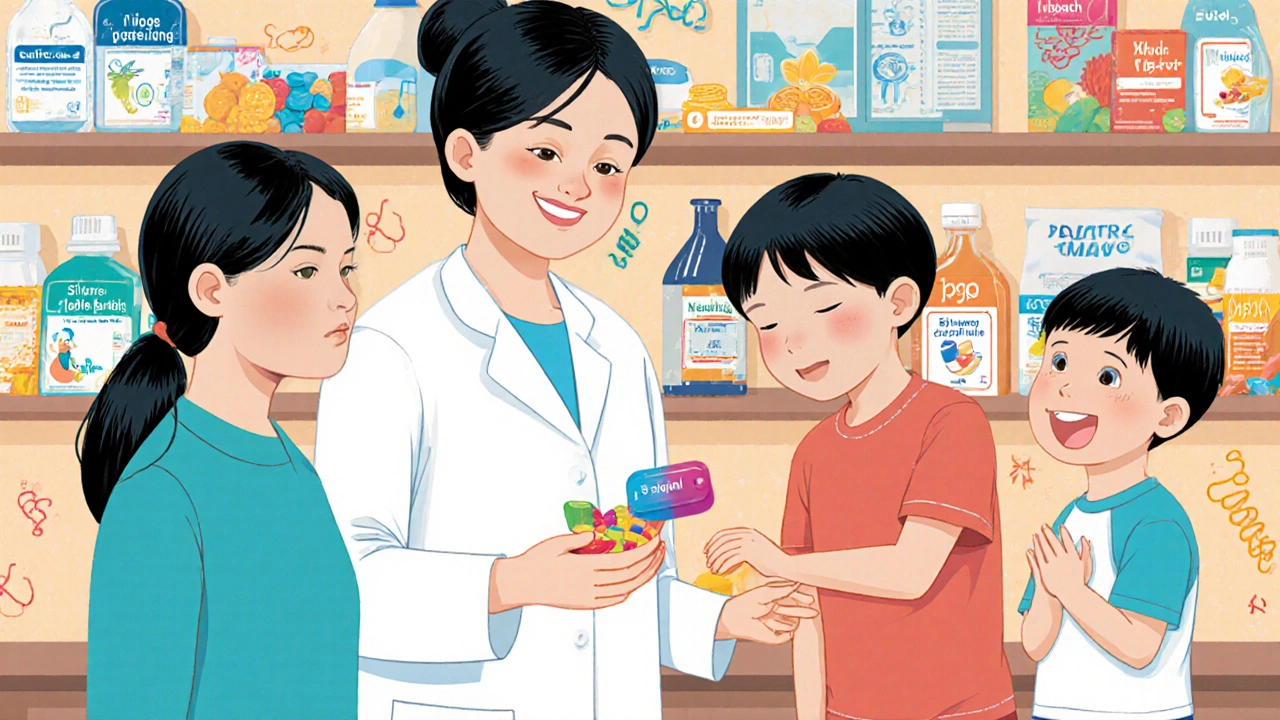
Medications to Avoid: The KIDs List
The Key Potentially Inappropriate Drugs in Pediatrics (KIDs) List, updated in 2025 by the Pediatric Pharmacy Association, is your go-to guide for dangerous drugs. It’s not a suggestion-it’s a warning. Here’s what’s on the list:- Codeine and tramadol: Avoid in all children. Risk of fatal respiratory depression.
- Angiotensin receptor blockers (like losartan): Use with caution under 1 month. Can cause kidney failure in newborns.
- Montelukast (Singulair): Use with caution under 18. Linked to sleep disturbances, nightmares, and mood changes.
- Mirabegron (for overactive bladder): Avoid under 3 years. Safety data is lacking.
- Molnupiravir (antiviral for COVID): Avoid under 18. Potential DNA damage risk.
Dosing Errors: The Silent Killer
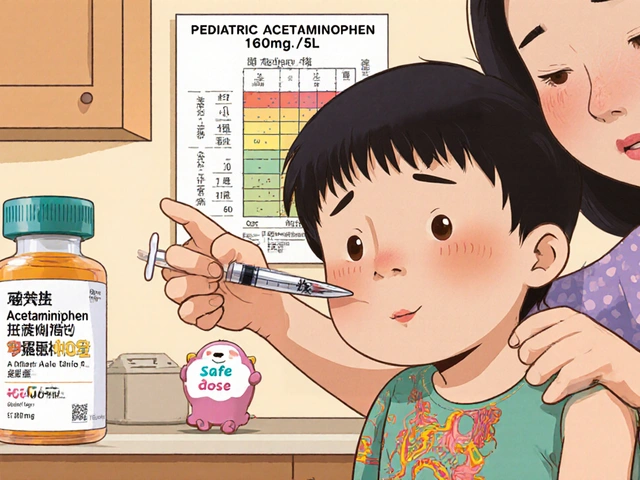
One of the biggest dangers isn’t the medicine itself-it’s getting the dose wrong. A 2023 study by the Institute for Safe Medication Practices found that 32% of pediatric medication errors involved decimal mistakes. Think: giving 2.5 mL instead of 0.25 mL. That’s a tenfold overdose. Parents often use kitchen spoons or unmarked cups. Bad idea. A teaspoon isn’t 5 mL unless it’s a medical measuring device. A 2024 study at Children’s Hospital of Philadelphia found that 42% of caregivers made dosing mistakes because they used the wrong tool. Fix it: - Always use the syringe or cup that comes with the medicine. - Double-check the concentration on the bottle. - Ask the pharmacist to write the dose in mL, not teaspoons. - Keep a log of when each dose is given. Electronic health records with built-in pediatric safety checks have cut dosing errors by 61% in children’s hospitals. If your clinic doesn’t have this, ask why.Off-Label Use: When There’s No Official Option
Here’s the hard truth: about half of all medications given to kids aren’t officially approved for their age group. The American Academy of Family Physicians says this is common-especially for newborns and teens with complex conditions. That doesn’t mean it’s unsafe. It means there’s not enough research. Many off-label uses are based on decades of clinical experience. For example, gabapentin is used off-label for nerve pain in teens, even though it’s only FDA-approved for adults. The key is using evidence-based guidelines. Don’t guess. Use Lexicomp Pediatric Dosage Handbook or the FDA’s Pediatric Dosing Calculator app-tools trusted by 63% of pediatric pharmacists.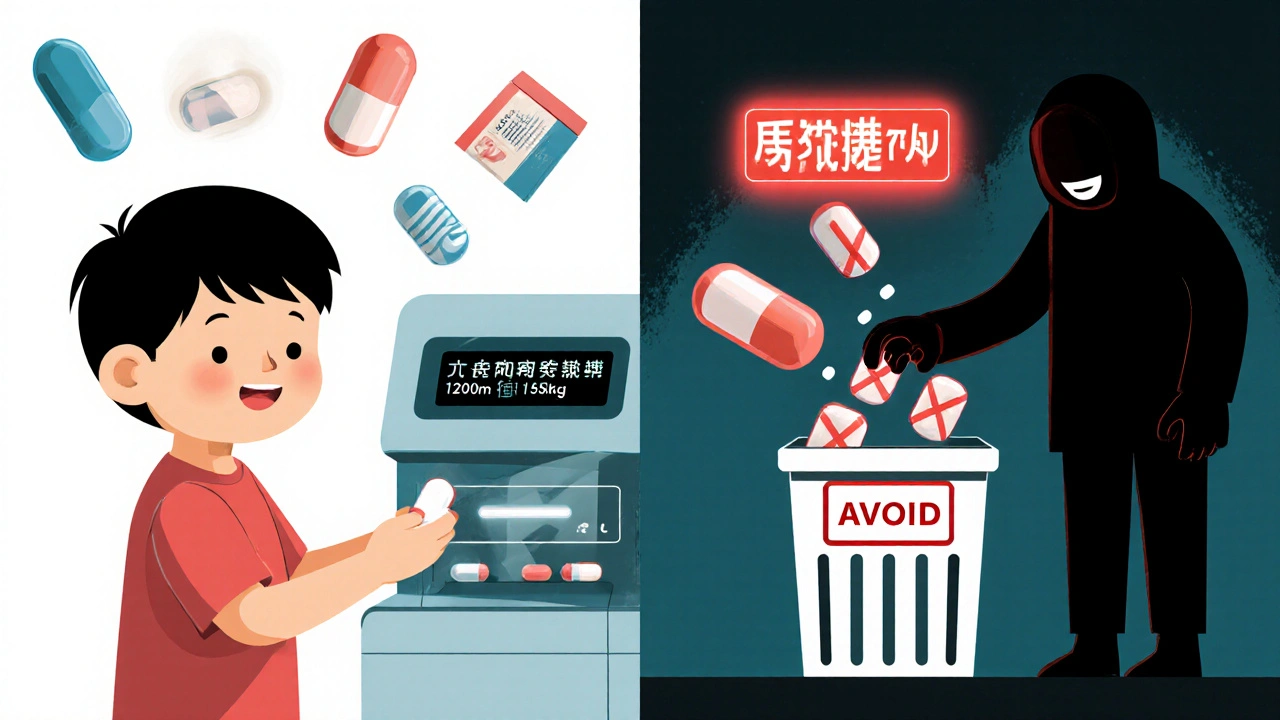
What’s Changing in 2025
The field is evolving fast. New technologies are making pediatric meds safer: - 3D-printed pills: Cincinnati Children’s Hospital is testing personalized doses printed on demand. A 15 kg child gets exactly 120 mg-no measuring needed. - Nanoparticle delivery: Being tested to help neonates absorb drugs better through their immature guts. - Palatability testing: New FDA guidelines now require taste tests with actual kids before approval. The WHO’s 2025 Access to Medicines Framework aims to get 90% of essential pediatric drugs available in low-income countries by 2030. Right now, only 34% are available there, compared to 92% in high-income countries. This gap kills.What Parents Should Do
You don’t need to be a pharmacist. But you do need to be informed.- Always ask: “Is this approved for my child’s age?”
- Confirm the dose in mL, not teaspoons.
- Ask if there’s a better-tasting version.
- Keep a list of all meds your child takes, including supplements.
- Never use leftover antibiotics from another child.
Final Thought
Medicines for kids aren’t just smaller versions of adult drugs. They’re different medicines entirely. The science behind them is complex, but the goal is simple: give children the right dose, in the right form, at the right time. The system isn’t perfect. Dosing errors still happen. Formulations are still too bitter. Access is still unequal. But progress is real. Thanks to laws like PREA, research is finally catching up. And more kids are getting medicines that actually work-for them.Can I give my child adult medicine if I cut the dose in half?
No. Adult medications are not formulated for children. Even if you reduce the dose, the inactive ingredients (like dyes or preservatives) may be unsafe. Also, dosing isn’t linear-children’s bodies process drugs differently. Always use pediatric-specific formulations.
What should I do if my child refuses to take liquid medicine?
Ask your pharmacist if a better-tasting version exists. Some brands offer fruit flavors or sugar-free options. You can also mix the dose with a small amount of applesauce or yogurt-but only if the medication allows it. Never mix with juice if it’s an antibiotic, as it can reduce effectiveness. Use a syringe to gently squirt the medicine inside the cheek, not toward the back of the throat.
Is it safe to use ibuprofen for a 4-month-old with a fever?
Generally, no. Ibuprofen is not recommended for infants under 6 months unless directed by a pediatrician. For babies under 6 months, acetaminophen is the safer choice. Always check weight-based dosing and never exceed the daily maximum.
Why are antibiotics overprescribed in kids?
Many ear and sinus infections are viral, not bacterial. But doctors sometimes prescribe antibiotics because parents expect them, or because it’s faster than waiting. Overuse leads to resistant bacteria, making future infections harder to treat. Always ask: “Is this infection bacterial? Do we really need an antibiotic?”
How do I know if my child’s medicine is on the KIDs List?
Ask your pharmacist or pediatrician. The KIDs List is available through the Pediatric Pharmacy Association’s website and is integrated into most hospital electronic systems. If you’re unsure, search the drug name + “KIDs List” online. Avoid any medication flagged as “avoid” without specialist approval.
king tekken 6
man i just gave my kid ibuprofen last week and i used a kitchen spoon cause i was tired lol. now im paranoid. also why does everything taste like chalk? my 4yo cried for 20 mins. why cant they make it taste like gummy bears? 🤦♂️
DIVYA YADAV
This is all western propaganda. In India, we give children adult aspirin since the 1950s and not one child has died. Your FDA is weak. Our Ayurvedic doctors know better. Why do you trust American pharma over centuries of tradition? The KIDs List is just a tool to control parents and sell more expensive drugs. I saw a doctor in Delhi give a 1-year-old diclofenac gel for fever. No problems. You are being manipulated.
Kim Clapper
I appreciate the thoroughness of this post, but I must express my profound concern regarding the normalization of off-label prescribing in pediatric populations. The lack of rigorous longitudinal studies, coupled with the increasing commercialization of pediatric pharmacology, raises serious ethical questions. Are we truly prioritizing child welfare-or are we enabling a pharmaceutical-industrial complex that profits from ambiguity? I urge all caregivers to demand full transparency and independent verification before administering any unapproved agent.
Jake Ruhl
so like... i heard the fda is hiding something about 3d printed pills? like theyre using nano tech to track kids? i mean why else would they make it so precise? they got cameras in the syringes i bet. and dont get me started on the taste tests-kids are being brainwashed to like sweet stuff so theyll take more meds. its all part of the agenda. also my cousin’s dog took a chewable and lived. so its prob fine for humans too? 🤔
doug schlenker
I’ve been a pediatric nurse for 18 years and this post nails it. The biggest thing I see? Parents panic and guess doses. I’ve seen kids given 10x the right amount because they used a soup spoon. The syringe that comes with the med? Use it. Always. And if your kid hates the taste, ask for a flavor. Pharmacies can mix in apple or grape. It’s not magic-it’s just care. Also, never use leftover antibiotics. Ever. It’s like leaving a loaded gun in the toy box.
Hannah Magera
This is so helpful! I had no idea about the KIDs list. I just looked it up and wow-montelukast is flagged? My daughter’s been on it for asthma. Should I be worried? I’m going to call her pediatrician tomorrow. Also, the part about taste and adherence? So true. She refused her antibiotic for 3 days until we found the strawberry version. Now she asks for it like it’s candy 😅
Alexander Rolsen
The WHO is a globalist puppet. The FDA is a corporate shill. And this whole 'pediatric age groups' thing? Just a way to sell more branded syrups. Real parents in the Midwest give crushed pills in applesauce. Kids survive. You think your 80 mg/0.8 mL liquid is safer? It's just more expensive. And why are we letting bureaucrats decide what's 'safe'? My kid got penicillin at 3 months in 1992. He's 24 now. Healthy. You're overcomplicating it.
Leah Doyle
I just read this and cried a little. My son had a severe ear infection last winter and the pharmacist spent 15 minutes explaining the dosing. She even drew me a picture. I didn’t know that was a thing. Thank you for this. Also-yes, taste matters! We switched from the bitter amoxicillin to the cherry-flavored one and he actually took it without screaming. 🙏
Alexis Mendoza
It’s funny how we treat kids like tiny adults until it comes to medicine. Then suddenly, we remember they’re developing beings with fragile systems. But we still let them watch cartoons with sugar ads for candy medicine. We’re teaching them to associate pills with reward. Is that really the message we want? Maybe the real problem isn’t dosing-it’s culture. We need to stop treating health like a transaction.
Graham Moyer-Stratton
KIDs list is legit. Avoid codeine. Period.
tom charlton
I commend the author for presenting a meticulously researched and clinically grounded overview of pediatric pharmacology. The emphasis on evidence-based practice, accurate dosing methodology, and the avoidance of potentially harmful agents such as codeine and fluoroquinolones reflects best practices endorsed by the American Academy of Pediatrics and the Pediatric Pharmacy Advocacy Group. It is imperative that caregivers remain vigilant and consult licensed professionals prior to administration of any pharmaceutical agent to pediatric patients.
Chris Kahanic
I’ve been a dad for 12 years. I used to think 'just cut the pill in half' was fine. I was wrong. Now I keep a logbook. I use the syringe. I ask about taste. I check the concentration. It’s not hard. It’s just… attention. And that’s the real medicine.
Geethu E
I’m a pharmacist in Kerala and we see this every day. Parents bring adult ibuprofen and ask to crush it for their 2-year-old. We say no. We give them the pediatric suspension. Sometimes they argue. But then they come back a week later saying their kid finally slept. That’s why this matters. Also-yes, taste is everything. We even have a mango-flavored paracetamol here. Kids beg for it. Science + empathy = better outcomes.