
You have a sore throat or a minor cut that looks infected. It is easy to reach for the same pill you took last time, hoping it will clear things up quickly. But taking antibiotics when they are not needed does more than just waste money. It actively trains bacteria to survive your medication. This process creates antibiotic resistance, a global health crisis where common infections become harder, and sometimes impossible, to treat. Alongside this rise in superbugs comes another serious threat: Clostridioides difficile (often called C. diff), a dangerous bacterial infection that thrives when your natural gut defenses are wiped out by unnecessary drugs.
The situation is worsening faster than many people realize. According to the World Health Organization's Global Antibiotic Resistance Surveillance Report from October 2025, one in six laboratory-confirmed bacterial infections worldwide were resistant to standard treatments in 2023. This is not a distant future problem; it is happening now in hospitals and communities across every continent. Understanding how these risks work-and what you can do to protect yourself-is essential for navigating modern healthcare safely.
How Antibiotic Resistance Develops
To understand why overuse is so dangerous, you first need to look at how bacteria behave. Bacteria are living organisms that reproduce rapidly. When you take an antibiotic, it kills most of the bacteria causing your infection. However, a small number might have a random genetic mutation that makes them immune to that specific drug. These survivors multiply, creating a new population of bacteria that your medicine cannot touch.
This is evolution in action, accelerated by human behavior. Every time you take an antibiotic for a viral infection like the common cold or flu, you are exposing your body’s harmless bacteria to the drug without killing any harmful ones. This gives those harmless bacteria practice in surviving. If you later get a real bacterial infection, the bugs inside you may already be resistant.
The data supports this concern. Between 2018 and 2023, resistance rates increased by 5% to 15% annually for more than 40% of the pathogen-antibiotic combinations monitored by the WHO. Specific examples include Escherichia coli (E. coli), a common cause of urinary tract infections. In 2020, one in five E. coli UTI cases showed reduced susceptibility to standard antibiotics like ampicillin and fluoroquinolones. For Staphylococcus aureus, the median rate of methicillin resistance (MRSA) reached 35% across 76 countries. These are not rare exceptions; they are becoming the norm in many regions.
The C. difficile Connection
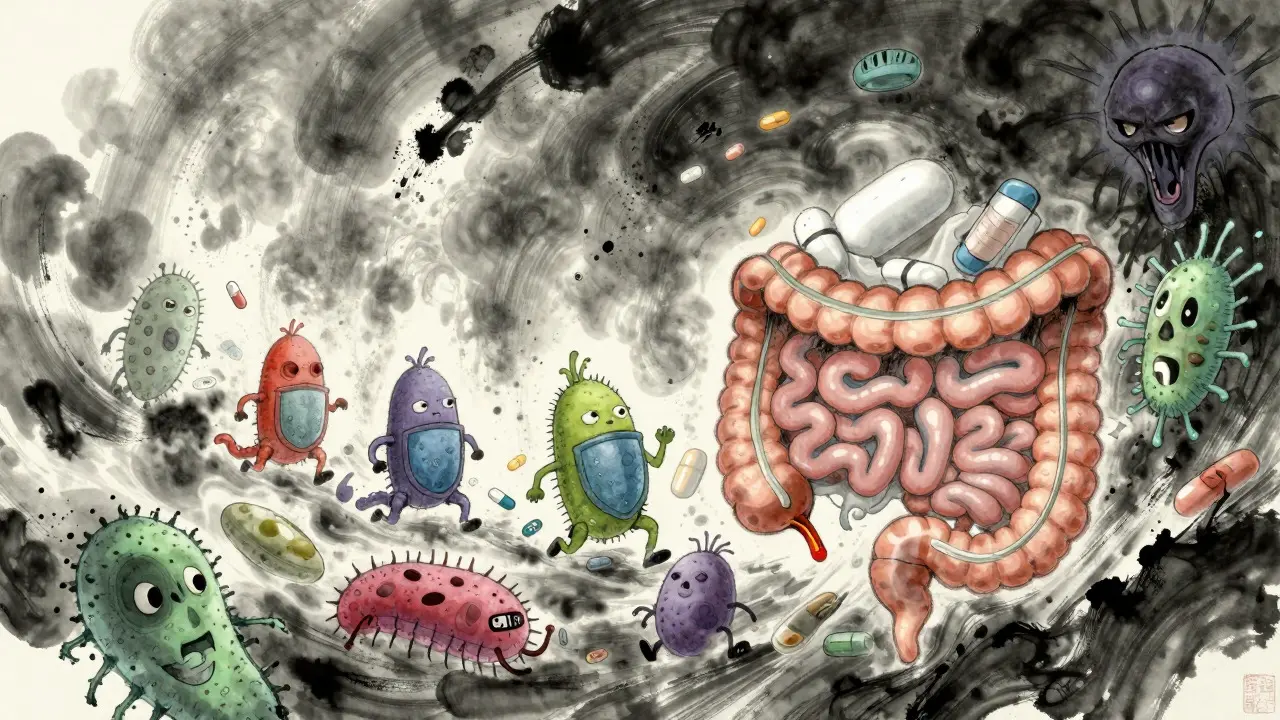
While resistance makes existing drugs less effective, C. difficile infection (CDI) represents a different but equally severe consequence of antibiotic overuse. Your gut is home to trillions of beneficial bacteria that keep harmful microbes in check. This ecosystem is known as your gut microbiome. When you take broad-spectrum antibiotics, they do not distinguish between the bad bacteria causing an infection and the good bacteria protecting your digestive system. They wipe out both.
When your protective flora disappears, Clostridioides difficile spores-which can live on surfaces for months-can germinate and produce toxins. These toxins attack the lining of your colon, leading to severe diarrhea, abdominal pain, fever, and potentially life-threatening complications like toxic megacolon. The CDC has long identified antibiotic use as the primary driver of C. diff infections. In 2017 alone, C. diff caused nearly half a million infections in the United States, resulting in approximately 29,000 deaths. While recent surveillance focuses heavily on resistance, the link between antibiotic exposure and CDI remains a critical clinical reality.
Risk factors for developing C. diff include:
- Taking broad-spectrum antibiotics such as clindamycin, cephalosporins, or fluoroquinolones.
- Being aged 65 or older.
- Having a weakened immune system.
- Recent hospitalization or stay in a long-term care facility.
The irony is stark: the very treatment meant to cure an infection can create a new, often more dangerous one. This is why doctors emphasize prescribing antibiotics only when necessary.
Global Disparities and Economic Impact
The burden of antibiotic resistance is not shared equally. Geographic disparities highlight systemic issues in healthcare access. The WHO South-East Asian and Eastern Mediterranean Regions reported that one in three infections were resistant to antibiotics, compared to one in five in the African Region. In resource-limited settings, the lack of quality diagnostics means doctors often prescribe antibiotics empirically-without confirming if the infection is even bacterial. This accelerates resistance development because patients receive drugs they do not need, while those who truly need them find the drugs ineffective.
The economic toll is staggering. Experts project that resistant infections could cause $3 trillion in annual global GDP losses by 2030. By 2050, if current trends continue, antimicrobial resistance (AMR) could result in 10 million annual deaths globally, surpassing cancer mortality. The cumulative loss in global economic output could reach $100 trillion. This is not just a medical issue; it is an economic emergency that threatens the viability of modern medicine, including surgeries, cancer chemotherapy, and organ transplants, all of which rely on effective antibiotics to prevent post-procedure infections.
| Bacterium | Common Infections | Resistance Trend (2018-2023) | Key Concern |
|---|---|---|---|
| Escherichia coli | Urinary tract, bloodstream | Increased 5-15% | High resistance to third-gen cephalosporins (42% median) |
| Staphylococcus aureus | Skin, surgical site | Stable/Increasing | Methicillin resistance (MRSA) at 35% median globally |
| Klebsiella pneumoniae | Lung, bloodstream | Increasing | Rising carbapenem resistance (last-resort drugs) |
| Neisseria gonorrhoeae | Gonorrhea | Increasing | Reduced susceptibility to multiple first-line treatments |
The Broken Pipeline for New Drugs
If resistance is rising, why aren't we simply inventing stronger antibiotics? The answer lies in economics. Developing a new antibiotic is expensive and scientifically challenging, but unlike drugs for chronic conditions like diabetes or hypertension, antibiotics are taken for short periods. This generates limited revenue for pharmaceutical companies. As a result, major drug manufacturers have largely abandoned antibiotic research.
Organizations like CARB-X (Combating Antibiotic-Resistant Bacteria Biopharmaceutical Accelerator) have stepped in to fill the gap. Launched in 2016 with initial funding from BARDA and the Wellcome Trust, CARB-X had invested over $480 million in 118 antibiotic projects across 20 countries by 2025. Despite these efforts, the pipeline remains insufficient. Kevin Outterson, Executive Director of CARB-X, notes that rising resistance among Gram-negative bacteria is already reducing treatment options. Without significant policy changes and financial incentives, the world faces a future where we run out of effective drugs before we develop new ones.
What You Can Do: Practical Steps for Patients
You play a crucial role in slowing antibiotic resistance. Here is how to protect yourself and your community:
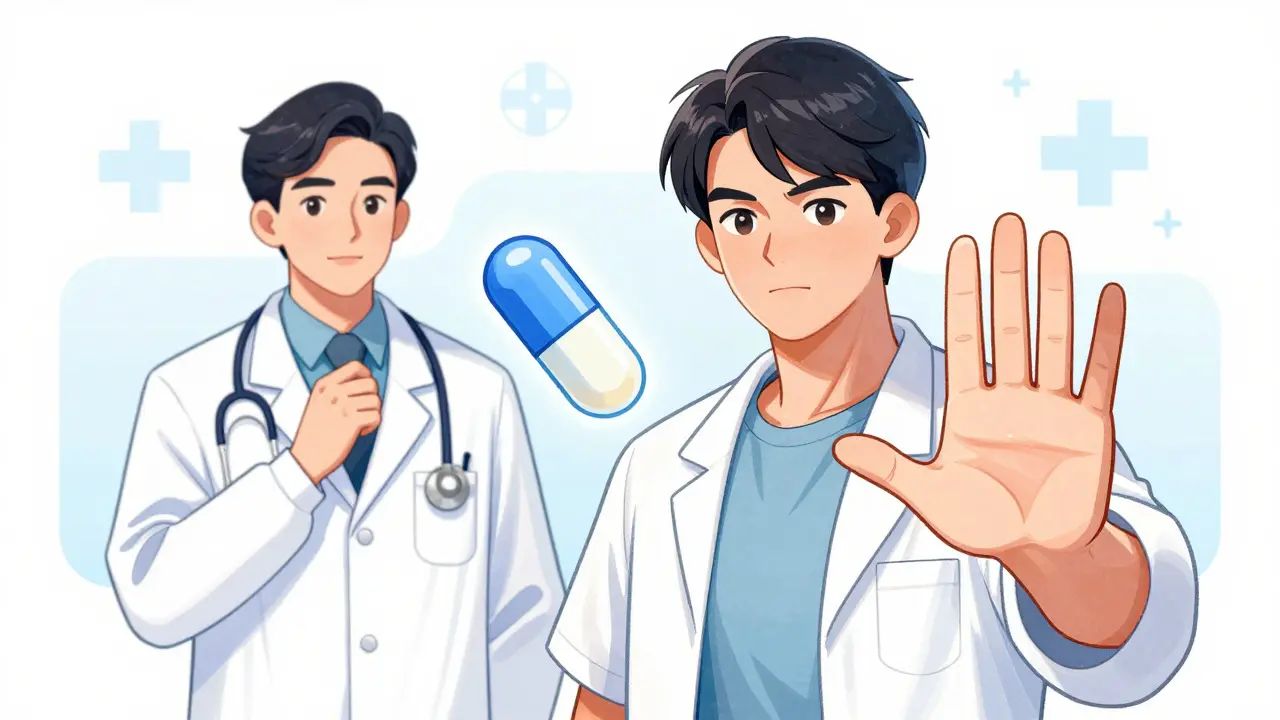
- Ask "Is this bacterial?" Before accepting a prescription, ask your doctor if your infection is likely bacterial or viral. Viruses (colds, flu, most sore throats) do not respond to antibiotics.
- Complete the full course. If prescribed an antibiotic, take every dose exactly as directed. Stopping early can leave behind the strongest bacteria, fostering resistance.
- Avoid leftovers. Never save antibiotics for "next time" or share them with family members. Each infection is unique, and leftover pills may be the wrong type or dosage.
- Practice hygiene. Wash hands regularly, keep vaccines up to date, and prepare food safely. Preventing infection is better than treating it.
- Support stewardship. Choose healthcare providers who follow antimicrobial stewardship guidelines. These programs ensure antibiotics are used appropriately, preserving their effectiveness.
During the COVID-19 pandemic, progress against AMR was reversed. Hospital-onset resistant infections increased by 20% compared to pre-pandemic levels due to overwhelmed systems and increased empirical antibiotic use. Learning from this period, healthcare systems are now prioritizing rapid diagnostic tests to confirm bacterial presence before prescribing. Advocating for these tests during your visits can help reduce unnecessary exposure.
Looking Ahead: A Silent Pandemic
Antibiotic resistance is often called a "silent pandemic" because it does not make headlines daily, yet it claims millions of lives. Dr. Kelly Dooley of Vanderbilt University warns that without intervention, deaths due to AMR will surpass those from cancer by 2050. The window for action is narrowing. Global coordination, improved diagnostics, investment in new drug development, and responsible patient behavior are all required to turn the tide.
The next time you feel sick, remember that antibiotics are precious resources, not everyday remedies. Using them wisely today ensures they will still work tomorrow when you truly need them.
What is the biggest risk of taking antibiotics unnecessarily?
The two biggest risks are developing antibiotic-resistant bacteria in your body and disrupting your gut microbiome, which can lead to Clostridioides difficile (C. diff) infection. Resistance means future infections may be harder or impossible to treat, while C. diff causes severe, potentially fatal diarrhea.
Can I catch antibiotic resistance from someone else?
You cannot catch "resistance" itself, but you can catch resistant bacteria. If someone with MRSA or resistant E. coli spreads the bacteria to you through contact or contaminated surfaces, you may develop an infection that standard antibiotics cannot kill. Good hygiene helps prevent this spread.
Why are doctors hesitant to prescribe antibiotics now?
Doctors are following antimicrobial stewardship guidelines to preserve the effectiveness of existing drugs. Since most common illnesses like colds and flu are viral, antibiotics provide no benefit and only add risk. Doctors aim to avoid side effects and prevent the emergence of superbugs.
How long does it take for C. diff symptoms to appear after antibiotics?
Symptoms typically appear within a few days to a month after starting antibiotic treatment, but they can occur up to several months later. Watch for watery diarrhea, abdominal cramping, and fever, especially if you have recently finished a course of antibiotics.
Are there new antibiotics being developed to fight resistance?
Yes, but slowly. Organizations like CARB-X are funding research into new classes of antibiotics, particularly for Gram-negative bacteria. However, the economic model for drug development is broken, meaning fewer big pharma companies are investing. Innovation relies heavily on public-private partnerships and government support.
What should I do if my doctor says I don't need antibiotics?
Trust their assessment. Ask about supportive care measures like rest, hydration, and over-the-counter symptom relief. If symptoms worsen or persist beyond a typical viral timeline (usually 7-10 days), return for re-evaluation. Avoid demanding antibiotics, as this pressures doctors to prescribe inappropriately.
Write a comment