
Your heart is a muscular pump, but what happens when that muscle itself gets sick? This is the core issue behind cardiomyopathy, a group of diseases affecting the heart muscle that impair its ability to pump blood effectively. It is not caused by coronary artery disease, high blood pressure, or valve problems. Instead, it is a primary failure of the myocardium. Understanding the three main types-dilated, hypertrophic, and restrictive-is crucial because each one changes the heart’s shape and function in completely different ways. Knowing which type you are dealing with dictates everything from daily activity limits to life-saving medication choices.
Key Takeaways
- Dilated Cardiomyopathy (DCM): The heart chamber stretches and thins, making it weak and unable to pump efficiently. It accounts for about 50-60% of cases.
- Hypertrophic Cardiomyopathy (HCM): The heart muscle becomes abnormally thick, stiffening the heart and potentially blocking blood flow. It is the leading cause of sudden cardiac death in young athletes.
- Restrictive Cardiomyopathy (RCM): The heart walls become rigid and non-compliant, preventing the heart from filling properly, even though pumping strength may remain normal. It is the rarest form.
- Diagnosis varies: Echocardiograms are the first step, but Cardiac MRI and genetic testing are often needed for precise classification and family screening.
- Treatment is specific: DCM focuses on strengthening the pump; HCM focuses on relaxing the muscle and reducing obstruction; RCM focuses on managing the underlying infiltrative disease.
What Is Cardiomyopathy?
To understand these conditions, you first need to know what cardiomyopathy actually is. According to the American Heart Association’s 2020 classification system, cardiomyopathies are defined as "primary diseases of the myocardium associated with cardiac dysfunction." The key word here is "primary." If your heart fails because of a blocked artery (heart attack) or severe high blood pressure, that is not classified as cardiomyopathy in this context. Cardiomyopathy means the muscle tissue itself is diseased.
These conditions affect approximately 1 in 250 adults globally. The World Health Organization first systematically classified them in 1995, updating the framework significantly in 2006 and 2013 to distinguish between genetic, mixed, and acquired forms. Today, we look at three major categories that cover about 90% of all cases: Dilated, Hypertrophic, and Restrictive. Each has a distinct structural problem, which leads to very different symptoms and treatments.
Dilated Cardiomyopathy (DCM): The Stretched Heart
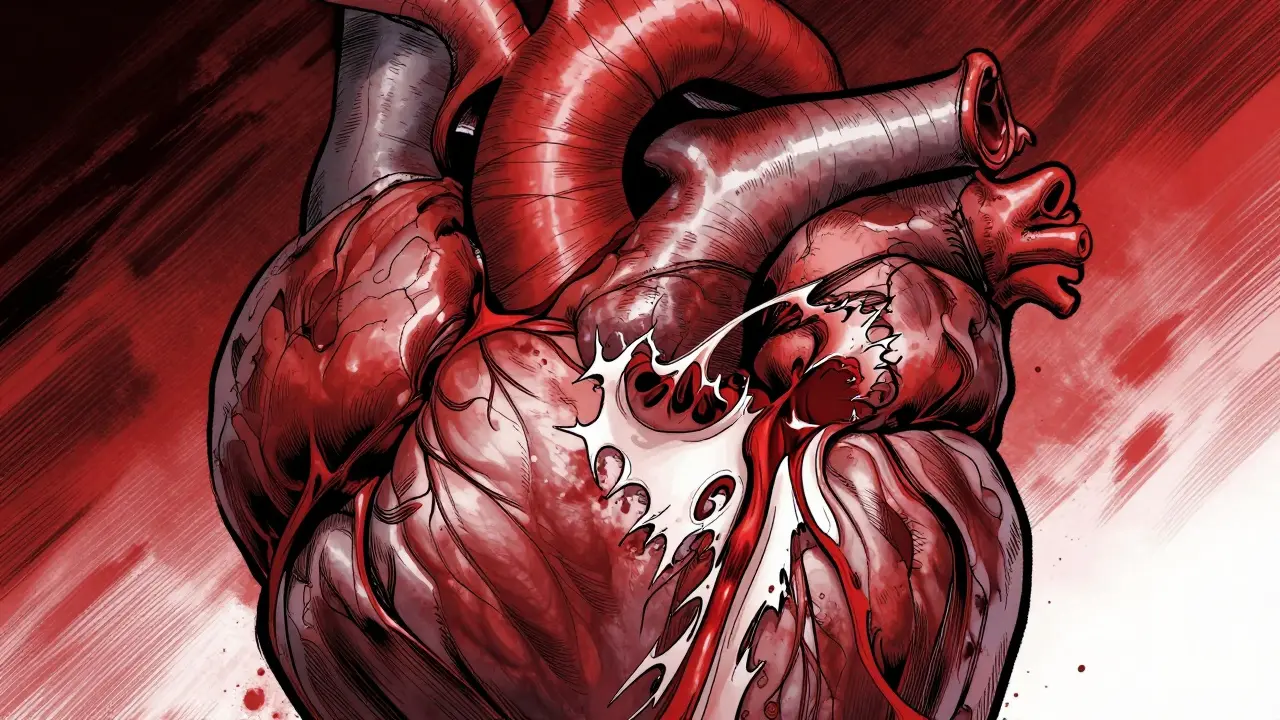
Imagine blowing up a balloon until the rubber becomes thin and loose. That is essentially what happens in Dilated Cardiomyopathy (DCM). In DCM, the left ventricle-the heart’s main pumping chamber-enlarges and stretches. The walls of the heart often become thinner than normal (often less than 10 mm thick). Because the chamber is so large and the muscle is stretched, it cannot squeeze hard enough to push blood out into the body.
Clinically, doctors diagnose DCM when the left ventricular end-diastolic dimension is greater than 55 mm in men or 50 mm in women, combined with an ejection fraction below 40%. Ejection fraction is the percentage of blood leaving the heart each time it contracts. A normal heart pumps out 60-70%; a DCM heart struggles to reach 40%.
Why does this happen? About 25-35% of cases are familial, meaning they run in families due to genetic mutations in genes like TTN, LMNA, or MYH7. However, many cases are acquired. Chronic excessive alcohol consumption (more than 80g per day for over five years), viral infections like coxsackievirus B3, and certain chemotherapy drugs (like doxorubicin) can damage the heart muscle and lead to dilation. Autoimmune conditions such as sarcoidosis are also culprits.
The good news? DCM responds well to modern guideline-directed medical therapy. Drugs like sacubitril/valsartan have shown significant improvements in quality of life and reduced hospitalizations. In fact, 68% of patients report better quality of life with current treatments. However, if the condition progresses, DCM accounts for 35-45% of heart transplants performed today.
Hypertrophic Cardiomyopathy (HCM): The Thickened Heart
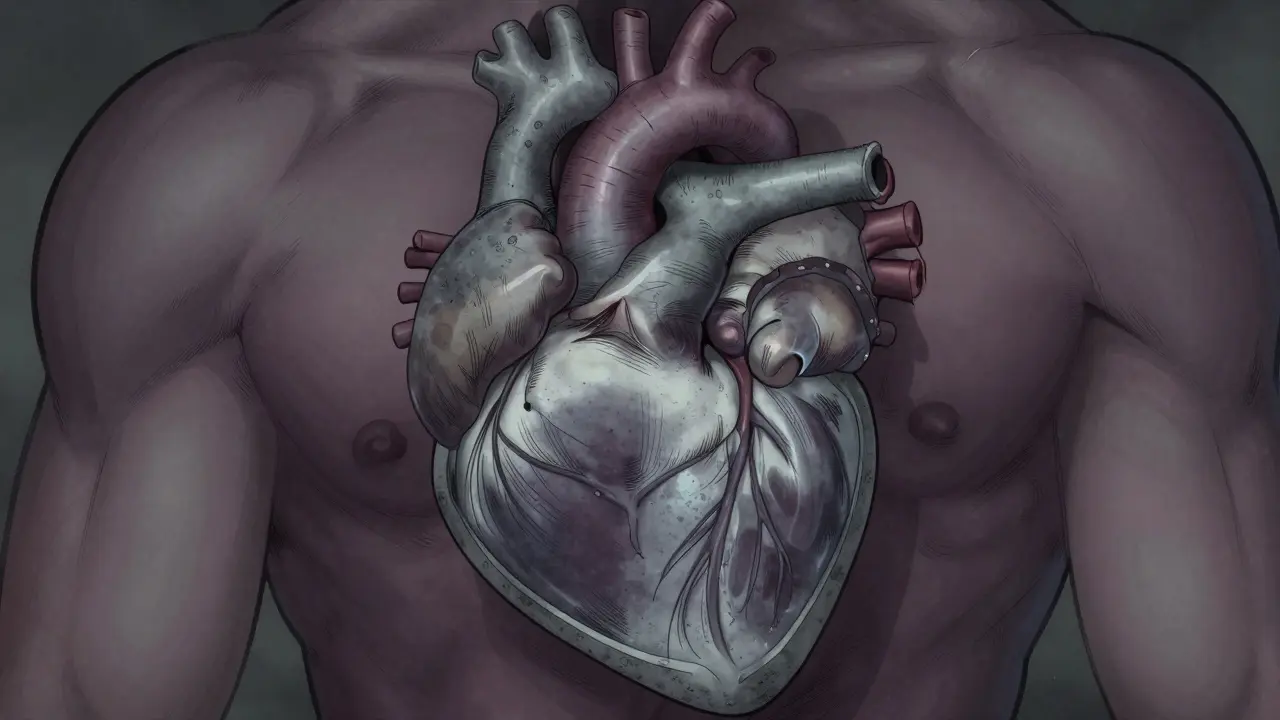
If DCM is a stretched balloon, Hypertrophic Cardiomyopathy (HCM) is a heart made of stone. In HCM, the heart muscle becomes abnormally thick without any obvious reason like high blood pressure. This thickening usually affects the interventricular septum (the wall between the two lower chambers) more than other parts, creating an asymmetric shape.
This thickness makes the heart stiff. It cannot relax properly to fill with blood between beats (diastolic dysfunction). In about 70% of cases, this thickening obstructs blood flow out of the heart, creating a gradient of 30 mmHg or higher. This is known as obstructive HCM. Patients often feel shortness of breath during exercise, chest pain, or fainting spells because the heart simply cannot keep up with demand.
HCM is predominantly genetic. About 60% of cases involve mutations in sarcomere proteins like MYH7 or MYBPC3. It follows an autosomal dominant pattern, meaning if one parent has it, there is a 50% chance their child will inherit it. This is why family screening is critical. HCM affects roughly 1 in 500 people, but it is much more common in athletic populations (1 in 200). Tragically, it is the leading cause of sudden cardiac death in young athletes under age 35 in the United States, accounting for 36% of such cases.
Diagnosis requires an echocardiogram showing wall thickness of at least 15 mm in adults (or 13 mm in relatives of HCM patients). Cardiac MRI is often used to confirm the diagnosis and rule out other causes like aortic stenosis. Treatment has evolved significantly. While beta-blockers help relax the heart, newer therapies like mavacamten (Camzyos) specifically target the molecular machinery causing the thickening, reducing obstruction in 80% of patients.
Restrictive Cardiomyopathy (RCM): The Rigid Heart
Restrictive Cardiomyopathy (RCM) is the rarest and often the most difficult to diagnose. Unlike DCM, the heart chambers do not enlarge. Unlike HCM, the walls do not necessarily thicken massively. Instead, the heart muscle becomes incredibly stiff and rigid. Think of trying to pour water into a glass lined with concrete. The pump might still squeeze normally (ejection fraction remains above 50%), but the heart cannot stretch to accept blood coming back from the lungs and body.
This leads to severe backup of blood, causing swelling in the legs, abdomen, and lungs. The hallmark of RCM is biatrial enlargement (atria larger than 40 mm) due to the high pressure required to force blood into the stiff ventricles. On an echocardiogram, you see a restrictive filling pattern with a rapid deceleration time.
RCM is rarely a primary muscle disease. It is almost always caused by substances infiltrating the heart tissue. Amyloidosis accounts for 60% of cases, where misfolded proteins build up in the heart. Sarcoidosis (15%) involves inflammatory granulomas, and hemochromatosis (10%) involves iron overload. Fabry disease is another storage disorder that causes restriction.
Diagnosing RCM is tricky because it looks very similar to constrictive pericarditis (where the sac around the heart is stiff). Doctors must use Cardiac MRI to look for late gadolinium enhancement patterns and measure extracellular volume. An endomyocardial biopsy is sometimes necessary to confirm amyloidosis. Treatment focuses on the underlying cause-for example, daratumumab for amyloidosis or phlebotomy for hemochromatosis. Unfortunately, prognosis is poorer here, with 5-year survival ranging from 30-50% depending on the cause.
Comparison of Cardiomyopathy Types
Understanding the differences visually helps clarify why treatment strategies diverge so sharply.
| Feature | Dilated (DCM) | Hypertrophic (HCM) | Restrictive (RCM) |
|---|---|---|---|
| Heart Structure | Enlarged, thin-walled chambers | Thickened, asymmetric walls | Normal size, rigid/stiff walls |
| Pumping Function | Weak (Systolic Dysfunction) | Strong but stiff (Diastolic Dysfunction) | Normal systolic, poor filling |
| Ejection Fraction | Reduced (<40%) | Normal or High (>50%) | Normal (>50%) |
| Primary Cause | Viral, Alcohol, Genetic, Chemo | Genetic (Sarcomere mutations) | Infiltrative (Amyloid, Iron, etc.) |
| Prevalence | 50-60% of cases | 30-40% of cases | 5-10% of cases |
| Key Risk | Heart Failure, Arrhythmias | Sudden Cardiac Death (Young Athletes) | Severe Congestion, Poor Prognosis |
Diagnosis and Testing Pathways
You cannot treat what you cannot define. The diagnostic journey usually starts with an echocardiogram, which provides a live ultrasound image of the heart. For DCM, the echo clearly shows the enlarged chamber and weak squeezing. For HCM, it reveals the thickened septum. For RCM, it shows the stiff filling pattern and enlarged atria.
However, echoes are not always enough. Cardiac Magnetic Resonance Imaging (Cardiac MRI) is now considered the gold standard for tissue characterization. It can detect fibrosis (scarring) in DCM with 95% sensitivity. In HCM, MRI confirms wall thickness and rules out other mimics. In RCM, MRI identifies the specific infiltration patterns of amyloid or iron.
Genetic testing plays a massive role, especially in HCM and familial DCM. A 17-gene panel costs between $1,200 and $2,500 in the US and has a diagnostic yield of about 60% for HCM. If a mutation is found, every first-degree relative should be screened. This prevents tragedies in young athletes who might otherwise be cleared for sports.
For RCM, if imaging suggests amyloidosis, a bone marrow biopsy or endomyocardial biopsy may be needed to confirm the type of protein deposit. This distinction is vital because treatments like tafamidis are highly effective for ATTR amyloidosis but useless for AL amyloidosis, which requires chemotherapy-like agents.
Treatment Strategies and Outlook
Treatment is no longer one-size-fits-all. It depends entirely on the type.
- For DCM: The goal is to reduce strain on the stretched heart. Guideline-Directed Medical Therapy (GDMT) includes ARNIs (like sacubitril/valsartan), beta-blockers, and SGLT2 inhibitors. These drugs have reduced mortality by 30% over three years. In advanced cases, devices like ICDs (Implantable Cardioverter Defibrillators) prevent sudden death from arrhythmias.
- For HCM: The goal is to relax the muscle and improve filling. Beta-blockers and disopyramide are standard. For obstructive cases, septal reduction therapy (surgery or alcohol ablation) removes part of the thick muscle to open the pathway. Newer myosin inhibitors like mavacamten offer a targeted pharmacological approach. Avoid dehydration and intense exertion if advised by your doctor.
- For RCM: There is no direct cure for the stiffness itself. Treatment targets the underlying disease. Diuretics help manage fluid buildup, but must be used carefully to avoid dropping blood pressure too low. Pacemakers may be needed if electrical conduction is affected. Survival rates vary widely based on the cause, but early identification of amyloidosis has improved outcomes significantly.
The outlook has improved dramatically. Five-year survival for treated DCM is 70-80%. For non-obstructive HCM, it is 95%. RCM remains challenging, but new therapies are emerging. The key is accurate classification. Misdiagnosis is common-up to 15-20% of DCM cases are initially mislabeled because ischemic causes weren't fully ruled out.
Can cardiomyopathy be cured?
Most forms of cardiomyopathy are chronic and cannot be completely "cured" in the sense of reversing the genetic or structural damage permanently. However, they can often be managed effectively. Some acquired causes, like alcohol-induced DCM or thyroid-related issues, may reverse if the underlying trigger is removed. Genetic forms require lifelong management to control symptoms and prevent complications.
Is cardiomyopathy hereditary?
Yes, many types are. Hypertrophic Cardiomyopathy (HCM) is strongly genetic, with 60% of cases linked to specific gene mutations passed down in an autosomal dominant pattern. Dilated Cardiomyopathy (DCM) is familial in 25-35% of cases. If you have a family history of unexplained heart failure or sudden death, genetic counseling and screening are highly recommended.
What are the first signs of cardiomyopathy?
Symptoms often mimic general heart failure. Common early signs include shortness of breath during physical activity or when lying flat, fatigue, swelling in the ankles or legs, and palpitations (irregular heartbeat). In HCM, fainting during exercise is a red flag. Many people have no symptoms initially, which is why screening is important for those with family histories.
Can I exercise if I have cardiomyopathy?
It depends on the type and severity. For DCM, moderate aerobic exercise is often encouraged once stable. For HCM, intense competitive sports may be restricted due to the risk of sudden cardiac death, but light to moderate activity is usually safe. Always consult your cardiologist for a personalized exercise plan. Never start a new rigorous regimen without medical clearance.
How is restrictive cardiomyopathy different from constrictive pericarditis?
Both cause stiff hearts and similar symptoms, but the cause is different. In restrictive cardiomyopathy, the heart muscle itself is stiff due to infiltration (like amyloid). In constrictive pericarditis, the sac surrounding the heart (pericardium) is thickened and calcified, trapping the heart. Cardiac MRI and CT scans are essential to tell them apart because the treatments are opposite: RCM needs medical management of the infiltrate, while constrictive pericarditis often requires surgery to remove the sac.
Write a comment