
Why You Need to Check Your Medicine Cabinet Right Now
Have you ever reached for a painkiller or allergy pill only to find the label faded, the tablet cracked, or the liquid cloudy? You’re not alone. Most people keep old meds in their bathroom cabinet, thinking, "It might still work" or "I might need it someday." But expired drugs aren’t just useless-they can be dangerous.
In the UK, over 200,000 accidental poisonings from household medicines happen every year, and nearly half involve expired or misused drugs. The NHS and the Medicines and Healthcare products Regulatory Agency (MHRA) warn that expired antibiotics can fail to treat infections, leading to worse illness or even antibiotic resistance. Insulin, nitroglycerin, or epinephrine that’s past its date might not work when you need it most-like during a heart attack or severe allergic reaction.
Here’s the truth: if it’s expired, toss it. Not tomorrow. Not when you get around to it. Now.
What Counts as Expired-and What Doesn’t
Expiration dates aren’t just marketing. They’re tested by manufacturers to guarantee safety and strength. After that date, the medicine may break down, lose potency, or even turn toxic. Tetracycline antibiotics, for example, can become harmful after expiration, causing kidney damage.
But expiration dates aren’t the only clue. Look for these red flags-even if the date hasn’t passed:
- Changed color: Pills that are yellowed, faded, or spotted. Liquid medicines that look cloudy or have particles.
- Odd smell: If your cough syrup smells like vinegar or your ointment smells rancid, it’s gone bad.
- Altered texture: Tablets that crumble, capsules that stick together, or creams that separate.
- Broken seals: If the blister pack is torn or the bottle cap doesn’t seal properly, contamination is possible.
And here’s a rule many don’t know: discard all prescription drugs after one year, even if the bottle says they’re good for three. The one-year rule comes from the National Kidney Foundation and is backed by pharmacists across the UK. Why? Because once you open a bottle, exposure to air, light, and moisture starts degrading the medicine-faster than you think.
Where Not to Store Your Medicines
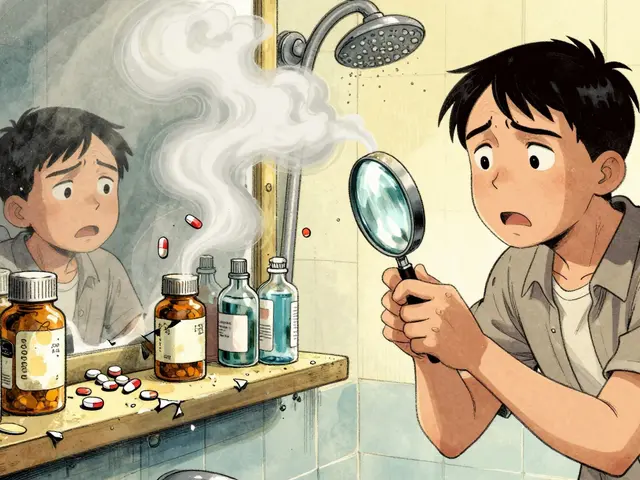
The bathroom cabinet is the worst place for meds. Every time you shower, humidity rises. That moisture gets into pill bottles and breaks down active ingredients. A 2022 Yale study found that humidity in bathrooms can reduce drug potency by 15-25% in just six months.
Same goes for the kitchen near the stove or a sunny windowsill. Heat and light are just as bad.
Where should you keep them? A cool, dry drawer-preferably in the bedroom or kitchen, away from direct sunlight. A locked box is ideal if you have kids or teens. Some people use a small plastic bin with a tight lid, labeled clearly. Keep it out of reach and out of mind-until check-up time.
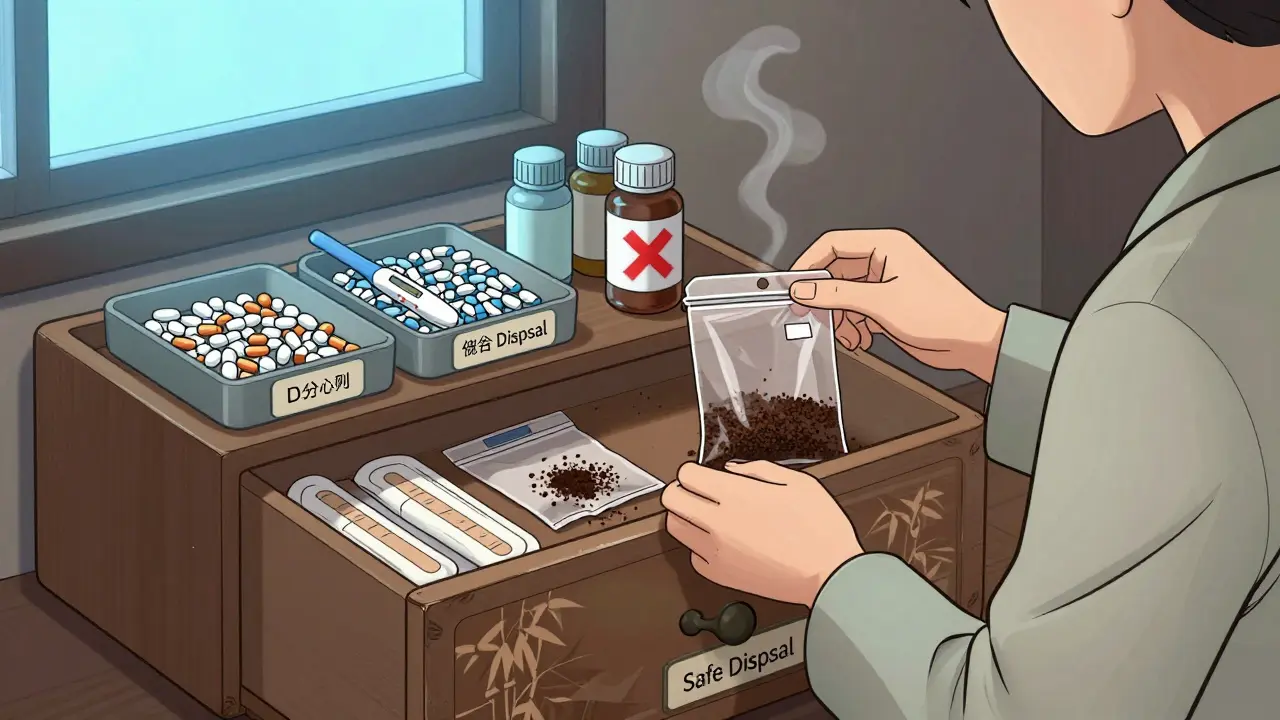
Your Six-Step Medicine Cabinet Check
Here’s how to do a full check in under 20 minutes. Do this twice a year-spring and fall, when the clocks change. Make it part of your smoke detector battery check.
- Empty everything out. Take every pill bottle, tube, spray, and patch off the shelf. Lay them on the table. No skipping the vitamins or cough drops-they expire too.
- Check every expiration date. Write the date on the bottle with a marker if it’s faded. Toss anything past the date. If there’s no date? Toss it. Same with unlabeled containers.
- Inspect for damage. Look for the signs we mentioned: color, smell, texture. If it looks or smells wrong, throw it out-even if it’s "new."
- Sort the keepers. Put back only what’s safe, unopened, and within date. Group similar items: painkillers together, allergy meds together, first aid supplies separate.
- Move to a better spot. No more bathroom. Find that cool, dry drawer. Lock it if needed.
- Restock essentials. Make sure you have: adhesive bandages (at least 20), gauze pads (10), medical tape, digital thermometer, alcohol wipes (10), hydrogen peroxide, petroleum jelly, scissors, and tweezers. These aren’t luxuries-they’re emergency basics.
How to Dispose of Expired Drugs Safely
Don’t flush them. Don’t throw them in the trash loose. Don’t pour them down the sink.
The safest way is a drug take-back program. In the UK, most pharmacies offer free disposal boxes. Just drop off your expired meds-no questions asked. Many local councils also hold annual collection days.
If that’s not available, use this FDA-approved method:
- Remove pills from the bottle. Crush them or mix with water if they’re not capsules.
- Combine with something unappetizing: used coffee grounds, cat litter, or dirt. Use at least two parts filler to one part medicine.
- Put the mix in a sealed plastic bag or container.
- Scratch out your name and prescription info on the empty bottle.
- Throw it in the trash.
For needles or syringes: use a sharps container. If you don’t have one, a sturdy plastic bottle (like a 2-liter soda bottle) with a tight lid works. Tape the lid shut and label it "Sharps-Do Not Recycle." Drop it at your pharmacy or local waste center.
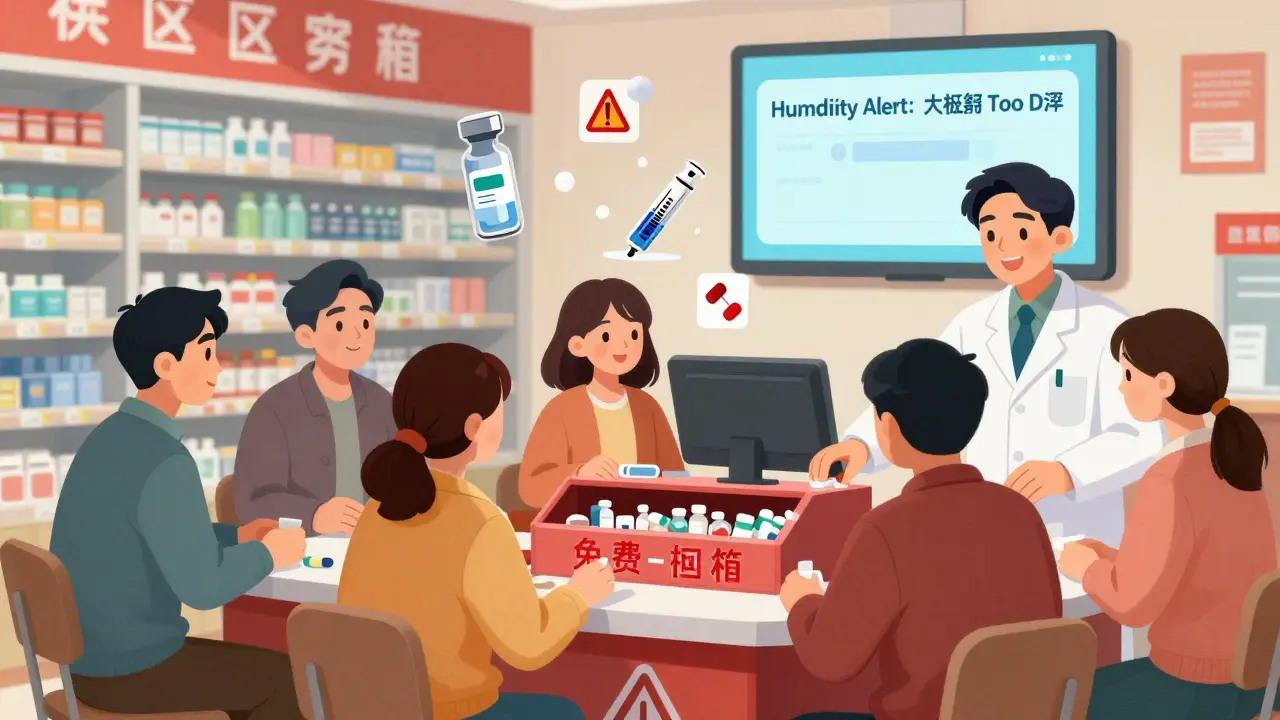
Why This Matters More Than You Think
Cluttered medicine cabinets aren’t just messy-they’re risky.
Older adults are 37% more likely to grab the wrong pill in a messy cabinet, leading to dangerous drug interactions. Children don’t know the difference between candy and medicine. In 2022, UK poison control centers handled over 67,000 cases of children swallowing meds from home cabinets.
And then there’s the opioid crisis. The CDC found that 70% of misused prescription painkillers came from family medicine cabinets. A single leftover oxycodone pill can be deadly to someone who doesn’t need it.
Expired antibiotics are another silent threat. If they’ve lost strength, they don’t kill all the bacteria-just the weak ones. That leaves behind the toughest bugs, which multiply and become resistant. That’s how superbugs form.
What’s New in Medicine Safety
Technology is helping. Some pharmacies now offer free prepaid mail-back envelopes for expired meds-just print, pack, and drop in the mailbox. CVS and Boots have rolled this out across the UK since early 2024.
Smart home gadgets are coming too. Amazon and Google are testing humidity-sensing inserts for medicine cabinets that will alert your phone if conditions get too damp. These will be available in 2025.
And in 2024, the UK government began requiring pharmacies to include disposal instructions with every prescription. That’s a big shift-from "take this" to "dispose of this safely."
Final Thought: Don’t Wait for a Crisis
You don’t need to be a doctor to protect your family. Just do the check. Twice a year. Take five minutes. Toss what’s expired. Store the rest right. Dispose of it properly.
It’s not about being perfect. It’s about being safe. Your next headache, fever, or allergic reaction shouldn’t be made worse by something you kept too long.
Can I still use medicine after the expiration date?
For most pills, the risk is low-but the benefit is gone. They lose potency over time, meaning they might not work. For certain drugs-like insulin, epinephrine, nitroglycerin, antibiotics, or liquid medicines-using them past expiration can be dangerous or even life-threatening. When in doubt, throw it out.
Is it safe to flush expired meds down the toilet?
No. Flushing medicines pollutes water supplies and harms wildlife. The MHRA and NHS strongly advise against it. Only flush if the label specifically says to-and very few do. Use take-back programs or the coffee grounds method instead.
What should I do with empty pill bottles?
Scratch out your name and prescription number with a marker or sandpaper. Then recycle them if your local council accepts plastic medicine bottles. If not, toss them in the trash. Don’t reuse them for storing other items-especially if you have kids.
Do vitamins and supplements expire?
Yes. They don’t turn toxic like antibiotics, but they lose effectiveness. A vitamin C tablet from 2021 might have only 20% of its original potency. If it’s discolored, smells odd, or has changed texture, toss it. Don’t waste your money on ineffective supplements.
How often should I check my medicine cabinet?
Twice a year. Spring and fall, when you change your clocks. That’s when most healthcare providers recommend it. It’s easy to remember and pairs well with checking smoke detectors. If you’ve had a major illness, surgery, or death in the family, check right away-medications left behind can be hazardous.
Paul Mason
I did this last week and found three expired antibiotics from 2020. Tossed 'em all. Seriously, why do people keep old meds like they're vintage wine? 🤦♂️
Vince Nairn
so i just threw out my ibuprofen because the date was 2022 but it still looked fine... am i a monster now?
Ayodeji Williams
bro this is so true i just found my grandma's epinephrine from 2019 and it was like... yellow and sticky 😳 i cried
Elen Pihlap
i checked mine and found like 12 different bottles with no labels. i just threw them all in the trash. who cares if they're expired? they're not gonna hurt anyone now.
Sai Ganesh
In India, many people reuse empty bottles for storing spices or oils. But you're right-better to recycle properly. I always wash them well and label them 'medicinal waste' before recycling. Small step, but it helps.
Jessie Ann Lambrecht
OMG I just did this and found a bottle of liquid Benadryl from 2018 that looked like swamp water. I nearly cried. This post saved my life. Thank you. Now I'm stocking up on gauze and alcohol wipes-no more winging it!
Kyle King
they're lying about expiration dates. the pharma companies just want you to buy more. my grandma took aspirin from 1998 and lived to 102. they're controlling you.
Kamlesh Chauhan
why even bother checking? everyone knows nothing works anymore anyway. i just take whatever i find and hope for the best
Emma Addison Thomas
I've been doing this since my mum passed. It's not just about safety-it's about honoring the memory. I keep one box of her meds as a reminder to check mine regularly.
Mina Murray
i read this and then went to my cabinet and found a bottle of amoxicillin from 2017 that was still sealed. i know the date says expired but honestly? i think they're lying. i took it last week for my sore throat and it worked fine. also i saw a video on tiktok that said the fda lets them extend dates secretly so dont trust the label. also my neighbor says the government puts stuff in the water to make us buy more meds. i think im gonna start hoarding.