
Citrus Fruit Medication Interaction Checker
Check Your Medication Risk
Enter your medication name below to see if it interacts with pomelo, Seville orange, or grapefruit. This tool uses data from the University of Florida Drug Interaction Database.
Enter a medication name to see interaction results.
Most people know grapefruit can mess with their meds. But what about pomelo and Seville orange? If you’re taking a statin, blood pressure pill, or immunosuppressant, these fruits might be just as dangerous - and far more confusing. You won’t find warnings on their packaging. Your pharmacist might not ask. And you could be eating them every week without realizing the risk.
Why These Fruits Are More Dangerous Than You Think
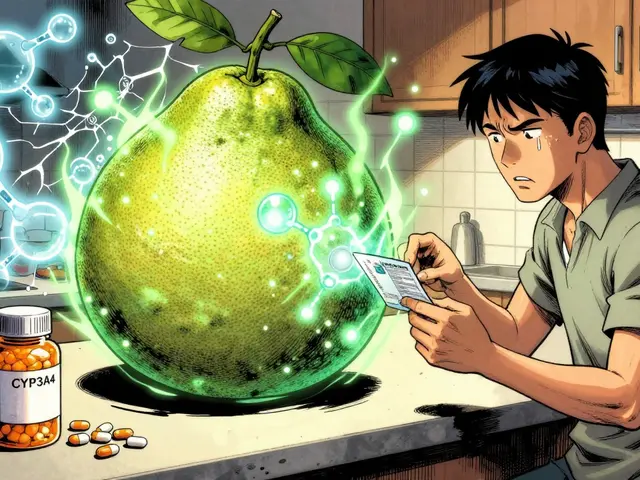
Pomelo and Seville orange aren’t just "other citrus." They’re chemical powerhouses. Both contain high levels of furanocoumarins, especially bergamottin and 6',7'-dihydroxybergamottin. These compounds shut down a key liver and gut enzyme called CYP3A4. That enzyme normally breaks down drugs before they enter your bloodstream. When it’s blocked, the drug builds up - sometimes dangerously so.
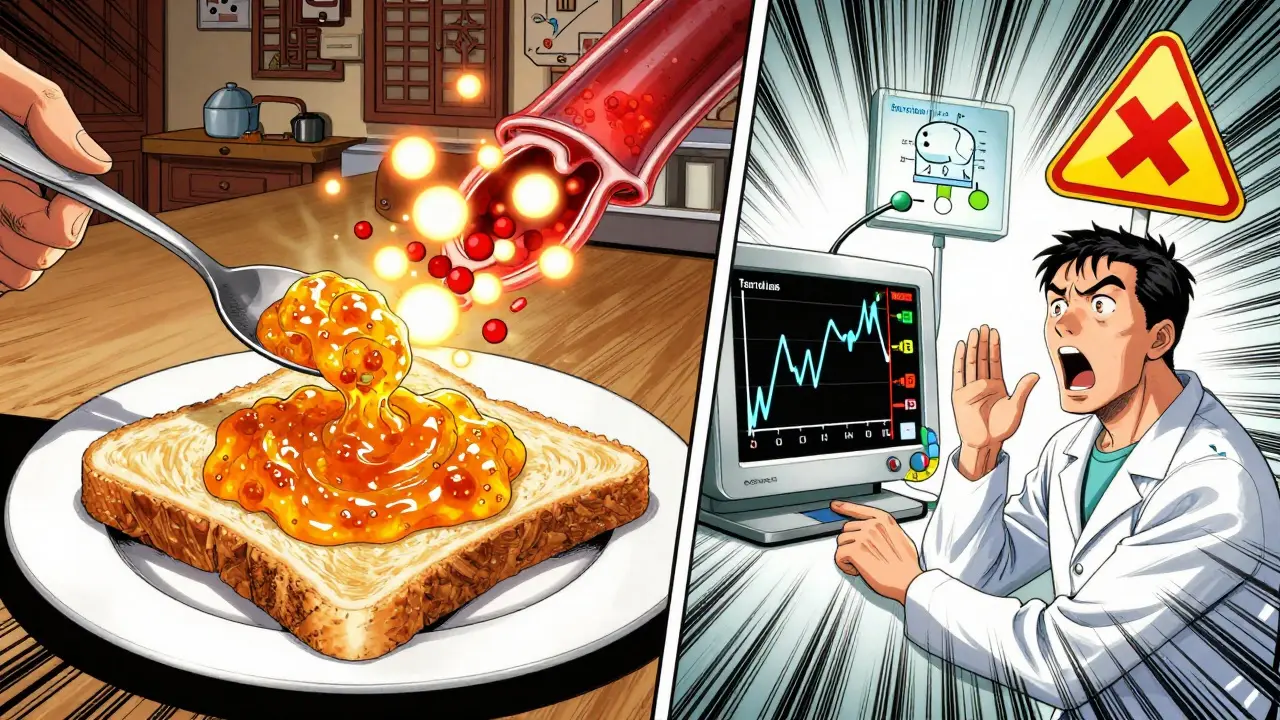
Studies show pomelo has up to 2.5 micromoles per liter of these compounds - higher than grapefruit’s 1.0-2.0. Seville orange? Even worse. Some varieties hit 3.0-4.0 micromoles. That’s 30% more than grapefruit. And it’s not just juice. Marmalade made from Seville orange peel concentrates these chemicals even further. One case report found a transplant patient’s tacrolimus levels spiked 400% after eating just a tablespoon of this marmalade daily.
What Happens When You Mix Them With Medications
These fruits don’t just make drugs stronger - they can turn them toxic. Here’s what’s at risk:
- Statins (like simvastatin, atorvastatin): Too much in your blood = muscle damage, rhabdomyolysis, kidney failure. One 2018 study found pomelo raised simvastatin levels by 350% - more than grapefruit.
- Calcium channel blockers (like amlodipine, diltiazem): Can cause dangerously low blood pressure, dizziness, fainting.
- Immunosuppressants (tacrolimus, cyclosporine): Transplant patients risk organ rejection or severe toxicity. A 2011 case linked Seville orange marmalade to life-threatening tacrolimus overdose.
- Benzodiazepines (like midazolam): Increased sedation, slowed breathing.
- Some antidepressants and anti-anxiety meds: Risk of serotonin syndrome or extreme drowsiness.
And here’s the scary part: one glass of juice is enough. Effects start within hours and last up to 72 hours because the enzyme inhibition is permanent. Your body has to grow new enzymes to recover. That means even if you eat pomelo one day and take your pill the next, you’re still at risk.
Why Nobody Warns You
Unlike grapefruit, which has warning labels on juice bottles and pharmacy flyers, pomelo and Seville orange fly under the radar. Only 37% of products containing these fruits carry any interaction warning - compared to 78% for grapefruit. Why? Because they’re not as common in the U.S. and U.K. Yet.
But that’s changing. Pomelo consumption has jumped 50% since 2015. It’s now sold in Asian grocery stores, farmers markets, and even mainstream supermarkets. Seville orange marmalade is a traditional British staple. Yet, 68% of patients surveyed on Drugs.com said their doctor or pharmacist never mentioned these fruits as a risk.
Pharmacists are catching on - slowly. A 2023 survey found only 42% routinely ask patients about pomelo or Seville orange. Most still only screen for grapefruit. And electronic pharmacy systems? Only 29% of major chains include these fruits in their drug interaction alerts.
Real Stories, Real Risks
Reddit threads from r/pharmacy tell the truth:
- A patient on simvastatin developed rhabdomyolysis after eating pomelo daily for two weeks. No one warned him.
- A kidney transplant patient was hospitalized after eating Seville orange marmalade for breakfast every morning. His tacrolimus levels were off the charts.
- A woman on a blood thinner had a stroke after drinking pomelo juice with her medication. Her doctor blamed "unexplained factors."
These aren’t rare. The FDA received 217 adverse event reports tied to pomelo between 2018 and 2022 - a 43% increase from the prior five years. And experts believe less than a third of these cases are ever reported.
What You Should Do Now
If you take any of these medications, here’s your action plan:
- Check your meds. Look up your drug on the University of Florida’s Drug Interaction Database. As of 2023, they list 107 medications with confirmed interactions.
- Ask your pharmacist. Say: "Does this interact with pomelo or Seville orange?" Don’t assume grapefruit warnings cover everything.
- Read labels. If you buy marmalade, check the ingredients. "Seville orange" or "bitter orange" means danger. Pomelo might be labeled "Chinese grapefruit," "pummelo," or "shaddock."
- Avoid all of them. If you’re on a high-risk drug, skip pomelo, Seville orange, and grapefruit entirely. Sweet oranges, tangerines, and clementines are safe - they don’t contain the same furanocoumarins.
- Wait 72 hours. If you accidentally eat one, don’t take your pill for at least three days. Your enzymes need time to reset.
What’s Changing in 2025
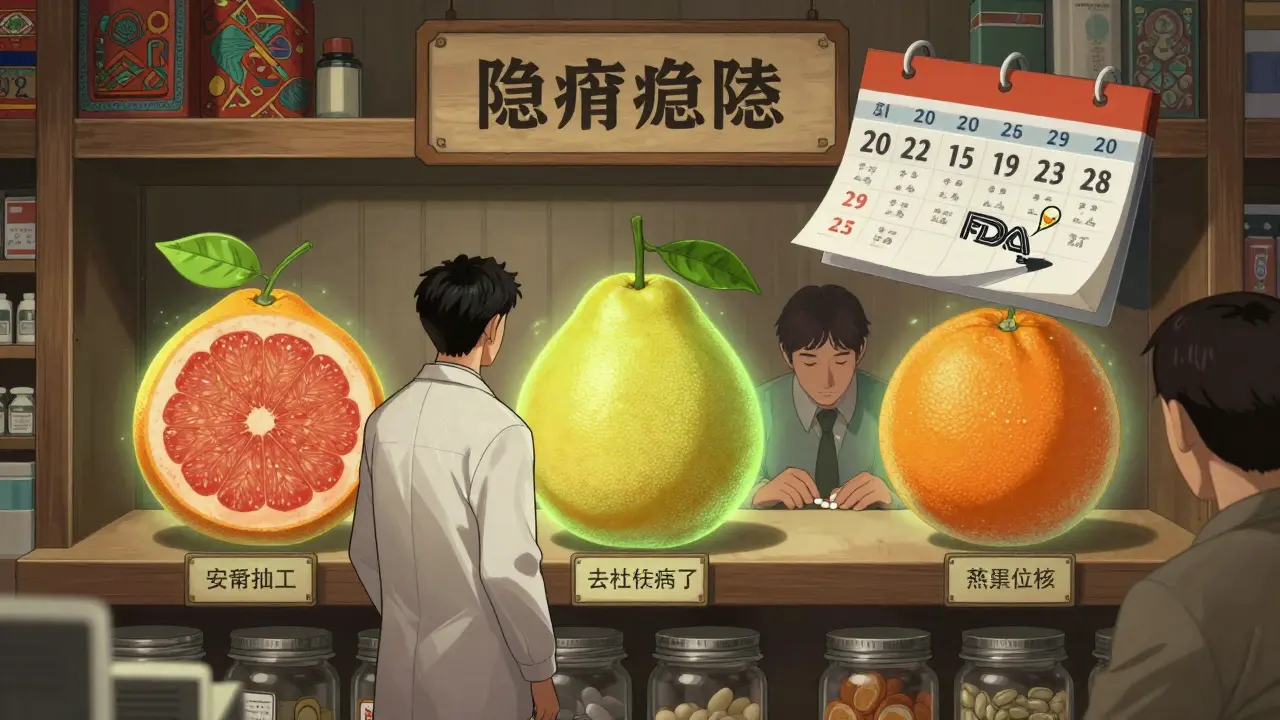
The FDA is finally catching up. In early 2023, they proposed expanding warning labels to include all furanocoumarin-rich citrus fruits - not just grapefruit. Implementation is expected by Q2 2025. The European Union has already adopted mandatory labeling in 17 countries.
Research is accelerating too. A $2.1 million NIH study launched in late 2023 is focused entirely on pomelo-drug interactions. And by 2027, experts predict 65% more healthcare providers will screen for these risks thanks to better EHR alerts.
The Bottom Line
Pomelo and Seville orange aren’t "healthy alternatives" to grapefruit - they’re its more potent cousins. If you’re on medication, they’re not optional risks. They’re silent dangers. You don’t need to give up citrus entirely. Just know which ones are safe - and which ones could put you in the hospital.
When in doubt, skip it. Your liver will thank you.
Can I eat sweet oranges if I take medication?
Yes. Sweet oranges (like navel or Valencia), tangerines, and clementines do not contain furanocoumarins and are safe to consume with most medications. They’re a great substitute if you need to avoid grapefruit, pomelo, or Seville orange.
How long does the interaction last after eating pomelo?
The enzyme inhibition lasts up to 72 hours. Even if you eat pomelo one day and take your medication the next, you’re still at risk. The compounds permanently disable CYP3A4 enzymes, and your body needs three full days to produce new ones.
Is Seville orange marmalade more dangerous than the juice?
Yes. The peel of Seville oranges contains the highest concentration of furanocoumarins. Marmalade often includes both pulp and peel, making it far more potent than juice. Just one tablespoon daily has been linked to life-threatening drug toxicity in transplant patients.
Do all citrus fruits cause drug interactions?
No. Only citrus fruits high in furanocoumarins - grapefruit, pomelo, Seville orange, and occasionally bitter orange. Sweet oranges, lemons, and limes have negligible levels and are generally safe. Always check the specific fruit, not just "citrus."
What should I do if I accidentally ate pomelo while on medication?
Stop taking your medication for at least 72 hours. Contact your pharmacist or doctor immediately. Do not wait for symptoms. Some interactions - like statin toxicity or immunosuppressant overdose - can cause serious harm before you feel anything. Keep a list of your meds handy when you call.
Write a comment