
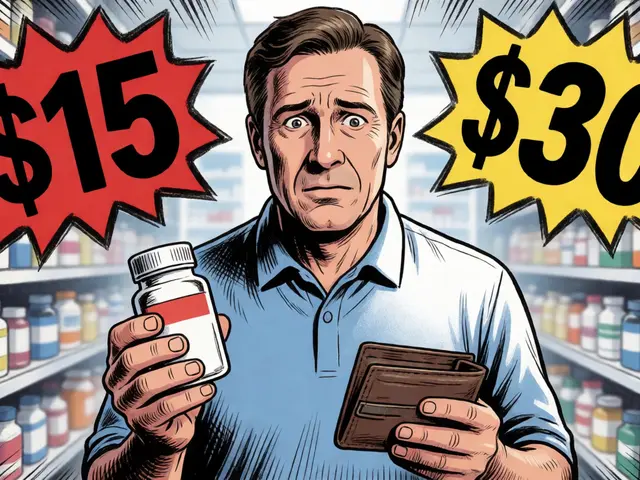
You might assume that because a pill is generic, it’s automatically cheap. But if you’re paying $15 for a bottle of lisinopril or struggling with the cumulative cost of five different generics every month, you know that assumption doesn’t always hold up. While brand-name drugs often come with manufacturer-sponsored copay cards, generic medications operate in a different financial landscape where direct manufacturer help is rare. Instead, finding financial relief requires knowing exactly where to look-shifting from pharmaceutical companies to government programs, non-profits, and pharmacy discount networks.
Why Generic Drugs Rarely Have Manufacturer Copay Cards
Here is the frustrating reality: most generic drug manufacturers simply do not have the profit margins to offer the kind of copay assistance you see with brand-name drugs. When a patent expires, multiple companies rush to produce the same active ingredient, driving prices down by an average of 80-85%. This competition keeps the base price low but eliminates the budget for marketing subsidies like copay cards. Consequently, patients taking exclusively generic medications often find themselves in a "assistance gap." They earn too much to qualify for full Medicaid coverage but lack access to the robust patient assistance programs available for expensive specialty drugs.
This creates a hidden burden, particularly for low-wage workers. According to recent data, about 26% of U.S. adults report difficulty affording prescriptions. If you are one of them, relying on a standard insurance plan might still leave you exposed. Unlike brand-name users who can stack manufacturer coupons with insurance, generic users must rely on structural pricing advantages and alternative assistance channels. Understanding this distinction is the first step toward lowering your out-of-pocket costs.
Leveraging Government Programs: The Power of Extra Help
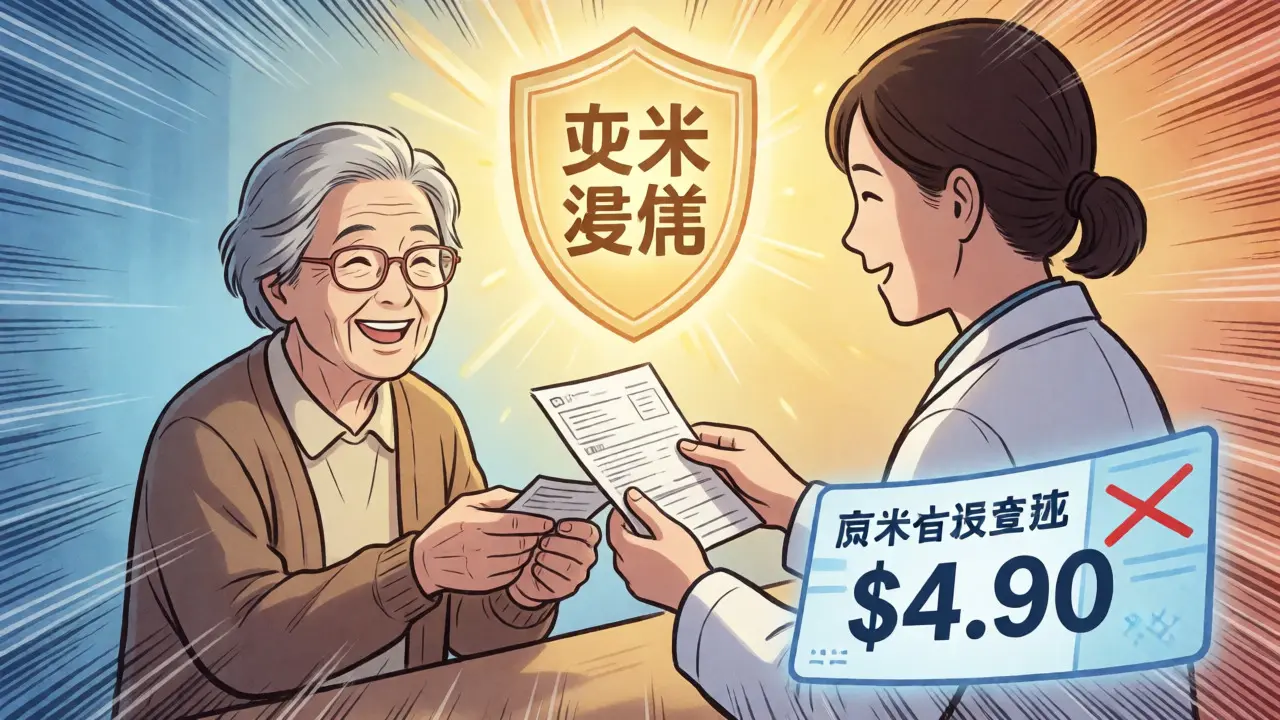
If you are over 65 or have certain disabilities, the most significant financial lever you can pull is the Low-Income Subsidy (LIS), commonly known as Extra Help. This federal program is designed specifically to reduce prescription drug costs for those with limited resources. For eligible beneficiaries, the savings are immediate and substantial. In 2024, the standard copay for a generic drug under Extra Help was capped at just $4.90 per fill. Compare that to the $30-$60 you might pay for a brand-name drug on Tier 2 of a standard commercial plan, and the difference is stark.
Eligibility isn't just for those with zero income. The program uses specific thresholds based on your annual income and resources. If you receive Supplemental Security Income (SSI), Medicaid, or participate in a Medicare Savings Program, you likely qualify automatically. However, many people fall into the "near-poor" category-earning just above the Medicaid threshold-and miss out. Applying for Extra Help can drastically change your monthly budget. Furthermore, starting January 1, 2025, the Inflation Reduction Act will implement a hard $2,000 annual out-of-pocket cap for Medicare Part D. This means once you hit that limit, your generics become free for the rest of the year, a massive safety net for those managing chronic conditions.
Pharmacy Discount Programs: The No-Application Solution
For those without government assistance, pharmacy discount programs offer a quick, no-hassle way to cut costs. These aren't insurance; they are membership-based discounts negotiated by third-party organizations. You don't need to apply or prove income. You simply sign up online, print a coupon or show a digital code, and present it at the register.
Programs like SingleCare, GoodRx, and RxSaver compete aggressively on price. A single prescription for a common generic might cost $12 with your insurance but only $4 with a discount card. It sounds counterintuitive-paying cash when you have insurance-but sometimes the discounted cash price is lower than your copay. Always ask your pharmacist to check both options before handing over your money. Major retailers also have their own initiatives. Walmart, for example, has long offered a list of approximately 150 common generics for $4 (30-day supply) or $10 (90-day supply). Kroger and other chains have similar programs. These lists cover basic maintenance meds like metformin, atorvastatin, and levothyroxine.
| Assistance Type | Best For | Average Generic Cost | Application Required? |
|---|---|---|---|
| Manufacturer Copay Card | Brand-name users | $0 - $10 | No (but rarely exists for generics) |
| Medicare Extra Help | Seniors/Low-income | $4.90 | Yes (Income test) |
| Pharmacy Discount Cards | All insured/uninsured | $4 - $15 | No |
| Non-Profit Grants | Specific diseases | Varies | Yes (Strict criteria) |
Navigating Non-Profit and Foundation Assistance
When pharmacy discounts aren't enough, non-profit foundations can bridge the gap. Organizations like the PAN Foundation, HealthWell Foundation, and NeedyMeds provide grants to help cover copays and premiums. However, these programs are highly specific. They usually target particular diseases-such as diabetes, heart disease, or autoimmune disorders-rather than offering blanket support for all generics.
Before applying, check the foundation's disease-specific criteria. As of mid-2024, only about 17 of PAN Foundation’s 72 active programs covered conditions typically treated with generic drugs. The application process can take three weeks or more, so plan ahead. Approval rates vary significantly based on your income relative to the Federal Poverty Level (FPL). Applicants below 250% of the FPL ($37,150 for individuals) have a high success rate (around 78%), while those between 250-400% of the FPL face a steep drop-off, with only a 12% approval rate. This "assistance cliff" is a major pain point for many middle-income families.
Strategic Tips to Maximize Your Savings
Don't just accept the first price quote. Pharmacists are trained to help you save money, but they can't read your mind. Here are four concrete strategies to lower your bill:
- Ask for the "Cash Price": Always request the cash price using a discount card alongside your insurance copay. Choose whichever is lower. Remember, you cannot combine a discount card with insurance, but you can choose one over the other.
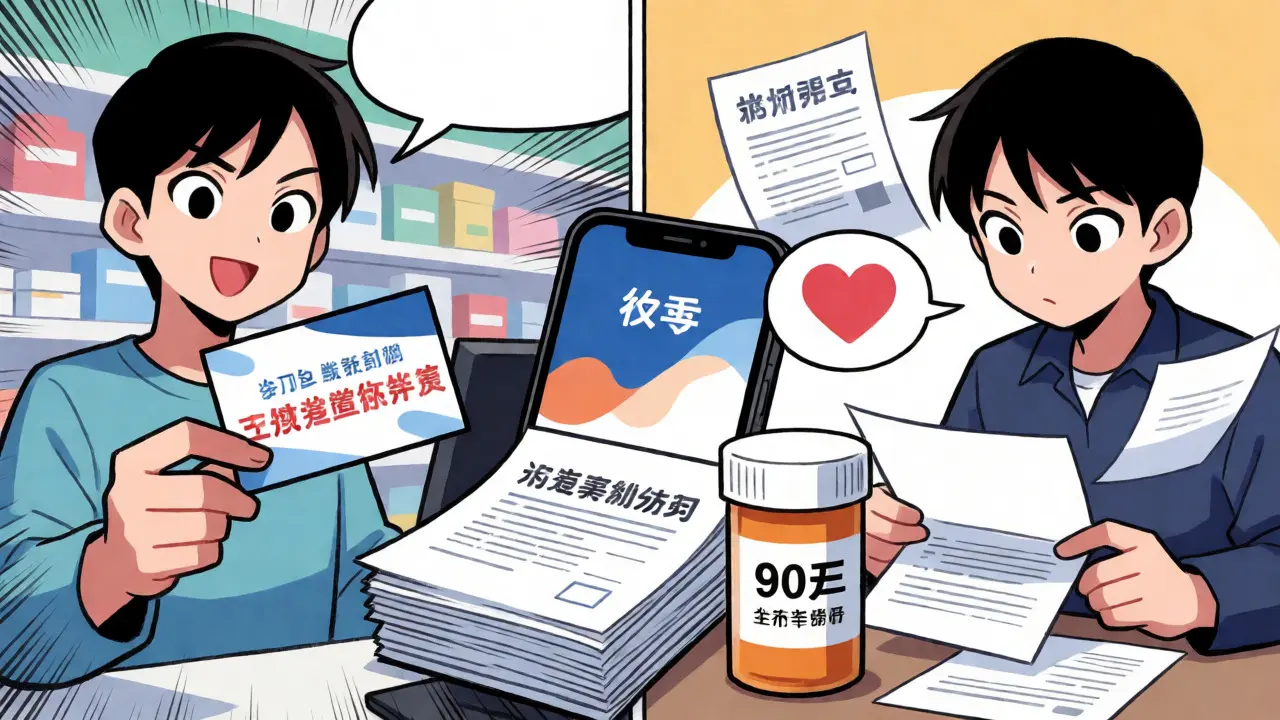
- Switch to 90-Day Supplies: Many plans offer a better rate for a 90-day supply versus three separate 30-day fills. This reduces your copay frequency and often lowers the total cost per day.
- Check for Therapeutic Interchange: Ask your doctor if there is a cheaper generic equivalent within the same drug class. Sometimes switching from one generic statin to another can save $10-$20 a month with no clinical difference.
- Stack Multiple Sources: Successful applicants often use an average of 2.3 different assistance sources. Combine a pharmacy discount card with a local state health assistance program or a hospital charity fund.
Be aware of the pitfalls. One common mistake is assuming generics don't need assistance. A 2023 study found that 38% of patients skipped doses or abandoned prescriptions entirely because they thought the cost was negligible until they saw the final bill. Another trap is paperwork errors. State Health Insurance Assistance Program (SHIP) counselors report that 41% of initial applications for aid are denied due to incomplete documentation. Double-check your tax returns and bank statements before submitting anything.
The Future of Generic Costs in 2026
The landscape is shifting rapidly. With the full implementation of the Inflation Reduction Act provisions in 2025 and beyond, we are seeing a systemic transformation. The new $2,000 out-of-pocket cap for Medicare Part D beneficiaries is already providing relief, ensuring that even heavy users of generics won't face catastrophic bills. Additionally, CMS guidance now requires Part D plans to ensure no beneficiary pays more than $100 quarterly for generics during the coverage gap phase.
For the near future, expect more pressure on PBMs (Pharmacy Benefit Managers) to pass savings back to consumers. The trend of "therapeutic interchange," where pharmacists automatically substitute generics unless medically inappropriate, has increased generic usage by 14 percentage points since 2020. While this drives down overall spending, it hasn't proportionally increased access to formal assistance. Stay proactive. Check your eligibility for Extra Help annually, keep your discount cards updated, and never hesitate to ask your pharmacist, "Is there a cheaper option?"
Do generic drug manufacturers offer copay cards?
Generally, no. Because generic manufacturers operate on thin profit margins due to market competition, they rarely offer direct copay assistance programs like brand-name manufacturers do. Patients typically rely on pharmacy discount cards, government subsidies, or non-profit grants instead.
Can I use a pharmacy discount card if I have insurance?
You can use a discount card, but you generally cannot combine it with your insurance copay. You must choose one method of payment. Often, the discounted cash price through a card like SingleCare or GoodRx is lower than the insurance copay, so it is worth asking your pharmacist to compare both prices.
What is the Medicare Extra Help program?
Medicare Extra Help (Low-Income Subsidy) is a federal program that helps people with limited income and resources pay for Medicare prescription drug costs. It significantly lowers copays for generics (to around $4.90 per fill in 2024) and may waive deductibles and monthly premiums for Part D plans.
Why are my generic drugs costing me more than expected?
Several factors can drive up costs: being in the "coverage gap" (donut hole) of a Medicare plan, having a high-deductible commercial plan, or lacking access to tiered formulary benefits. Additionally, some pharmacies charge higher dispensing fees. Always check if a 90-day supply offers better value or if a different pharmacy offers a lower cash price via a discount card.
How does the $2,000 out-of-pocket cap affect generics?
Starting in 2025, the Inflation Reduction Act caps annual out-of-pocket costs for Medicare Part D beneficiaries at $2,000. Once you reach this limit, your generic medications are covered at 100% by the plan for the remainder of the year, providing significant protection against high cumulative costs.
Jeremy Westcott
They love to tell you generics are cheap but conveniently forget to mention that the PBMs are skimming off the top so your "cheap" generic still costs a fortune at the register. It is all smoke and mirrors designed to keep us paying while the middlemen get fat.
Amy B
This is such a crucial distinction! I always assumed if it wasn't brand name, I was getting a deal. But realizing that manufacturer cards don't exist for generics changes everything. I'm going to start checking GoodRx before every refill now because $4 vs $15 is huge when you have five meds.
Amanda SF
The article fails to address the fundamental inequity of the system. While the author rightly points out the lack of manufacturer support, they gloss over the predatory nature of insurance formularies. A patient earning slightly above the Medicaid threshold is essentially punished by the system. This is not just an "assistance gap," it is a structural failure of healthcare economics. The reliance on non-profits with strict criteria like PAN Foundation creates a lottery rather than a safety net. Truly unacceptable.
Neil Martin
It is frankly pathetic how many people ignore therapeutic interchange. You could be saving twenty bucks a month by switching statins and nobody tells you because they want their dispensing fee. If you aren't asking your pharmacist about formulary tiers, you are voluntarily burning money. The PBM spread pricing model is broken, and until we fix the rebate structure, these "tips" are just band-aids on a gunshot wound.
Louis Tarro
I really appreciate this breakdown. It’s heartbreaking to hear that even generics can be a burden. My heart goes out to everyone struggling with that cumulative cost. I hope more people find the help they need through these programs. Stay strong, everyone.
Shu Chowdhury
good info
i use singlecare mostly
saves me a few bucks
worth the extra step
Rob Alderman
One must consider the broader implications of relying on discount cards. They are merely stopgaps in a fundamentally flawed market structure where price transparency is nonexistent. Until we address the root causes of pharmaceutical inflation, these minor savings are trivial.
Jenn Bell
Great tips! I didn't know about the 90-day supply trick. That sounds super easy to do. Thanks for sharing!
Falgun R Patel
The shift towards generic usage is inevitable as populations age. However, the financial architecture hasn't caught up. We need systemic change, not just individual coping mechanisms. But yes, knowing where to look is the first step toward empowerment.
Kim Pender
Most people are too lazy to check prices.
If you aren't calling around,
you're getting ripped off.
Simple as that.
Pramay Dattani
In India we pay pennies for same drugs!! USA system is corrupt mess. Why you guys tolerate this? Govt should cap prices hard. Your "extra help" program is joke compared to our Ayushman Bharat scheme. Fix your economy first then talk about copays.
Neil Sahli
Don't let the system beat you down! Every dollar saved is a victory. Keep fighting the good fight, ask those questions, and remember: you deserve affordable care. Let's make those pharmacies work for US!