
Every day, millions of Americans take generic drugs. They’re cheaper, widely available, and just as effective as brand-name medicines-when they’re safe. But how do we know they stay safe after they hit the shelves? The FDA doesn’t just approve generics and walk away. It has a full-time system watching them, day and night, long after the approval stamp is applied.
Why Monitoring Doesn’t Stop at Approval
Generic drugs go through rigorous testing before they’re approved. They must prove they’re bioequivalent to the brand-name version-meaning they deliver the same amount of active ingredient into the bloodstream at the same rate. These studies usually involve just 24 to 36 healthy volunteers. That’s not enough to catch every possible side effect.Real-world use is different. Thousands, even millions, of people take the drug over months and years. Some have other health conditions. Others take multiple medications. Some are older, sicker, or more sensitive. That’s when rare reactions, hidden interactions, or manufacturing flaws can show up.
The FDA admits it: “It is impossible to have complete information about the safety of a drug at the time of approval.” The true safety picture only becomes clear after the drug is used by real patients in real life.
The Tools the FDA Uses to Watch Generics
The FDA doesn’t rely on guesswork. It uses a network of systems, teams, and data sources to track generic drug safety. Here’s how it works.
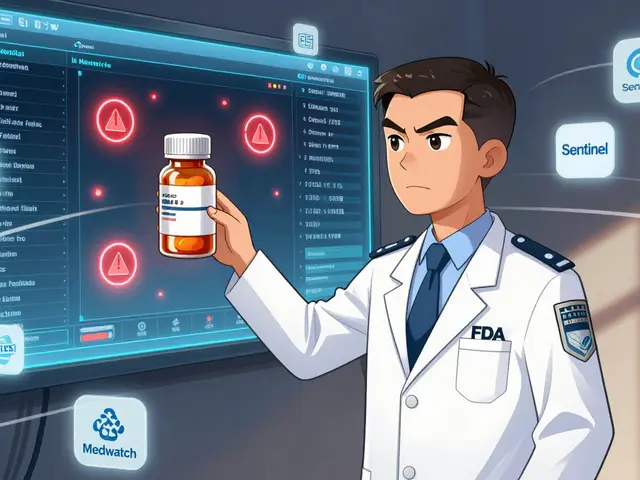
- FAERS (FDA Adverse Event Reporting System): This is the main database where doctors, pharmacists, patients, and drug companies report side effects. In 2022, FAERS collected over 2 million reports. The FDA’s Office of Surveillance and Epidemiology analyzes these reports daily, looking for patterns. If a specific generic drug suddenly shows a spike in liver injuries or dizziness, the system flags it.
- MedWatch: This is the public-facing portal where anyone can report a bad reaction. In 2022, over 1.4 million reports came in through MedWatch. The FDA doesn’t wait for reports to pile up-it actively mines this data, especially for newer generics or those with known risks.
- The Sentinel Initiative: Launched in 2008 and expanded under the 21st Century Cures Act, Sentinel uses real-time data from over 100 million patient records across hospitals, clinics, and insurers. It can detect safety signals within weeks, not years. For example, if a new generic version of a blood thinner starts showing up in emergency room records for unusual bleeding, Sentinel spots it before FAERS even catches up.
- OGD Clinical Safety and Surveillance Committee: This is a team of FDA scientists, pharmacists, and doctors who meet regularly to review safety signals specifically for generic drugs. They look at everything: lab results, manufacturing changes, impurity levels, and patient reports.
- cGMP Inspections: The FDA inspects about 1,200 U.S. and 600 foreign generic drug factories every year. These aren’t scheduled visits-they’re random, unannounced checks. Inspectors look at how raw materials are stored, how batches are mixed, how quality control is done. A tiny change in a manufacturing process can affect how the drug behaves in the body.
What Makes Generic Safety Different?
Generics aren’t copies. They’re equivalents. And that distinction matters.
Brand-name drugs go through years of clinical trials with thousands of patients. Generics don’t. They rely on bioequivalence studies with healthy volunteers. So while the active ingredient is identical, the fillers, dyes, or coatings might be different. These inactive ingredients are usually harmless-but not always.
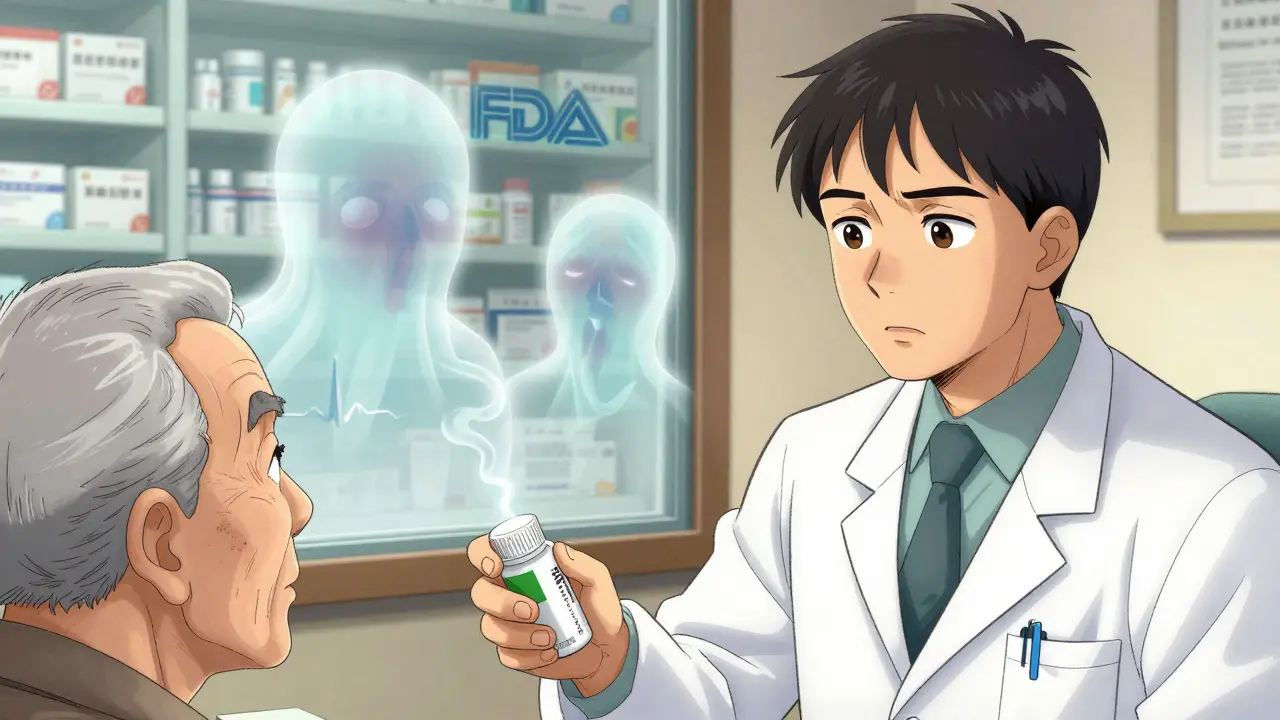
For example, a generic version of a seizure medication might use a different binder. In rare cases, that binder could slow down absorption just enough to cause breakthrough seizures in sensitive patients. These aren’t manufacturing errors. They’re “allowable differences” under FDA rules. But they can still cause problems.
The FDA monitors this closely. If a generic drug has impurities above safety thresholds, the Office of Pharmaceutical Quality steps in. They review toxicity data, published studies, and even computer models to decide if the impurity is dangerous. If it is, the drug gets pulled or relabeled.
How the FDA Responds to Problems
When a safety issue is confirmed, the FDA doesn’t sit still. It has a clear escalation path:
- Label Updates: The most common response. The drug’s package insert gets changed to warn doctors and patients about a new risk. A “Dear Healthcare Provider” letter might go out to clinics and hospitals.
- Product Recalls: If the issue is serious but not widespread, the FDA can ask the manufacturer to voluntarily recall the affected batch.
- Manufacturing Shutdowns: If inspections find repeated violations-like dirty equipment, falsified data, or unsafe storage-the FDA can halt production. Several generic drugmakers have been shut down in the last five years for these reasons.
- Market Withdrawal: This is rare, but it happens. In 2020, a generic version of a high-blood-pressure drug was pulled after multiple reports of dangerously low potassium levels linked to a specific manufacturing batch.
The Numbers Don’t Lie
Generic drugs make up 90% of all prescriptions filled in the U.S. But they cost only about 23% of total drug spending. That’s why safety monitoring isn’t optional-it’s essential. One safety failure in a widely used generic can affect millions.
The FDA approves about 1,000 new generic drugs every year. To keep up, the agency relies on the Generic Drug User Fee Amendments (GDUFA). Since 2012, drugmakers pay over $65 million annually in fees to fund inspections, data analysis, and staff. GDUFA III, which started in 2023, added new requirements for monitoring complex generics like inhalers, nasal sprays, and long-acting injectables.
Still, there are gaps. Experts estimate that only 1% to 10% of adverse events are ever reported. Many patients don’t know they can report side effects. Some doctors assume it’s not their job. That means the FDA is working with incomplete data.
What’s Next for Generic Drug Safety?
The FDA is pushing harder into real-world evidence. By 2025, the Sentinel Initiative aims to include data from 100 million patients-nearly a third of the U.S. population. That means faster detection of rare reactions, better understanding of how generics work in older adults or people with kidney disease, and more accurate warnings.
Also, the agency is improving how it tracks generic switches. If a patient is stable on one generic version and then switches to another, does their condition change? The FDA is starting to study this systematically, especially for drugs with narrow therapeutic windows-like warfarin, levothyroxine, or epilepsy meds.
And while the U.S. system is more fragmented than Europe’s centralized monitoring, it’s getting smarter. The combination of active surveillance, manufacturer accountability, and public reporting is working. Generic drugs are safer now than ever before.
What You Can Do
You don’t have to wait for the FDA to find a problem. If you notice a new side effect after switching to a generic-especially if it’s different from what you experienced with the brand-name version-report it. Go to MedWatch. Fill out the form. It takes five minutes. That report could help prevent someone else from having the same reaction.
Keep your medication list updated. Tell your doctor if you’ve switched generics and feel different. Don’t assume all generics are the same. If you’re on a critical drug-like thyroid medication, blood thinners, or seizure control-ask your pharmacist if the generic you’re getting is from the same manufacturer as last time.
The system isn’t perfect. But it’s active. It’s transparent. And it’s watching.
Are generic drugs less safe than brand-name drugs?
No. Generic drugs must meet the same strict standards for quality, strength, purity, and performance as brand-name drugs. The FDA requires them to be bioequivalent. The difference isn’t safety-it’s the scale of initial testing. Brand-name drugs are tested on thousands before approval; generics are tested on dozens. But post-approval monitoring catches any issues that arise after wider use.
Can different generic versions of the same drug have different side effects?
Yes, sometimes. While the active ingredient is identical, the inactive ingredients (fillers, dyes, coatings) can vary between manufacturers. In rare cases, these differences can affect how quickly the drug is absorbed or how your body reacts. This is more common with drugs that have a narrow therapeutic index, like warfarin or levothyroxine. If you switch generics and feel different, talk to your doctor.
How does the FDA know if a generic drug is causing problems?
The FDA uses multiple systems: FAERS for patient and doctor reports, MedWatch for public submissions, and Sentinel for real-time data from electronic health records. Teams of scientists analyze patterns in these reports. If a specific generic drug shows an unusual spike in kidney injury or heart rhythm issues, the FDA investigates. They also inspect manufacturing sites to rule out quality issues.
What happens if a generic drug is found to be unsafe?
The FDA can require changes to the drug’s label to warn of new risks, request a voluntary recall of affected batches, shut down the manufacturing facility, or, in extreme cases, remove the drug from the market. Most actions are taken quickly once a safety signal is confirmed.
Should I avoid generic drugs because of safety concerns?
No. Over 90% of prescriptions in the U.S. are filled with generics-and they’ve saved the healthcare system hundreds of billions of dollars. The FDA’s post-approval monitoring system is one of the most comprehensive in the world. While no system is perfect, the risks from using a generic drug are far lower than the risks of not taking a needed medication because you’re afraid of generics.
What to Watch For
If you’re on a generic drug, pay attention to how you feel after switching brands. Did your energy drop? Did you get a new rash? Did your blood pressure become harder to control? These could be signs of a formulation difference.
Keep your pharmacy’s name and the drug’s manufacturer on your records. If you notice a change in how the pill looks-color, shape, markings-ask your pharmacist. It might be a different generic version.
And if something feels off? Report it. Your report could be the one that triggers a safety review.
Dan Mack
The FDA is just another government puppet. They let Chinese labs pump out pills with rat poison fillers and call it 'bioequivalent'. You think they care about you? They get paid by the pharma giants. I switched generics and my heart started skipping beats. They buried the report. I know.
Niki Van den Bossche
Ah, the grand illusion of pharmaceutical equity. A molecule is a molecule, yes-but the soul of the medicine? The vibration of its excipients? The unseen metaphysical resonance between patient and pill? We mistake chemistry for communion. The FDA doesn't monitor safety-they monitor compliance with a capitalist script written in ink made from corporate blood.
Jan Hess
This is actually really cool to see how much work goes into this. People think generics are just cheap knockoffs but nope-there’s a whole army of scientists and inspectors behind the scenes. I used to be skeptical but after my dad’s blood pressure stabilized on a generic, I’m all in. Keep pushing the system, FDA. We need more transparency like this.
Iona Jane
They’re lying. Every single one of those systems is a theater. FAERS? Full of garbage reports. Sentinel? Only tracks people with insurance. And the inspections? They get 48 hours notice if you know where to look. My cousin died on a generic blood thinner. They called it ‘unrelated’. I’ve seen the emails. They knew.
Jaspreet Kaur Chana
In India, we see this every day. Generic drugs are life. My grandmother takes her epilepsy meds from a factory in Hyderabad-same pill, same result, 90% cheaper. But yes, sometimes the color changes and she gets dizzy. We don’t panic-we just ask the pharmacist. The FDA system sounds fancy but in places like ours, it’s the pharmacist who’s the real watchdog. Trust the person who hands you the pill, not just the paperwork.
Haley Graves
If you’re on a critical drug and you feel different after switching, don’t ignore it. Talk to your doctor. Write it down. Report it. You think it’s just you? It’s not. Your report could save someone’s life. Don’t be quiet. Your voice matters more than you know.
Diane Hendriks
The FDA’s system is the only one in the world that even attempts to monitor post-market safety at this scale. Comparing it to Europe’s centralized system is naive-they have less data, less diversity, and slower response times. This isn’t perfect, but it’s the best we have. And yes, the U.S. system works because it’s messy, loud, and demands accountability from every corner. Don’t tear it down because it’s inconvenient.
ellen adamina
I switched to a generic levothyroxine last year and my TSH went nuts. Took me months to figure out it was the brand change. I didn’t know I could report it. I just thought I was going crazy. This article made me realize-I’m not alone. I filed a MedWatch report yesterday. Felt good.
Gloria Montero Puertas
Let’s be honest: the FDA is a joke. They approve generics based on 24 healthy college kids. Then they pretend that’s enough. And now they’re patting themselves on the back for collecting 2 million reports? That’s like saying a leaky roof is fine because you’ve collected 2 million puddles. The system is broken. And you’re all just drinking the corporate Kool-Aid.
Sohan Jindal
China makes 80% of our generic pills. They don’t care if you live or die. They care about profit. The FDA doesn’t inspect those factories properly. They send some guy who speaks broken English and gets a free hotel stay. Then they say it’s safe. I won’t touch a generic until it’s made in America. End of story.
Frank Geurts
It is of paramount importance to underscore the structural integrity of the FDA’s pharmacovigilance architecture. The integration of FAERS, Sentinel, and GDUFA-funded oversight constitutes a paradigmatic advancement in public health surveillance. The granularity of data collection, coupled with real-time analytics, represents a monumental leap beyond historical paradigms of post-marketing surveillance. One must acknowledge the systemic sophistication inherent in this model.
Arjun Seth
You think the FDA is watching? They’re asleep. I saw a batch of generic metformin that looked like chalk. My uncle had diarrhea for three weeks. I called the pharmacy. They said ‘it’s the same chemical’. Same chemical? Then why did his butt explode? These companies cut corners. The FDA lets them. They don’t care.
Mike Berrange
I read this whole thing. Boring. I just want to know if my pill is going to kill me. You gave me 12 systems and zero answers. If I switch generics and feel weird, what do I do? Who do I call? How long until someone does something? Just tell me that.
Ayush Pareek
Hey, if you’re on a critical med and you switch generics, keep track of how you feel. Write it down. Talk to your pharmacist. You’re not being paranoid-you’re being smart. And if something feels off? Report it. You’re not just helping yourself. You’re helping someone’s grandma, someone’s kid, someone’s best friend. We’re all in this together.
Nishant Garg
Generics are the unsung heroes of global health. In India, we grow our own raw materials, make our own pills, and send them to Africa, Southeast Asia, Latin America. The FDA’s system is one model-but the real story is how millions survive because of affordable medicine. Don’t fear the generic. Fear the price tag that keeps people from taking their pills at all.