
If you wake up every morning with a stuffy nose or itchy eyes, your bedding might be the culprit. You aren't imagining the congestion. Dust Mitesare microscopic arachnids that feed on human skin flakes and live in warm environments. Approximately 20 million Americans suffer from allergies caused by these tiny creatures. They thrive in places where we spend the most time: our beds. When you ignore the signs, the result is chronic inflammation and disrupted sleep. The good news is that you can control them effectively without stripping your home of all comfort.
The battle against these pests relies on three pillars: physical barriers, environmental modification, and specific cleaning protocols. Research shows that comprehensive interventions can reduce allergen levels by 80-90%. However, half-measures often lead to disappointment. Understanding the biology of the pest is the first step to winning the war in your bedroom.
The Science Behind Dust Mite Survival
To stop Dust Mites, you have to understand what keeps them alive. The two main species found in homes are Dermatophagoides farinae and Dermatophagoides pteronyssinus. They are not insects; they are arachnids, meaning they share traits with spiders. Unlike mosquitoes, they do not bite, but their waste particles trigger severe allergic reactions in sensitive individuals.
Their survival depends heavily on moisture. These creatures absorb water directly from the air through their bodies. If the air is too dry, they cannot hydrate, and the population collapses rapidly. The National Institute of Allergy and Infectious Diseases notes that maintaining relative humidity below 50% creates an environment where mites cannot sustain themselves. Below 55% humidity, they struggle to absorb enough moisture to survive.
Critical Temperature Standards for Bedding
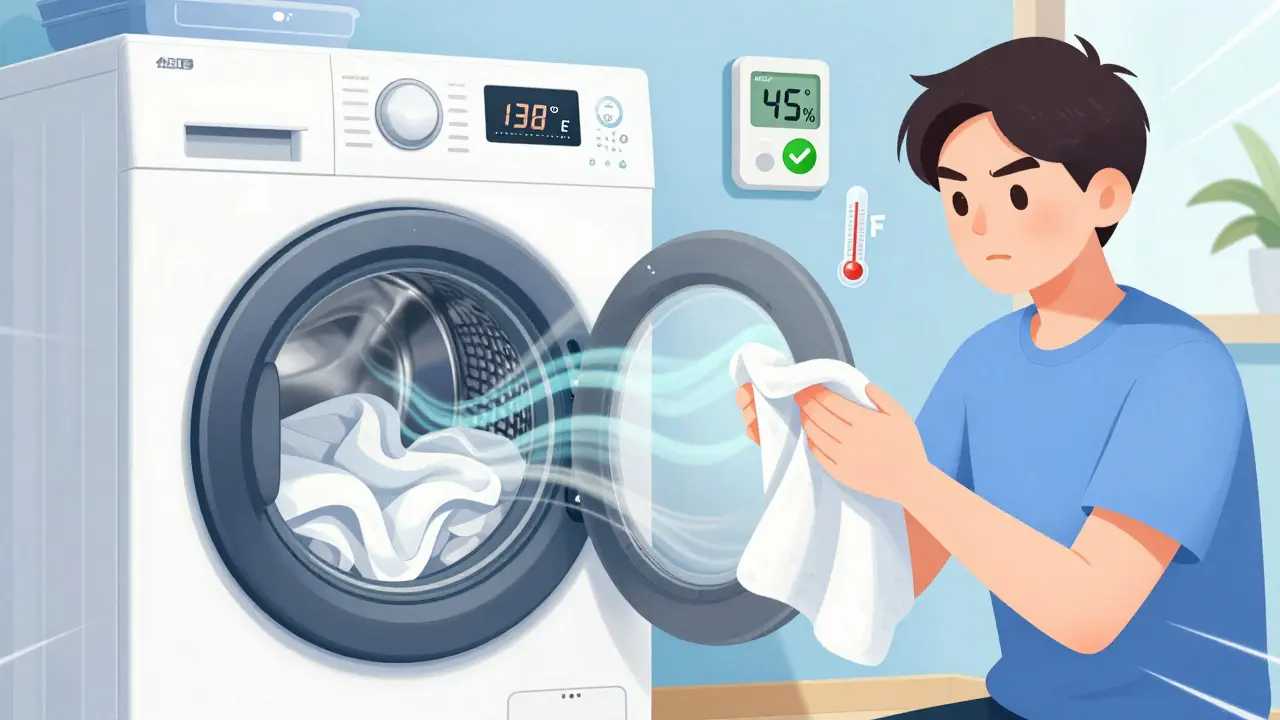
Your laundry routine is the most direct way to eliminate existing infestations in your linens. Many people wash sheets in cold or warm water to save energy, but this leaves mites alive. According to the Mayo Clinic, washing bedding in water at exactly 130°F (54.4°C) kills 100% of dust mites. Anything less is merely temporary.
You must also pay attention to the washing cycle duration. A short spin at high heat isn't enough. The water needs to stay hot for a minimum of 20 minutes during the wash cycle. This heat exposure ensures the proteins in the mites' bodies denature, causing immediate death. It is crucial not to overcrowd the machine. When the tub is packed beyond 50% capacity, clothes clump together, creating cold spots where water circulation fails. Adequate soap concentration is also vital-aim for 30-40ml per load to break down organic waste effectively.
If you cannot tolerate hot water on certain fabrics, drying offers a backup method. Research indicates that drying items at 130°F for 15 minutes achieves similar effectiveness to hot water washing. For delicate items that cannot withstand this heat, freezing them in plastic bags for 24 hours can kill the mites, though this does not remove the allergenic waste they leave behind.
Humidity Control as the Primary Defense
While washing kills existing mites, controlling the air prevents new ones from establishing colonies. Dr. James Sublett of the American College of Allergy, Asthma and Immunology states that humidity control is the single most important factor in management. Maintaining levels below 50% eliminates 90% of the problem.
This requires more than just intuition. You need accurate tools. Standard hygrometers in cheap clocks often lack precision. Invest in a digital hygrometer accurate to ±2% RH. Place it at bed level to get the reading where you sleep. If your home consistently stays above 55% humidity, a dehumidifier becomes necessary. Studies published in the Journal of Allergy and Clinical Immunology show that keeping humidity between 40-45% reduces populations by 95% within 14 days.
In humid climates or seasons, HVAC consultation may be needed to achieve this target consistently. During summer months when outdoor air carries significant moisture, mechanical ventilation alone often fails to pull the numbers down. Running air conditioning helps, but dedicated dehumidification equipment ensures the metrics stay in the safe zone regardless of external weather conditions.
Physical Barriers and Mattress Encasements
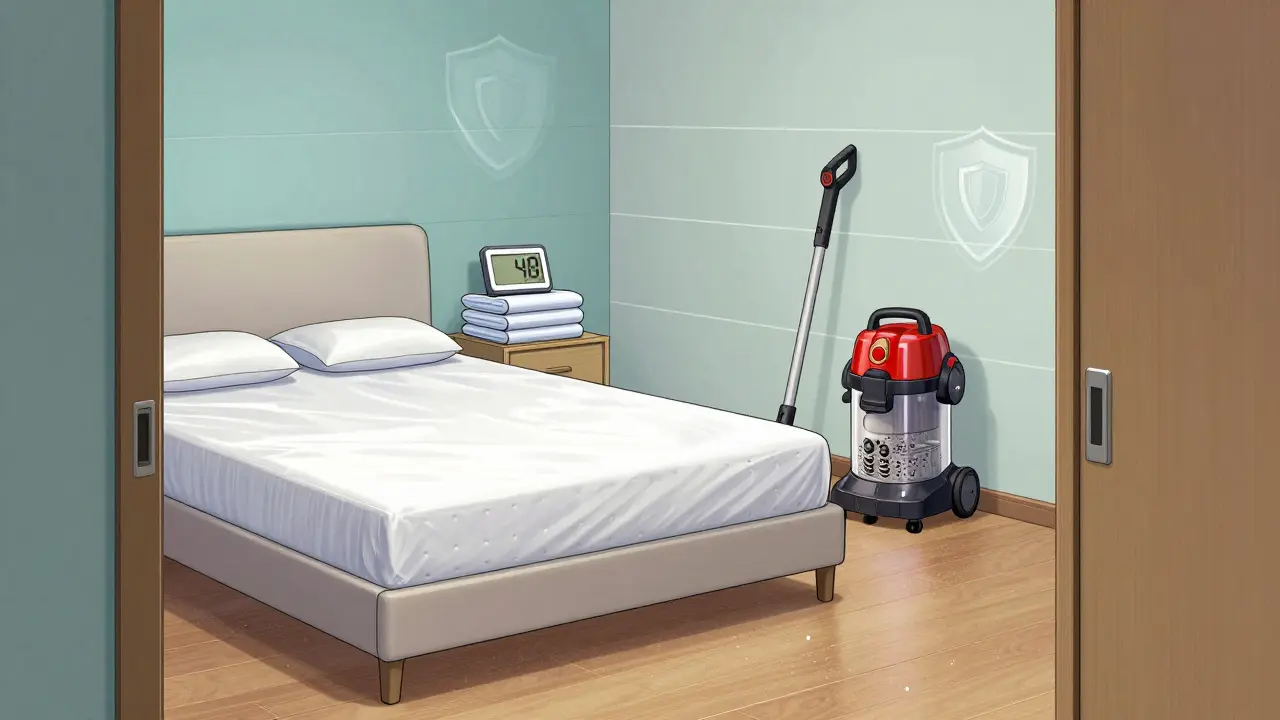
Even with perfect humidity, mattresses remain a reservoir for old allergens. Old fecal matter trapped in foam continues to trigger symptoms even if active mites die off. This is where encasements become essential. Not all covers are created equal. Effective Mattress Encasements must have pore sizes of 10 micrometers or less.
Mattresses usually cost hundreds of dollars, but protecting them is cheaper than replacing them every few years due to allergy issues. Certified products should withstand at least 10,000 abrasion cycles to maintain their barrier integrity over time. Cheaper alternatives often develop micro-tears after six months of regular use, allowing mites to penetrate back into the mattress core. Look for zipper seals that lock completely to prevent entry from the edges.
Encasements provide fair effectiveness on their own, roughly reducing allergens by 30-40%. However, when combined with humidity control and weekly washing, the effectiveness jumps to 'Very Good', cutting levels by 80-90%. Do not rely on one method in isolation. The synergy between barriers and environmental control creates a defensive network that denies the mites anywhere to live.
Vacuuming Techniques and Carpet Choices
Cleaning floors is vital, especially if you have wall-to-wall carpeting. Carpets trap skin flakes and provide insulation that holds warmth, creating a haven for mites. While removal rates are rated as 'Very Good' effectiveness compared to keeping carpets, many families prefer to keep them for style or cost reasons.
If you keep carpets, you must use a HEPA Vacuum. Standard vacuums blow air out the back, recirculating fine allergens into the room. High-Efficiency Particulate Air (HEPA) filters trap 99.97% of particles. However, the filter is useless if you vacuum too fast. Move slowly, about one foot per second, to maximize suction and capture power. Quick passes push debris deeper rather than lifting it.
The Better Health Channel recommends a damp mop routine for hard surfaces before vacuuming. Dry dust becomes airborne easily. Wetting surfaces slightly binds the particles so they stick to the mop rather than floating into your lungs. Damp mopping hard floors weekly, combined with slow vacuuming, forms the backbone of the floor maintenance routine.
Budgeting for Long-Term Relief
Setting up a dust mite-proof bedroom requires an initial investment. Estimates suggest setup costs average between $350 and $500. This budget typically covers mattress and pillow encasements ($150-$250), a quality hygrometer ($20-$50), and a reliable vacuum ($180-$300).
It feels steep upfront, but consider the cost of medication and doctor visits. Over-the-counter antihistamines and nasal sprays add up quickly. User experiences on community forums indicate that while the initial cost is noted as a challenge, the symptom reduction makes it worthwhile within months. One user reported an 80% drop in symptoms after spending $300 on encasements and monitoring equipment.
Maintenance costs are minimal once established. Electricity for running a dehumidifier adds a small amount to your monthly utility bill. Buying certified encasements ensures they last longer than generic versions. Replacing cheap covers every year ends up costing more than buying high-quality ones that survive ten thousand abrasion tests.
Can I just wash my bedding in cold water?
No. Cold water does not kill dust mites or their eggs. Water must reach exactly 130°F to ensure 100% mortality. If you cannot use hot water, you must follow up with a dryer cycle at high heat for at least 15 minutes or freeze the items for 24 hours.
How often should I change my sheets?
Weekly washing is recommended. Many users mistakenly believe biweekly washing is sufficient. Because humans shed skin cells nightly, skipping a week allows mite populations to rebound quickly, negating the progress made during previous cleaning.
Is carpet removal worth the effort?
Yes, removing carpets achieves a 90% reduction in allergens, which is rated as 'Very Good'. Keeping carpets requires rigorous weekly vacuuming with HEPA filters to reach 'Good' effectiveness (60-70%). Hard flooring is easier to manage for allergy sufferers.
Do I really need a dehumidifier?
If your indoor humidity cannot be kept below 50% using standard AC, yes. Mites stop growing when humidity drops below 55%. In humid regions or seasons, a dedicated unit is often necessary to protect the bedroom environment specifically.
Will chemical sprays work better than cleaning?
Most chemical sprays offer only moderate effectiveness (50-60%) compared to integrated environmental controls. Evidence suggests that physical barriers and humidity control provide superior long-term clinical benefits for allergic patients compared to chemicals alone.
Goodwin Colangelo
People always forget that the temperature of the wash cycle is the most critical factor in this whole process. If you run your sheets through cold water you are literally just rinsing the living organisms instead of killing them. You need to hit that one hundred thirty degrees mark to ensure complete eradication of the population. Most modern detergents work better when combined with this higher thermal exposure anyway. It does take a bit more energy but your health isn't worth skimping on electricity bills. A lot of folks think regular warm water works because the clothes come out clean visually. Visual cleanliness does not mean biological safety for allergy sufferers out there. You have to trust the science regarding protein denaturation here rather than gut feeling. Spending extra minutes on the heat setting saves you from buying antihistamines later.
Rob Newton
You can wash till you drop if the humidity stays high nothing will change.
Sam Hayes
Good point about the washing machine temps i usually skip the dryer thinking its waste. Now i realize the heat in the dryer is also a killer for them. Thanks for sharing the info on the soap concentration too
Joey Petelle
Buying expensive machines is just capitalism trying to fix laziness with plastic covers. Real life doesn't require forty percent humidity it requires just common sense and opening a window. These encasements feel like prison bars keeping dust away from your face while you sleep. I prefer dealing with minor irritation than spending five hundred dollars on gadgets. People believe everything they read on internet guides about optimal living conditions.
Will Baker
I bet half of these people won't even bother running the dehumidifier once the novelty wears off. They buy the equipment and then store it in the closet before winter hits. Everyone claims they want relief but nobody wants to pay the electric bill for it.
Joseph Rutakangwa
Just get the humidity under control and stop worrying
Ace Kalagui
Seriously folks you need to understand that humidity is the key factor here. If you keep your room dry enough these pests simply cannot exist. We spend a huge chunk of our lives in bed during sleep hours. That means our mattresses become breeding grounds without us realizing it. The skin flakes we shed are essentially a buffet for these tiny creatures. Most people wake up tired and blame their pillow but never check the air quality. You really have to invest in a hygrometer to see what is happening around you. Without accurate data you are just guessing about whether the environment is safe. Keeping humidity below fifty percent is a non-negotiable step for relief. It stops the reproduction cycle immediately when conditions become too arid. Washing your sheets is necessary but doing it wrong wastes your effort entirely. Hot water is the only way to actually kill the mites inside the fabric fibers. Cold wash cycles leave them alive and they just multiply faster than ever. Combining heat treatment with barrier protection creates a fortress against allergens. Taking action now prevents chronic issues later down the road for sure.
Dee McDonald
Stop making excuses and just set the thermostat to the right level today. Reading about this stuff is useless unless you actually implement the changes suggested. Your health depends on the actions you take this week not next month. The cost of ignoring the problem outweighs the price of the dehumidifier by far. Get off the computer and go buy a hygrometer immediately.
angel sharma
We must empower ourselves with knowledge and take charge of our bedroom environments. Every small step toward cleaner air contributes to a better quality of life for everyone in the house. Imagine waking up without congestion every single morning without medication. That peace of mind is worth every penny spent on protective gear. Let us motivate each other to maintain these strict standards consistently.