
It’s spring in Nottingham, and your eyes are burning, watering, and itching like crazy. You rub them, they feel better for a second - then worse. You reach for Visine, and the redness fades… but by afternoon, they’re even more bloodshot. You’re not imagining it. You’ve got eye allergies, also called allergic conjunctivitis. And you’re not alone. About 40% of people in the U.S. deal with this every year, and here in the UK, pollen counts are climbing higher than ever. The good news? There’s a real, effective way to stop it - without waiting for it to go away on its own.
What’s Actually Happening in Your Eyes?
Your eyes aren’t infected. There’s no virus or bacteria. Instead, your immune system overreacts to something harmless - like pollen, dust mites, or pet dander. When these allergens land on the surface of your eye, your body treats them like invaders. Mast cells in your conjunctiva (the thin layer covering your eyeball) release histamine. That’s the chemical that makes your eyes itch, swell, and turn red. It’s an immediate reaction - sometimes within minutes of stepping outside or petting your cat.
Here’s what you’ll feel: intense itching (92% of people report this), redness (88%), watery eyes (85%), swollen eyelids (76%), and sometimes a burning sensation. You might also notice dark circles under your eyes - called allergic shiners - or sensitivity to light. Unlike pink eye caused by infection, allergic conjunctivitis doesn’t produce thick yellow or green discharge. If you’ve got that, it’s likely bacterial and needs different treatment.
Why Regular Eye Drops Won’t Cut It
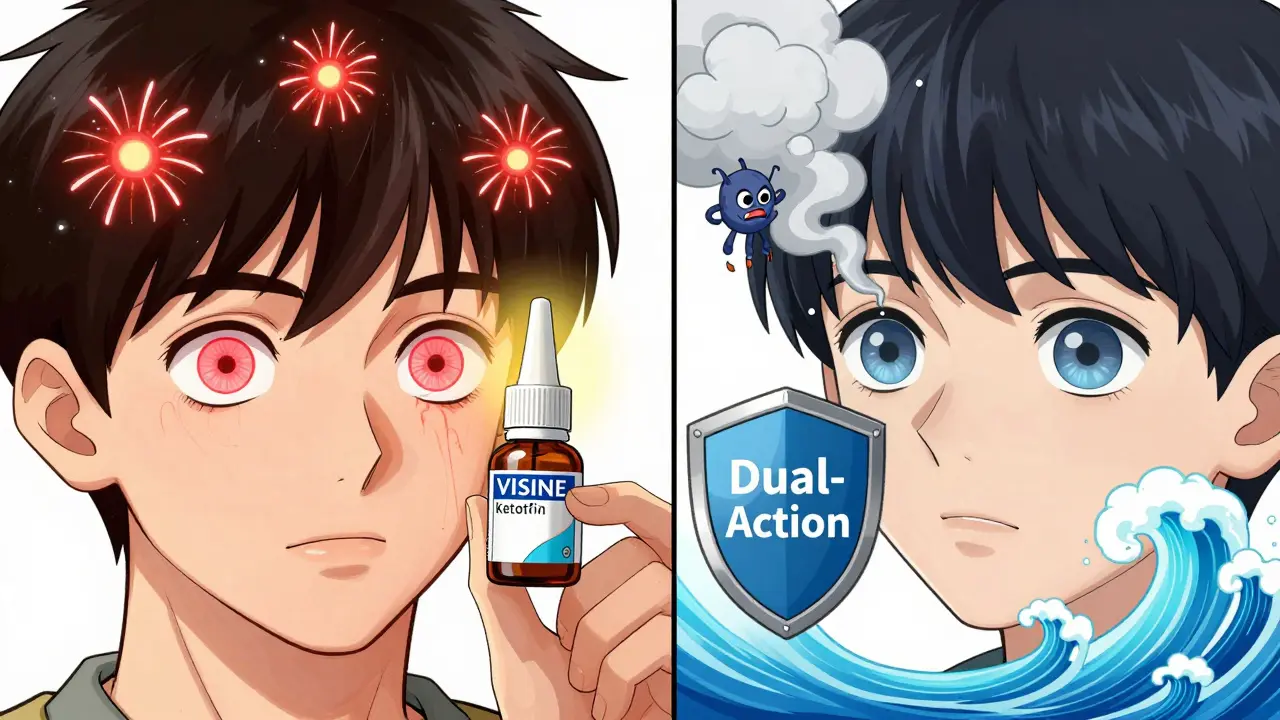
Most people reach for redness-relief drops first - the kind with tetrahydrozoline, like Visine-A or Clear Eyes. They work fast. Your eyes look white again. But here’s the catch: they don’t touch the root cause. They just shrink the blood vessels. After a few days, your eyes get used to it. Then, when you stop using them, your blood vessels bounce back bigger than before. This is called rebound hyperemia. Studies show 65% of people who use these drops for more than three days end up with worse redness than when they started.
Oral antihistamines like Zyrtec or Claritin help with runny noses and sneezing, but they often dry out your eyes. About 40% of users report increased dryness, grittiness, or blurred vision. That’s because these pills affect your whole body - including the tear glands. Your eyes need moisture, not more dryness.
The Right Kind of Eye Drops: Antihistamine + Mast Cell Stabilizer
The gold standard for eye allergies isn’t just one ingredient - it’s two working together. Modern antihistamine eye drops like olopatadine (Pataday) and ketotifen (Zaditor, Alaway) don’t just block histamine. They also stop mast cells from releasing it in the first place. That’s called dual-action therapy. It’s why these drops work better and last longer.
Here’s how they compare:
| Brand/Generics | Active Ingredient | Onset of Relief | Duration | Stinging Risk | Cost (2.5mL) |
|---|---|---|---|---|---|
| Pataday Once Daily Relief | Olopatadine 0.2% | 3-5 minutes | 16-24 hours | Low (8%) | $42.99 (brand) |
| Zaditor / Alaway | Ketotifen 0.025% | 3 minutes | 8-12 hours | Low (8%) | $12.99 (generic) |
| Naphcon-A | Pheniramine | 3-5 minutes | 4-6 hours | High (25%) | $15.99 |
| Visine-A | Tetrahydrozoline + Naphazoline | Instant | 4-8 hours | Low | $8.99 |
Pataday (olopatadine 0.2%) is the most effective for all-day relief. In clinical trials, it cut itching scores from 2.8 to 0.7 on a 4-point scale within 3 minutes - and kept it down for over 16 hours. That means one drop in the morning can carry you through the whole day. Zaditor works fast too, but you’ll likely need to reapply by afternoon. And while Pataday costs more, many insurance plans cover it at a $15-$40 copay. Generic ketotifen is the budget-friendly winner if you don’t mind a second application.
How to Use Eye Drops Right (Most People Get It Wrong)
Even the best drops won’t help if you’re not using them properly. Here’s what works:
- Wash your hands first.
- Tilt your head back and look up.
- With one finger, gently pull down your lower eyelid to make a small pocket.
- Hold the bottle close to your eye - but don’t touch your eyelid or eyeball.
- Squeeze one drop into the pocket.
- Close your eye gently for 30 seconds. Press the inner corner of your eye (near your nose) with a finger to keep the drop from draining into your throat.
This is called the “pocket technique.” It’s simple, but 50% of people mess it up. Touching the dropper to your eye risks contamination. Not closing your eye lets the drop spill out. And if you don’t press your inner corner, the medicine drains into your nose and throat - where it won’t help your eyes and might even cause a bitter taste or drowsiness.
What Else Helps Beyond Drops?
Medication alone isn’t enough. You need to reduce exposure. Here’s what actually works:
- Wash your face and hands after being outside - especially before bed. Pollen sticks to skin and hair.
- Use preservative-free artificial tears 4-6 times a day. They flush out allergens and soothe irritation.
- Wear wraparound sunglasses outdoors. A 2023 study showed they cut pollen exposure by half.
- Keep windows closed during high pollen days. Check local pollen counts via the National Allergy Bureau or Met Office.
- Use a HEPA filter in your bedroom. Dust mites and pet dander build up indoors.
For some people, cold compresses help too. A clean cloth soaked in cold water and placed over closed eyes for 10 minutes reduces swelling and itching. One Reddit user said: “Pataday in the morning + ice pack at lunch - symptoms went from unbearable to manageable in 48 hours.”

When to See a Doctor
If your eyes still itch, burn, or water after two weeks of proper drop use, it’s time to see an eye care professional. About 20% of people who think they have allergies actually have dry eye disease, blepharitis, or another condition that looks similar. Your doctor can test for it.
Also, if you’ve been using redness-relief drops for more than three days - stop. Your eyes are probably in rebound mode. Switch to an antihistamine/mast cell stabilizer instead.
For severe, year-round allergies, your allergist might suggest immunotherapy - allergy shots or tablets. It takes 6-12 months to start working, but 60-80% of people see long-term improvement after 3-5 years. It’s the only treatment that changes how your body reacts to allergens long-term.
The Bottom Line
Eye allergies aren’t just annoying - they’re common, treatable, and often misunderstood. You don’t have to suffer through every spring. You don’t need to rely on drops that make things worse. Start with a dual-action antihistamine/mast cell stabilizer like olopatadine or ketotifen. Use them correctly. Combine them with simple environmental changes. And if it’s not working after two weeks, get it checked.
Pollen counts are rising. Climate change is making allergy seasons longer and stronger. But you don’t have to be at their mercy. With the right drops and habits, you can keep your eyes clear, calm, and comfortable - even when the world around you is full of triggers.
Can eye allergies cause permanent damage?
No, allergic conjunctivitis itself doesn’t cause permanent eye damage. But chronic rubbing can lead to thinning of the cornea (keratoconus) in rare cases. Also, long-term use of steroid eye drops - which are only prescribed for severe cases - can increase the risk of glaucoma or cataracts. That’s why you should never use steroid drops without a doctor’s supervision.
Is it safe to use antihistamine eye drops every day?
Yes, for most people. Olopatadine and ketotifen are designed for daily use during allergy season. Studies show no significant side effects with regular use for months. But if you’re using them year-round and still have symptoms, you may need to look at other triggers - like indoor allergens - or consider immunotherapy.
Why do my eyes sting when I use the drops?
A brief sting is normal, especially with older formulations like pheniramine. Newer drops like olopatadine and ketotifen cause stinging in only about 8% of users. If the sting lasts more than a minute or causes blurred vision, you might be sensitive to the preservative. Try switching to a preservative-free version - some brands offer them, or ask your pharmacist.
Can children use antihistamine eye drops?
Yes. Ketotifen (Zaditor, Alaway) is approved for children as young as 3. Olopatadine 0.1% is approved for kids 2 and older. Always check the label or ask your doctor. For young kids, you may need to gently hold their head and use a mirror to help them look up while you apply the drop.
Do I need a prescription for the best eye drops?
No. Olopatadine 0.1% and ketotifen are available over the counter. The once-daily olopatadine 0.2% (Pataday) is prescription-only in the UK, but the 0.1% version (Patanol) is OTC. Your pharmacist can help you choose the right one. If OTC drops don’t work after two weeks, see your GP or optometrist - they can prescribe stronger options.
Are natural remedies like chamomile tea bags helpful?
Cold compresses with clean water or saline can help reduce swelling and itching. Chamomile tea bags may offer mild soothing effects, but there’s no strong evidence they reduce histamine or block allergens. Don’t use them as a replacement for proven treatments - especially if your symptoms are severe. If you do try them, make sure the tea bag is cool and clean to avoid introducing bacteria.
What to Do Next
Start today. Buy a bottle of ketotifen (Zaditor or Alaway) - it’s affordable and effective. Use it twice a day for a week. Pair it with preservative-free artificial tears and wash your face after coming indoors. If your eyes still feel irritated after seven days, switch to olopatadine 0.1% or ask your doctor about the once-daily version.
Track your symptoms. Note when they flare up - after walking the dog? On windy days? During your commute? That tells you what triggers you. Then you can plan around them. And if you’re tired of guessing - get tested. Allergy skin tests can pinpoint exactly what you’re reacting to. That’s the first step toward long-term relief.
Nicholas Gabriel
I’ve been dealing with this for years, and honestly? The moment I switched from Visine to ketotifen, my life changed. I used to rub my eyes raw-now I just drop one in the morning, and I’m good. No more rebound redness. No more 3 p.m. panic. I even started using preservative-free tears midday, and my eyes feel like they’re breathing again. Seriously, if you’re still using redness-relief drops, stop. Just stop. You’re not fixing anything-you’re just delaying the inevitable burnout.
Cheryl Griffith
Thank you for writing this. I’ve been too embarrassed to say how bad it gets-I cry just from pollen, and I feel like a mess every spring. I tried everything: nasal sprays, pills, even those weird eye washes. Nothing worked until I found Zaditor. I didn’t even know there was a difference between antihistamine drops and redness drops. Now I keep a bottle in my purse, my car, and my desk. It’s not glamorous, but it’s the only thing that lets me leave the house without looking like I’ve been crying for hours.
Melodie Lesesne
So glad someone finally broke this down without sounding like a pharmaceutical ad. I’ve been using Alaway for two seasons now, and I swear by it. I also started washing my face right after coming home-it’s such a small thing, but it makes a huge difference. And I don’t even wear makeup anymore during allergy season. Just clean skin, sunglasses, and a hat. My dog still sneezes on me, but at least my eyes don’t feel like they’re on fire. Also, cold compresses? Life saver. I keep a damp washcloth in the fridge. Feels like a mini spa break.
waneta rozwan
Ugh. I can’t believe people still don’t know this. You’re literally poisoning your eyes with Visine. It’s like drinking bleach to cure dehydration. And don’t even get me started on those ‘natural remedies’-chamomile tea bags? Are you kidding? That’s like putting a Band-Aid on a broken leg. If your eyes are still burning after two weeks, you’re either lazy or lying. Just use the drops. Use them right. Stop Googling ‘home remedies for eye allergies’ and start treating it like a medical issue, not a Pinterest project.
Ryan Hutchison
Y’all are overcomplicating this. In America, we’ve had these drops for decades. You don’t need a PhD to figure out that Visine is a trap. The problem isn’t the science-it’s that people think they’re too good for simple solutions. I’ve lived in four countries, and the U.S. still has the best OTC eye allergy meds. If you’re in the UK or India and still suffering, maybe stop blaming the pollen and start taking responsibility. It’s not climate change-it’s your refusal to use what works.
Samyak Shertok
So… we’re treating symptoms because we’ve forgotten how to live with nature? You’re telling me we can’t just… breathe? That we need chemical warfare just to open our eyes in spring? What’s next-antihistamine toothpaste? I mean, if your immune system is allergic to pollen, maybe it’s not the pollen that’s wrong… maybe it’s you. Or the air. Or capitalism. Or the fact that we’ve replaced grass with concrete and then wonder why our bodies rebel. But sure, keep dropping chemicals. At least you’ll be numb while the planet burns.
Joie Cregin
I used to think I was just ‘sensitive,’ but after reading this, I realized I was doing everything wrong. I’d rub my eyes, then use Visine, then cry because they still burned. I even tried rinsing them with tap water once. 🤦♀️ Now I use Alaway twice a day, keep a cold compress in the freezer, and wash my hair before bed. It’s not magic, but it’s peace. Also-wraparound sunglasses? Genius. I bought a pair that look like retro sci-fi goggles and now I feel like a spy. Who knew treating allergies could come with a style upgrade?
Jody Fahrenkrug
Just wanted to say thank you for the pocket technique tip. I had no idea about pressing the inner corner. I’ve been wasting half my drops for years. Now I’m actually getting the full benefit. Also, the part about steroid drops being dangerous without supervision? Huge. I had a friend who used them for months because they ‘felt better.’ Ended up with glaucoma. Please, everyone-don’t self-prescribe steroids. Ever.
Riya Katyal
lol you think this is bad? wait till monsoon hits. here in india, we have pollen AND mold AND dust AND street smoke AND your neighbor’s incense burning at 6am. i use pataday and still cry. but hey, at least i’m not using visine. that’s like putting duct tape on a leaking submarine. also, your ‘preservative-free tears’? those cost more than my monthly rent. so thanks for the advice, rich people.
Henry Ip
Start simple. Ketotifen. Twice a day. Wash your face. Wear sunglasses. That’s it. No need to overthink it. If it’s not better in 7 days, see a doc. No shame. But don’t waste time on tea bags or TikTok hacks. This isn’t a lifestyle trend-it’s a medical fix. You wouldn’t ignore a sprained ankle, so why ignore your eyes? Just do the thing.
swarnima singh
everyone says 'use the drops' like its so easy... but what if you're poor? what if you're a single mom working 3 jobs? what if you don't have insurance? what if your eyes are burning but you have to pick up your kid from school? you think pataday is gonna fix your life? no. it just makes you feel worse because you can't afford it. this post is so privileged. like... congrats on your healthcare. i'm still rubbing my eyes with my sleeve.
Kasey Summerer
My dude. I used to think I was allergic to cats… turns out I was allergic to my own ignorance. 😅 Switched to Zaditor, now I hug my cat all day. No tears. No sneezes. Just peace. Also, the ‘press inner corner’ trick? Mind blown. I’ve been wasting drops like a drunk at a buffet. 🤯 Pro tip: Keep the bottle in the fridge. Cold drops = instant chill. Like a tiny ice bath for your eyeballs. 🥶
kanchan tiwari
They’re lying. All of it. The pollen counts? Fake. The drops? Part of the Big Pharma mind control. They want you dependent. Why do you think they make the ‘once-daily’ version? So you keep buying. I stopped using everything. Now I just stare at the sky at dawn. My eyes are still red, but my soul is free. Also, I heard the FDA is hiding the truth about 5G and eye allergies. Don’t trust the government. Don’t trust your doctor. Trust the wind. It knows what’s real.