
When you pick up a generic pill at the pharmacy, you expect it to work just like the brand-name version. That’s the whole point. But what if the ad you saw online claimed the generic was weaker, less safe, or even unsafe? What if it made you believe the brand-name drug was somehow superior - even though both are approved by the FDA? That’s not just misleading. It’s illegal. And people are getting hurt because of it.
What Counts as False Advertising in Generic Drugs?
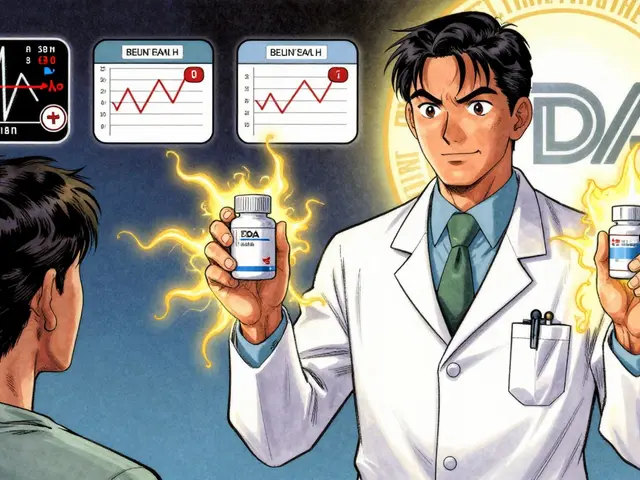
False advertising in generic pharmaceuticals isn’t about lying outright. It’s about creating a false impression. It’s when an ad says, "This brand works better," without clinical proof. It’s when a commercial shows a sleek, colorful package next to a plain white pill and implies the generic is inferior - even though both contain the exact same active ingredient. It’s when an ad uses the phrase "FDA Approved" for a product that’s only been cleared for sale, not formally approved as a generic equivalent. The FDA requires that generic drugs be bioequivalent to their brand-name counterparts. That means they must deliver the same amount of active ingredient into the bloodstream at the same rate. The acceptable range? Between 80% and 125% of the brand’s performance. If a drug meets that, it’s legally the same. But ads often ignore that. They use emotional language, fear tactics, or visuals to suggest differences that don’t exist. Take levothyroxine, a thyroid medication. The FDA has confirmed that generic versions are bioequivalent. Yet, online ads still claim "generic thyroid drugs are dangerous" - sparking panic. Patients stop taking their meds. Their thyroid levels crash. That’s not speculation. The FDA reviewed over 1,200 patient complaints in 2024 and found that 32% of those who quit their generic meds due to misleading ads suffered real health consequences.Legal Framework: What Laws Are Broken?
This isn’t just unethical - it’s against the law. Three major federal laws are used to shut down false generic drug ads:- The Federal Food, Drug, and Cosmetic Act (FD&C Act) - This is the FDA’s main tool. It bans false or misleading labeling and advertising. If an ad implies a generic isn’t as effective, it’s a violation.
- The Lanham Act - This lets competitors sue each other. If a brand-name company believes a generic’s ad is misleading consumers and stealing sales, they can file a lawsuit. Courts have awarded millions in damages for this.
- State Consumer Protection Laws - States like New York and California have their own rules. New York’s General Business Law § 349 lets consumers sue for deceptive ads and get triple damages. California’s Unfair Competition Law is even stricter on proof requirements.
The "Adequate Provision" Loophole Is Closed
For decades, drug ads got away with hiding risks. They’d say something like, "For full safety information, visit [website]." That’s called the "adequate provision" rule. It was created in 1997 to make TV and radio ads shorter. But it became a loophole for deception. Patients rarely clicked through. Even if they did, the risk info was buried in dense legalese. So in September 2025, the FDA announced it was eliminating this rule. Now, every broadcast and digital ad for a prescription drug - brand or generic - must include all major risks directly in the message. No more hiding behind links. This change hits generic manufacturers hardest. They can’t rely on vague disclaimers. They must clearly state side effects, contraindications, and warnings - in 14-point font or higher, with at least 50% contrast. That’s expensive. It’s also necessary.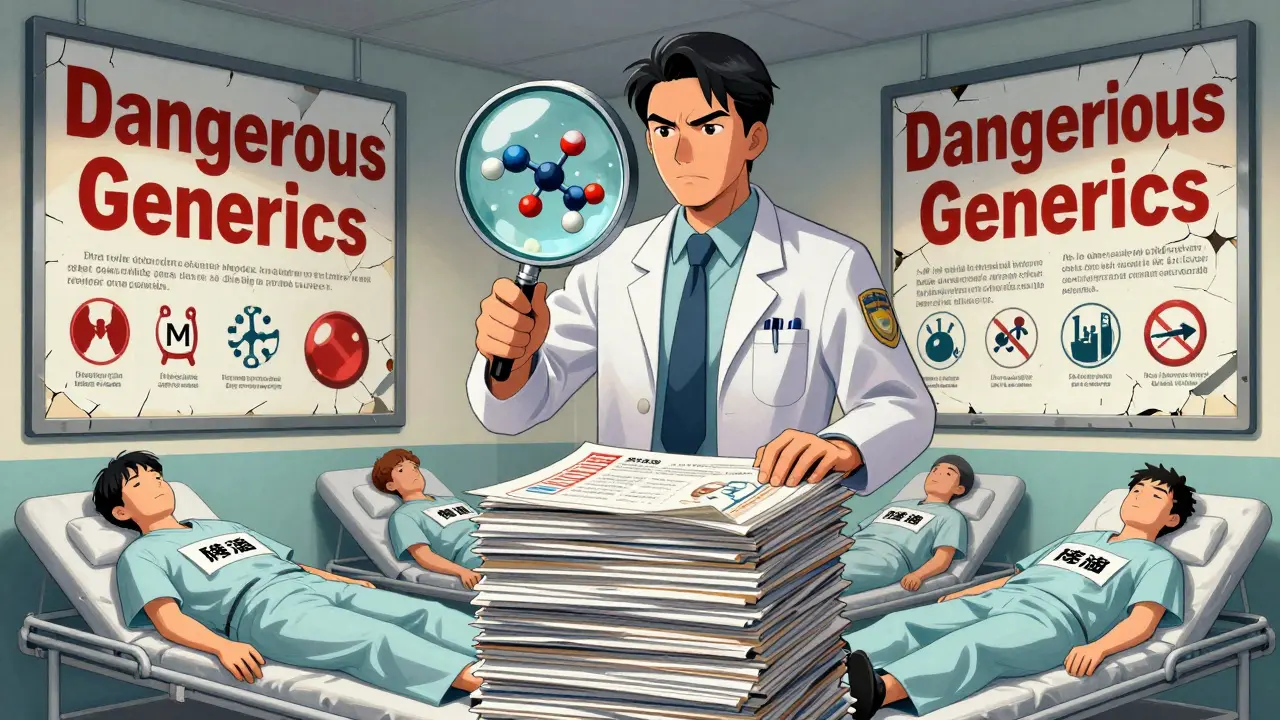
What Generic Ads Are Allowed to Say
There’s a fine line between truth and deception. Here’s what’s allowed:- "This is a generic version of [Brand Name]."
- "This drug contains the same active ingredient as [Brand Name]."
- "Generics save patients up to 80% on cost." (Only if backed by real data from a reputable source.)
- "FDA-approved generic equivalent."
- Claims that generics are "less effective," "lower quality," or "not as safe."
- Using visuals that mimic brand packaging to confuse consumers.
- Implying therapeutic equivalence for narrow therapeutic index drugs (like warfarin or lithium) without explicit FDA designation.
- Using terms like "FDA Approved" for drugs that are only "cleared" for sale - a common mistake with imported generics.
Who’s Getting Hurt - And Who’s Profiting?
The victims? Patients. Especially seniors on fixed incomes. A 2024 AARP survey found that 78% of seniors who saw clear, honest ads about generics reported saving over 75% on their monthly prescriptions. But 41% of patients reported confusion after seeing ads that pushed brand-name superiority. The winners? The companies running those deceptive ads. Brand-name manufacturers have the budget to spend millions on TV spots that make generics look risky. Smaller generic makers? They can’t compete with that kind of spending. The result? Fewer patients switch. More people pay full price. And healthcare costs climb. The Free Market Medical Association estimates that overregulation of generic ads could be costing the system $28 billion a year by suppressing awareness of cheaper options. But the FDA and public health advocates say the cost of patient harm - hospitalizations, ER visits, lost productivity - is far higher.
Compliance Is a Full-Time Job
Major generic drug companies now spend an average of $2.1 million a year just on compliance. That includes legal reviews, medical writing teams, regulatory affairs staff, and digital ad audits. One company, Pfizer, spent $45 million in 2024 building an internal system that flags every word, image, and tone in their ads before they go live. Smaller manufacturers? Many don’t have that luxury. Only 47% of smaller generic firms are fully compliant, according to FDA data from October 2025. That’s a ticking time bomb. One bad ad can trigger a Lanham Act lawsuit, a state attorney general investigation, or a federal warning letter - each carrying penalties from $10,000 to millions in damages.What Happens If You Get Caught?
Penalties aren’t just financial. They’re reputational. A single FDA warning letter can trigger investor panic and loss of pharmacy contracts. Here’s what’s on the line:- Federal fines: Up to $10,000 per violation under state laws like New York’s.
- Lanham Act lawsuits: Can include treble damages, attorney fees, and forced corrective advertising.
- CEASE-AND-DESIST orders: Required to pull all ads immediately and issue public corrections.
- Product recalls: In extreme cases, if ads misrepresent safety, the FDA can pull the drug from shelves.
What Patients Should Do
If you’re unsure about a generic drug:- Ask your pharmacist. They know what’s bioequivalent and what isn’t.
- Check the FDA’s website for approved generics. Search by drug name and look for the "ANDA" number.
- Don’t believe ads that say "generic is dangerous" - unless the FDA says so.
- If you’re worried about switching, talk to your doctor. Don’t stop your meds because of an ad.
Can a generic drug be legally advertised as "better" than the brand-name version?
No. Under FDA and FTC rules, generic drug ads cannot claim superiority unless supported by head-to-head clinical trials approved by the FDA. Most generics are not tested this way because they’re designed to be bioequivalent, not superior. Any ad suggesting otherwise is illegal and can trigger a Lanham Act lawsuit from the brand-name manufacturer.
Are all generic drugs FDA-approved?
Yes - but only if they go through the Abbreviated New Drug Application (ANDA) process. The FDA requires every generic to prove bioequivalence to the brand-name drug before it can be sold. Some products are sold as "generic" but have never been reviewed by the FDA - these are illegal and often imported. Always check the FDA’s database for the ANDA number on the packaging.
Can I trust generic drugs for chronic conditions like thyroid or epilepsy?
Yes. The FDA has approved generic versions of levothyroxine, phenytoin, and other narrow therapeutic index drugs after rigorous testing. While some patients may feel differences due to inactive ingredients, these are not safety issues. The FDA states that switching between approved generics or from brand to generic is safe for nearly all patients. Always consult your doctor before switching, but don’t avoid generics because of fear-based ads.
What should I do if I see a misleading generic drug ad?
Report it. File a complaint with the FDA’s MedWatch program or the FTC’s Consumer Sentinel network. Include the ad’s name, where you saw it, and a screenshot if possible. The FDA received over 5,000 consumer complaints about deceptive drug ads in 2024 - your report helps them take action.
Why do some pharmacies still refuse to substitute generics?
Some pharmacies may refuse substitution due to outdated policies, lack of staff training, or pressure from brand-name manufacturers offering rebates. But legally, pharmacists are required to substitute unless the doctor writes "dispense as written" or the patient refuses. If you’re being denied a generic you’re entitled to, ask to speak with the pharmacist-in-charge or contact your state board of pharmacy.
Liz MENDOZA
I’ve been on generic levothyroxine for five years. My TSH is perfect. I’ve saved $1,200 a year. I don’t care if the pill is white or colored - it keeps me alive. Stop scaring people with ads that don’t match reality.
My grandma switched after seeing one of those fear-mongering videos. She ended up in the ER. Don’t let that happen to someone else.
Anna Weitz
the system is rigged and you know it
brand names pay for the ads that make generics look like trash
the FDA is just another arm of big pharma
they let the same people who wrote the rules also write the enforcement
why do you think they never test generics head to head
because then people would see the truth
the truth is they’re not the same
and you’re being lied to every time you fill a prescription
Satyakki Bhattacharjee
This is why India makes the best generics. We don’t lie. We don’t hide. We make medicine for the poor. You Americans think money solves everything. But in India, we know medicine is a right, not a privilege.
When your pharma companies scare people away from cheap pills, they are stealing from the sick. This is not just illegal. It is immoral.
Kishor Raibole
It is with profound regret, and a certain degree of existential disillusionment, that I observe the current state of pharmaceutical advertising in the United States.
The commodification of health, the weaponization of fear, and the systematic erosion of public trust through targeted psychological manipulation - these are not merely regulatory failures. They are cultural collapses.
One might reasonably argue that the Lanham Act, while technically robust, is a bandage on a severed artery. The true pathology lies in a society that permits corporations to profit from the anxiety of the vulnerable.
And yet, we continue to click. We continue to buy. We continue to believe.
What, then, is the difference between a lie and a collective hallucination?
Perhaps the only difference is who gets to write the script.
John Barron
Let’s be real - the FDA doesn’t even test every batch of generic drugs. They just trust the manufacturers. 😒
And don’t get me started on the "bioequivalence" range of 80–125%. That’s a 45% swing! That’s not the same - that’s a gamble.
My cousin switched to generic seizure meds and had three seizures in two weeks. The doctor said "it’s fine" - but it wasn’t.
So yeah, I trust the brand. And I’ll pay extra. 💸💊
Olivia Goolsby
Have you ever noticed how every single "FDA-approved" generic comes from China or India? And yet, the FDA says they’re "equivalent"?
What if the active ingredient is real… but the fillers are toxic? What if the tablets are made in a warehouse with no air filtration? What if the inspectors are paid off? What if the whole system is a lie?
I’ve seen the videos. I’ve read the whistleblower reports. The FDA doesn’t inspect 1% of the factories that make these pills. And they’re letting them into your body.
And now they’re banning ads that tell the truth? That’s not protection - that’s suppression.
They don’t want you to know. They want you to take the white pill. And stay quiet.
Alex Lopez
Wow. So the solution to deceptive ads is… more ads? 😏
Let me get this straight: the FDA is now forcing companies to list every side effect in 14-point font… while still letting them say "FDA-approved" for drugs that were never reviewed? That’s like requiring a car ad to say "this vehicle has four wheels" while ignoring that it has no brakes.
Meanwhile, the real problem - that brand-name companies spend $500M/year on ads to scare people away from generics - gets zero attention.
So… we’re fixing the symptom, not the disease.
Good job, regulators. 🙃
Gerald Tardif
Look - I get it. You’re scared. You’ve been told your medicine isn’t good enough. But here’s the truth: your body doesn’t care if the pill is white or blue. It cares if the chemical inside works.
And guess what? It does.
Switching to generic saved me $800 last year. I didn’t get sick. I didn’t crash. I just… lived better.
Don’t let fear write your health story. Let facts do it. Talk to your pharmacist. Check the FDA site. Ask your doctor. But don’t let a 30-second ad make your decision for you.
You’re stronger than that.
Monika Naumann
It is a matter of national pride that India produces the most affordable and reliable generic medications in the world. The United States, in its capitalist obsession, has allowed corporate greed to distort the very essence of healthcare.
When your citizens are misled into paying exorbitant prices for brand-name drugs, it is not merely an economic failure - it is a moral failure.
Our generics are not inferior. They are superior in accessibility, in ethics, and in compassion.
Let your people be free. Let them choose. Let them live.
Elizabeth Ganak
my mom switched to generic blood pressure med and her numbers got better 🤷♀️
she used to spend $120 a month. now it’s $18.
she says she feels the same, just with more money for groceries.
why are people so scared of this? it’s just medicine.
Nicola George
So let me get this straight - you’re telling me the FDA spent $28 billion to protect people from ads… but the real cost is patients dying because they stopped taking their meds?
That’s not regulation. That’s theater.
And the fact that you’re still surprised? 😐
Meanwhile, I’m over here paying $5 for my generic insulin while you’re crying over a red X on a pill.
Y’all really do love your drama.