
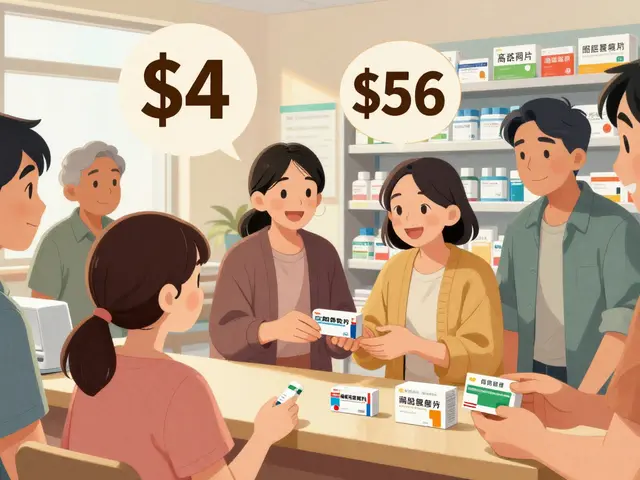
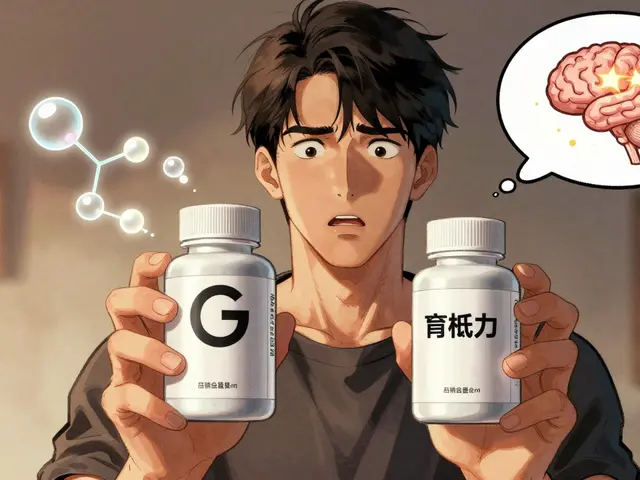
When you pick up a pill bottle from the pharmacy, do you ever wonder why a $4 generic tablet feels less effective than a $12 brand-name version-even though both contain the exact same active ingredient? This isn’t just in your head. It’s the placebo effect at work, and it’s reshaping how millions of people experience their medications every day.
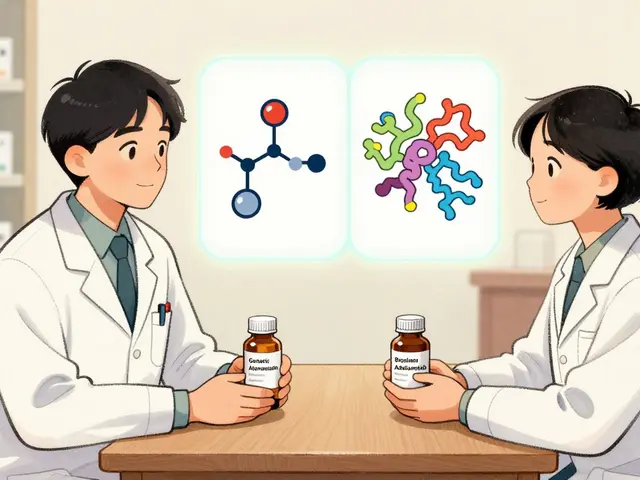
Let’s be clear: generic drugs are not inferior. The FDA requires them to deliver the same amount of active ingredient into the bloodstream as the brand-name version, within a tight 80-125% range. In lab tests, they’re identical. But when real people take them, something strange happens. A 2014 study from the University of Auckland tracked 87 college students with recurring headaches. One group got placebo pills labeled as a brand-name painkiller. Another got the exact same pills labeled as a generic. The brand-labeled placebos reduced pain by 2.3 points on a 10-point scale-almost as much as real ibuprofen. The generic-labeled ones? Just 1.1 points. The pills were identical. The only difference was the label.
Price Tells Your Brain What to Expect
Your brain doesn’t just react to chemicals. It reacts to context. Price is one of the strongest signals it uses. In a 2014 study at the University of Cincinnati, Parkinson’s patients were given fake injections labeled as either a $1,500 treatment or a $100 one. Both were saline solutions. The $1,500 group showed 28% more improvement in movement. Brain scans confirmed their dopamine levels spiked higher-because their brains believed they were getting something better. The same pattern shows up with painkillers. In a Harvard experiment, people told they were getting a $2.50 painkiller reported 37% less pain than those told it cost $0.10-even though both were sugar pills.
This isn’t about greed or marketing. It’s about evolution. For thousands of years, expensive things were better. A finely crafted tool lasted longer. A rare herb healed faster. Your brain still uses price as a shortcut to judge quality. When you see a generic labeled “$0.25 per pill,” your subconscious doesn’t see cost savings. It sees low value.
The Nocebo Effect: When Your Mind Makes You Sick
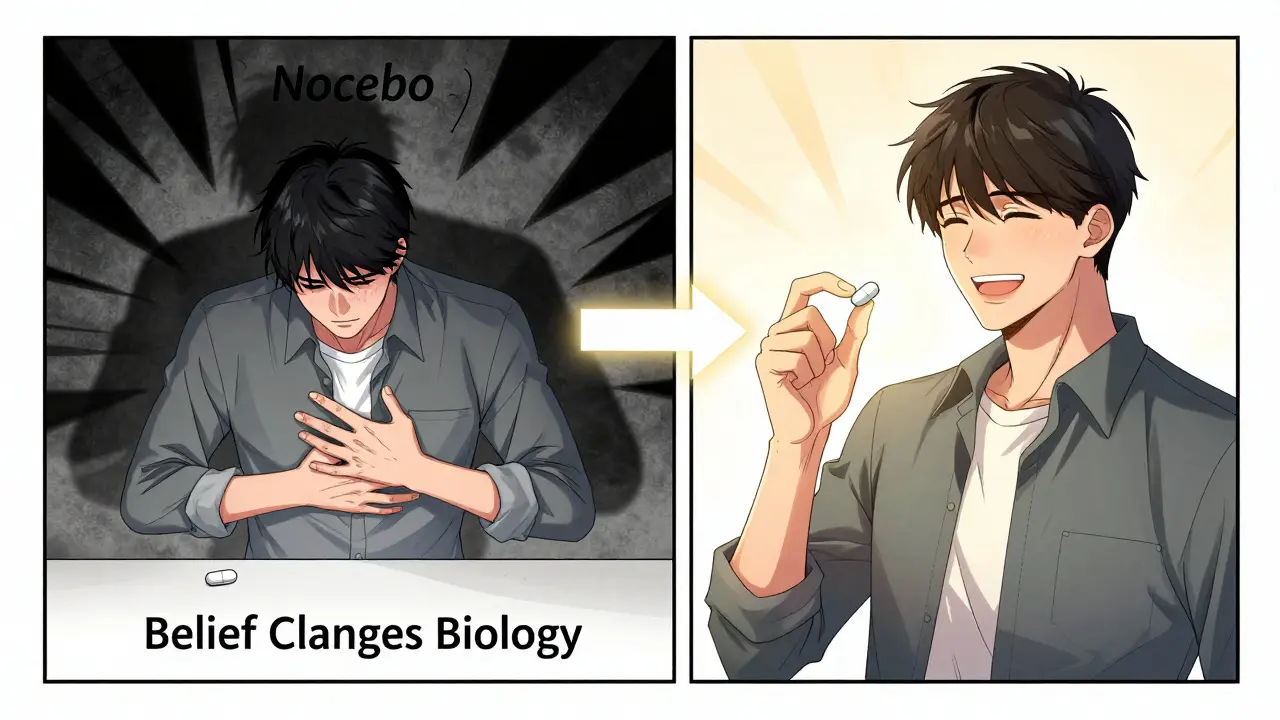
Just as belief can make you feel better, belief can make you feel worse. This is the nocebo effect-the dark twin of the placebo effect. A 2014 meta-analysis of 12 statin trials found that when patients were told they were taking a generic version, they reported 2.1 times more muscle pain than those told they were taking the brand. The pills were identical. The only thing that changed was the label. In another study, 13.2% of people on generic-labeled placebos complained of muscle pain. Only 6.3% did on brand-labeled placebos. That’s not side effects. That’s expectation.
It gets worse in mental health. A 2013 review in Lancet Psychiatry found antidepressant trials with generic labeling had 11% lower response rates than those with brand labels. Patients didn’t just feel less improvement-they felt worse. One Reddit user wrote: “Switched from brand Nexium to generic and my GERD symptoms came back. My doctor said it’s probably nocebo.” He wasn’t lying. His brain just didn’t trust the pill.
Generics Work-If You Believe They Do
Here’s the flip side: when people are told the truth, they do just fine. A 2022 Drugs.com survey of over 8,000 people found that 67% said generics worked just as well as brand-name drugs. But when those same people were given a simple 30-second explanation about bioequivalence-“This generic has the same active ingredient, same dose, same effect”-the number jumped to 82%. Knowledge changes perception.
Doctors who use “positive generic messaging” get better results. In a 2020 trial, physicians trained to say things like, “This generic works exactly the same but saves you money,” saw 85% of patients stick with their medication. Those who just said, “We’re switching you to a generic,” got only 63% adherence. The difference wasn’t in the drug. It was in the words.
Why Some Conditions Are More Sensitive
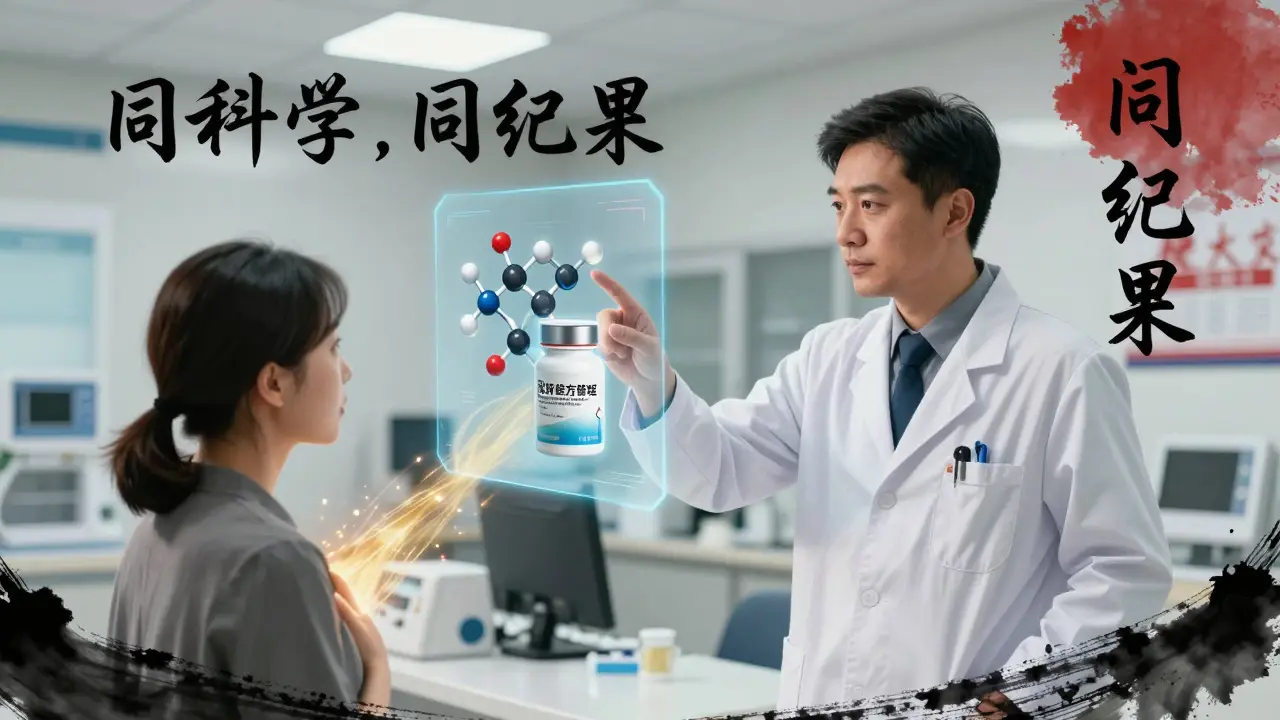
Not all drugs are affected equally. Placebo effects are strongest in conditions where symptoms are subjective: headaches, depression, anxiety, chronic pain, and epilepsy. In migraine studies, brand-labeled placebos reduced pain by 41%. Generic-labeled ones? Just 22%. But for infections like strep throat or pneumonia? The placebo effect barely matters. If the antibiotic kills the bacteria, you’ll feel better regardless of the label.
This is why the problem hits hardest in mental health and neurological care. These conditions rely heavily on brain chemistry-and your brain’s expectations directly influence that chemistry. Dopamine, serotonin, endorphins-they all respond to belief. If you think the pill won’t work, your brain won’t release the chemicals needed to make you feel better.
Real Consequences, Real Costs
This isn’t just about feeling better. It’s about survival. A 2017 analysis of 38,000 Medicare patients found that people on generic medications had 12-15% higher hospitalization rates than those on brand-name drugs. Not because generics were less effective. Because people stopped taking them. They thought they weren’t working. They felt side effects that weren’t there. They switched back to expensive brands-or quit altogether.
The financial toll is staggering. The U.S. spends $1.2 billion extra each year on unnecessary brand-name prescriptions because people distrust generics. And when people stop taking their meds due to nocebo effects, the healthcare system loses another $318 billion annually in avoidable ER visits, hospital stays, and complications.
What’s Being Done About It?
Some solutions are simple. A 2023 study in Wisconsin tested generic pills in packaging that looked like brand-name bottles-same colors, same font, same logo style. Nocebo complaints dropped by 37%. People didn’t need a lecture. They just needed the pill to look like it belonged.
Another innovation? The FDA’s “Generic Confidence” app. It uses augmented reality to show patients a 3D model of their generic drug, then overlays the brand-name version to prove they’re identical. In beta testing, users were 29% more likely to stick with their prescription.
But the biggest fix? Education. A 2018 study showed that just seven minutes of clear, calm explanation from a doctor raised generic acceptance from 58% to 89%. Patients didn’t need jargon. They needed to know: “This is not a cheaper version. It’s the same drug. The same science. The same results.”
What You Can Do
- If you’re switching to a generic, ask your doctor to explain why it’s the same. Don’t just accept the change-understand it.
- If you feel worse after switching, don’t assume it’s the drug. Talk to your provider. It might be your brain, not the pill.
- If you’re on a long-term medication like blood pressure or antidepressants, track your symptoms before and after the switch. Often, there’s no real difference.
- Use apps like GoodRx or Drugs.com to compare prices and read real patient reviews-not just fear-based stories.
The truth is simple: your mind is powerful. It can turn a sugar pill into a miracle cure. It can turn a lifesaving drug into a source of pain. The difference between a generic and a brand isn’t in the chemistry. It’s in the story you tell yourself.
Are generic drugs really as effective as brand-name drugs?
Yes. By law, generic drugs must contain the same active ingredient, strength, dosage form, and route of administration as the brand-name version. They must also meet the same strict manufacturing standards. The FDA requires them to deliver the same amount of medicine into your bloodstream within a narrow range (80-125%) of the brand. In over 98% of cases, they work identically. The only differences are in inactive ingredients (like fillers or dyes), which rarely affect how the drug works.
Why do some people feel worse on generic medications?
It’s often the nocebo effect. If you believe generics are inferior, your brain can trigger real physical symptoms-like headaches, nausea, or fatigue-even when the drug is chemically identical. A 2014 study found people on generic-labeled placebos reported twice as much muscle pain as those on brand-labeled ones, despite both being inert. Your expectations shape your experience. Talking to your doctor about this can help break the cycle.
Can the packaging of generic drugs affect how well they work?
Yes. A 2023 trial showed that when generic pills were packaged to look like brand-name versions-same colors, fonts, and design-patients reported 37% fewer side effects and were more likely to keep taking them. Your brain uses visual cues to judge quality. A plain white pill in a basic bottle feels less trustworthy than one that looks polished and familiar. Packaging doesn’t change the chemistry, but it changes your belief-and that changes your body’s response.
Do insurance companies force people to take generics?
In 42% of U.S. states, insurers can require you to switch to a generic without your consent-unless your doctor writes a “dispense as written” note. This is legal under pharmacy benefit rules. But if you’re worried about side effects or feel worse after switching, you have the right to ask your doctor to challenge the substitution. Many doctors will do so if you explain your concerns clearly.
Is there a way to train myself to trust generics?
Yes. Start by learning the science. Read the FDA’s fact sheet on generics. Talk to your pharmacist. Use apps like Drugs.com to see what other patients report. Keep a simple journal: note how you feel before and after switching. You’ll likely find no difference. Over time, your brain will update its belief. Knowledge replaces fear. And when your brain trusts the pill, your body responds accordingly.
Oliver Calvert
Interesting piece. The placebo effect with generics is well-documented but rarely discussed outside medical circles. I've seen patients react dramatically to packaging changes - same drug, same dose, different bottle, and suddenly they're convinced it's not working. The brain is a powerful drug delivery system. No magic in the pill, just expectation.
Prateek Nalwaya
Man, this hits hard. I used to think generics were just cheap knockoffs until I did a deep dive into the FDA data. Turns out, the only difference is the label, the color, and your wallet. I switched my dad from brand-name statin to generic - he swore the generic gave him muscle pain. We did a blind swap. He couldn't tell which was which. His brain just needed to believe it was the same. Knowledge is the real medicine here.
Tony Shuman
Of course generics don't work as well. America's been brainwashed by Big Pharma to believe their overpriced pills are sacred. Meanwhile, other countries get the exact same pills in identical packaging - no complaints. We're too emotional, too entitled. Your brain makes you sick because you're too lazy to trust science. Just take the damn pill.
Linda Franchock
Oh honey, you think this is new? My grandma took generic insulin in the 70s and lived to 92. She didn't care what the bottle looked like - she cared that it kept her alive. We've turned medicine into a status symbol. Meanwhile, people in India, Brazil, Nigeria - they don't have the luxury of placebo drama. They just take what works. Maybe we need to stop treating our pills like iPhones.
Logan Hawker
Let’s be precise: the nocebo effect isn’t some vague psychological quirk - it’s a neurochemical cascade mediated by prefrontal cortex modulation of descending pain pathways, coupled with dopaminergic and serotonergic dysregulation under expectancy bias. The 2014 Auckland study? Underpowered. The Cincinnati fMRI data? Correlation ≠ causation. And don’t even get me started on the Drugs.com survey - self-reported data with no blinding. This whole piece is a cherry-picked narrative dressed in epidemiological pajamas.
Jonathan Ruth
Generics work fine if you're not a whiny American. I took generic Adderall for 3 years. No issues. No headaches. No 'feeling weird.' People who complain are either lazy or addicted to the ritual of paying $300 for a pill. The system is rigged to make you think you need luxury meds. Wake up. The pill is the pill. Your brain is the problem.
Geoff Forbes
Wait so you're telling me my migraines got worse when I switched to generic? Not the drug… my BRAIN? That's wild. I thought I was just allergic to fillers. But now I'm thinking… maybe I just didn't like the color? I mean… it was blue. Brand was green. That's gotta mean something right? 😅
Haley DeWitt
Thank you for writing this. I'm a nurse, and I see this every day. Patients panic when they get a different-looking pill. I show them the FDA page side by side - same active ingredient, same dosage, same manufacturer sometimes. The relief on their faces? Priceless. It's not about the pill. It's about trust. And we can fix that.
Adam Short
Britain doesn't have this problem. We've had generics since the 70s. No one cares what the bottle looks like. We don't treat medicine like a luxury brand. Americans turn every prescription into a drama. You want better results? Stop buying into the marketing. Take the blue pill. It's the same damn thing.
Kancharla Pavan
How can you be so naive? This is not about science. This is about control. Corporations want you dependent on expensive pills. They want you to believe you're powerless without their branded version. They profit from your fear. They profit from your ignorance. The placebo effect? It's a weapon. And they've weaponized it against the poor. You think this is about health? It's about profit. And you're the mark.
Philip Blankenship
My wife switched from brand to generic for her anxiety med. First week? She swore she felt 'off.' Second week? Same. Third week? She forgot to mention it. By month two? She said she didn't even remember which one she was on. We laughed about it. Turns out, the only thing that changed was her expectation. Funny how your brain can trick you into feeling worse… just because the pill looks cheaper.
Dennis Santarinala
This is beautiful. You're not just talking about pills. You're talking about how we assign meaning to things. We're meaning-making creatures. A plain white pill feels like a surrender. A branded bottle feels like a promise. The science says they're the same. But the soul needs a story. Maybe the real fix isn't in the chemistry - it's in the storytelling.
PRITAM BIJAPUR
Our minds are the last frontier of medicine 🌌💊
Science tells us generics = brand.
But the soul? The soul remembers the price tag.
Maybe healing isn't just about chemistry.
Maybe it's about rewriting the story we tell ourselves.
And that? That takes courage.
And maybe… a little more empathy from doctors.
And fewer white pills in plain bottles.
❤️
Sam Pearlman
Wait, so you're saying if I just told myself the generic was the brand, I'd feel better? That's wild. I'm gonna try it. Next time I take my blood pressure med, I'm gonna whisper 'this is the expensive one' like a mantra. Maybe I'll start levitating. Or at least stop feeling tired. 😎