
FDA Safety Communications Timeline Finder
FDA Safety Communications Timeline
The U.S. Food and Drug Administration (FDA) doesn’t just approve drugs and medical devices - it watches them after they’re on the market. When something goes wrong, the FDA issues a FDA Safety Communications. These aren’t just press releases. They’re official, legally grounded alerts that can change how doctors prescribe, how patients use medications, and sometimes even lead to recalls. But what if you need to know what the FDA said about a drug five years ago? Or ten? That’s where the FDA Safety Communications Archive comes in.
What’s in the FDA Safety Communications Archive?
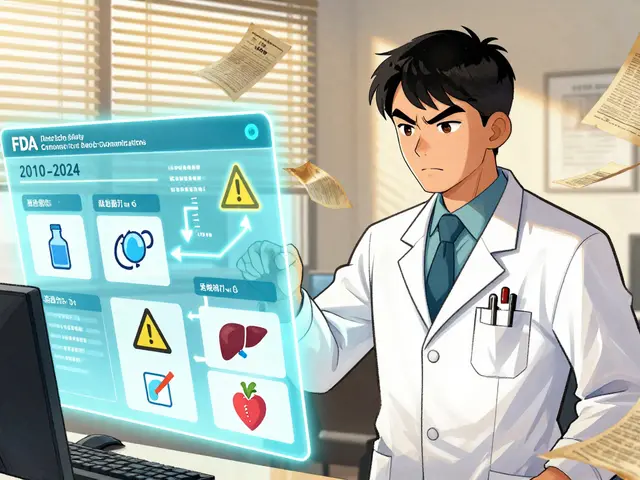
The archive isn’t one single database. It’s three interconnected systems, each with its own rules and history. First, there are the Drug Safety Communications (DSCs). These started being formally archived in 2010. Before that, the FDA issued safety alerts, but not in a consistent, searchable format. Today, you can find every DSC from 2010 through 2024. Each one details a specific safety concern - like liver damage from a diabetes drug, or an increased risk of heart attack with a painkiller. The FDA updates these when new evidence comes in. Older versions are archived because they’ve been replaced by newer, more accurate warnings. Then there’s the Drug Safety-related Labeling Changes (SrLC) Database. This one started in January 2016. It tracks every single change made to the official prescribing information - the fine print in the drug’s package insert. That includes updates to sections like BOXED WARNINGS, CONTRAINDICATIONS, WARNINGS AND PRECAUTIONS, and even patient counseling materials. If the FDA forced a manufacturer to add a warning about birth defects in pregnant women, that change is recorded here with the exact date and regulatory reason. This database is built on Section 505(o)(4) of the Federal Food, Drug, and Cosmetic Act - a legal requirement passed in 2007. Finally, there’s the Medical Device Safety Communications system. These cover everything from faulty pacemakers to contaminated surgical tools. Since September 2025, the FDA has expanded its Early Alerts program to include all medical devices. These alerts are often the first public signal that a device might be dangerous - sometimes before a formal recall is issued. Unlike drug alerts, which focus on chemical side effects, device alerts often talk about mechanical failure, software glitches, or design flaws.How to Find What You Need
If you’re researching a specific drug or device, start with the FDA’s official website. Go to the Drug Safety and Availability section. From there, you can browse Drug Safety Communications by year - 2024, 2023, 2022, and so on back to 2010. Each communication is labeled clearly with the product name, the issue, and the date issued. If you’re looking for labeling changes after 2016, use the SrLC Database. It lets you search by drug name, active ingredient, or even the specific section of the label that changed. For medical devices, head to the Medical Device Recalls and Early Alerts page. Here, you can filter by device type, manufacturer, or alert type. Early Alerts are marked distinctly - they’re the FDA’s way of saying, “We think this could be serious, and you should act now.” But what if you need information from before 2010? That’s trickier. The FDA’s current website doesn’t show pre-2010 DSCs. You’ll need to use the FDA.gov Archive - a tool that lets you view old versions of web pages that have since been updated or removed. Type in the URL of the old safety page, and the archive will show you what it looked like months or years ago. It’s not perfect, but it’s the only way to recover lost digital records.Going Further Back: Paper Records and Historical Context
If you’re digging into drug safety from the 1950s or 1960s - say, the thalidomide crisis or early concerns about oral contraceptives - you won’t find it online. Those records live in the National Archives. The FDA’s historical records (Record Group 88) include handwritten reports, internal memos, and correspondence between regulators and drugmakers from 1906 to 1978. These are stored in Philadelphia and accessible to researchers by appointment. They’re not digitized. You’ll need to visit in person or hire someone to do it for you. This is where the history matters. The FDA’s modern system didn’t appear out of nowhere. It grew from the work of Dr. Harvey Washington Wiley in the early 1900s. His “Poison Squad” experiments - where volunteers ate food laced with common preservatives - exposed how little we knew about what was in our medicines and food. That led to the 1906 Pure Food and Drug Act. The FDA’s current archive is the digital descendant of those early efforts. When you read a 2024 alert about a new blood thinner, you’re seeing the same mission: protect people from hidden dangers.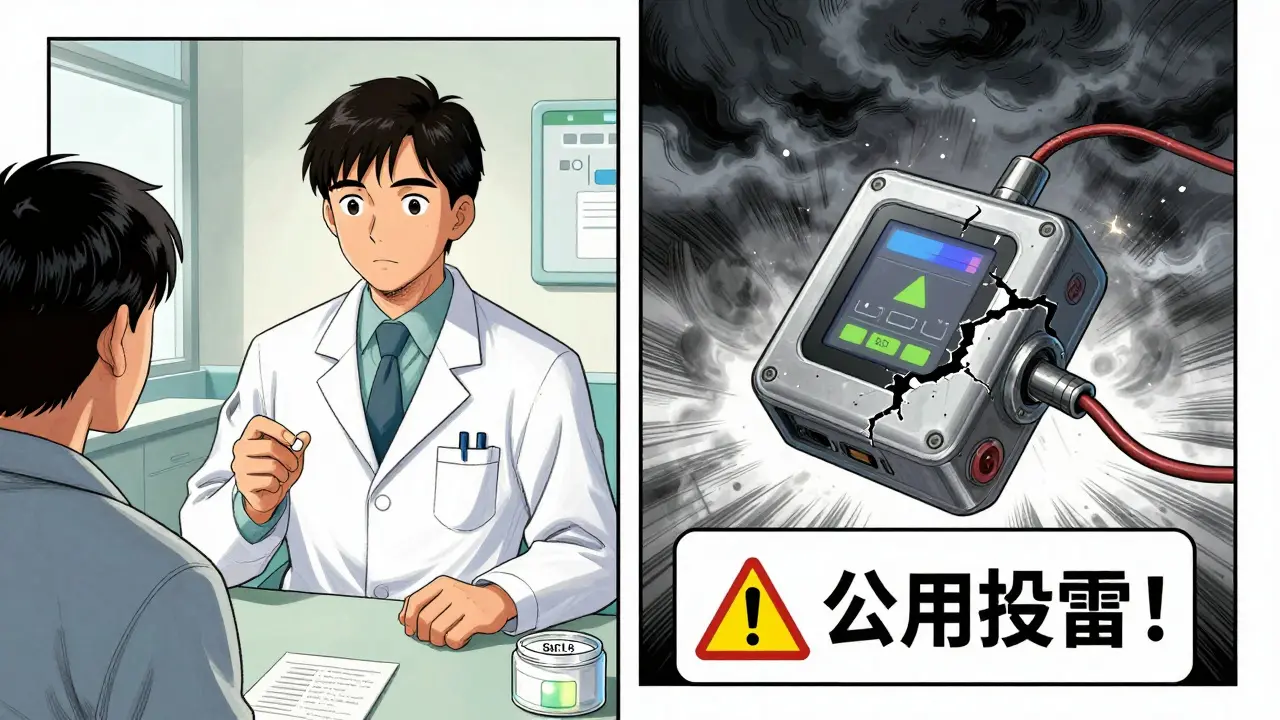
What the Archive Doesn’t Tell You
The archive gives you facts - but not always context. A 2012 study published in the Journal of the American Medical Informatics Association found that not all FDA safety alerts had the same effect. Some led to immediate drops in prescriptions. Others? Nearly zero impact. Why? Because the way the message was delivered mattered. A letter to doctors had more weight than a public notice. A boxed warning on the label had more impact than a website update. Also, the SrLC Database only covers changes since 2016. If you’re studying how a drug’s safety profile evolved from 2008 to 2015, you’re stuck. The FDA recognized this gap. In October 2023, they announced a new resource to help researchers collect historical drug approval data. It’s still in development, but it could eventually fill in those missing years.How This Archive Is Different From Other Systems
Compare the FDA’s archive to the European Medicines Agency (EMA). The EMA issues safety alerts, but their historical records are messy. Before 2015, there’s no consistent format. You might find a PDF from 2012, but not from 2011. The FDA, by contrast, has kept a clean, year-by-year log since 2010. Health Canada’s system is even simpler - it’s one big database of recalls and alerts for drugs, devices, and food. No separation. No deep labeling data. The FDA’s approach is more complex, but also more useful for researchers who need to trace how a drug’s risks were understood over time.Who Uses This Archive?
It’s not just researchers. Pharmacists use it to answer patient questions. Lawyers use it in lawsuits over drug injuries. Insurance companies use it to assess risk. Doctors use it to decide whether to prescribe a newer drug over an older one with a known history. For example, if a patient asks, “I heard this drug caused liver damage - is that still true?” a pharmacist can pull up the DSC from 2018, check the SrLC Database for the 2021 update that added a new monitoring requirement, and confirm that the current label includes mandatory blood tests. That’s real-world impact.
What’s Next for the Archive?
The FDA is working on better search tools. Right now, you have to know the drug name or the year to find something. Soon, you might be able to search by symptom - like “liver injury” or “suicidal thoughts” - and get all related alerts across drugs and devices. They’re also looking at how to make alerts more effective. If research shows that a certain type of warning doesn’t change behavior, they’ll test new formats. Maybe color-coded labels. Maybe video summaries for patients. The goal isn’t just to record history - it’s to make sure the next warning actually works.How to Access the Archive
All of it is free. No subscription. No login. Just go to fda.gov and search for “Drug Safety Communications” or “Medical Device Alerts.” You’ll find direct links to the archives. For the SrLC Database, use the exact URL: https://www.fda.gov/drugs/drug-safety-and-availability/drug-safety-related-labeling-changes-srlc-database If you’re stuck, call the FDA’s Division of Drug Information at (855) 543-3784. Or email [email protected]. They answer questions about specific alerts, even ones from years ago.What You Can Do With This Information
- Track how a drug’s risk profile changed over time. Did the FDA add a warning after a study? When? - Compare how two similar drugs were handled differently. Why did one get a boxed warning and the other didn’t? - Support a legal case with official documentation of known risks. - Educate patients with facts, not rumors. - Write a research paper with primary source data from the FDA itself. This archive is a public record. It’s not hidden. It’s not locked behind paywalls. It’s there because the public has a right to know what the government knows about the medicines and devices they use.Can I find FDA safety warnings for drugs from the 1990s online?
No, not directly. The FDA’s online archive for Drug Safety Communications starts in 2010. For warnings from the 1990s, you’ll need to use the FDA.gov Archive tool to view old web pages or visit the National Archives in Philadelphia, which holds physical records from 1906 to 1978. Some pre-2010 alerts were re-published in later summaries, but there’s no complete digital list.
What’s the difference between a Drug Safety Communication and a recall?
A Drug Safety Communication warns about a potential risk - like increased bleeding or liver damage - but doesn’t require the product to be pulled from shelves. A recall means the product is being removed because it’s defective, contaminated, or unsafe to use. Safety communications can lead to recalls, but most don’t. They’re meant to change how the product is used, not stop its sale.
Is the SrLC Database only for prescription drugs?
Yes. The SrLC Database covers only human prescription drugs regulated under New Drug Applications (NDAs) and biological products under Biologics License Applications (BLAs). It does not include over-the-counter drugs, veterinary drugs, or medical devices. For those, you’ll need to check other FDA databases.
Why does the FDA separate drug and device safety communications?
Because the risks are different. Drug risks are usually chemical - side effects, interactions, long-term toxicity. Device risks are mechanical or software-based - battery failures, broken parts, coding errors. The FDA has separate teams reviewing each. Combining them would make the alerts confusing. Keeping them separate lets doctors and patients understand the type of risk they’re dealing with.
Can I use FDA safety communications in court?
Yes. FDA safety communications are official government records and are often admitted as evidence in lawsuits involving drug injuries. They’re especially powerful when they show the FDA knew about a risk before a patient was harmed. Courts treat them as authoritative sources of safety information.
Are all FDA safety alerts posted online?
Almost all. The FDA posts every Drug Safety Communication and Medical Device Alert online. The only exceptions are rare cases involving national security or ongoing investigations, which are never made public. If you can’t find an alert, it likely doesn’t exist - or you’re looking in the wrong archive.
How often does the FDA update the archive?
New Drug Safety Communications are posted daily. The SrLC Database is updated weekly, as labeling changes are approved. Medical Device Alerts are added as soon as the FDA completes its analysis - often within days of a problem being confirmed. The archive is not static; it’s a living record that grows every day.

Wren Hamley
Man, I spent three days last month trying to track down a 2013 DSC on that one anticoagulant that got pulled quietly. The FDA archive is a beast-half the time you’re digging through Wayback Machine snapshots like an archaeologist with a caffeine addiction. But when you finally find it? Pure gold. The labeling change from 2015? That’s the real story. The alert just whispered. The SrLC entry screamed.
Kerry Howarth
This is exactly the kind of resource every clinician should bookmark.
Neela Sharma
History doesn’t live in databases it lives in the silence between warnings
the gaps where regulators hesitated
the memos buried under bureaucracy
the patients who vanished before the alert was written
we archive facts but we forget the screams behind them
Shruti Badhwar
The SrLC Database is indispensable for pharmacovigilance professionals, but its limitation to prescription drugs under NDAs and BLAs is a glaring oversight. Over-the-counter products contribute significantly to adverse event profiles, and their exclusion undermines comprehensive risk assessment.
Brittany Wallace
This made me cry a little 😭
Harvey Wiley’s Poison Squad… imagine eating arsenic-laced bread for science
we owe them everything
and yet we scroll past alerts like they’re ads
we’re so disconnected from the cost of our pills
Michael Burgess
Just used this last week for a patient who was paranoid about her new blood pressure med. Found the 2019 DSC, showed her the 2022 SrLC update with the new liver enzyme monitoring note, and she calmed right down. Docs should do this more. Not just hand out scripts-hand out context.
Also, FDA’s hotline? Actually answered. No robot. Real human. Wild.
Liam Tanner
For anyone doing research-don’t skip the paper archives. I found a 1972 internal memo about thalidomide follow-ups that wasn’t referenced in any modern paper. It changed my whole thesis. The digital archive is clean, but the dirt’s in the boxes.
Hank Pannell
Think about it-the FDA’s archive is essentially a living autopsy of capitalism’s relationship with health. Each DSC is a timestamped admission that profit outpaced precaution. The SrLC Database? That’s the legal afterthought. The device alerts? The emergency brake that sometimes fails. We don’t just track safety-we track how much risk society is willing to tolerate before someone dies. And we’re getting better at hiding the body count.
veronica guillen giles
Oh wow, a government site that actually works? What’s next? Free healthcare and functional public transit? 😏
Ian Ring
Excellent breakdown. I’ve used these resources for litigation support-particularly the SrLC Database. The timestamped changes are legally invaluable. However, I must note: the FDA’s website navigation remains frustratingly inconsistent. A minor UI/UX overhaul would dramatically improve accessibility for non-specialists.
Tru Vista
srclc? i thought it was srlc. who cares. fda is just a p.r. machine anyway. they let everything through then panic later. like always.
JUNE OHM
THEY’RE HIDING MORE THAN WE KNOW!!
Why no alerts on 2011-2015? Because they were covering for Big Pharma!!
They’re using AI to bury the truth!!
And why is the archive only in English? COINCIDENCE??
They don’t want you to know what’s really in your insulin!!
Check the 2023 memo leaked on 4chan-THEY’RE ADDING SEDATIVES TO DIABETES DRUGS TO KEEP PATIENTS QUIET!!
They don’t want you to find this!!
⚠️⚠️⚠️
Philip Leth
Yo, I showed this to my abuela. She’s 82, takes five meds, doesn’t use the internet. I printed out the DSCs from 2018 and 2021, put ‘em in a folder with a sticky note: “If you feel weird, show this to your doctor.” She hugged me. This shit matters.
Angela Goree
Why is the FDA allowed to have a 5-year gap in drug safety records?! This is a national security risk!!
They let dangerous drugs stay on the market for years without updating labels?!
Who’s protecting us?!
Where’s the oversight?!
It’s all corruption!!!
Tiffany Channell
This post is dangerously misleading. The FDA archive is a curated illusion of transparency. The real data is buried in FOIA requests that take 18 months to process. The SrLC Database? Only includes changes that were legally mandated-not those quietly negotiated. And the device alerts? They’re delayed by months while manufacturers lobby. This isn’t public safety-it’s PR theater with a fancy URL.