
Imagine paying $15 for a month's supply of blood pressure medication when your insurance copay is $40. For millions of Americans, this isn't hypothetical; it's reality. As high-deductible health plans become the norm, more people are turning to prescription discount cards to keep their medicine affordable without breaking the bank. These programs don't replace insurance-they work alongside or instead of it, offering negotiated rates that can slash costs significantly, especially for generic drugs.
But how do they actually work? And are they really worth the effort of comparing prices at different pharmacies? Let’s break down what you need to know about using coupon and discount card programs to save on generic medications, from the biggest players in the market to the practical steps you can take today.
Key Takeaways
- Prescription discount cards like GoodRx and Blink Health offer significant savings on generic drugs, often reducing costs by 60-80% compared to cash prices.
- These programs are most beneficial for uninsured patients or those with high-deductible plans who haven't met their deductible yet.
- Prices vary widely between pharmacies and platforms, so comparing options before filling a prescription is essential.
- While effective for generics, discounts on brand-name drugs are much smaller, sometimes only around 10%.
- The market for these services is growing rapidly, projected to reach $3.8 billion by 2034, driven by rising out-of-pocket costs.
What Are Prescription Discount Cards?
Prescription discount cards are third-party services that provide patients with reduced prices on medications through negotiated rates with pharmacies, functioning as an alternative payment mechanism rather than insurance. Think of them like a membership club for your local pharmacy. You don't pay a monthly fee, but when you show your digital or printed card at checkout, the pharmacy gives you a special price lower than their standard cash rate.
This model started gaining traction in the late 2000s. In 2006, Walmart launched its famous $4 generic drug program, which offered certain common medications for just four dollars for a 30-day supply. This sparked a wave of similar programs from other major retailers like Target, Kroger, and Costco. Today, the landscape has evolved into a mix of retail-specific plans and independent, app-based platforms.
The key difference between these cards and traditional health insurance is simplicity. There are no deductibles, no annual maximums, and usually no enrollment requirements. If you have the card (or the app), you get the discount. This makes them incredibly accessible, particularly for people who fall through the cracks of the traditional insurance system.
Major Players in the Market
Not all discount cards are created equal. The market features several dominant players, each with its own strengths and network of participating pharmacies.
| Platform | Type | Key Feature | Network Size |
|---|---|---|---|
| GoodRx | Third-party App | Variable discounts on brand and generic; telehealth integration | 70,000+ pharmacies |
| Blink Health | Third-party App | User-friendly interface; strong focus on price transparency | National coverage |
| NeedyMeds | Non-profit/Discount | Long history (since 1984); combines patient assistance info with discounts | Extensive database |
| Walmart Pharmacy | Retail Specific | $4/$10 flat-rate generic program | Walmart locations only |
GoodRx, founded in 2011, has become the household name in this space. It claims discounts of up to 85% on both brand and generic medications. Its strength lies in its vast network and user-friendly app that lets you compare prices across nearby pharmacies instantly. Blink Health, launched in 2015, competes closely with GoodRx, often offering competitive rates and a streamlined experience. Meanwhile, NeedyMeds brings a unique angle as a non-profit organization that has been helping patients find affordable medications since 1984, expanding its discount services in the 2010s.
On the other end of the spectrum are retail-specific programs. Walmart's program is straightforward: if a generic drug is on their list, it costs $4 for a 30-day supply or $10 for a 90-day supply. No apps, no comparisons-just a fixed price. This model appeals to those who prefer simplicity over optimization, though it may not always yield the lowest possible price compared to third-party apps.
How Much Can You Actually Save?
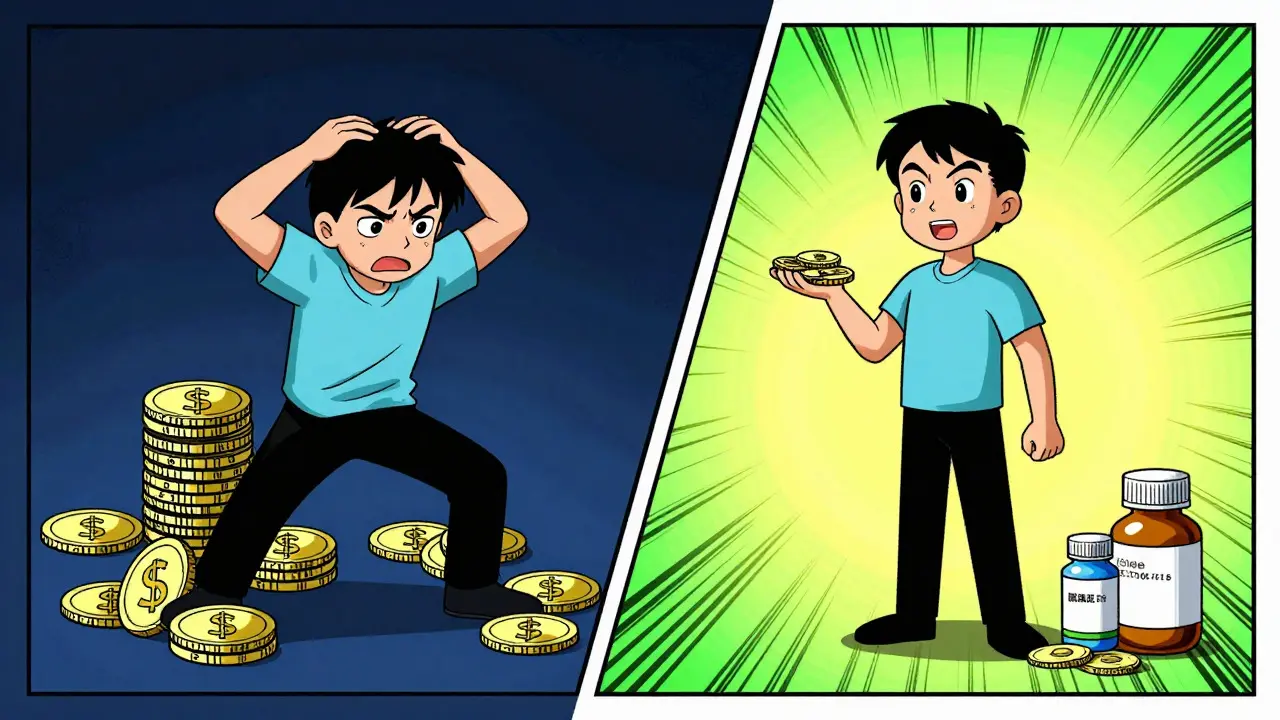
The short answer: it depends heavily on whether you're buying generic or brand-name drugs. A 2022 study published in *Circulation: Cardiovascular Quality and Outcomes* analyzed pricing for heart failure medications and found stark differences. For generic-only regimens, discount cards achieved an average 65% discount off standard cash prices. In some cases, a three-drug regimen cost as little as $11 per month.
However, when brand-name medications were included in the regimen, the savings shrank dramatically. Discounts dropped to approximately 10%, and monthly costs could still range from $1,200 to $1,500. This highlights a critical limitation: while these cards are powerful tools for managing chronic conditions with generic alternatives, they offer limited relief for expensive brand-name therapies.
For common generics like lisinopril, metformin, or atorvastatin, users frequently report savings of 70-80%. One user on Reddit noted saving $87 on cholesterol meds in a single month by using GoodRx instead of paying cash. But consistency isn't guaranteed. Another user reported that the same drug at the same pharmacy cost $15 with one card but $42 with another. This variability is why checking multiple sources is crucial.
Who Benefits Most from These Programs?
Discount cards shine brightest for two groups: the uninsured and those with high-deductible health plans (HDHPs). In 2022, 43% of U.S. workers were covered by HDHPs, according to the Kaiser Family Foundation. With these plans, you pay full out-of-pocket costs until you meet your deductible, which can be thousands of dollars. During this period, a discount card can drastically reduce your expenses.
For insured individuals with low copays, the math might not work in favor of the card. If your insurance copay for a generic drug is $10, and the discount card offers $12, you're better off using insurance. However, if your copay is $40 and the card offers $15, the card wins. An analysis by Ohio State University College of Pharmacy notes that these programs are "most beneficial for uninsured patients, as the discounted generic price with the card may not be superior to an insurance copay" for others.
Health literacy also plays a role. A study by Kripalani et al. found that patients who believed generic drugs were as effective as brand names were three times as likely to utilize discount programs. Understanding that generics contain the same active ingredients as their brand-name counterparts empowers patients to make informed choices and maximize savings.
Practical Steps to Maximize Savings
Using these programs effectively requires a bit of strategy. Here’s how to approach your next prescription:
- Check Your Insurance First: Determine your current copay or coinsurance amount. If it's already very low, stick with insurance.
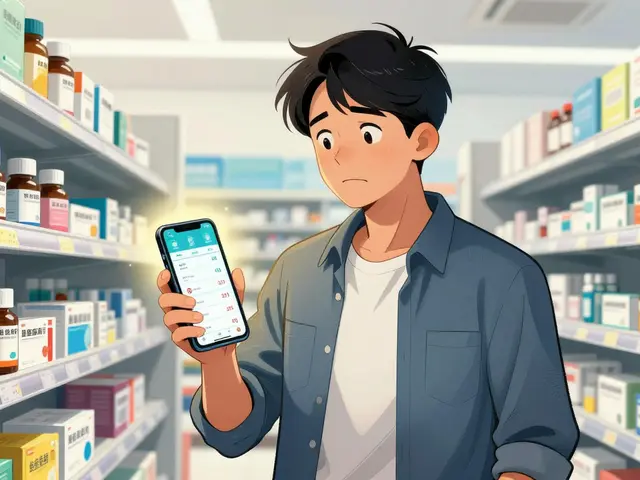
- Compare Multiple Platforms: Don't settle for the first quote. Use apps like GoodRx, Blink Health, and NeedyMeds to see which offers the best price for your specific drug and dosage.
- Compare Nearby Pharmacies: Prices vary by location. Even within the same zip code, one pharmacy might charge less than another. The apps allow you to filter by distance and price.
- Consider Retail-Specific Deals: If you shop at Walmart, Kroger, or Costco, check if your drug is on their flat-rate list. Sometimes $4 is unbeatable.
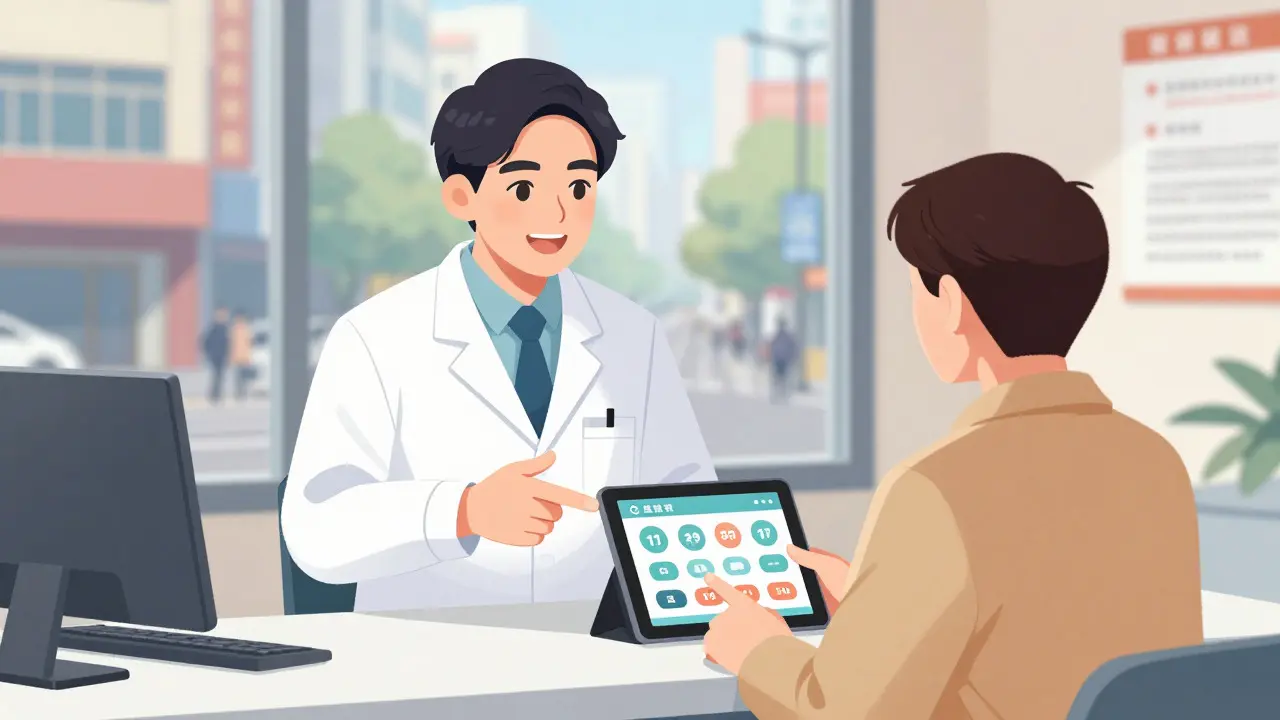
- Ask Your Pharmacist: Pharmacists are trained to advocate for affordability. They can often tell you if a discount card price is better than your insurance price and help you switch to a cheaper equivalent if available.
Keep in mind that this process takes time. Consumer Reports found that 68% of users who tried multiple discount cards had to visit several pharmacies to find the best price. For those managing multiple chronic conditions, this "shopping around" can feel burdensome. However, for many, the savings far outweigh the inconvenience.
Challenges and Limitations
Despite their benefits, these programs aren't perfect. Dr. Michael Fischer, an associate professor at Harvard Medical School, described the current system as "piecemeal," noting that it places a substantial administrative burden on patients. You have to do the work to find the best deal, which can lead to delayed access to medication if you're spending hours comparing prices.
There's also the issue of brand-name drugs. As mentioned earlier, discounts on these are minimal. For patients requiring expensive specialty medications, discount cards offer little relief. Additionally, regulatory concerns persist. The Federal Trade Commission has raised questions about the revenue models behind these programs, particularly how Pharmacy Benefit Managers (PBMs) share fees with discount card providers. While this doesn't directly affect your wallet today, it could impact future pricing structures.
Another limitation is the lack of universal acceptance. Not every pharmacy participates in every program. While GoodRx covers over 70,000 pharmacies, there are still gaps, especially in rural areas. Always verify that your preferred pharmacy accepts the card before heading in.
The Future of Drug Discounting
The market for prescription discount cards is booming. InsightAce Analytic projects the market will grow from $1.2 billion in 2023 to $3.8 billion by 2034, representing an 11.3% compound annual growth rate. This growth is fueled by rising consumerism, digital adoption, and increasing member liability due to high-deductible plans.
We're also seeing integration with traditional insurance. In 2023, major PBMs like Express Scripts and OptumRx began implementing "integrated discount card programs" that automatically apply the lowest available price from both insurance and discount cards. This removes the manual comparison step, making the process smoother for patients. GoodRx has also expanded into telehealth, allowing users to consult doctors and get prescriptions with pre-applied discounts, further streamlining the journey from diagnosis to dispensing.
As these systems evolve, the goal is to make affordability seamless. Until then, staying informed and proactive is your best defense against skyrocketing drug costs. By understanding how these programs work and leveraging them strategically, you can take control of your healthcare expenses and ensure that cost never stands in the way of getting the medication you need.
Do I need to enroll in a prescription discount card program?
No, most major programs like GoodRx and Blink Health are free to use. You simply download the app or print a coupon from their website. There are no membership fees or annual costs associated with using these cards.
Can I use a discount card if I have health insurance?
Yes, but you should compare prices first. If your insurance copay is higher than the discount card price, use the card. If your copay is lower, use insurance. You cannot typically use both simultaneously for the same prescription.
Are discount cards effective for brand-name drugs?
They are generally less effective for brand-name drugs. While generics can see discounts of 60-80%, brand-name medications often see only around 10% savings. For expensive brand drugs, manufacturer patient assistance programs might be a better option.
Which is better: GoodRx or Walmart's $4 program?
It depends on the specific medication. Walmart's $4 program is great for common generics on its list. GoodRx offers more flexibility and potentially lower prices for a wider range of drugs, including some brand-name options. Compare both for your specific prescription.
Do pharmacists accept all discount cards?
Most large chain pharmacies accept major cards like GoodRx, Blink, and NeedyMeds. However, independent pharmacies may have different agreements. It's always best to check the platform's website or call the pharmacy ahead of time to confirm participation.
Amy Zalkin
honestly this whole thing feels like a puzzle game where the prize is just not getting broke at the pharmacy. i use goodrx for my thyroid meds and it’s wild how much cheaper it is than my insurance copay sometimes. but yeah you gotta be ready to do some detective work or else you might end up paying way more than you should. it’s like shopping for groceries but for your life stuff which is kinda scary tbh
Alex Brown
The fundamental issue here is that we have outsourced the complexity of healthcare navigation to the patient, rather than solving the structural inefficiencies within the system itself. While these tools are helpful, they are band-aids on a bullet wound of an administrative burden. We must look beyond individual optimization strategies to systemic reform.
Kaylyn Mello
i totally agree with the point about comparing prices because last month i went to cvs and paid full price for my metformin then realized i could have used blink health and saved like 15 bucks. it was such a small amount but when you add it up over a year it gets real. also the pharmacist didn't even mention the discount option so you really do have to ask them if they know about it
joyce Hogewoning
oh my god can we talk about how insane it is that we have to download three different apps just to figure out what a pill costs? i spent like twenty minutes last week standing in the parking lot of walgreens trying to get wifi so i could check if my blood pressure med was cheaper at kroger across the street. it is absolutely ridiculous that our healthcare system has turned into a coupon clipping contest for people who are already stressed out about being sick. i just want to take my medicine without feeling like a financial advisor doing market analysis every single time i refill my script. the fact that the price changes depending on which app you open is just pure chaos and makes me want to scream into a pillow. why cant we just have one standard price for everything like normal human beings would expect? it is exhausting having to be a detective just to stay healthy in this country. i bet half the reason people skip their meds is because they are too tired to hunt down the best deal. it is a mess and i am so over it. please someone fix this before i lose my mind. i miss the days when you just handed over your insurance card and walked away done. now it is a whole production every single time. i swear if i had to compare prices for my vitamins i would just stop taking them entirely. the mental load is just too high for something that should be basic. i hope the future section of this article is actually true and not just wishful thinking. otherwise we are all doomed to spend our lives as part-time pharmacists. it is just so tiring and frustrating and nobody talks about the emotional toll of it. i just want to feel safe knowing i can afford my health without breaking the bank. but until then i guess i will keep refreshing my phone in the pharmacy line. ugh. anyway rant over but seriously this needs to change soon. thank you for letting me vent. i needed to say this out loud somewhere. bye.
Thhomas Fox
Solid breakdown. The key takeaway is that knowledge is power here. If you don't check, you pay more. Simple as that. GoodRx is usually my go-to, but always double-check local retail options. Don't let convenience cost you extra cash.
Owen John
It's not really about saving money, it's about the PBM cartel squeezing the last drop of profit from the system while pretending to help you. These 'discount' cards are just another layer of obfuscation designed to keep you dependent on their ecosystem. Wake up. The real enemy isn't the price tag, it's the invisible hand controlling the flow of capital. You think Walmart's $4 program is charity? It's a loss leader to drive foot traffic. Purely cynical. Most people don't see the strings attached. They're happy with a few dollars off while the giants feast. Enjoy your little coupons, sheep. The architecture of control remains intact. Just remember, nothing is free. Not even 'savings'. Especially not in America. 🤡
Maneesh kv
this is so true man 😤 i live in india and we dont have this exact system but the struggle of finding affordable meds is universal. here we also have generic vs brand issues and people often pay more for brands they think are better. the concept of checking multiple sources is genius. maybe we need apps like this globally? 🌍💊
John Park
let's be real the only reason these cards work is because pharma companies are gouging us so hard that even a 10% discount feels like a victory. it's a band aid on a cannon ball. the real problem is supply chain corruption and lack of competition. these apps are just symptom management. you're treating the headache not the tumor. typical american solution: make a website for it. 🙄
Kathleen McGrath
I love this tip! I never thought to ask my pharmacist if there was a cheaper equivalent. I'm going to try this next time I go in. Thanks for sharing!
Lemuel Gomez
Very well written, indeed; however, the nuance regarding rural areas is crucial, as many of us find that the '70,000 pharmacies' statistic is somewhat misleading in practice, given that access is often limited to a single chain within a fifty-mile radius, which, unfortunately, dictates the pricing structure regardless of digital comparison efforts. It is a subtle but significant barrier that urban-centric articles often overlook, yet it remains a persistent reality for a large demographic segment, necessitating a more localized approach to affordability strategies. One must consider the logistical hurdles involved in such comparisons, especially when transportation is a limiting factor, which further complicates the 'shopping around' narrative presented in the text. Thus, while the tools exist, their utility is unevenly distributed across the geographical landscape of the nation, creating a two-tiered system of access that deserves further scrutiny and attention from policymakers alike.
Emmanuel Umana
In Nigeria, we rely heavily on informal networks for drug pricing. This formalized digital approach is fascinating. It shows how technology can democratize information, even in complex systems. A model worth studying for developing economies.
Lilian Binda
stop acting like its so hard to save money. if you are poor enough to need these cards you should just go to a hospital clinic instead. they give cheap meds for free most of the time. its lazy people who complain about checking apps. we in nigeria manage with less and no one complains about the apps. its all in the mindset. stop whining and start working smarter. 🇳🇬