
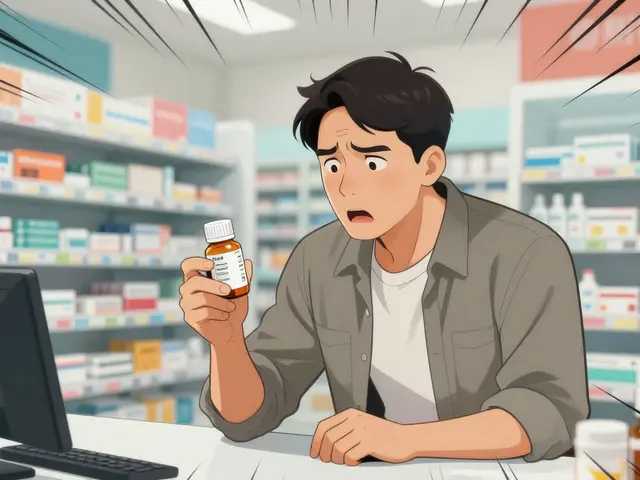
You're at the pharmacy counter, you hand over your prescription, and then comes the sticker shock. A monthly medication that you thought would be affordable suddenly costs more than your grocery bill. It's a frustrating spot to be in, but there's a simple solution that most people overlook: asking for a generic. While we often hear that generics are "just as good," actually getting your doctor to switch the prescription requires a bit of strategy. You aren't just asking for a cheaper pill; you're asking for a therapeutic equivalent that keeps your health on track without draining your bank account.
Why your doctor might not mention generics
You might wonder why your physician doesn't just prescribe the cheapest version automatically. The truth is, doctors are human and overwhelmed. According to data from Cedars-Sinai, many physicians can't keep track of exactly when a new generic hits the market or which specific versions are covered by your insurance plan. They are focused on your diagnosis and treatment, not the fluctuating price lists of pharmacy benefit managers.
Moreover, some doctors have an old-school habit of prescribing the brand they trained on years ago. It's not necessarily that they don't trust generics; it's just that the brand name is the "familiar" one. This is where you come in. By bringing up the topic, you're helping your doctor align your clinical needs with your financial reality.
When a brand-name drug is actually necessary
Before you push for a switch, it's important to know that there are a few cases where the brand name actually matters. These are called narrow therapeutic index drugs. These are medications where a tiny difference in the amount of drug in your blood can lead to a major change in how the drug works or cause dangerous side effects.
Common examples include Warfarin (a blood thinner) and certain thyroid medications like levothyroxine. For these specific drugs, switching between different generic manufacturers can sometimes cause your levels to fluctuate. If your doctor tells you that you must stay on the brand name, ask them specifically: "Is this a narrow therapeutic index drug?" If the answer is yes, the brand-name consistency is likely a safety requirement, not a preference.

How to start the conversation
The best time to talk about costs is during your appointment, not while you're standing at the pharmacy. If you wait until you're at the drugstore, you might have to call the doctor and wait hours for a callback, delaying your treatment. Instead, frame the conversation around shared goals. Instead of just asking "Can I get the generic?", try saying: "I want the most effective treatment possible at the best price. Can we look for generic options for my medications?"
Here are a few specific questions to keep in your back pocket for your next visit:
- Is there a generic equivalent available for this specific medication?
- Would the generic version be just as appropriate for my specific health needs?
- Are there any medical reasons why I should stay on the brand-name version for this drug?
- If a generic isn't available today, do you know if one is expected to be approved soon?
If you want to be extra prepared, bring a simple cost comparison. For example, the difference between brand-name Nexium and generic omeprazole can be staggering-sometimes jumping from nearly $300 down to just a few dollars for a 30-day supply. Showing your doctor the actual price difference makes the request a matter of financial necessity rather than a casual preference.
| Feature | Brand-Name Drug | Generic Alternative |
|---|---|---|
| Active Ingredient | Original Formula | Identical Active Ingredient |
| FDA Requirement | Rigorous Clinical Trials | Bioequivalence Proof |
| Price Point | Premium (Patent Protected) | Significantly Lower (Competitive) |
| Appearance | Unique Shape/Color | May differ in color, shape, or imprint |
| Inactive Ingredients | Standardized | Can vary (binders, fillers, dyes) |
Dealing with concerns about effectiveness
A common worry is that generics are "watered down" or lower quality. This is a myth. The FDA requires generics to be bioequivalent. This means the active ingredient must reach the same concentration in your blood within the same timeframe as the brand name, with a very tight margin of error (typically 80-125% of the brand's performance).
If you do feel a difference after switching, it's usually not the active medicine. Generics can have different excipients-the inactive stuff like dyes or binders. While these don't change how the drug treats your condition, they can occasionally cause a different minor side effect. If this happens, tell your doctor; they might be able to switch you to a different generic manufacturer that uses different fillers.

The role of your pharmacist
Your pharmacist is your best ally in this process. In most states, pharmacists are actually allowed to substitute a generic for a brand name automatically unless the doctor explicitly writes "Do Not Substitute" on the script.
If you're unsure if a generic exists, ask your pharmacist first. They have the most up-to-date data on what's in stock and what the insurance companies are covering. If they find a generic alternative that your doctor missed, the pharmacist can often call the office and suggest the switch, saving you a second trip to the clinic.
Practical tips for maximum savings
If you're managing multiple medications, the savings from switching to generics can add up to thousands of dollars a year. AARP found that seniors who actively discussed generics with their doctors saved an average of $427 annually. For those on high-cost biologics, the savings can be even more dramatic. In some cases, switching a rheumatoid arthritis medication from a brand-name version to a generic biosimilar has saved patients over $1,800 per month.
To make the most of your healthcare, consider these final tips:
- Ask for a "generic-allowed" prescription. This gives the pharmacist the green light to find the cheapest equivalent.
- Check your insurance formulary. Some plans have "preferred generics" that cost almost nothing.
- Keep a list of your current medications and the date you started them. This helps you track if a change in manufacturer affects your symptoms.
Are generic drugs really as effective as brand-name ones?
Yes. For about 95% of medications, generics are therapeutically equivalent. The FDA requires them to have the same active ingredient, strength, and delivery method. The only differences are usually the inactive ingredients (like fillers or colors) and the price.
Why would a doctor refuse to prescribe a generic?
The most valid medical reason is if the drug is a "narrow therapeutic index" medication, where tiny dosage variations can be dangerous. Other reasons might include a patient having a known allergy to a specific filler used in the generic version, or the generic simply not being available yet.
Will my insurance cover the generic version?
In most cases, insurance companies prefer generics because they are cheaper. In fact, some insurance plans will only cover the generic version unless your doctor provides a strong medical reason for the brand name.
Can I switch to a generic if I've been on the brand name for years?
Generally, yes. Most people can switch without any change in their health outcomes. However, you should always consult your doctor first to ensure the switch is safe for your specific condition, especially for long-term maintenance drugs.
What if the generic pill looks different than the brand one?
This is completely normal. Generic manufacturers cannot copy the exact look, shape, or color of a brand-name drug due to trademark laws. As long as the pharmacy verifies the medication, the appearance does not affect its potency.
Christopher Cooper
It is honestly refreshing to see a guide that emphasizes the conversation during the appointment. Most people just suffer in silence at the pharmacy counter and then leave their medication behind because they can't afford it. The part about narrow therapeutic index drugs is a crucial distinction that often gets glossed over in these types of articles. It ensures safety while still promoting affordability.
Daniel Trezub
Sure, this is all great and dandy, but let's be real: some generics are basically placebo pills in certain markets. Not saying they aren't FDA approved, but the quality control varies wildly between different manufacturers. You might be saving twenty bucks only to find out the drug doesn't actually kick in until six hours later. Just my two cents.
Jay Vernon
This helps a lot! Thanks! 😊👍
Danielle Kelley
Wake up people! Why do you think they want you on generics? It is all about control and testing new fillers on the population without us knowing! The big pharma companies just rotate their patents to keep the prices high on some and low on others to see who is gullible enough to switch. Don't trust the FDA, they are paid off by the very people making these pills!
Michael Flückiger
Absolutely amazing advice!!! I've been doing this for years and it really works!!!! Just be firm with your provider!!!!
Srikanth Makineni
pharmacy apps are better for checking prices first
Brady Davis
Oh wow, what a revelation. I had no idea that spending less money was actually a good thing. Truly groundbreaking stuff here. I'm sure the pharmaceutical CEOs are shaking in their boots right now because someone figured out how to ask for the cheaper version of a pill.
GOPESH KUMAR
The concept of bioequivalence is a mere mathematical abstraction that ignores the holistic experience of the patient. You can have the same active ingredient, but if the delivery mechanism differs by even a fraction, the metaphysical impact on the body is entirely different. People just blindly follow guidelines without understanding the underlying chemistry of absorption. It's a classic case of reductionism in modern medicine where the price tag becomes more important than the actual efficacy of the treatment.
Jitesh Mohun
stop trusting the doctors blindly and just go to a generic pharmacy and get it done man
Sarabjeet Singh
Fair point, but some people need the paper trail for insurance.
Laurie Iten
it is interesting how we prioritize the brand name over the actual molecule... a strange societal quirk where the label feels safer than the science
Ruth Swansburg
Please do reach out to your pharmacist. They are wonderful resources for this.
Timothy Burroughs
Typical garbage advice for people who can't handle their own bills. In this country we used to have real medicine not this generic waste. You people are just begging for lower quality care and then wondering why the healthcare system is collapsing. It's pathetic how we've settled for the bare minimum just to save a few pennies while the rest of the world laughs at us
Nikhil Bhatia
Too long. Just ask the pharmacist.
Dhriti Chhabra
I believe it is most prudent to maintain a respectful dialogue with one's physician to ensure that the transition to a generic alternative does not compromise the clinical outcome of the treatment plan.