
Switching from a brand-name drug to a generic version is common - and usually safe. But if you’ve ever looked at a new pill and thought, "This doesn’t look right," you’re not alone. Thousands of people in the UK and US experience confusion, anxiety, or even side effects during these transitions. The good news? Pharmacists are trained to help you through this. And with the right questions, you can avoid disruptions to your treatment.
Why Generic Switches Happen
When a brand-name drug’s patent expires, other companies can make the same medicine at a lower cost. These are called generics. They contain the same active ingredient, work the same way, and meet the same safety standards as the original. In fact, the FDA says 9 out of 10 prescriptions filled in the US are for generics. In the UK, NHS prescribing guidelines strongly encourage generics to save money - and those savings go back into the health system. But here’s the catch: generics aren’t always identical in appearance. They might be a different color, shape, or size. They might even have a different brand name on the label. That’s because inactive ingredients - like fillers, dyes, or coatings - can vary. For most people, this doesn’t matter. But for some, especially those on drugs with a narrow therapeutic index, even small differences can cause problems.What You Need to Know Before the Switch
Don’t wait until your prescription runs out to ask questions. Start talking to your pharmacy at least 30 days before your brand-name drug is no longer available. Here’s what to check:- Is your insurance covering the generic? Most plans require you to try the generic first - unless your doctor says otherwise.
- Does your prescription have any restrictions? Some medications, like warfarin or levothyroxine, require special approval for brand-name use.
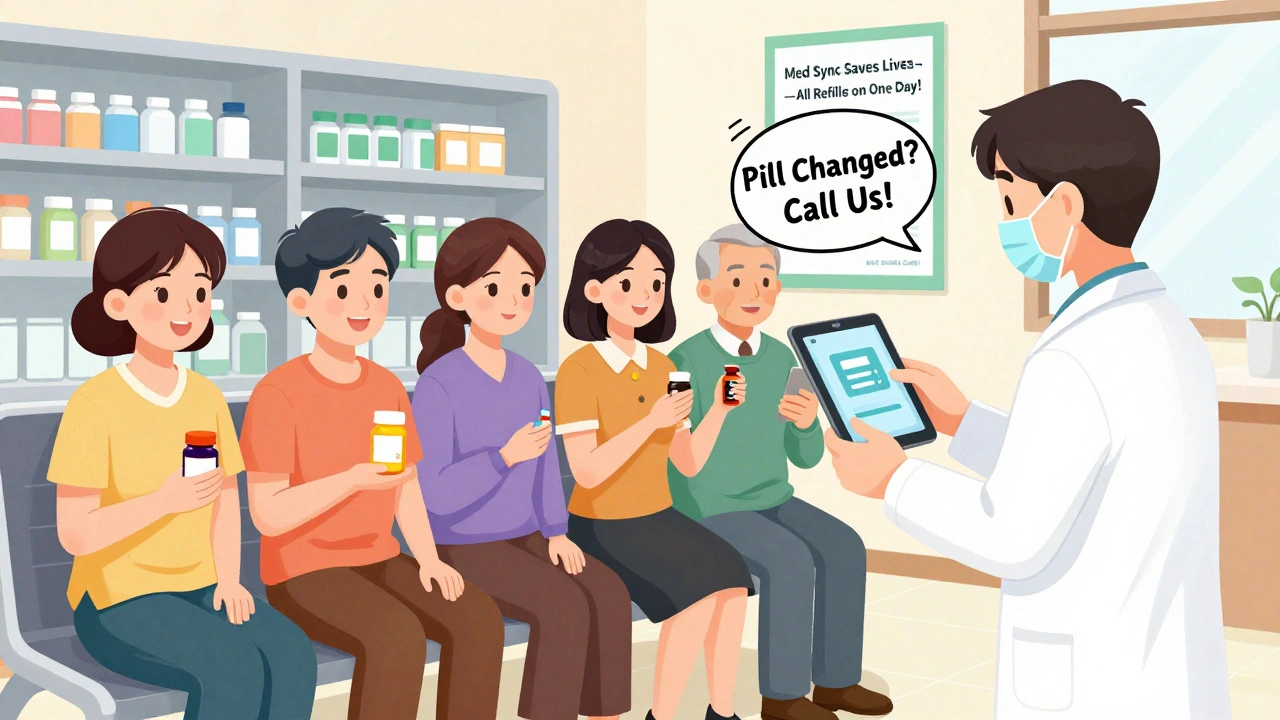
- Will the switch affect your refill schedule? Ask if you can sync all your meds to one day each month. It reduces missed doses.
- Is there a patient support program? Some generic manufacturers offer free samples or cost-help programs.
When to Speak Up - Red Flags to Watch For
Most people switch without issues. But if you notice any of these after switching, contact your pharmacist immediately:- New or worsening side effects - like dizziness, nausea, or rashes
- Changes in how you feel - fatigue, mood swings, or seizures (especially if you’re on epilepsy meds)
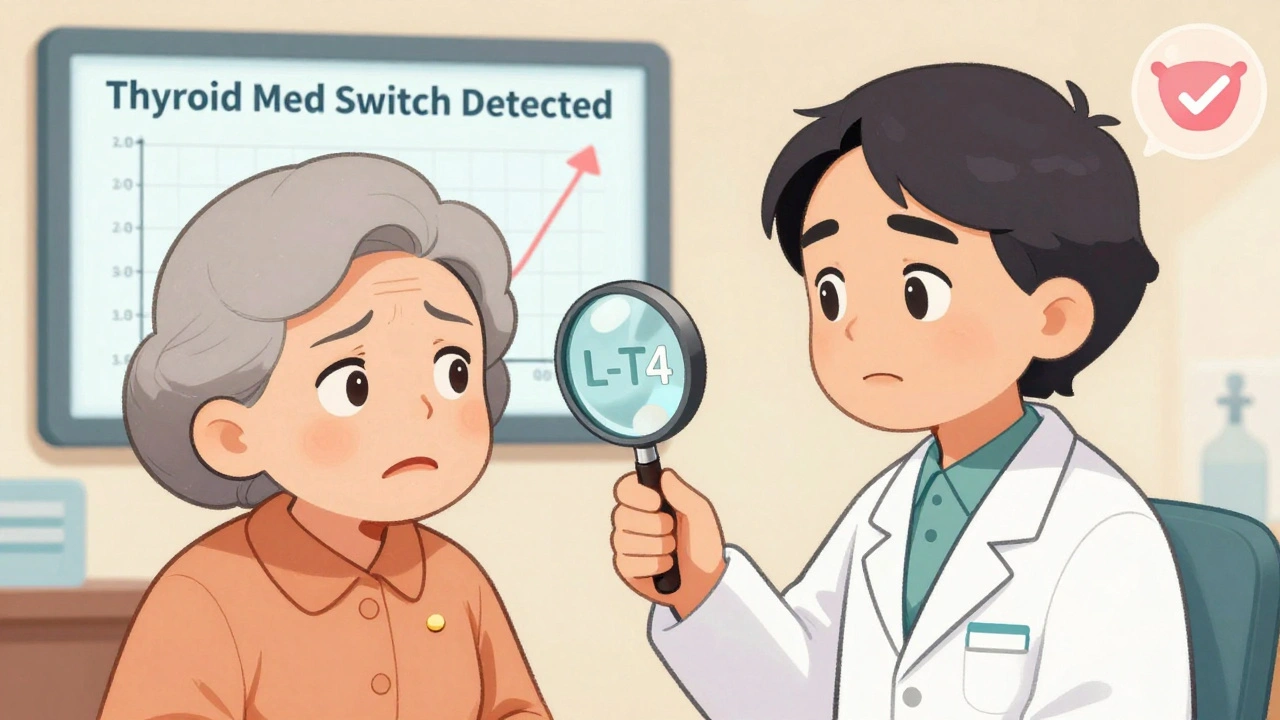
- Medication not working like it used to - for example, blood pressure not dropping or thyroid levels changing
- Confusion over pill appearance - if your pill looks completely different from last time
How Pharmacists Help During Transitions
Your pharmacist isn’t just filling a prescription - they’re your medication safety net. When a generic becomes available, they:- Check your insurance formulary to see what’s covered
- Verify if your drug has any restrictions (like for thyroid or blood thinners)
- Compare your current and new meds for bioequivalence
- Review your full list of drugs for possible interactions
- Document any concerns you raise - and may even call your doctor if needed
What to Do If You’re Not Sure
If you’re nervous about switching, here’s your action plan:- Call your pharmacy ahead of time. Say: "I’m due to switch to a generic. Can we talk about it before I pick it up?"
- Bring your current pill bottle and a list of all your meds to the pharmacy.
- Ask: "Is this generic the same as the brand? Will it affect how I feel?"
- Request to see the new pill - compare it to your old one. Ask what the inactive ingredients are.
- If you’re still unsure, ask your doctor for a "dispense as written" note. This tells the pharmacy not to substitute.
Special Cases - When Generic Switches Need Extra Care
Some medications are more sensitive to changes. These include:- Levothyroxine (for thyroid): Even tiny changes in absorption can throw off your hormone levels. Many doctors prefer you stick with the same brand or generic once you’ve stabilized.
- Warfarin (blood thinner): Small differences in how the drug is absorbed can increase bleeding risk. Pharmacists often monitor INR levels more closely after a switch.
- Antiepileptics (like Keppra or Lamictal): A small study found some patients had more seizures after switching. Don’t assume it’s safe without checking.
- Immunosuppressants (like cyclosporine): Used after transplants. Even slight changes can lead to rejection.
What’s New in 2025
Technology is making transitions smoother. In the UK, many pharmacies now use digital tools that flag potential issues when a generic is substituted. Some systems even alert you via text if your pill looks different - and suggest you call your pharmacist. The DEA’s 2023 rule change (which also applies to UK-style controlled drug systems) lets you transfer prescriptions between pharmacies without going back to your doctor. That means if your brand runs out and your local pharmacy doesn’t have the generic, you can move your script quickly. Some pharmacies now offer "medication synchronization" - getting all your refills on the same day. This reduces confusion and missed doses during transitions. One study showed it improved adherence by 27%.Your Next Steps
You don’t have to guess or worry. Here’s what to do right now:- Check your next prescription: Is it still brand-name? If yes, ask your pharmacy when the generic will be available.
- Call your pharmacy today. Ask: "Will I be switched to a generic? What should I watch for?"
- Keep your pill bottles - even empty ones. They help you compare changes.
- Write down how you feel before and after the switch. Note sleep, energy, mood, or symptoms.
- If something feels off, don’t wait. Call your pharmacist. They’re there to help.
Are generic drugs as safe as brand-name drugs?
Yes. All generics approved by the FDA or the UK’s MHRA must prove they deliver the same amount of active ingredient into your bloodstream at the same rate as the brand-name version. They’re held to the same strict manufacturing standards. The only differences are in color, shape, or inactive ingredients - which rarely affect how the drug works.
Can I refuse a generic substitution?
Yes. You can ask your pharmacist to dispense the brand-name drug instead. But your insurance may require you to pay the full price out of pocket. If you have a medical reason - like a bad reaction to a previous generic - ask your doctor to write "dispense as written" or "no substitution" on the prescription.
Why does my generic pill look different?
Generic manufacturers aren’t required to match the brand’s appearance. Different companies use different dyes, shapes, or coatings. This is normal. But if the pill looks completely different from your last refill - especially if it’s a new color or marking - ask your pharmacist to confirm it’s the right medication. Never assume.
What if the generic doesn’t work like the brand?
If you notice changes in how you feel - like increased symptoms, side effects, or reduced effectiveness - contact your pharmacist immediately. For certain drugs like thyroid meds or seizure medications, even small differences matter. Your pharmacist can check if the generic is bioequivalent, contact your doctor, or help you get the brand back if needed.
How do I know if my pharmacy is using a reliable generic?
All generics sold in the UK or US must be approved by the MHRA or FDA. Reputable pharmacies only stock approved generics. You can ask your pharmacist which manufacturer makes the generic you’re getting - and whether it’s been on the market long enough to have a safety record. Avoid generics from unknown or overseas suppliers not regulated by these agencies.
Can I switch back to the brand if I don’t like the generic?
Yes. If you’re experiencing problems, your pharmacist can help you request a return to the brand-name drug. You’ll need a note from your doctor stating it’s medically necessary. Some insurance plans allow one-time exceptions. If cost is the barrier, ask if the manufacturer offers coupons or patient assistance programs.
ATUL BHARDWAJ
Generic same active ingredient. No need panic. Pharmacist know what they doing. Save money. Good for system.
Ella van Rij
Ohhh so now we’re all supposed to trust the ‘same active ingredient’ fairy tale? 🙄 My cousin’s thyroid levels went haywire after switching - turns out the generic had a different filler that messed with absorption. Thanks for the PSA on how to ignore your body’s warning signs.
Rebecca M.
My pill changed from a blue oval to a white triangle and I cried. Not because I’m dramatic - because I’ve been on this med for 12 years and now I don’t recognize my own life. Who designed this system? A robot with a grudge?
Jay Everett
Y’all are overthinking this. I’ve switched generics 7 times in 5 years - levothyroxine, warfarin, you name it. Only once did I feel off, and it was because I forgot to take it at the same time. The real issue? Consistency. Take it at the same time, same food, same routine. The pill’s color doesn’t care if you’re a drama llama. 🤷♂️💊
Elizabeth Grace
I just got switched to a generic and now I’m sweating through my pajamas at 3am. I swear to god, if this is just ‘in my head’ I’m gonna throw my pill bottle out the window. Why does everyone act like my anxiety is a bug, not a feature of this system?
Paul Keller
While I appreciate the intent of this article, it fundamentally underestimates the psychological and physiological weight of medication identity. The pill is not merely a chemical delivery system - it is a ritual, a symbol of stability. When that symbol changes without warning, it triggers a cascade of cognitive dissonance, particularly in patients with chronic conditions. This is not anecdotal - it is neurobiological. The FDA’s bioequivalence standards are statistically sound, but they do not account for the human experience of bodily continuity. We must move beyond reductionist pharmacology toward patient-centered pharmacotherapy.
Steve World Shopping
Generic substitution is a supply chain optimization protocol, not a clinical decision. The real problem is the lack of pharmacovigilance infrastructure in community pharmacies. You need real-time bioavailability monitoring, not a Google search for pill images. Until we implement FDA-grade traceability with blockchain-backed batch verification, this is just placebo compliance with a side of cost-cutting.
Arun kumar
you know what i think? maybe the problem isnt the pill. maybe its we got used to the brand name like its a friend. i mean, we name our dogs, our cars, why not our meds? but the body dont care about the logo. just the molecule. still… i get it. its weird. like your favorite coffee cup breaks and you have to use a plastic one. same coffee. different feeling.
Zed theMartian
Oh, so now we’re supposed to be grateful that corporations are saving us money by making our medicine look like a cheap candy? Brilliant. Next they’ll be replacing my insulin with a ‘generic’ that’s just sugar water with a sticker. I’ve seen the pills. They’re not just different colors - they’re different sizes, different markings, different textures. And now you want me to trust a system that can’t even keep the same shape? This isn’t healthcare. It’s pharmaceutical roulette.
Shannara Jenkins
Hey - if you’re worried, call your pharmacist. Seriously. They’re not just the people who hand you the bottle. They’re your medication detective. Ask them to walk you through the switch. Most of them will do it for free. You’ve got this. 💪
Lynn Steiner
I hate this so much. I’m not crazy. I know my body. And now I’m supposed to just swallow a new pill and pretend I’m fine? I’ve had panic attacks over pill changes. And no one gets it. Not my doctor. Not my insurance. Not even my husband. I’m just supposed to be grateful for the savings? Like my mental health is a line item on a spreadsheet. 😭
Steve Enck
The article is a masterclass in institutional gaslighting. By framing patient concerns as ‘anxiety’ rather than legitimate pharmacokinetic variability, it reinforces the hegemony of cost-driven medicine. The JAMA study cited (9.4% therapeutic failure) is statistically significant, yet dismissed as ‘rare.’ Rare for whom? For the insurer? Not for the patient who just had a seizure. This is not healthcare. It’s actuarial management disguised as public service.
Alicia Marks
Just wanted to say - if you’re scared, you’re not alone. I’ve been there. I called my pharmacy, asked to see the pill, and they printed me a comparison sheet. It helped so much. You’re not being dramatic. You’re being smart.
dave nevogt
There’s a deeper question here: if a pill looks different, and you feel different - is it the pill, or the narrative around it? We’ve been conditioned to equate appearance with authenticity. But medicine isn’t art. It’s chemistry. And yet… the mind is part of the pharmacology. Placebo isn’t fake - it’s real biology. So maybe the problem isn’t the generic. Maybe it’s the lack of trust in the system. And that’s not something a pharmacist can fix with a pamphlet.
मनोज कुमार
Generic is fine. Stop crying. Pharma companies are scamming you with brand names. Your body is weak. Take the pill. No drama. Save money. End of story.