
Trying to refill your prescription while abroad isn’t as simple as walking into a local pharmacy. Whether you’re retiring in Spain, working in Canada, or just traveling for months, getting your medication across borders can feel like navigating a maze with no map. The truth? Prescription transfer between countries isn’t a standardized process - it’s a patchwork of laws, loopholes, and local rules that change with every border you cross.
Why You Can’t Just Walk In and Ask for a Transfer
Most people assume if a pharmacy in the U.S. can transfer a prescription to another U.S. pharmacy, it should work the same way internationally. But that’s not how it works. The DEA’s 2023 rule allowing one-time electronic transfers between U.S. pharmacies applies only within the country. It doesn’t extend overseas. Why? Because every nation controls its own drug supply, licensing, and safety standards. What’s legal in Germany might be banned in Japan. What’s a brand name in the U.S. could be a generic in France. Pharmacists abroad aren’t allowed to fill a foreign prescription unless their own country’s rules say they can.Europe: The Only Place It’s Actually Easy
If you’re traveling within the European Union, you’re in the best position. The EU recognizes prescriptions issued in any of its 27 member states. That means if you have a prescription from Italy, you can walk into a pharmacy in Portugal and get your meds - as long as you bring the original paper or electronic copy. But here’s the catch: the prescription must list the generic (common) name of the drug, not the brand name. So if your U.S. doctor wrote “Lipitor,” you might get “atorvastatin” in Spain. That’s fine - it’s the same medicine. But if you don’t know the generic name, you could be turned away. Also, not every drug is available everywhere. A medication you take daily in the UK might not be stocked in rural Croatia. That’s why you should always call ahead or use the EU’s official ePrescription portal to check availability before you travel.Canada: The Cosigning Trap
Getting your U.S. prescription filled in Canada is harder than you think. Canadian law requires every prescription to be issued by a licensed Canadian doctor. That means your U.S. prescription can’t be transferred - it must be “cosigned.” Here’s how that works: you send your original prescription, your medical history, and a letter from your U.S. doctor explaining your condition and why you need the medication. A Canadian pharmacist then forwards this to a Canadian physician, who reviews it and writes a new, Canadian-valid prescription. This process can take 3-7 days. Some pharmacies, like those listed on PharmacyChecker, offer this service for a fee, but many U.S. pharmacies refuse to even send the information because they’re not legally allowed to transfer prescriptions internationally. Real story: A Toronto resident in the U.S. had to fly back to Canada twice in six months because her U.S. pharmacy wouldn’t send her prescription to a Canadian pharmacy. She ended up paying $1,200 in flight costs just to refill her blood pressure meds.United States: The Legal Gray Zone
U.S. law (21 U.S. Code § 384) technically bans importing prescription drugs from other countries. But here’s the twist: the FDA doesn’t enforce this for most travelers. If you’re a U.S. citizen bringing back a 90-day supply of medication for personal use - and it’s for a condition you’ve been treated for - they usually let it slide. Customs officers aren’t drug cops. They’re looking for smuggling, not your cholesterol pills. But don’t test it. Bring your original prescription bottle with the pharmacy label. Bring a letter from your doctor. Don’t ship it. Don’t order it online from a foreign site. Don’t try to refill a U.S. prescription at a Mexican pharmacy and bring it back in bulk. That’s where enforcement kicks in.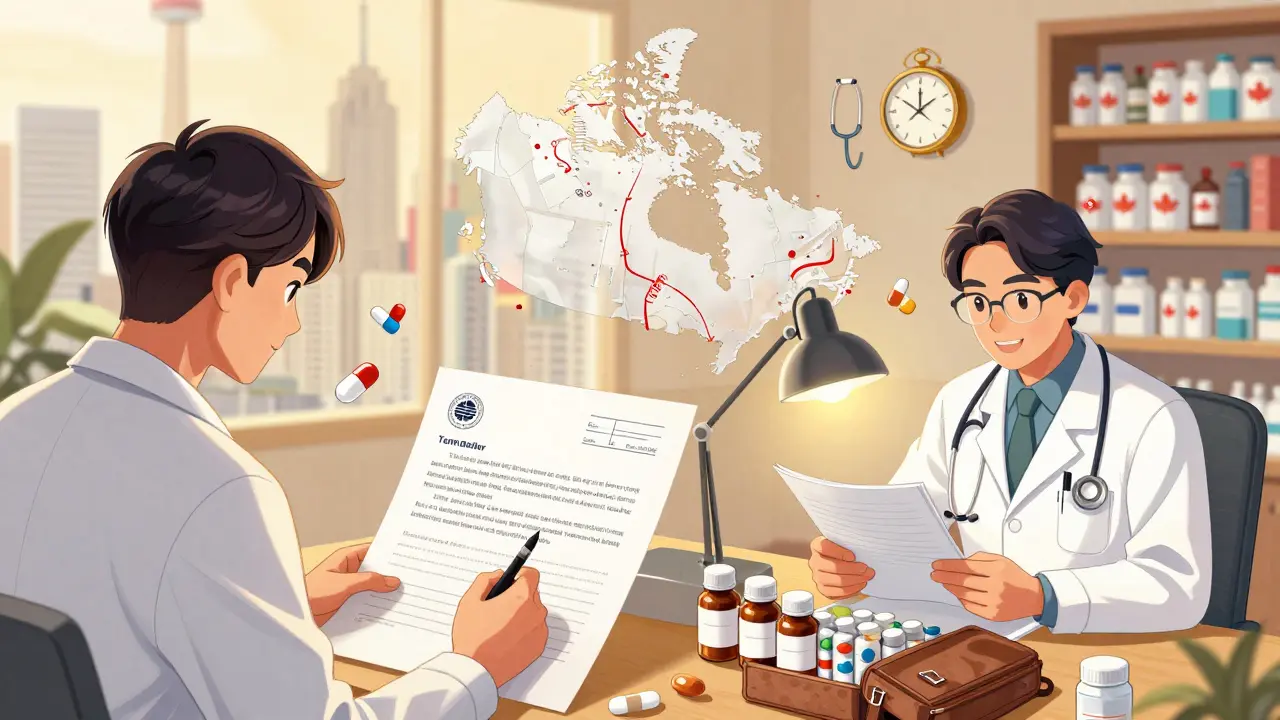
China, the Middle East, and Other Strict Regions
If you’re heading to China, Saudi Arabia, or the UAE, you’re entering one of the world’s strictest medication zones. These countries don’t just want a prescription - they want a full medical dossier. In China, you’ll need:- A signed letter from your doctor explaining your diagnosis and treatment plan
- The exact generic name of the drug
- Proof that the medication is not banned in China (some antidepressants and ADHD meds are restricted)
- Original packaging with pharmacy labels
What to Do Before You Leave
If you’re traveling for more than a few weeks, here’s your checklist:- Get a 90-day supply of your medication before you leave. This is your safety net.
- Ask your doctor for a letter on official letterhead that includes: your name, diagnosis, medication names (generic and brand), dosage, and reason for travel.
- Write down the generic names of all your drugs. Use a site like Drugs.com to double-check.
- Keep all medications in their original bottles with pharmacy labels. Never put them in pill organizers for international travel.
- For Canada: Contact a Canadian pharmacy that offers cosigning services before you leave. PharmacyChecker has a list.
- For non-EU countries: Check the embassy website of your destination. They often list banned or restricted drugs.
- Carry a copy of your prescription in both digital and printed form.
What Doesn’t Work (And Why)
Don’t assume your U.S. pharmacy will help. Most won’t. A 2022 survey by the National Community Pharmacists Association found that 65% of U.S. pharmacists had no idea how to handle international prescription transfers. Even if you explain the EU rules to a Walgreens pharmacist, they’ll say, “We can’t transfer to foreign pharmacies - it’s against policy.” They’re not being difficult. They’re following legal limits. Don’t try to order from international online pharmacies unless they’re verified. Sites like PharmacyChecker.com list accredited pharmacies, but even those can’t legally transfer U.S. prescriptions to Canada - they can only help you get a new one.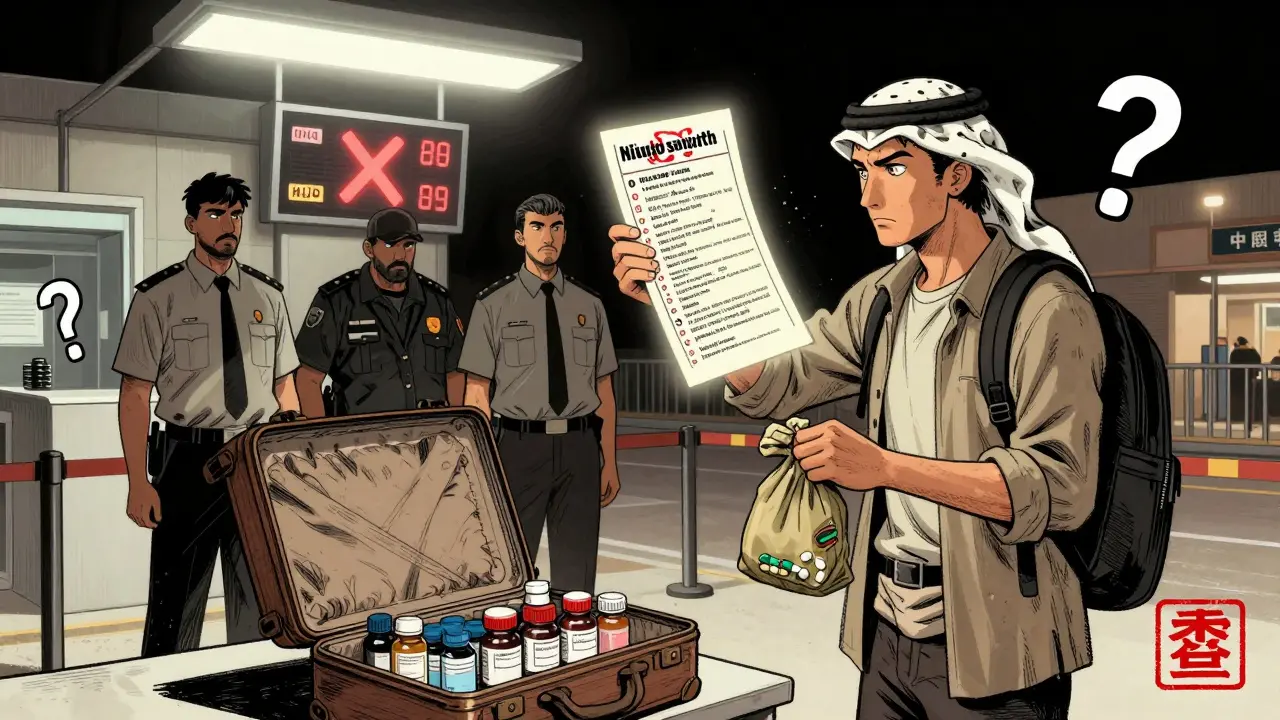
What Works: The Real Solutions
There are three proven paths:- Bring enough meds for your whole trip. This is the simplest, safest option. Most doctors will give you a 90-day supply if you ask.
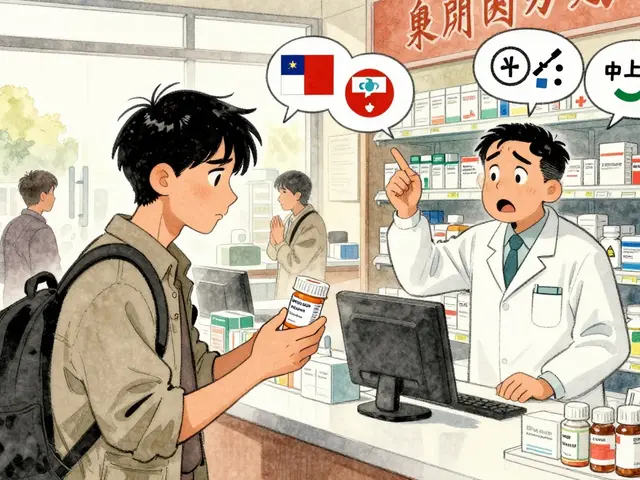
- Use a local doctor abroad. In many countries, you can walk into a clinic and get a new prescription. Bring your medical records. Pay out of pocket. It’s cheaper than you think - a 30-day supply of metformin in Thailand costs $5.
- Use a cosigning service for Canada. If you’re moving to or visiting Canada, work with a Canadian pharmacy that partners with U.S. providers. They handle the paperwork. You just send your info.
What’s Changing - and What’s Not
The U.S. is improving domestic transfer rules, but international transfers? No progress. The DEA, FDA, and Congress have all looked at the issue. The Safe and Affordable Drug Importation Act, which would have made it easier to bring in meds from Canada, died in committee in 2022. The European Union is expanding its cross-border system - but only within its own borders. Experts agree: global harmonization is unlikely before 2030. Why? Because drug safety systems, licensing, and pricing models are too different. Until then, travelers are stuck with workarounds.Final Tip: Don’t Wait Until You Run Out
One traveler ran out of insulin in Mexico City. She had a prescription, but no doctor’s letter. The pharmacy refused. She spent 12 hours calling U.S. clinics, embassy staff, and local hospitals before finally finding a clinic that would write her a new script - at $300 cash. She had to pay extra for a private taxi to get there. Plan ahead. Don’t gamble with your health. If you need medication regularly, treat it like your passport: get it ready before you leave.Can I transfer my U.S. prescription to a pharmacy in the UK?
No. The UK does not recognize U.S. prescriptions. You’ll need to see a local doctor and get a new prescription. Bring your medical records and a letter from your U.S. doctor to make it easier. Most UK pharmacies will accept a 90-day supply of medication brought in by a traveler, as long as it’s for personal use and clearly labeled.
Can I bring my prescription meds into the U.S. from another country?
Yes - if it’s a 90-day supply for personal use and you’re returning to the U.S. You must have the original prescription bottle with your name and the pharmacy label. A doctor’s letter helps, but isn’t required. Don’t try to ship it. Don’t bring more than 90 days’ worth. The FDA doesn’t usually stop travelers, but Customs can confiscate your meds if they think you’re importing for resale.
Why won’t my U.S. pharmacy transfer my prescription to Canada?
Because Canadian law requires every prescription to be issued by a Canadian doctor. U.S. pharmacies can’t legally transfer prescriptions across borders. Even if they wanted to, they’d risk violating federal pharmacy regulations. Your only option is to go through a Canadian pharmacy that offers cosigning services - they’ll work with your doctor to issue a new, valid Canadian prescription.
Are there any countries where I can refill my U.S. prescription without a doctor visit?
In most countries, no. But in places like Thailand, Mexico, or Turkey, you can often walk into a pharmacy and buy common medications like antibiotics, blood pressure pills, or diabetes meds without a prescription - if you know the generic name. This isn’t legal everywhere, and quality varies. Only do this if you’re out of options and have your original prescription as proof of what you need.
What should I do if my medication is banned in the country I’m visiting?
Check your destination’s government health website before you travel. If your drug is banned, contact your doctor immediately. They may be able to switch you to an alternative medication that’s allowed. Never try to sneak it in. If caught, you could face fines, detention, or deportation - especially in the Middle East and Asia.
Ryan Pagan
Let me tell you, I once tried to refill my antidepressants in Mexico City - no doctor’s letter, just a bottle with my name on it. The pharmacist looked at me like I’d asked for a rocket launcher. Took me 4 hours, three different clinics, and a guy who spoke zero English but somehow got me a script for $12. Never again. Bring the damn letter.
And for god’s sake, don’t try to ship meds. I know someone who got flagged by Customs because they mailed 6 months of insulin. They didn’t arrest him - but they held his package for 3 weeks. He had to fly to Tijuana to get more. That’s not a vacation, that’s a medical hostage situation.
rajaneesh s rajan
U.S. pharmacies act like international transfers are a crime. Meanwhile, in India, you walk into a pharmacy, say ‘atorvastatin,’ hand over 50 rupees, and walk out. No forms. No drama. No ‘cosigning.’ The system’s broken, not the people.
Also, why are we pretending this is about ‘safety’? It’s about profit. If you could just refill your pills abroad, Big Pharma would lose billions. So they make it a maze.
Megan Brooks
It’s staggering how little the average person understands about global pharmaceutical regulation. We assume medicine is universal, but it’s not - it’s political, economic, and deeply local. A pill that saves your life in Ohio might be classified as a controlled substance in Singapore.
I spent a year in Germany with a U.S. prescription for a thyroid med. They wouldn’t fill it because the dosage form was different. I had to get a new script from a local GP, who was surprisingly helpful once I showed him my lab results. The system isn’t broken - it’s just not designed for global citizens.
Kristie Horst
Oh, so now we’re pretending the FDA is some benevolent guardian of health? Please. They don’t care about your insulin. They care about your $1,200 vial of Humalog being sold for $12 on the black market.
The real tragedy? The system punishes the sick for being poor, or mobile, or just unlucky enough to need a drug that’s patented in one country and generic in another. It’s not a ‘gray zone’ - it’s a moral failure dressed up as policy.
Doug Gray
So… the EU has interoperability. Canada has cosigning. The U.S. has… bureaucracy? And China has… surveillance? Classic. The global pharma ecosystem is just a series of walled gardens with different security protocols.
TL;DR: If you’re not a citizen of a country with a single-payer system and a centralized e-prescription database, you’re basically a medical refugee.
Also, why is no one talking about the fact that 78% of global drug manufacturing happens in India and China? We’re outsourcing production but not regulation. That’s not logic - that’s delusion.
Sheryl Dhlamini
I ran out of my anxiety meds in Bali. I had a 30-day supply. I was on day 28. I cried in a pharmacy. The pharmacist, a sweet 70-year-old woman, just handed me a box of generic sertraline - no questions asked. Said, ‘We all need peace here.’ I paid $8. I still think about her every time I take my pills.
Maybe the system isn’t broken. Maybe we’re just too scared to trust each other.
Laia Freeman
YOOOOO I JUST GOT BACK FROM THAILAND AND I BOUGHT MY DIABETES MEDS AT A STREET PHARMACY FOR LIKE $3?? I DIDN’T EVEN HAVE A PRESCRIPTION BUT I SHOWED THEM THE BOTTLE AND THEY WERE LIKE ‘OH YEAH WE GOT THAT’ AND I WAS LIKE ‘I’M LIVING IN THE FUTURE’
ALSO THE PHARMACIST GAVE ME FREE TEA AND A HUG?? IDK WHAT HAPPENED BUT I’M NOT GOING BACK TO THE U.S. FOR MEDS EVER AGAIN. #PHARMAISACULT
DHARMAN CHELLANI
Why are you even surprised? Americans think the world runs on Walgreens. It doesn’t. It runs on local laws, local doctors, and local people who don’t care about your insurance plan.
Stop acting like this is a ‘guide’ - it’s a cry for help from people who think medicine is a right, not a privilege you buy with a U.S. address.
Paul Adler
There’s a quiet dignity in how other countries handle this. In Thailand, you don’t need a prescription for most meds - you just talk to the pharmacist. In Germany, they’ll help you translate your U.S. script. In Canada, they’ll make you jump through hoops, but they’ll do it legally.
The U.S. doesn’t have a problem with international transfers. It has a problem with seeing its citizens as global people. We treat medicine like it’s a loyalty card - redeemable only in our own system.
Maybe the real issue isn’t the law. It’s our refusal to adapt.
kabir das
And yet… and yet… I still can’t believe people think this is normal. A man needs insulin. He’s in Mexico. He’s got the bottle. He’s got the name. He’s got the dosage. And the pharmacy says ‘no’ because the U.S. won’t let them accept it?
That’s not regulation. That’s cruelty with paperwork.
LOUIS YOUANES
Wow. A whole article about how hard it is to get your meds abroad. And yet… you didn’t mention the real issue: that Americans are the only people on Earth who think they deserve to import cheap meds from anywhere but still demand the same pricing and patent protections as if they lived in a vacuum.
You want to refill your Lipitor in Spain? Fine. But stop complaining when the same system that lets you buy it for $400 here lets them sell it for $4 there.
It’s not a maze. It’s a mirror.
Robin Keith
Let’s not forget the metaphysical implications: when your body becomes dependent on a chemical compound that is, by design, inaccessible across geopolitical boundaries - you are, in essence, a prisoner of capital. Your survival is contingent upon the alignment of regulatory bureaucracies, pharmaceutical patents, and the arbitrary lines drawn by colonial-era nation-states.
Is your insulin a medicine… or a commodity locked behind a firewall of legal fiction?
And if you’re lucky enough to have a U.S. insurance plan that covers your meds - are you truly free? Or are you just a well-fed inmate in a gilded cage?
paul walker
Man I just got back from Canada and tried to get my meds refilled… I had the letter, the bottle, the whole thing… and the pharmacy said ‘we can’t do it unless your doctor calls us directly’… but my doctor’s in Texas and doesn’t even know how to email a PDF… I had to fly back home just to get a new script… wasted 2 days and $800.
Why does this even exist?
Andy Steenberge
There’s a reason the EU’s system works: they treat medication as a public good, not a profit vector. They standardize generic names, harmonize safety protocols, and empower pharmacists as clinical partners - not just dispensers.
The U.S. treats pharmacies as retail outlets with liability insurance. Canada treats them as legal gatekeepers. The rest of the world treats them as health professionals.
The solution isn’t more bureaucracy. It’s redefining the role of the pharmacist globally. Until then, we’re all just improvising with our lives.