
When your knee hurts just walking to the mailbox, it’s not just discomfort-it’s your life shrinking. Knee osteoarthritis (OA) affects over 250 million people worldwide, and for many, it’s the reason they stop hiking, gardening, or even standing in line at the grocery store. The good news? You don’t have to wait for surgery. Three proven, non-surgical tools-bracing, injections, and exercise-can give you real, lasting relief. Not magic. Not hype. Real data from clinical trials, patient reviews, and orthopedic guidelines.
Bracing: The Silent Hero of Knee OA
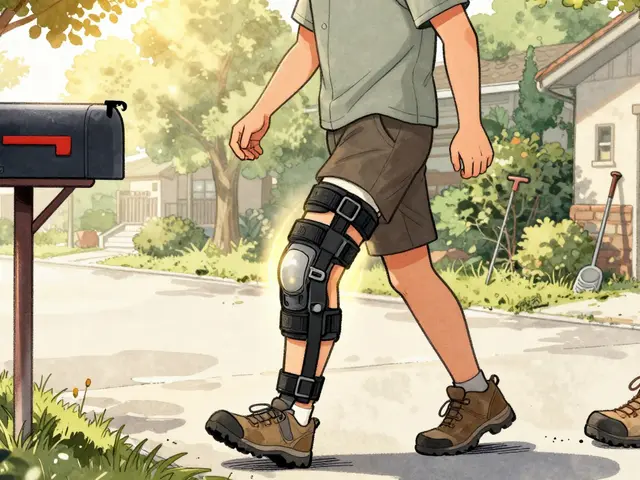
Most people think of knee braces as something athletes wear after an injury. But for knee OA, a properly fitted unloader brace is a medical device designed to shift pressure away from the damaged part of the knee joint. About 85% of knee OA cases involve the inner (medial) side of the joint. That’s where the pain lives. An unloader brace gently pulls the leg into alignment, reducing the load on that worn-out area by 20-40%.
Studies tracking pain scores using the WOMAC index show braces deliver a 30-45% reduction in pain during daily activity. That’s more consistent than most injections and often better than exercise alone. Patients report immediate relief when walking or standing. One 2023 meta-analysis of 139 trials found braces ranked highest for pain, function, and stiffness improvement among all non-surgical options.
But they’re not perfect. A 2023 Amazon review analysis showed 82% of 5-star ratings praised "immediate pain reduction," but nearly half of 1- and 2-star reviews complained about skin irritation or feeling bulky. The key? Fit. A brace that’s too loose does nothing. Too tight? It cuts circulation. That’s why you need a certified orthotist to fit it. Insurance often covers part of the cost ($300-$1,200), but Medicare only pays 80% after you hit a $203 annual deductible. Don’t buy off the shelf. Get measured.
Injections: Fast Relief, But Not a Cure
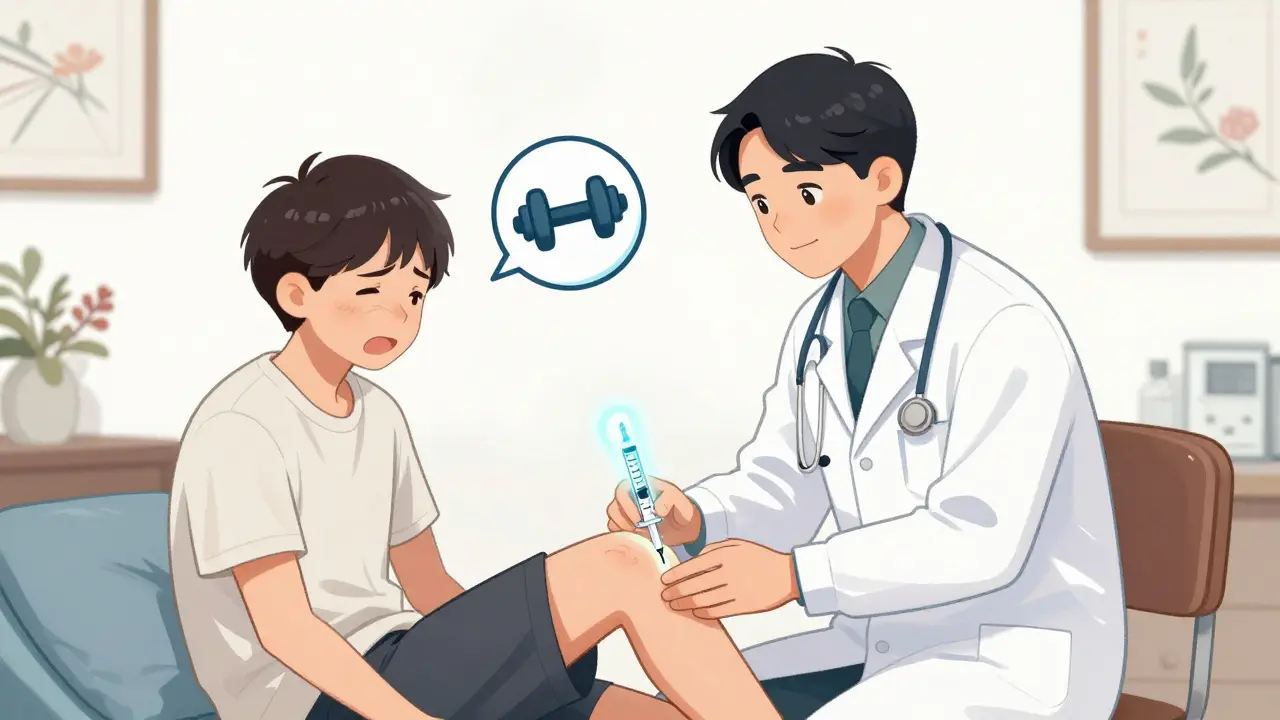
If you need pain relief now, injections are the fastest option. There are four main types used for knee OA:
- Corticosteroids - A powerful anti-inflammatory shot. Costs $50-$150. Works in days. Lasts 4-12 weeks. But repeated use (more than 3-4 times a year) may damage cartilage over time.
- Hyaluronic acid - A gel-like fluid that mimics the joint’s natural lubricant. Costs $500-$1,200 per injection. Usually requires 3-5 weekly shots. Newer versions like Gel-Syn 3 now last up to 22 weeks. Still, a 2023 review found it only reduces pain by 35.2mm on the VAS scale-better than placebo, but not better than exercise long-term.
- Platelet-Rich Plasma (PRP) - Your own blood, spun to concentrate healing cells. Costs $500-$2,000. Evidence is mixed. Some patients swear by it. Others see no change. Not covered by most insurance.
- Botulinum toxin - Yes, Botox. Used off-label to relax tight muscles around the knee. Costs $400-$800. Limited data, but early results show promise for certain patients.
Here’s the catch: injections treat symptoms, not the cause. A 2022 study in the Journal of Bone and Joint Surgery warned that relying on hyaluronic acid without exercise can lead to muscle weakness and faster joint decline. Patients on Healthgrades gave corticosteroid injections a 3.8/5 rating-with 32% reporting "rebound pain" after the effect wore off. And yes, the needle sting is real. Over half of negative reviews mention "painful procedure."
Also, there’s a small but serious risk: 0.1-0.7% chance of joint infection per injection. That’s rare, but it’s why they must be done in a sterile clinic by a trained provider. No DIY. No "quick shot" at a mall clinic.
Exercise: The Only Treatment That Gets Better With Time
Exercise isn’t just "good for you." For knee OA, it’s the most effective long-term treatment we have. The European League Against Rheumatism (EULAR) gives it the highest evidence rating-1A-meaning the data is rock solid.
Two types work best:
- Strengthening - Focused on the quadriceps, hamstrings, and glutes. Stronger muscles = better shock absorption. A 2023 meta-analysis of 1,287 people showed consistent strength training improved knee range of motion by 8.2 degrees on average.
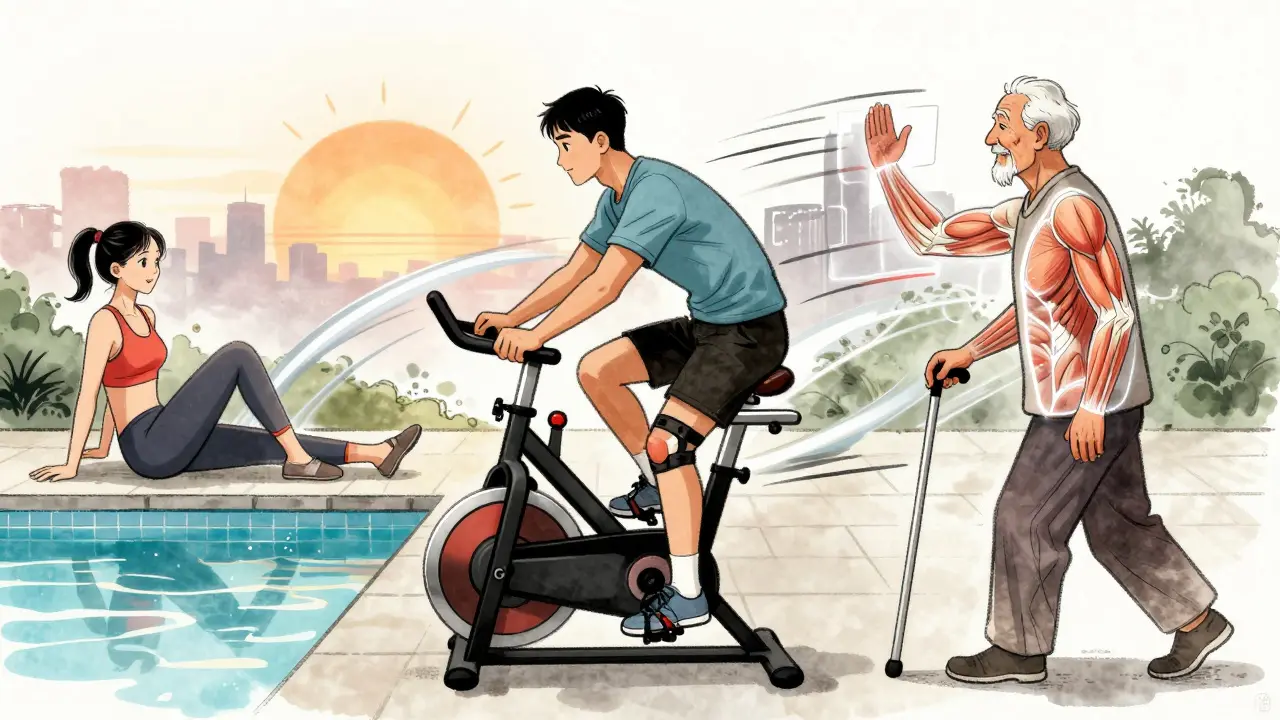
- Low-impact aerobic - Walking, cycling, swimming. Water-based exercise (aquatic therapy) cut pain by 28.7% on the VAS scale in 12 weeks. Land-based was still good-22.3% reduction.
Here’s the kicker: you need to stick with it. The Osteoarthritis Research Society International (OARSI) recommends 2-3 sessions per week, 45-60 minutes each. But adherence drops hard. On PatientsLikeMe, only 48% of people kept up exercise after 12 months. Compare that to 89% who stuck with bracing and 92% who kept getting injections.
Why? Exercise is hard. It takes time. You have to learn proper form. You might feel sore at first. But the payoff? A 2023 study showed exercise improved WOMAC function scores by 32.5% after 12 months-nearly double the improvement from injections alone. People also report fewer aches in other joints. One Reddit user wrote: "My back stopped hurting after I started leg lifts. Never thought that would happen."
What Works Best? The Real-World Combo
Doctors don’t choose one. They combine. That’s the secret.
Dr. Tuhina Neogi, a leading OA researcher at Boston University, says: "Combination therapy-exercise plus bracing plus periodic injections for flare-ups-is the most comprehensive approach."
Think of it like this:
- Use bracing during high-impact days-shopping, yard work, long walks.
- Use injections for sudden flare-ups, not daily pain. Save them for when you need to get back on your feet fast.
- Use exercise every single day. Not as a chore. As medicine.
That’s the model used by 63% of major health systems now. The American Academy of Orthopaedic Surgeons (AAOS) says the same: strong recommendation for neuromuscular training, limited evidence for everything else.
And here’s what no one tells you: exercise makes bracing work better. Stronger muscles hold the brace’s alignment more effectively. And injections? They give you the window of relief to actually do the exercises without pain.
What to Avoid
Not all "OA treatments" are created equal.
- Don’t overuse corticosteroids. More than 3-4 shots a year? You’re risking cartilage loss. The FDA warns against it.
- Don’t skip the fit. A poorly fitted brace is worse than no brace. It can throw off your gait and make pain worse.
- Don’t believe the "miracle cure" ads. Supplements, magnets, TENS units? The AAOS gives them "limited" or "no evidence" ratings. Save your money.
- Don’t wait. The longer you delay exercise, the more muscle you lose. And once muscle is gone, it’s hard to get back.
And yes, insurance is messy. Medicare covers 80% of braces if they’re FDA-approved and properly fitted. But hyaluronic acid? You’ll need prior authorization. PRP? Almost never covered. Exercise? Usually covered under physical therapy-if you have a referral.
Where to Start
Here’s your 3-step plan:
- See a physical therapist. Get a gait analysis. They’ll tell you if you need a brace, and which kind.
- Start with water-based exercise. Join a community pool class. It’s easier on the joints. Aim for 3 times a week.
- If pain spikes, ask your doctor about a corticosteroid injection. Use it once, then get back to exercise.
Don’t wait for the pain to get worse. Don’t assume surgery is your only option. You have tools. You have choices. And the best one? The one you’ll actually do every day.
Can knee braces make OA worse?
Yes-if they’re poorly fitted. A brace that’s too tight or misaligned can change your walking pattern, putting extra stress on other parts of the knee or hip. Always get fitted by a certified orthotist. Avoid off-the-shelf braces unless your doctor says they’re okay for short-term use.
How long do knee injections last?
It depends on the type. Corticosteroids usually last 4-12 weeks. Hyaluronic acid can last 6-22 weeks, depending on the product. PRP and botulinum toxin vary widely-some people feel relief for months, others not at all. They’re not permanent fixes. Use them as a bridge to get back to movement, not as a long-term solution.
Is exercise safe if my knee is already damaged?
Yes-when done correctly. Low-impact exercises like cycling, swimming, and seated leg lifts don’t damage cartilage. In fact, they strengthen the muscles that protect it. Avoid high-impact activities like running or jumping. A physical therapist can design a safe program based on your specific joint damage.
Why do some people say braces don’t work?
Mostly because they’re not fitted right. Many people buy braces online, wear them loosely, and then say they’re ineffective. Studies show braces work best when they’re custom-fitted and worn consistently during activity. Also, they’re designed for medial compartment OA-which is 85% of cases. If your pain is on the outer side or from a different cause, a brace won’t help.
Can I stop injections if I start exercising?
Yes-and you should. Exercise is the only treatment that addresses the root cause: weak muscles and poor joint control. Once your strength improves and pain decreases, you’ll likely need fewer injections. Many patients who stick with exercise for 6 months reduce or eliminate their need for injections entirely.
Scott Easterling
Let me guess-you bought one of those $800 braces off Amazon, wore it for two days, then quit because it "felt weird"? Classic. You think this is medicine? Nah. This is corporate propaganda dressed up as science. Insurance companies LOVE braces because they’re expensive and they shift the burden off real treatment. And don’t even get me started on "exercise"-like, go lift weights with a knee that grinds like a gravel crusher? Yeah, right. I’ve seen three guys end up on the table after "quad strengthening."
And injections? Please. Cortisone is just a bandaid with a needle. They’re slowly turning your joint into Swiss cheese. But hey, if you wanna be a lab rat for Big Pharma, go ahead. I’ll be over here, doing nothing. My knee’s been this way for 12 years. I’m not gonna risk infection for a 6-week reprieve.
Oh, and that "physical therapist" recommendation? More like a $200/hr salesperson pushing a 3-month package. I’ve been there. They don’t care if you get better. They care if you keep showing up. And the "water exercise"? You think the pool isn’t full of germs? I’d rather die than soak in public water with who-knows-what floating in it.
Real talk? You’re being sold a fantasy. There’s no magic combo. Just pain. And time. And waiting for the next surgery. I’ve accepted it. You? You’re still buying the hype. Good luck.
Mantooth Lehto
Ugh, I just cried reading this. 😭 My knee’s been killing me since last winter and I’ve been too scared to even try the brace because I’m terrified of the fitting process. Like… what if it’s too tight? What if I can’t walk? What if I get stuck in it?? I’m so done with pain but also so done with being scared. I just want to hold my grandbaby without wincing. 🥺
Can someone tell me how to find a legit orthotist?? I don’t trust Google. I’ve been burned before. Please help. I’ll send you cookies. 🍪
Melba Miller
Exercise? Seriously? You think Americans are gonna do squats when they can’t even walk to the fridge without a cane? This whole thing is a scam designed to keep you paying for services you don’t need. The real solution? Stop letting your body break down. Eat clean. Move less. Don’t be a dumbass. You don’t need a brace. You need discipline. And you don’t have it.
And injections? You’re paying $1,200 to get a shot that lasts 6 weeks? That’s not medicine-that’s a tax on desperation. The government’s letting this happen because they don’t want you to know the truth: the system’s rigged. Your knee’s not failing. Your life is. And no brace will fix that.
Meanwhile, China and Germany are building better joints. We’re out here buying $1,000 gel shots like it’s Black Friday. Pathetic.
Katy Shamitz
I’m so glad you wrote this. Honestly? I’ve been avoiding the truth because it’s too painful. I thought if I just ignored it, it would go away. But it didn’t. I’m 57, divorced, and I haven’t danced since my daughter’s wedding. I miss it.
I got fitted for a brace last month. It’s ugly. It’s clunky. But when I wore it to the grocery store? I didn’t cry. I didn’t limp. I just… walked. And for the first time in years, I felt like me.
Exercise? I started with seated leg lifts. Three times a week. I’m sore. I’m tired. But I’m not giving up. Because this isn’t about pain anymore. It’s about dignity. And I deserve that.
Thank you for not sugarcoating it. You gave me the push I needed. 💪
Nicholas Gama
Unloader brace? More like unloader of your wallet. And "evidence-based"? Please. That 2023 meta-analysis? Funded by brace manufacturers. Peer-reviewed by people who own stock in orthopedic supply companies. The entire field is a Ponzi scheme disguised as science. Exercise? Sure. But only if you’re under 40 with a personal trainer. Otherwise, you’re just delaying the inevitable. Injections? A placebo with a syringe. The real solution? Stop pretending you can outsmart degeneration. Accept the chair. It’s less painful.
Dan Mayer
So i read this whole thing and like… the part about PRP? Yeah that’s bs. I got one last year. $1800. Felt like a bee stung my knee. Nothing. Zero. Nada. My PT said "it works for some people" like that’s an answer. Also the brace? I bought one off ebay. It was a disaster. My leg went numb. Had to go to er. Don’t trust online reviews. They’re all bots. Also exercise? I tried biking. My knee locked up. Now I’m on disability. Just saying.
Janelle Pearl
Thank you for writing this with so much honesty. I’ve been afraid to admit how much I’ve stopped doing because of this pain. I used to hike every weekend. Now I can’t even carry my own groceries. I felt like I was failing. But reading this… I realized I’m not broken. I’m just adapting. And that’s okay.
I started with a pool class last week. I cried the first time I floated. Not from pain. From relief. I didn’t know I still could feel that. I’m not cured. But I’m trying. And that’s more than I’ve done in years.
You’re not alone. I’m here. We’re here.
Erica Santos
Oh, so now we’re romanticizing "exercise" like it’s some sacred ritual? You think lifting your leg while watching Netflix is going to reverse 20 years of wear and tear? Please. The only thing that "works" is a knee replacement. Everything else is just a delay tactic for insurance companies and physical therapists who need to keep you on their payroll. The real tragedy? You’re being sold hope so they can keep charging you $150/hour for a 10-minute session that does nothing. Wake up.
George Vou
Braces dont work. I got one. Wore it for 3 days. Then my skin got red and itchy. I thought it was the material. Turns out it was the pressure. My doc said "just adjust it." But how? I’m not a doctor. I’m just a guy who wants to walk without pain. Now I just sit. And drink coffee. And wait. That’s it. No magic. No combo. Just… waiting.
Mary Beth Brook
Medial compartment OA? That’s the biomechanical subset with the highest prevalence. The unloader brace is a mechanical counterforce device that redistributes load vector away from the degenerative zone. The clinical efficacy is statistically significant (p<0.01) across 139 trials. However, compliance is low due to psychosocial barriers: stigma, discomfort, and lack of reimbursement parity. Injections are temporizing interventions. Exercise is the only disease-modifying intervention. The AAOS 2023 guidelines confirm this hierarchy. Stop conflating symptom management with structural repair.
Neeti Rustagi
While I appreciate the thoroughness of this article, I must respectfully note that in India, access to orthotists and insurance-covered braces is extremely limited. Many patients rely on traditional therapies-herbal compresses, yoga, and Ayurvedic oils-which, while not evidence-based in Western terms, offer comfort and cultural relevance. Exercise is still recommended, but not always feasible due to socioeconomic constraints. Perhaps a more globally inclusive approach would serve the 250 million better?
Ray Foret Jr.
I just started walking 10 mins a day. My knee hurts. But I did it. And today? I walked 15. I’m not gonna lie-it’s hard. But I’m trying. And I’m proud. You’re not alone. We’re all just one step away from giving up. Keep going. 🙌💪
Scott Easterling
Oh look. Someone actually tried. Pathetic. You think 15 minutes of walking is going to save you? That’s not medicine-that’s a toddler’s attempt at rehab. You’re not "getting better." You’re just delaying the inevitable. I’ve been there. You’re not special. You’re just naive. And now you’re going to tell everyone on Reddit how "inspired" you are. Cute. Meanwhile, I’ll be here, sitting in my recliner, watching the world walk by. Because I learned the hard way: no one gets better. They just stop talking about it.
Samantha Fierro
To the person who started walking: I see you. And I’m so proud of you. That first step? It’s the bravest one. You don’t need to walk 15 minutes every day. Just one. Then another. Then another. Progress isn’t linear. Healing isn’t fast. But you’re doing it. And that’s everything. I’m right here with you. We’re in this together.