
When your child is sick, getting them to take their medicine can feel like a battle. You’ve got two main options: a sweet-tasting liquid or a tiny pill. For years, doctors and parents defaulted to liquids, assuming kids couldn’t swallow pills. But that’s changing. Today, the choice isn’t just about what’s easier-it’s about safety, cost, and long-term habits. So what’s really better: liquid or tablet medications for children?
Why Liquids Were the Go-To (And Why They’re Not Always Best)
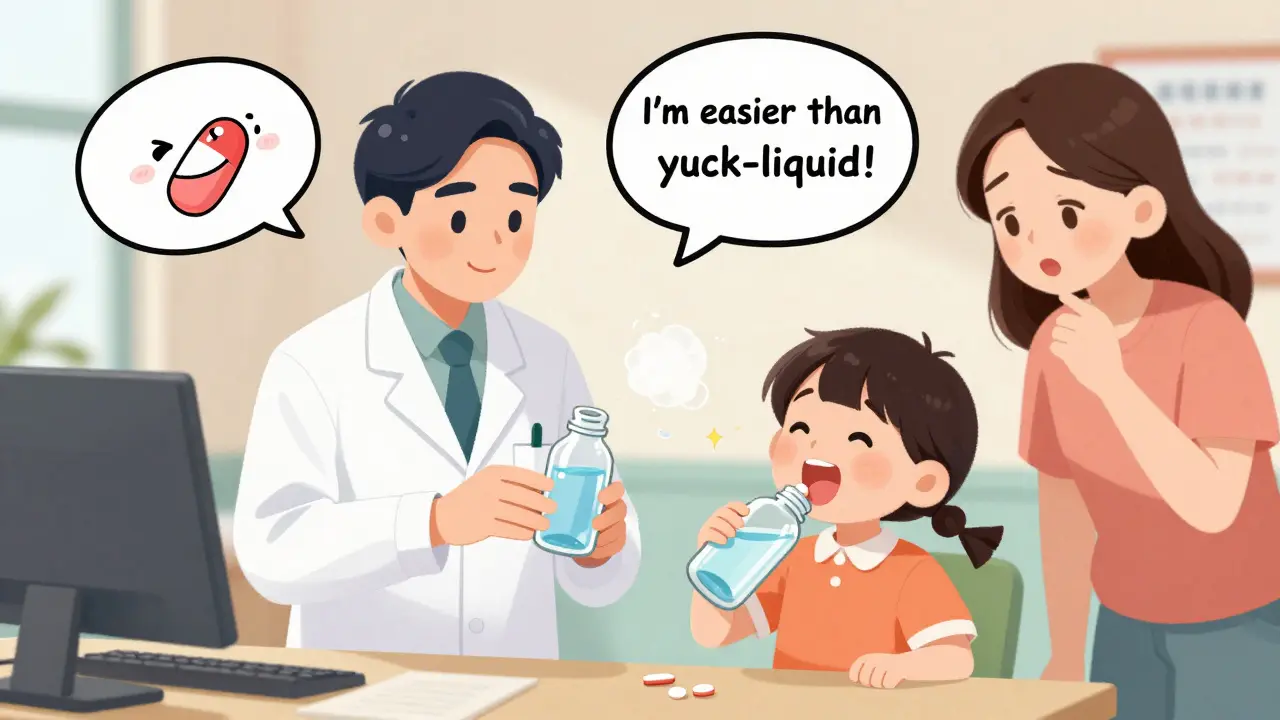
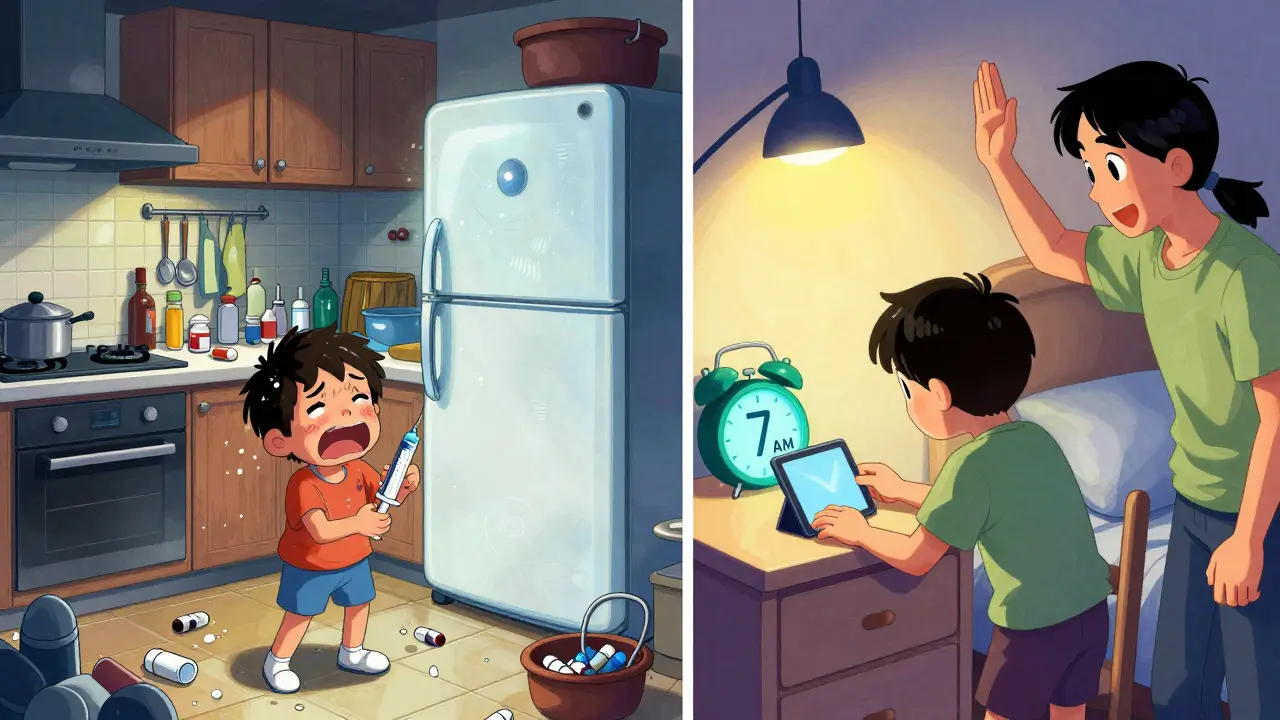
For decades, liquid medications were the standard for kids. They seemed safer. Easier to dose. More palatable. But here’s the truth: many liquids aren’t as simple as they look. A 2021 study from the American Academy of Pediatrics found that 15-20% of parents mismeasure liquid doses. That’s not because they’re careless-it’s because measuring cups, spoons, and syringes are confusing. A teaspoon isn’t the same as a medicine syringe. A dropper can leak. And if you’re tired at 3 a.m., it’s easy to pour too much-or too little. Then there’s taste. A 2007 survey showed that 68% of children refuse liquid meds because they taste artificial. "Strawberry-flavored" antibiotics that smell like chemical candy don’t fool kids. One parent on Reddit put it bluntly: "My 4-year-old would rather swallow a mini-tablet than take the 'strawberry' antibiotic that tasted like chemicals." Liquids also need refrigeration. Many antibiotics, antifungals, and seizure meds must be kept between 2°C and 8°C. If the power goes out, or you forget the cooler on a trip, the whole bottle can go bad in days. Shelf life? Just 14 to 30 days after opening. Compare that to tablets, which last 2 to 3 years at room temperature.The Rise of Mini-Tablets: It’s Not What You Think
The biggest myth? That kids can’t swallow pills. Research from 2012 by Spomer et al. tracked 60 children aged 6 months to 6 years. They tested mini-tablets-just 2mm wide-and found acceptance rates were equal to or better than liquids, especially in babies under 1 year. Why? Because liquids often trigger gag reflexes. Tablets, when small enough, don’t. Today, pediatric tablets come in forms you might not expect:- Orodispersible tablets dissolve in 30 seconds on the tongue-no water needed.
- Film-coated mini-tablets hide bitter tastes and are smooth enough for toddlers.
- 2mm to 4mm tablets are now standard for kids as young as 2.
When Liquids Still Win
This isn’t about replacing liquids everywhere. Some situations still need them.- Babies under 6 months can’t swallow pills. Liquids are necessary.
- Medicines needing precise dosing like levothyroxine (for thyroid) or warfarin (a blood thinner) are safer in liquid form. Tiny changes in dose matter here.
- Children with swallowing disorders or neurological conditions may still need liquids.
Cost and Waste: The Hidden Problem
A single bottle of liquid amoxicillin might cost £12. The same dose in mini-tablets? £3. That’s not a typo. Liquid formulations require preservatives, flavorings, and special packaging. They’re bulkier. They expire faster. And hospitals throw out tons of unused liquid meds. In the UK, NHS data from 2021 showed that switching just one out of every five liquid prescriptions to tablets could save £7,842 per 10,000 pediatric prescriptions. For a medium-sized hospital, that’s over £50,000 a year. Multiply that across the NHS, and you’re talking millions. Meanwhile, tablet production is getting cheaper. The EMA approved 47 new pediatric tablet formulations between 2008 and 2022. Only 12 new liquids got approval in that time.How to Help Your Child Swallow Tablets
If you’re nervous about tablets, you’re not alone. But it’s easier than you think. Start around age 3. Here’s how:- Practice with mini-marshmallows or bread balls. Make it a game.
- Use the "pop-bottle method": Have your child take a sip of water from a bottle, then place the tablet on their tongue. They swallow naturally with the sip.
- Try a "pill-swallowing cookie"-a small, soft treat with a tablet hidden inside.
- Never crush tablets unless the doctor says it’s safe. Crushing can ruin time-release formulas or make doses unsafe.
What to Ask Your Doctor or Pharmacist
Not all medications come in both forms. But many do. Ask:- "Is there a tablet version of this medicine?"
- "What size is the tablet? Can my child swallow it?"
- "Does it need refrigeration?"
- "Will the tablet taste better than the liquid?"
- "Can you show me how to help my child swallow it?"
Final Takeaway: It’s Not About Age. It’s About Fit.
There’s no one-size-fits-all answer. But the old rule-"liquids for kids, pills for adults"-is outdated. For most children over 2, tablets are safer, cheaper, and easier to stick with. They don’t spoil. They don’t leak. They don’t taste like plastic. And they help kids build habits that last into adulthood. The real question isn’t whether your child can swallow a tablet. It’s whether you’re willing to learn how to help them.Can my 2-year-old swallow a tablet?
Yes, if it’s the right size. Modern pediatric tablets are as small as 2mm wide and designed for toddlers. Studies show children as young as 2 can swallow them successfully with practice. Start with soft, sugar-free practice items like mini-marshmallows. Use the "pop-bottle method"-have them sip from a bottle while placing the tablet on their tongue. Most kids master it within a few days.
Are liquid medications less accurate than tablets?
Yes, in practice. While liquids allow fine-tuned dosing in theory, real-world use is messy. The FDA reports that 12-18% of liquid doses are incorrectly measured due to improper tools or human error. Tablets come in fixed doses, eliminating guesswork. For medications with wide therapeutic windows-like most antibiotics-this makes tablets more accurate overall.
Why do some doctors still prescribe liquids for older kids?
Three main reasons: habit, parental pressure, and lack of training. A 2021 survey found 62% of US pediatricians still default to liquids for kids under 8. Many parents assume liquids are safer or easier. But doctors often aren’t trained to teach tablet swallowing. As more evidence emerges, this is changing-especially in Europe, where guidelines now push for tablets as the first option.
Can I crush a tablet and mix it with food?
Only if the label or your doctor says it’s safe. Many tablets are time-release or enteric-coated. Crushing them can make the drug work too fast, cause side effects, or even be dangerous. For example, crushing a delayed-release antibiotic can lead to stomach upset or antibiotic resistance. Always check before crushing.
Is it true that liquid meds taste worse than tablets?
Yes, overwhelmingly. Pharmacy review sites show liquid meds average 2.7 out of 5 stars, while tablets get 4.5. Why? Liquid flavorings often mimic artificial candy, not real fruit. Kids notice. Tablets, especially film-coated ones, are designed to mask bitterness. Some even come in kid-friendly flavors like chocolate or orange that actually taste good.
How much money can I save by switching to tablets?
A lot. In the UK, switching one liquid prescription to a tablet can save £5-£10 per dose. For a child on a 10-day course, that’s £50-£100. Hospitals save £7,842 per 10,000 prescriptions. Over time, fewer wasted doses, less refrigeration, and lower packaging costs add up. If your child takes regular meds, switching could save hundreds a year.
Write a comment