
Medication Guide Safety Checklist
Select the category that best describes your new prescription to see if it typically requires a mandatory Medication Guide.
Opioids
Pain management, addiction risk
Biologics
Immunosuppressants, injections
Psychiatric
Antidepressants, antipsychotics
Blood Thinners
Warfarin, clotting risks
Isotretinoin
Severe acne treatment
Other / Unsure
General prescriptions
Your Personalized Safety Checklist
You pick up a new prescription. The pharmacist hands you the bottle and a folded piece of paper. You glance at it, maybe toss it in your bag, and forget about it until you get home. That paper is likely a Medication Guide, which is a mandatory FDA document providing critical safety information for specific high-risk prescription drugs. It’s not just extra paperwork. It could literally save your life.
We often assume that if a doctor prescribes a drug, it’s safe. But many powerful medications come with serious risks that require active patient participation to manage. A Medication Guide bridges the gap between complex medical jargon and what you actually need to know to stay safe. Understanding these documents isn't just about following rules; it's about taking control of your health outcomes.
What Exactly Is a Medication Guide?
A Medication Guide is a specific type of patient labeling required by the U.S. Food and Drug Administration (FDA). Unlike the small label on your pharmacy bottle or the dense technical insert meant for doctors, this guide is written specifically for you. It uses plain language-often at a sixth-grade reading level-to explain serious risks associated with certain medications.
The FDA mandates these guides under strict regulations found in 21 CFR Part 208, which is the federal regulation governing the distribution and content of Medication Guides. This rule ensures that manufacturers provide these materials, and pharmacists distribute them every time you fill a prescription for covered drugs. As of late 2023, there are approximately 150 prescription products requiring these guides. These aren't random choices. They are drugs where the risk-benefit ratio requires heightened awareness.
Why do some drugs get them and others don’t? The FDA looks for three main criteria:
- The drug has serious risks that could affect your decision to use it.
- Patient adherence to directions is crucial for the drug to work safely.
- The information can help prevent serious adverse reactions.
If a medication meets these standards, a Medication Guide becomes part of the legal requirement for its sale. It’s a non-negotiable safety net.
Who Needs a Medication Guide?
You might wonder if your specific medication requires one. While you won't find a public list of every single drug on your phone, certain categories are heavily represented. If you are prescribed any of the following, you will almost certainly receive a guide:
- Opioids: Due to the high risk of addiction, overdose, and death.
- Biologics: Complex drugs derived from living organisms, which can trigger immune responses.
- Psychiatric Medications: Antidepressants and antipsychotics that may carry risks like suicidal thoughts or metabolic changes.
- Isotretinoin: Used for severe acne but carries severe birth defect risks.
- Blood Thinners: Drugs like warfarin that increase bleeding risks significantly.
These guides are also closely tied to Risk Evaluation and Mitigation Strategies (REMS), which are comprehensive safety programs required by the FDA for drugs with serious risks to ensure benefits outweigh dangers. If a drug is part of a REMS program, a Medication Guide is usually included as a core component. For example, patients taking Tysabri for multiple sclerosis must follow strict monitoring protocols outlined in their guide to watch for signs of progressive multifocal leukoencephalopathy (PML), a rare but deadly brain infection.
Medication Guides vs. Package Inserts: What’s the Difference?
It’s easy to confuse a Medication Guide with the package insert (also known as Prescribing Information). They look similar, but they serve very different audiences.
| Feature | Medication Guide | Package Insert (Prescribing Info) |
|---|---|---|
| Target Audience | Patients and caregivers | Healthcare providers (doctors, pharmacists) |
| Language Level | Plain English (6th grade level) | Technical medical terminology |
| Content Focus | Serious risks, side effects, usage instructions | Clinical trials, dosage forms, chemical structure |
| Distribution | Mandatory at dispensing | Available upon request, not always given to patients |
| Regulatory Status | FDA-mandated for specific high-risk drugs | Required for all approved drugs |
The package insert is a scientific document. It contains data from clinical trials, molecular structures, and detailed pharmacokinetics. It’s invaluable for your doctor but overwhelming for most people. The Medication Guide strips away the noise. It focuses on what you need to do: take it with food, avoid grapefruit, call 911 if you experience chest pain. A 2022 study published in the *Journal of the American Pharmacists Association* found that patients had 37% higher comprehension rates when using Medication Guides compared to standard pharmacy counseling sheets alone. The clarity matters.
Why Most People Ignore Them (And Why That’s Dangerous)
Here’s the hard truth: many patients throw these guides away unread. A 2023 thread on Reddit’s r/pharmacy community revealed that 63% of pharmacists reported patients discarding guides without reading them. Patients cited reasons like "too much dense text" or "I already talked to the pharmacist." Another study showed that only 52% of patients even recalled receiving a guide, and of those, only 38% read it thoroughly.
This disconnect is dangerous. Consider the case of a patient named 'MSWarrior42' on the platform PatientsLikeMe. They credited their Tysabri Medication Guide with helping them recognize early symptoms of PML. Because they had read the guide, they knew exactly what warning signs to look for. They sought immediate intervention, preventing severe disability. Without that guide, they might have dismissed early symptoms as fatigue or stress.
Ignoring the guide assumes that verbal counseling is enough. But human memory is fallible. Stress, pain, or anxiety can make it hard to retain complex instructions during a brief pharmacy visit. The Medication Guide serves as a permanent reference. It’s the difference between guessing and knowing.
How to Actually Use Your Medication Guide
Receiving the paper is step one. Using it effectively is step two. Here is how to get the most out of it:
- Read It Before Taking the First Dose: Don’t wait until you feel sick. Understand the risks upfront. Look for the section titled "What is the most important information I should know about [Drug Name]?" This highlights the top-tier dangers.
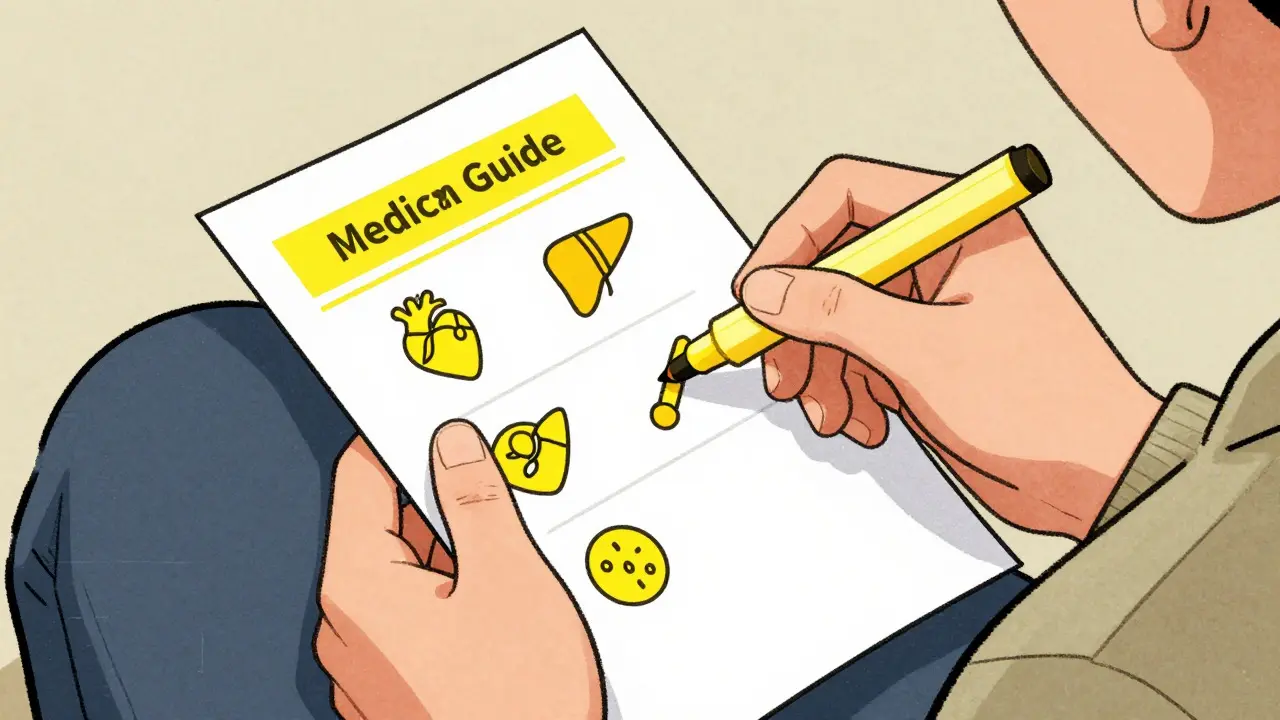
- Highlight Key Warnings: Use a highlighter or pen to mark side effects that sound scary or unfamiliar. If you see "liver damage" or "suicidal thoughts," circle them. This creates a visual cue for future reference.
- Ask Specific Questions: Instead of asking "Is this safe?", ask "The guide mentions kidney issues. Do my blood tests show any risk for me?" This turns passive reading into active dialogue with your provider.
- Store It Accessibly: Keep the guide with your medication box. If you run out of pills, you still have the safety instructions. Many experts recommend keeping a digital copy on your phone as a backup.
- Use the Teach-Back Method: When your pharmacist hands it to you, summarize what you heard back to them. "So, I need to take this with food and watch for rash, right?" This confirms understanding immediately.
Pharmacists are often rushed. A 2022 University of Michigan study found they spend an average of 47 seconds per prescription explaining these guides. You cannot rely on them to cover everything. The guide is your independent source of truth.
The Future of Medication Safety Communication
The landscape of patient education is evolving. The FDA recognized that static paper has limitations. In October 2022, the agency finalized rules allowing electronic delivery of Medication Guides when patients request it. Early data shows 18% of patients now choose digital formats. This shift allows for more interactive experiences.
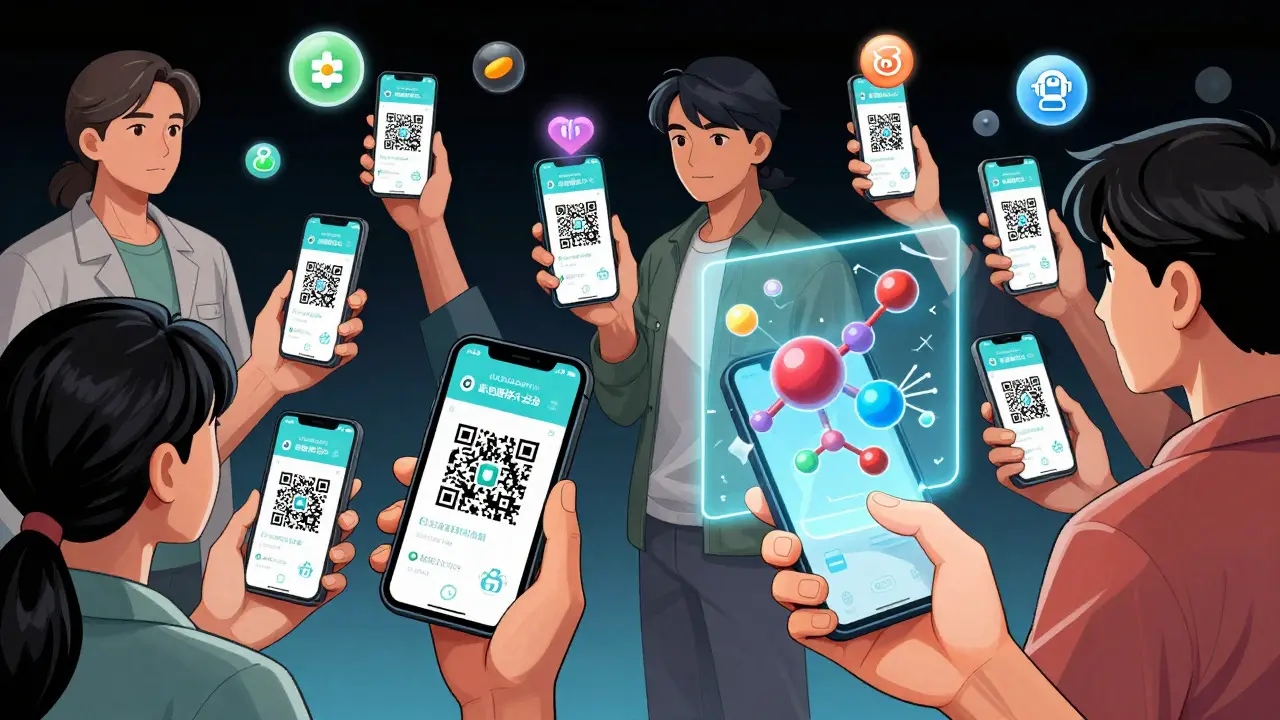
In May 2023, the FDA approved the first "Interactive Medication Guide" for Jardiance. This version combines printed material with QR codes linking to video explanations and personalized risk assessments. Imagine scanning a code to watch a 30-second animation showing how the drug affects your kidneys. This aligns with the FDA’s 2023-2025 Strategic Plan, which prioritizes human-centered design, multilingual versions, and integration with electronic health records.
Despite these advancements, the core purpose remains unchanged. Whether on paper or screen, the goal is to empower you with knowledge. A 2023 meta-analysis in *The Lancet* confirmed that required Medication Guides are associated with a 19.3% reduction in serious adverse events. That statistic represents thousands of avoided hospitalizations and saved lives.
Common Pitfalls to Avoid
Even when reading the guide, misunderstandings can happen. Watch out for these common traps:
- Assuming "Side Effects" Mean "Guaranteed": The guide lists potential risks, not certainties. Not everyone gets every side effect. Context matters.
- Ignoring Drug Interactions: The guide may warn against alcohol or other meds. Always disclose all supplements and over-the-counter drugs to your pharmacist.
- Stopping Abruptly: Some guides warn against stopping suddenly (e.g., antidepressants, steroids). Always consult your doctor before discontinuing.
- Overlooking Storage Instructions: Some biologics require refrigeration. Leaving them in a hot car can ruin the drug and cause treatment failure.
Your health is a partnership. The doctor prescribes, the pharmacist dispenses, but you administer. The Medication Guide is the manual for that administration. Treat it with the respect it deserves.
Do all prescription drugs come with a Medication Guide?
No. Only about 5% of prescription drugs (approximately 150 products) require a Medication Guide. These are typically drugs with serious risks, such as opioids, biologics, and certain psychiatric medications. Common drugs like antibiotics or blood pressure meds usually do not require them unless they have specific high-risk profiles.
What happens if the pharmacist doesn't give me a Medication Guide?
If a drug requires a Medication Guide, the pharmacist is legally obligated to provide it. If they forget, you should ask for it. You can also check the FDA website or ask your doctor. Missing this document means you might be unaware of critical safety warnings, which poses a significant health risk.
Can I get a Medication Guide electronically?
Yes. Since late 2022, the FDA has allowed electronic delivery if you request it. Many pharmacies now offer digital versions via email or app notifications. Some newer guides even include QR codes for interactive content. However, you must explicitly ask for the digital format, as paper is still the default.
Are Medication Guides available in languages other than English?
Many manufacturers provide translations for major languages like Spanish, French, and Chinese. The FDA’s strategic plan aims to expand multilingual access further. If you don't speak English well, ask your pharmacist for a translated version or use interpretation services to understand the key safety points.
How are Medication Guides different from REMS?
A Medication Guide is a document you receive. REMS (Risk Evaluation and Mitigation Strategies) is a broader safety program that may include the guide plus additional requirements like mandatory testing, special enrollment, or restricted distribution. All REMS programs for outpatient drugs usually include a Medication Guide, but not all Medication Guides are part of a full REMS program.
Write a comment