
MAOI Dietary Safety Checker
This tool helps you determine if the foods you select could cause a hypertensive crisis while taking MAOIs. Tyramine-rich foods can trigger dangerous blood pressure spikes when you're on MAOIs. Select the foods you plan to eat to check their safety.
Select Your Foods
Cheeses
Meats
Beverages
Other Foods
Risk Assessment
Important Safety Note
Even if this tool indicates your meal is safe, always consult your doctor before consuming any food or medication while on MAOIs. The risk of hypertensive crisis is real and potentially life-threatening.
When other antidepressants fail, some people turn to monoamine oxidase inhibitors - or MAOIs. These aren’t the first-line drugs you hear about on TV. They’re not the go-to option for mild depression. But for those who’ve tried three, four, even five other medications with no relief, MAOIs can be the difference between surviving and finally feeling like themselves again. The catch? They come with rules that feel like living in a science fiction novel. You can’t eat aged cheese. You can’t drink certain beers. You can’t take a cold pill without risking a stroke. And yet, for thousands, the trade-off is worth it.
How MAOIs Work - And Why They’re Different
Most antidepressants work by boosting one or two brain chemicals. SSRIs increase serotonin. SNRIs boost serotonin and norepinephrine. MAOIs? They do something more radical. They stop the enzyme monoamine oxidase from breaking down serotonin, norepinephrine, and dopamine at all. That means all three feel-good chemicals pile up in your brain. This isn’t just a tweak - it’s a full-system reset. This is why MAOIs work when others don’t. People with treatment-resistant depression often have imbalances in multiple neurotransmitters, not just one. MAOIs hit them all. That’s why, in studies, 50-60% of people who’ve tried other meds without success find real relief with an MAOI. It’s not magic. It’s chemistry. There are two types of the enzyme: MAO-A and MAO-B. MAO-A breaks down serotonin and norepinephrine - the ones most tied to mood. That’s why older MAOIs like phenelzine and tranylcypromine target MAO-A. Newer ones, like selegiline at low doses, mostly block MAO-B, which is why they’re used for Parkinson’s, not depression. The real antidepressant power comes from shutting down MAO-A.The Tyramine Trap - Why Your Cheese Isn’t Just a Snack
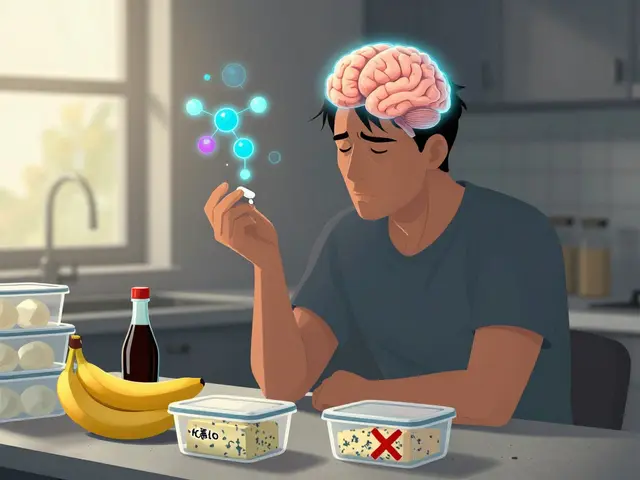
Here’s where things get serious. Tyramine is a natural compound found in aged, fermented, or spoiled foods. Your body normally breaks it down with MAO-A in the gut. But if you’re on an MAOI, that enzyme is blocked. Tyramine slips into your bloodstream and triggers a massive release of norepinephrine. Your blood pressure skyrockets - sometimes over 200 mmHg systolic. That’s a hypertensive crisis. It can cause stroke, heart attack, or death. Foods to avoid? Aged cheeses like cheddar, blue cheese, parmesan (over 6 mg of tyramine per 100g). Cured meats - salami, pepperoni, pastrami. Tap beer and some wines. Soy sauce, miso, tempeh. Fava beans. Overripe bananas. Even leftover meals stored more than 48 hours. It’s not about being perfect. It’s about being careful. One bite of blue cheese on a pizza, one glass of homebrewed beer - and you could end up in the ER. The good news? Not all foods are dangerous. Fresh cheese like cottage cheese, mozzarella, or cream cheese is fine. Fresh meat, poultry, and fish are safe. Most fruits and vegetables are okay. The key is freshness and preparation. Cooking at home gives you control. Eating out? That’s where most accidents happen.Drug Interactions - The Hidden Danger
MAOIs don’t just clash with food. They clash with common meds. Mixing them with SSRIs, SNRIs, or even over-the-counter cold pills can lead to serotonin syndrome - a dangerous overstimulation of the brain. Symptoms: high fever, muscle rigidity, confusion, rapid heartbeat. It’s rare, but deadly if not caught fast. Pseudoephedrine - the active ingredient in Sudafed - is a major red flag. Even a 30 mg tablet can spike blood pressure in someone on an MAOI. Dextromethorphan (in cough syrups), certain painkillers like meperidine, and even some herbal supplements like St. John’s wort or 5-HTP can be dangerous. The washout period between switching from an SSRI to an MAOI? At least two weeks. Sometimes five. Skipping this isn’t risky - it’s reckless. Doctors don’t just hand out MAOIs. They require a full review of every medication, supplement, and OTC product you take. Some patients keep a printed list in their wallet. Others use apps to scan pills before taking them.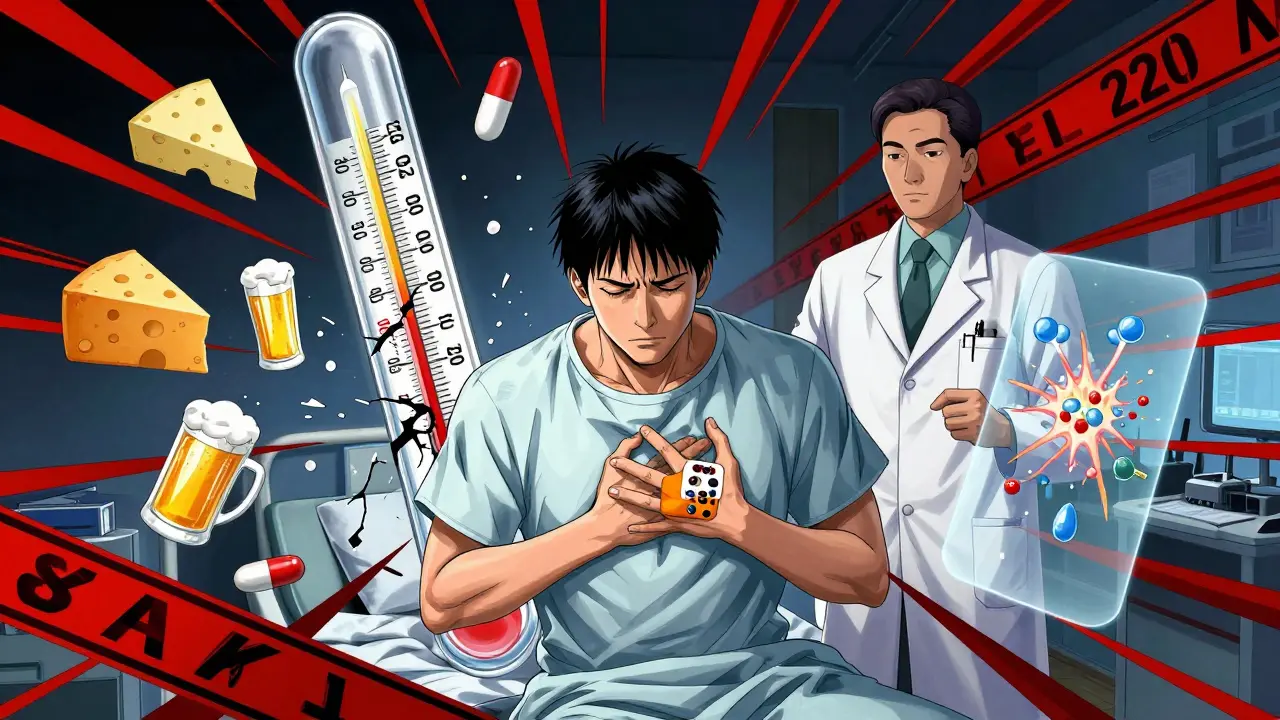
The Newer Options - Less Restrictive, Still Powerful
Not all MAOIs are created equal. The transdermal selegiline patch (Emsam) changed the game. At the lowest dose (6 mg/24hr), it doesn’t require dietary changes at all. At higher doses, restrictions return - but even then, only about 8% of users need to avoid tyramine-rich foods. That’s a huge drop from 92% with oral MAOIs. Why? Because the patch delivers the drug slowly through the skin. It bypasses the gut, where tyramine normally interacts with MAO-A. That’s why it’s safer. It’s also more expensive - $850 to $1,200 a month - but for many, the freedom outweighs the cost. Another option? Moclobemide. It’s a reversible MAO-A inhibitor (RIMA). That means it lets go of the enzyme when needed. Tyramine can still be broken down. It’s approved in Europe and used in about 15% of MAOI prescriptions there. It’s not available in the U.S., but it’s a sign of where the field is heading: safer, smarter, still effective.Real People, Real Experiences
On Reddit’s r/antidepressants, over 1,200 people share their stories. Most say the same thing: “I was broken. Then I tried MAOIs. My life changed.” But they also say: “I almost died once from soy sauce.” One user, “ChronicDepressor87,” wrote: “After 12 years of failed treatments, Parnate saved me. But I’ve had two hypertensive crises. One sent me to the ER with BP 220/110. I carry phentolamine in my purse now.” Another: “Dating is impossible. You can’t say, ‘Hey, I can’t have soy sauce on our first date.’ It’s exhausting.” A 2022 survey by the Depression and Bipolar Support Alliance found that 65% of MAOI users stayed on treatment for over two years - even with the restrictions. Compare that to 42% of people on SSRIs in the same group. That tells you something: when MAOIs work, people stick with them.
Who Should Consider MAOIs?
Not everyone. If you’ve tried SSRIs or SNRIs and they didn’t help - especially if you have atypical depression (mood reactivity, increased appetite, oversleeping, heavy limbs), MAOIs might be worth a conversation. If you’re someone who can commit to careful food prep, avoid OTC meds, and see your doctor regularly, you might be a candidate. But if you travel often, eat out daily, or can’t imagine checking every label on your food, MAOIs aren’t for you. The restrictions aren’t optional. They’re life-saving. Psychiatrists who specialize in treatment-resistant depression use MAOIs more often - 38% of them do. General practitioners? Only 7%. That’s because managing MAOIs isn’t just about prescribing. It’s about coaching, monitoring, and constant communication.What’s Next for MAOIs?
Research is moving fast. A new experimental MAO-A inhibitor called AZD7325 showed a 70% reduction in tyramine sensitivity in early trials. That could mean fewer restrictions in the future. The National Institute of Mental Health is funding studies on MAOIs for bipolar depression, with early results showing 55% remission rates. The goal isn’t to bring back the old MAOIs. It’s to build better ones - drugs that work like MAOIs but don’t require you to live like a monk. For now, MAOIs remain a powerful, risky, and deeply effective tool. They’re not for everyone. But for those who’ve run out of options? They might be the only thing left.Can you drink alcohol while on MAOIs?
It depends. Red wine, tap beer, and some liqueurs contain tyramine and can trigger dangerous blood pressure spikes. Even small amounts can be risky. Most doctors recommend avoiding alcohol entirely. If you do drink, stick to small amounts of fresh, unfermented options like clear spirits (vodka, gin) with non-tyramine mixers - but only after discussing it with your prescriber.
How long do you have to wait after stopping an MAOI before starting another antidepressant?
For irreversible MAOIs like phenelzine or tranylcypromine, you need at least two weeks - sometimes up to five - before starting an SSRI or SNRI. This is because the enzyme takes time to regenerate. If you switch too soon, you risk serotonin syndrome. Always follow your doctor’s timeline. Never guess.
Are MAOIs safe during pregnancy?
There’s not enough data to say they’re safe. Most experts avoid MAOIs during pregnancy unless the benefits clearly outweigh the risks - like in severe, treatment-resistant depression where other options have failed. If you’re pregnant or planning to be, talk to your psychiatrist about alternatives. The risks to the fetus are not fully understood.
Do MAOIs cause weight gain?
Unlike many SSRIs, MAOIs are less likely to cause weight gain - and some people actually lose weight. That’s because they can improve appetite regulation and energy levels. However, if your depression causes overeating, and the MAOI lifts your mood enough that you start eating normally again, you might gain weight. It’s not a direct side effect - it’s a symptom reversal.
Can you use MAOIs if you have high blood pressure?
Generally, no. MAOIs can cause dangerous spikes in blood pressure, especially if you already have hypertension. Even if your blood pressure is controlled, the risk of a hypertensive crisis is too high. Doctors usually avoid prescribing MAOIs to people with uncontrolled or poorly managed hypertension. If you have mild, stable high blood pressure, your doctor may consider it - but only with very strict monitoring.
MAOIs aren’t the easy answer. But for those who’ve been through the wringer - the failed trials, the lost years, the numbness - they can be the bridge back to life. The rules are strict. The risks are real. But so is the relief.

kirti juneja
I'm from India and we've been using traditional fermented foods for centuries - miso, soy sauce, even aged paneer. My grandma would roll her eyes at the idea that one bite of sambar could kill you. But I get it - science doesn't care about tradition. Still, I'm gonna keep my idli-dosa combo and trust my body more than a warning label. 🤷♀️
John Smith
So let me get this straight we're telling people they can't eat cheese or drink beer but we're fine with prescribing a drug that can turn your blood pressure into a rocket launch? Sounds like the FDA's idea of a sitcom
Michael FItzpatrick
The selegiline patch is a godsend. I've been on it for 18 months. No more reading ingredient labels like I'm decoding a Russian novel. I can finally eat at restaurants without sweating bullets. And yeah it's expensive but compare that to years of therapy, failed meds, and ER visits - this is the ROI of sanity. Also I don't miss the days when I'd cry over a bowl of ramen because I didn't know the broth had soy.
Nick Hamby
There's a quiet dignity in the discipline required by MAOIs. It's not just medical compliance - it's a daily practice of mindfulness. Every meal becomes an act of self-preservation. Every medication check a ritual of self-awareness. In a world that rewards speed and convenience, choosing caution is radical. Not everyone can do it. But those who do? They're not just surviving. They're reclaiming their lives - one fresh tomato at a time.
Ashley Johnson
I've been following this since 2019. I know someone who died from a MAOI reaction. It wasn't cheese. It was a cough syrup. The guy was 32. Had a baby. The ER said he had serotonin syndrome. But here's the thing - the pharmacist didn't even know he was on an MAOI. That's the real problem. Not the diet. The system. We're handing out these drugs like candy and calling it 'treatment'.
Haley Gumm
I love how people treat MAOIs like some mystical cure. It's not magic. It's just chemistry with a side of anxiety. I was on Parnate. Lost 15 pounds. Got a hypertensive crisis after a slice of blue cheese pizza. Now I'm on a SSRI. Still depressed. But at least I can eat tacos. Sometimes the trade-off isn't worth it. And no one tells you that part.
Lillian Knezek
I don't trust any of this. The FDA is controlled by Big Pharma. The 'tyramine danger' is a myth designed to keep people dependent on expensive patches. They want you to buy Emsam because it's $1000 a month. Fresh cheese is fine. I eat it every day. I'm 52. Still alive. They're lying. I know people who've been on MAOIs for 20 years and never had a problem. It's all about control.
tia novialiswati
I'm so glad you wrote this. My sister started MAOIs last year and I didn't know how to help. Now I read labels with her. We cook together. I even made a chart of safe foods. It's not easy but it's worth it. She smiles again. And I'll never take that for granted. You're not alone. We're here. 💛
Timothy Haroutunian
Let's be real. The whole MAOI thing feels like a 1970s sci-fi movie where the hero has to wear a spacesuit to eat lunch. And yes I get it - it works. But why? Why can't we just make a better drug? Why do we have to turn people into food scientists just to feel okay? It's not healing. It's survival. And if your life is reduced to avoiding soy sauce and checking expiration dates on chicken, then maybe the system failed you long before the prescription was written.
Shalini Gautam
In India we don't have this problem. We've had fermented foods for thousands of years. Our ancestors didn't die from soy sauce. We have better ways. Why are we copying American medical rules that are outdated? MAOIs are fine. But the restrictions? They're colonial hangovers. We need our own guidelines. Not more fear. More wisdom.
Erin Pinheiro
I took an MAOI and I lost my entire social life. I can't go to parties. I can't eat at restaurants. I can't even have a glass of wine on New Year's. My boyfriend left me because I 'couldn't be spontaneous'. I'm not depressed anymore. But I'm not alive either. I'm a walking checklist. And they call this treatment? I just want to be normal. Not a lab rat with a food diary.