
Why manufacturing staff qualifications matter more than ever
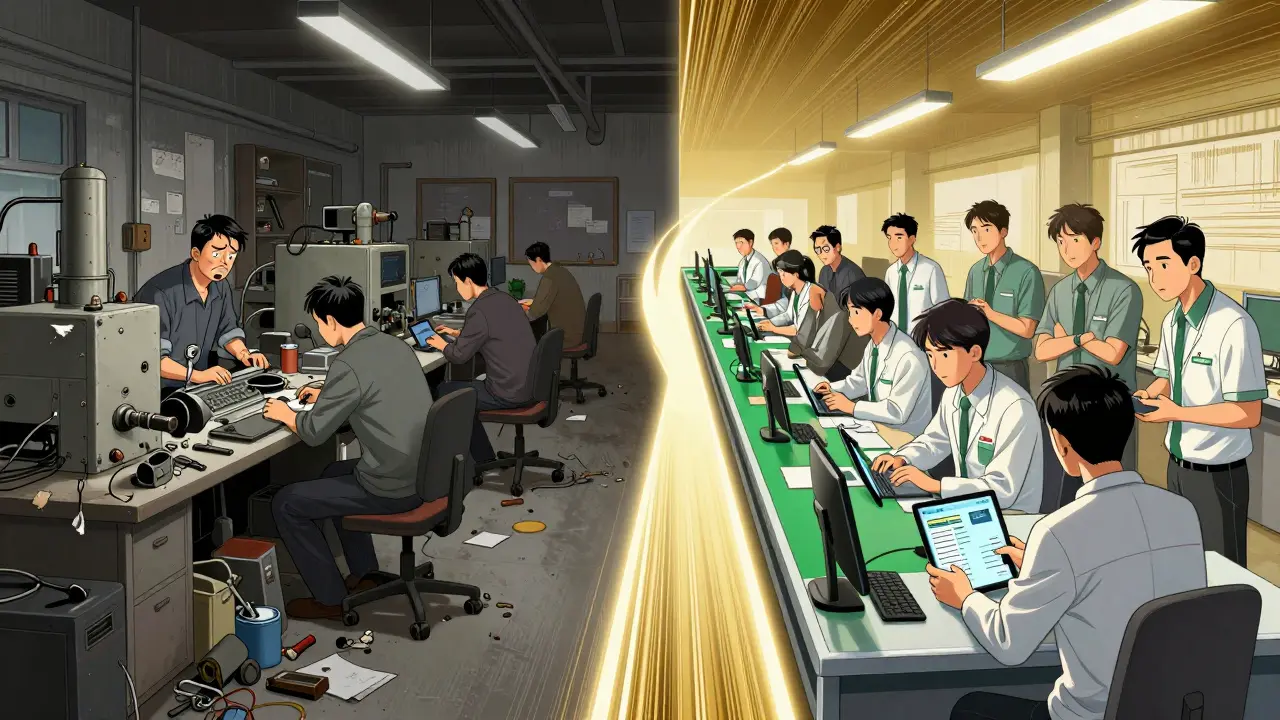
It’s 2025, and the factory floor isn’t what it used to be. Machines talk to each other. Robots handle precision tasks. Workers need to read digital dashboards, not just turn knobs. If your team doesn’t have the right training, you’re not just falling behind-you’re risking safety, quality, and bottom-line performance.
Manufacturers across the U.S. are struggling to fill over 2 million jobs by 2030, not because there aren’t enough people, but because too many don’t have the right skills. The problem isn’t just technical know-how. It’s understanding how to work with automated systems, follow strict quality protocols, and communicate clearly under pressure. Without proper qualifications, even the best equipment won’t save you from costly errors or workplace injuries.
What qualifications do manufacturing staff actually need?
Not every role in manufacturing requires a college degree. But that doesn’t mean anyone can walk in off the street and operate a CNC machine. Qualifications are tiered, and they match the complexity of the job.
For entry-level positions-like material handlers, machine feeders, or basic assembly roles-a high school diploma or GED is often the only formal requirement. But here’s the catch: employers who hire only based on diplomas see 37% higher turnover than those who require even basic certifications. Why? Because training sticks. People who earn a credential feel more valued and are more likely to stay.
For technical roles-welders, machine operators, quality inspectors-you need more than experience. Most employers expect 1-2 years of post-secondary training in fields like Welding Technology, Mechanical Engineering Technology, or Industrial Maintenance. These programs teach you how to read blueprints, use calipers and micrometers, and troubleshoot common equipment failures. Without this foundation, you’re just guessing.
Engineering and supervisory roles? Those almost always require a bachelor’s degree in Industrial Engineering, with coursework in quality control, process design, and basic statistics. But even here, certifications often matter more than the degree alone.
The top certifications that actually move the needle
Not all certifications are created equal. Some are just fancy stickers on a resume. Others are industry-wide standards backed by decades of data. Here are the three that matter most in 2025.
Certified Production Technician (CPT) from the Manufacturing Skill Standards Council (MSSC) is the baseline for frontline workers. It covers four core areas: safety, quality practices, manufacturing processes, and maintenance awareness. Over 42 states recognize it, and it’s built into high school career programs. It’s not expensive-usually under $200-and it takes about 40 hours of training. For someone starting out, this is the first real step up.
Six Sigma is the gold standard for quality control and process improvement. It’s not just for managers. Green Belts (who lead small improvement projects) earn median salaries of $85,000. Black Belts (who lead complex, cross-departmental initiatives) earn over $110,000. Training ranges from 100 to 240 hours, depending on the level. ASQ (American Society for Quality) is the most trusted provider. And here’s the kicker: retention rates jump from 57% to 85% when certification is paired with mentorship. That’s not a coincidence-it’s structure.
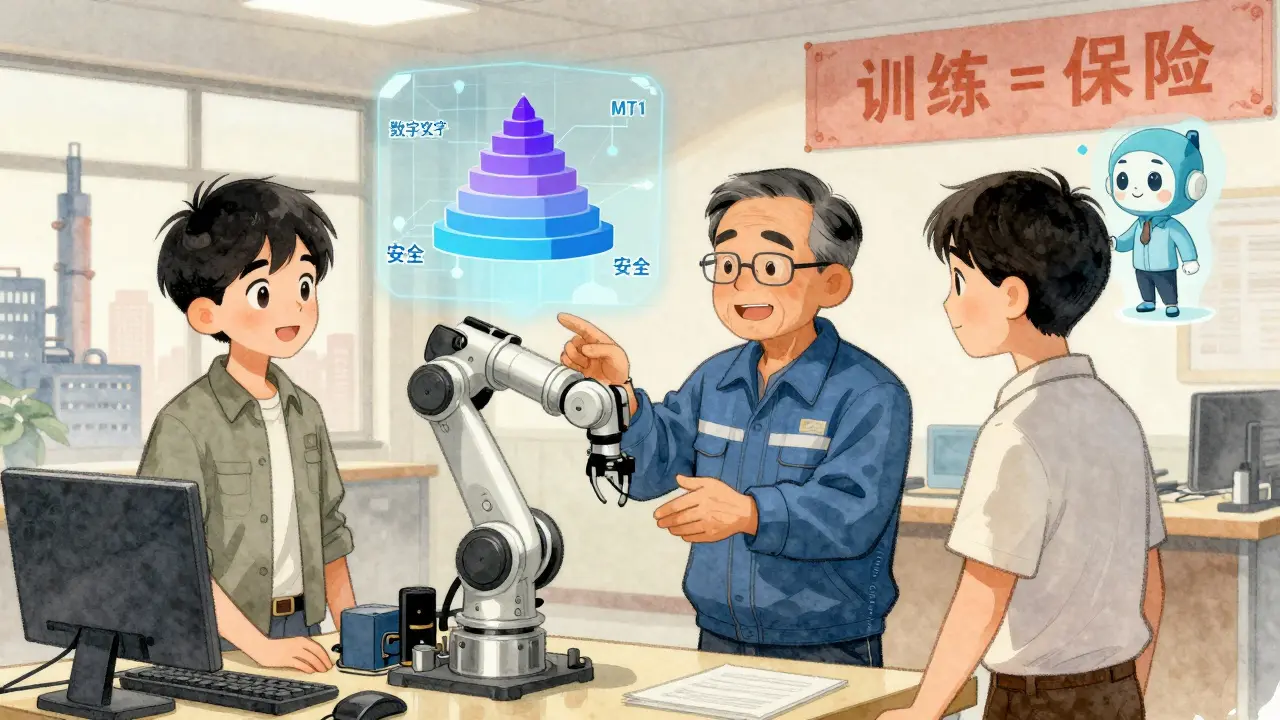
Manufacturing Technician Level 1 (MT1) from the Manufacturing Skills Institute is gaining serious traction. It’s designed for technicians who operate, maintain, and monitor production equipment. What makes MT1 different? It’s funded by state education departments. In Virginia, for example, public school teachers get $2,200 to get certified so they can teach it in high schools. The credential is valid for three years and requires recertification through continuing education. It’s not as widely known as Six Sigma, but it’s growing fast-especially in regions with strong manufacturing clusters.
Training isn’t just about certs-it’s about safety
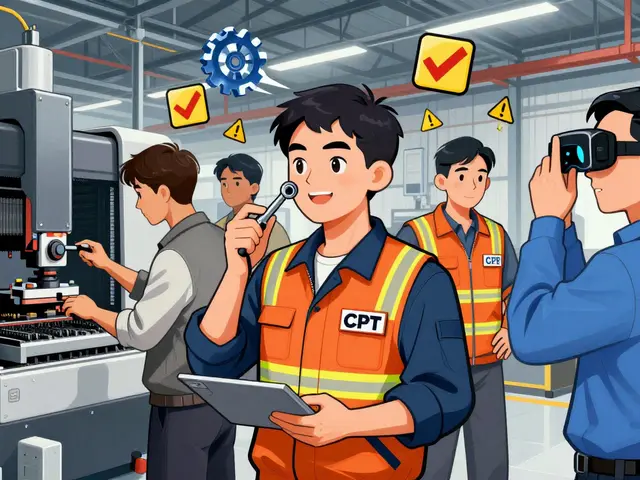
OSHA says proper safety training cuts workplace injuries in manufacturing by 52%. That’s not a suggestion. It’s the law. Every worker needs to know how to use PPE, respond to emergencies, lock out machines during maintenance, and report hazards without fear.
But here’s what most companies miss: safety training isn’t a one-time event. Only 38% of small manufacturers do regular safety recertification. That’s dangerous. Equipment changes. Procedures change. Workers forget. Quarterly refreshers, spot checks, and real-time feedback make the difference between a safe day and a costly accident.
Some companies are using augmented reality (AR) headsets to simulate emergency scenarios-like a chemical spill or a press malfunction-without putting anyone at risk. Users on Reddit’s r/manufacturing report a 39% drop in errors after adopting AR training. It’s not science fiction anymore. It’s becoming standard.
How to build a training program that actually works
Just handing out a manual and saying “go learn” doesn’t work. Effective training is systematic, measurable, and tied to real performance.
Start by looking at your data. What machines break down the most? Where do quality defects show up? Which shifts have the most near-misses? Use that to find your gaps. Companies that do this first see skill acquisition speed up by 33%.
Next, combine learning methods. Don’t rely on just classroom time or just on-the-job training. Blend them. Use short video modules for theory, hands-on practice for skills, and digital checklists to track progress. Document everything. Manufacturers who use skills matrices and digital tracking see 27% higher retention rates.
Don’t forget soft skills. Harvard Business School found that 70% of production failures come from communication breakdowns-not technical errors. A worker who doesn’t speak up when a tool is misaligned, or who doesn’t report a minor defect because they’re afraid of being blamed, is a risk. Train people on how to give and receive feedback. Build psychological safety into your culture.
The cost of skipping training (and why it’s cheaper than you think)
Small manufacturers say they can’t afford training. They’re wrong.
Yes, Six Sigma Black Belt training can cost $5,000. A four-year engineering degree can run $200,000. But the real cost is what you lose without it.
Untrained staff cause:
- Higher scrap rates (up to 15% more waste)
- More machine downtime (2-3 extra hours per week per line)
- Increased OSHA fines (up to $15,000 per violation)
- Higher turnover (replacing a worker costs 1.5x their annual salary)
Large manufacturers see a return on training investment within 14 months. Smaller ones take a bit longer-but still break even in under two years. The key is starting small. Get one team certified in CPT. Train your supervisors in safety protocols. Add one Six Sigma Green Belt. Track the results. The numbers will speak for themselves.
What’s changing in 2025-and what to watch for
The future of manufacturing training is modular, digital, and stackable.
Instead of waiting two years for a full diploma, workers can now earn micro-credentials in weeks. A digital literacy badge. A robotic arm operation cert. A data entry standard. These stack up over time into full qualifications. Sixty-three percent of manufacturers plan to adopt this model by 2025.
And the tech is getting smarter. AI-powered learning platforms now adapt to your pace. If you struggle with calibration, the system gives you extra practice. If you master safety protocols fast, it moves you ahead. Pilot programs show 22% faster skill mastery.
But there’s a warning. MIT professor David Autor found that 43% of current certifications don’t actually predict job performance. With over 247 different credentials floating around, employers are confused. Workers are overwhelmed. The solution? Stick to the big three: CPT, Six Sigma, and MT1. They’re proven. They’re recognized. They’re worth the time.
Where to start if you’re new to manufacturing training
If you’re a small business owner, a supervisor, or a worker looking to get ahead, here’s your action plan:
- Assess your team’s biggest gaps using production data and incident reports.
- Start with CPT certification for frontline staff-it’s affordable, recognized, and builds confidence.
- Train your supervisors in OSHA safety standards and basic Six Sigma principles.
- Use free resources like the Manufacturing Extension Partnership (MEP) network. They offer free consultations and help connect you with local training providers.
- Track progress with a simple skills matrix. Update it every quarter.
- Encourage cross-training. Rotate workers through different stations. It reduces burnout and builds versatility.
Training isn’t an expense. It’s insurance. Against errors. Against injuries. Against losing your best people to competitors who invested in their team.
Do manufacturing staff need a college degree?
No, not always. Entry-level roles only require a high school diploma or GED. But for technical roles like machine operators or quality inspectors, 1-2 years of community college training in fields like welding or mechanical tech is standard. Engineering and management roles typically need a bachelor’s degree. Certifications like CPT or MT1 often matter more than degrees for frontline workers.
What’s the difference between CPT and Six Sigma?
CPT (Certified Production Technician) is for frontline workers and covers safety, quality, and basic machine operation. It’s the entry point. Six Sigma is for process improvement and quality control, used by technicians, engineers, and managers. Green Belt and Black Belt levels focus on data analysis and reducing defects. CPT gets you hired. Six Sigma gets you promoted.
Is MT1 certification worth it?
Yes, especially if you’re in a state that supports it. MT1 is recognized in 42 states and is being integrated into high school programs. It’s focused on equipment operation and maintenance, making it ideal for technicians. While it’s not as widely known as Six Sigma, it’s growing fast and is often funded by state grants, making it low-cost or free for workers.
How much does manufacturing training cost?
Costs vary widely. CPT certification is under $200. Six Sigma Green Belt training runs $1,000-$2,500. MT1 trainer certification is around $2,200-but often covered by state programs. Community college programs cost $3,000-$8,000 per year. University degrees range from $20,000-$50,000 annually. Many employers pay for certifications, especially when tied to performance improvements.
Can older workers keep up with new training?
Absolutely. In fact, 42% of manufacturing workers are 45 or older, and 61% need upskilling for new tech. The key is tailored training-short modules, hands-on practice, and peer support. Many older workers excel at troubleshooting and process knowledge. Digital skills can be learned in weeks with the right approach. Avoid assuming age equals resistance-focus on relevance and support.
What’s the best way to measure training success?
Track real outcomes: defect rates, machine downtime, safety incidents, and turnover. Companies that use skills matrices and digital tracking see 27% higher retention. If your OEE (Overall Equipment Effectiveness) improves after training, you’re on the right track. Don’t just count certificates-count results.
Final thought: Training is your competitive edge
Manufacturing isn’t about who has the newest machines. It’s about who has the best-trained people. In a world where automation handles the routine, human judgment, adaptability, and teamwork are what set top performers apart. Investing in qualifications isn’t just about compliance-it’s about building a team that can evolve, solve problems, and keep your operation running smoothly for years to come.
BETH VON KAUFFMANN
Look, I’ve seen this same garbage for ten years. CPT? Six Sigma? MT1? Everyone’s throwing around acronyms like they’re magic beans. Meanwhile, the actual floor workers are drowning in AR headsets and digital checklists while management sips kombucha in the breakroom. Real training? That’s when someone hands you a wrench and says, ‘Fix it.’ Not a 40-hour webinar on ‘safety awareness.’
Raven C
One must question the epistemological foundations of this piece-particularly the conflation of credentialism with competency. The MSSC’s CPT certification, while administratively convenient, lacks the rigorous pedagogical scaffolding of a true vocational apprenticeship. Moreover, the reliance on ‘skills matrices’ betrays a managerial fetish for quantification over qualitative mastery. One cannot reduce craftsmanship to a spreadsheet.
Donna Packard
I just wanted to say-this article made me feel seen. My cousin just got her CPT last month, and it changed everything. She’s finally got confidence. She’s asking questions. She’s staying late to help train new people. That’s the real win-not the certificate, but the pride. Keep pushing this stuff. It matters.
Patrick A. Ck. Trip
Im not sure if this is accurate but i think the part about AR training reducing errors by 39% might be overstated. I work in a small shop in Ohio and we tried an AR demo last year-cost us 12k and the guys just thought it was a gimmick. We stuck with old-school shadowing. Still, the point about retention is solid. We’ve seen better numbers since we started cross-training. Just wish more of this was free.
Jessica Salgado
Okay, I need to say something real here. I’m 52. I’ve been on the line since I was 18. We didn’t have CPT when I started. We had mentors. We had shame when we messed up. We had pride when we fixed it. Now? We get badges. We get apps. We get ‘psychological safety.’ I don’t need safety-I need someone to trust me with the machine. And if I mess up? Let me fix it. Don’t turn me into a PowerPoint slide. This article? It’s well-intentioned. But it’s missing the soul.
Michael Whitaker
Let’s be honest: the only reason Six Sigma exists is because corporate consultants needed to charge $300/hour. The real problem? Managers don’t know how to lead. They outsource competence to certifications. Meanwhile, the guy who’s been running the same press for 17 years knows more about that machine than any Black Belt ever will. Stop buying certificates. Start listening.
Naomi Lopez
MT1 is the future. Period. It’s the only credential that actually aligns with state workforce development goals-and it’s funded. Why are we still talking about CPT? It’s 2025. We’re not training assembly-line workers anymore; we’re training equipment stewards. MT1 is the bridge between high school and industry. And yes, it’s quietly replacing the old apprenticeship model. The rest? Noise.
Kent Peterson
Who wrote this? A union lobbyist? A college professor who hasn’t set foot on a factory floor since 1999? Let me break it down: 1) No one cares about Six Sigma unless they’re in a Fortune 500 plant. 2) AR training? That’s a Silicon Valley fantasy. 3) ‘Psychological safety’? That’s HR jargon for ‘don’t fire anyone.’ We need people who can fix things-not people who ‘feel safe’ while they stare at a screen. And stop pretending training is ‘insurance.’ It’s a cost center. And we’re cutting it.
Josh Potter
Y’all are overthinking this. My buddy got his CPT in two weeks. Now he’s making $22/hr instead of $16. He’s got a promotion. He’s not scared to speak up. That’s it. No AR. No Black Belts. Just a stupid little cert that says ‘I know what I’m doing.’ Stop arguing. Go get certified. Your wallet will thank you.