
When your lung suddenly stops working the way it should, it’s not just uncomfortable-it can be life-threatening. Pneumothorax, or a collapsed lung, happens when air leaks out of the lung and gets trapped between the lung and chest wall. That air pushes on the lung, making it shrink like a deflated balloon. You can’t breathe properly. Your body doesn’t get enough oxygen. And if it gets worse, it can stop your heart. This isn’t rare. About pneumothorax affects 1 in 5,000 people every year, and for some, it happens without warning.
What Does a Collapsed Lung Feel Like?
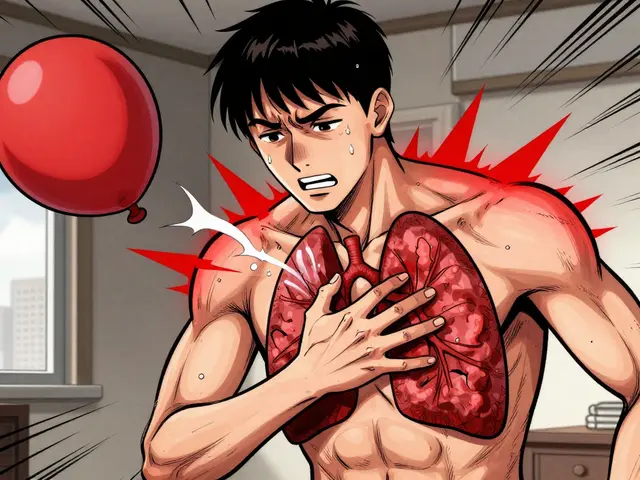
The first thing most people notice is sharp, sudden chest pain. It’s not a dull ache. It’s a stabbing sensation, usually on one side, and it gets worse when you take a deep breath or cough. Many describe it as if someone punched them in the ribs. The pain often travels up to the shoulder on the same side-this is a key clue doctors look for. In fact, studies show over 90% of people with pneumothorax report this exact pattern.Right after the pain, shortness of breath kicks in. It might start as feeling winded after climbing stairs. But if the lung collapse is bigger than 30%, you’ll struggle to breathe even while sitting still. You might feel like you’re suffocating, even though you’re not choking. Your lips or fingertips may turn slightly blue. That’s your body screaming for oxygen.
Physical signs are just as telling. If a doctor listens to your chest with a stethoscope, they’ll hear little to no breath sounds on the affected side. When they tap on your chest, it will sound unusually hollow-like drumming on an empty barrel. Your skin might feel cooler on that side, and you may feel less vibration when you speak, because the air trapped outside the lung blocks sound.
The Real Danger: Tension Pneumothorax
Not all collapsed lungs are the same. The scariest version is called tension pneumothorax. This isn’t just a lung collapse-it’s a ticking bomb. Air keeps leaking in, but can’t escape. Pressure builds up, squishing the lung completely, then pushing the heart and major blood vessels to the other side. Your heart struggles to pump. Your blood pressure crashes. Your oxygen levels drop below 90%. Your heart rate spikes past 130 beats per minute.Here’s the brutal truth: tension pneumothorax kills fast. In 10 minutes, it can cause cardiac arrest. And here’s what makes it worse-many people wait. They think it’s a pulled muscle. Or panic. But time is everything. If you’re in severe distress, have blue lips, and can’t catch your breath, don’t wait for an ambulance. Call emergency services immediately. Every minute counts.
How Doctors Diagnose It
In the ER, they don’t guess. They use proven tools. The first thing they do is order a chest X-ray. It catches 85% to 94% of cases. But even that can miss the mark, especially if you’re lying down after a car crash. That’s why many hospitals now use ultrasound. A trained emergency doctor can spot a pneumothorax in seconds using a handheld device. They look for the “lung point”-a tiny flicker where the lung still moves against the chest wall. When that point disappears, the lung has fully collapsed.CT scans are the gold standard. They show even the smallest leaks-down to 50 milliliters of air. But they’re not used first. Too much radiation. Too slow. Unless you’re stable and the X-ray is unclear, they skip the CT.
They also check your blood. If your oxygen level is below 80 mmHg and your carbon dioxide is too low, it confirms your lungs aren’t working right. You’re hyperventilating because your body is desperate for air.
Emergency Treatment: What Happens Next
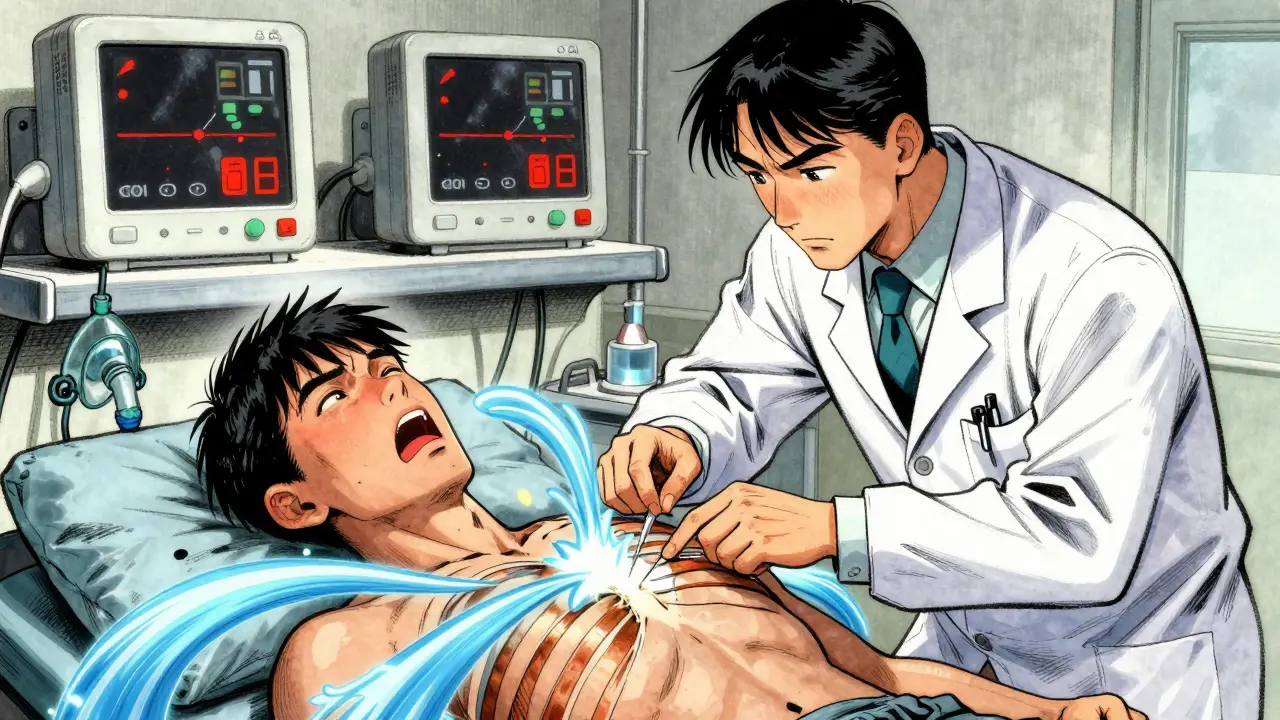
If you’re unstable-low blood pressure, fast heart rate, low oxygen-doctors don’t wait for scans. They act. Right now. They stick a needle into your chest, between the ribs, and pull out the trapped air. It’s called needle decompression. It’s not pretty. It’s loud. You’ll feel pressure. But within seconds, your breathing improves. Your heart rate drops. Your color comes back. This isn’t optional. It’s the difference between life and death.If you’re stable, they might try something less invasive: needle aspiration. A thin tube pulls air out through a small puncture. It works in about 65% of cases. If that fails, or if the collapse is big, they insert a chest tube. A 28F tube goes between your ribs, connected to a suction system. It drains the air over hours or days. You’ll be hooked up to monitors. You’ll feel sore. But your lung will slowly re-expand.
For people with recurring cases, or those with underlying lung disease, surgery is often needed. Video-assisted thoracoscopic surgery (VATS) is minimally invasive. A camera and tools go in through small cuts. They seal the leak and remove damaged tissue. It’s done under general anesthesia. Recovery takes a few days. But it cuts your chance of it happening again from 40% down to just 5%.
What Happens After You Leave the Hospital
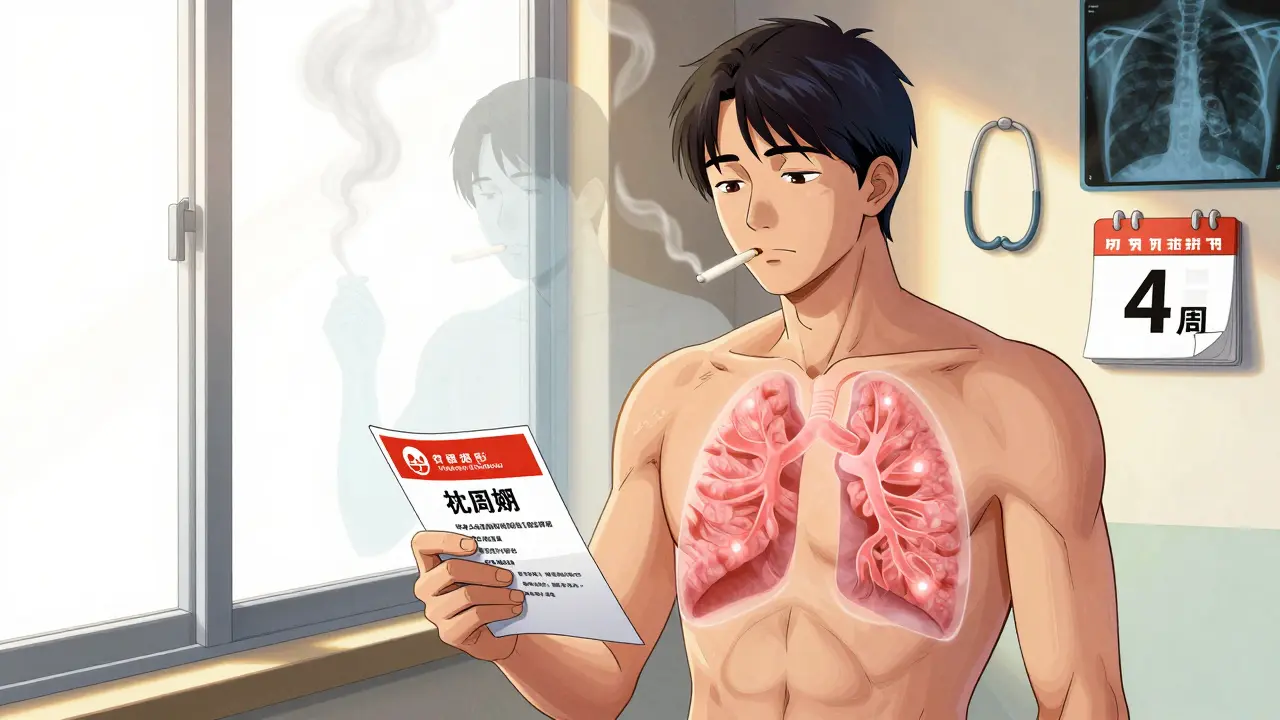
Going home doesn’t mean you’re out of the woods. The biggest risk? It coming back. For healthy, young people without lung disease, about 1 in 3 will have another episode within two years. If you smoke, your risk jumps to more than 20 times higher. Quitting isn’t advice-it’s survival. Studies show quitting smoking cuts recurrence by 77% in the first year.You’ll need a follow-up X-ray in 4 to 6 weeks. Not just to check healing, but to catch hidden problems. About 8% of people develop delayed complications if they skip this step.
Here’s what you can’t do:
- No flying for at least 2 to 3 weeks after recovery. Air pressure changes in planes can make the leak return.
- No scuba diving unless you’ve had surgery. The pressure underwater is too risky-12% of divers with past pneumothorax have another episode while diving.
- No heavy lifting or intense exercise for 4 to 6 weeks. Your lung needs time to heal fully.
Watch for warning signs: sudden sharp pain again, trouble speaking full sentences, lips turning blue, or oxygen levels dropping. If any of this happens, call 999. Don’t drive yourself. Don’t wait. This isn’t a trip to urgent care-it’s an emergency.
Who’s Most at Risk?
Pneumothorax can hit anyone, but some groups are far more vulnerable. Tall, thin men under 40 are the most common. Why? Their lungs have weak spots near the top-like tiny blisters-that can rupture. Smoking? That’s the #1 preventable cause. Every pack-year increases your risk 22-fold. People with COPD, asthma, or cystic fibrosis are also at high risk. For them, a collapsed lung isn’t a one-time event-it’s a recurring threat. One study found over half of COPD patients have another episode within a year.And yes, it can happen after medical procedures. A biopsy, a central line, even CPR can cause it. That’s why doctors check for signs after any procedure involving the chest.
Bottom Line: Act Fast, Think Ahead
Pneumothorax doesn’t wait. It doesn’t care if you’re busy, tired, or scared. If you feel that sudden, sharp chest pain with trouble breathing, don’t ignore it. Don’t assume it’s heartburn or anxiety. Get checked. If you’re in distress, get help now. Emergency treatment saves lives. Surgery can stop it for good. And quitting smoking? That’s your best defense.The truth is simple: early action = survival. Delay = danger. Know the signs. Know your risks. And if you’ve had it once, treat your lungs like your most valuable asset-because they are.
Can a collapsed lung fix itself without treatment?
Yes, but only in small cases. If the air leak is minor-less than 2 cm on an X-ray-and you’re otherwise healthy, doctors may just monitor you with oxygen. The body can reabsorb the air over 1 to 2 weeks. About 82% of these small, primary cases heal on their own. But if you have any breathing trouble, underlying lung disease, or the collapse is larger, you need medical intervention. Never assume it will go away.
Is pneumothorax the same as a pulmonary embolism?
No. A collapsed lung (pneumothorax) is caused by air leaking into the chest cavity, pushing the lung down. A pulmonary embolism is a blood clot blocking an artery in the lung. Both cause chest pain and shortness of breath, but they’re completely different. A pulmonary embolism often comes with leg swelling, sudden coughing, or coughing up blood. Diagnosis and treatment are totally different. Mistaking one for the other can be deadly.
Can stress or anxiety cause a collapsed lung?
No. Stress or anxiety won’t cause pneumothorax. But they can mimic the symptoms. Rapid breathing during a panic attack can feel like you’re struggling to breathe, and chest tightness can feel like pain. If you’ve never had a lung issue before, it’s more likely anxiety. But if you’re tall, smoke, or have lung disease, and this is sudden and severe, don’t assume it’s anxiety. Get checked. It’s better to be safe.
How long does it take to recover from a chest tube?
Most people go home within 3 to 5 days after chest tube insertion. But full recovery takes longer. The lung re-expands quickly, but the hole where the tube went in needs time to seal. You’ll feel sore for weeks. Avoid lifting anything heavier than a kettle for 4 to 6 weeks. Your doctor will schedule a follow-up X-ray to confirm healing before clearing you for normal activity.
Why is oxygen therapy used for pneumothorax?
Breathing high-flow oxygen (10-15 liters per minute) speeds up how fast your body absorbs the trapped air. Normally, air leaves the chest cavity at about 1.25% of volume per hour. With supplemental oxygen, that rate jumps to over 4% per hour. That means you might heal in days instead of weeks. It’s a simple, non-invasive way to help your body do the work faster.
Write a comment