
Steroid Side Effect Risk Calculator
Estimate your potential side effect risks based on dosage and duration of Prednisone or Prednisolone use.
Your Risk Assessment
-
Short-Term Risks (First Few Weeks):
- -
Long-Term Risks (Chronic Use):
- -
Management Recommendations:
-
Imagine waking up with a face that looks puffy, a stomach that won't settle, and a mind racing with anxiety. For millions of people prescribed Prednisone or its close cousin Prednisolone, this isn't a nightmare-it's a Tuesday. These powerful synthetic corticosteroids are the go-to weapons against inflammation, autoimmune flare-ups, and severe allergies. They work fast, often saving lives in acute crises like giant cell arteritis or severe asthma attacks. But they come with a steep price tag in terms of side effects.
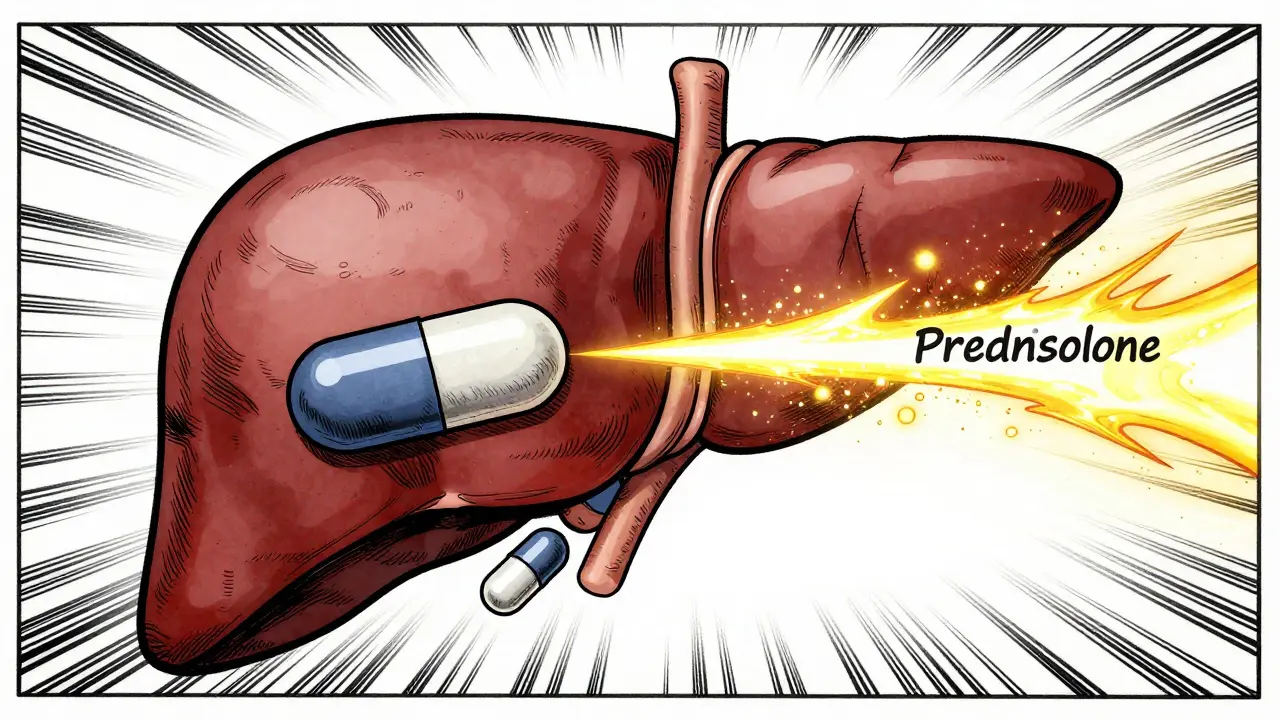
You might be wondering why there are two names for what seems like the same drug. The short answer is biology. Prednisone is a prodrug, meaning it’s inactive until your liver converts it into prednisolone. If you have healthy liver function, the difference is negligible. If you don’t, prednisolone becomes the safer, more direct choice. Understanding this distinction is just the first step in managing the complex web of short-term annoyances and long-term health risks associated with these medications.
How Prednisone and Prednisolone Work in Your Body
To understand the side effects, you first need to understand the mechanism. Both drugs belong to a class called glucocorticoids. Think of them as master switches for your immune system. When you take them, they bind to receptors inside your cells and shut down the production of inflammatory chemicals. This is why swelling goes down and pain decreases so quickly.
However, your body doesn't distinguish between "bad" inflammation (like an autoimmune attack) and "good" inflammation (like healing from a cut). By suppressing the entire system, you open the door to other issues. Prednisone must travel to the liver and undergo a chemical transformation via the enzyme 11-beta-hydroxysteroid dehydrogenase type 1 to become active prednisolone. Studies show that in patients with severe liver impairment (Child-Pugh class C), this conversion drops by 67%. This is why doctors prescribe prednisolone directly to patients with cirrhosis or hepatitis-they bypass the broken conversion step entirely.
| Feature | Prednisone | Prednisolone |
|---|---|---|
| Active Form | Prodrug (needs conversion) | Active metabolite |
| Liver Dependency | High (requires healthy liver) | Low (directly active) |
| Bioavailability Speed | Slower (depends on conversion rate) | Faster (1.8x quicker in normal liver) |
| Dose Equivalence | 5mg = 5mg Prednisolone | 5mg = 5mg Prednisone |
| Best For | General population, lupus | Liver disease, pediatric IBD |
Short-Term Side Effects: What Happens in the First Few Weeks
If you’re taking steroids for a brief period-say, a 5-day burst for a bad allergic reaction or a 2-week taper for a flare-up-the side effects are usually annoying but reversible. Most patients report these symptoms resolving within two weeks of stopping the medication.
- Insomnia and Sleep Disruption: Steroids mimic cortisol, your natural wake-up hormone. Taking them late in the day can keep you wired. A trial at the Mayo Clinic found that restricting doses to before 2 PM reduced sleep disturbances from 68% to 29%. Stick to morning dosing if possible.
- Increased Appetite and Weight Gain: You’ll likely feel hungrier than usual. This isn’t just psychological; the drug alters metabolic signaling. Expect water retention rather than fat gain in the short term. Limiting sodium to under 2,000mg daily helps combat this fluid buildup.
- Mood Swings and Anxiety: Known colloquially as "roid rage," though it’s often more about irritability and paranoia. In high doses (above 40mg), some users experience severe psychiatric effects, including psychosis. One user on Reddit described becoming paranoid enough to call emergency services multiple times due to hallucinations. While rare at low doses, mood changes affect over half of users.
- Gastrointestinal Distress: Stomach upset is common. Prednisolone may cause slightly more GI distress (28% of patients) compared to prednisone (24%), according to a Cochrane meta-analysis. Doctors often prescribe proton pump inhibitors (PPIs) if you’re on steroids for more than four weeks to prevent peptic ulcers.
For children, the most visible short-term effect is "moon face"-facial swelling caused by fat redistribution. Parents often find this distressing, but it typically improves within 10 days of stopping treatment. Growth velocity can decrease by 1.2 cm per year for every 0.2mg/kg/day of prednisolone, making monitoring essential for kids.
Long-Term Side Effects: The Hidden Dangers of Chronic Use
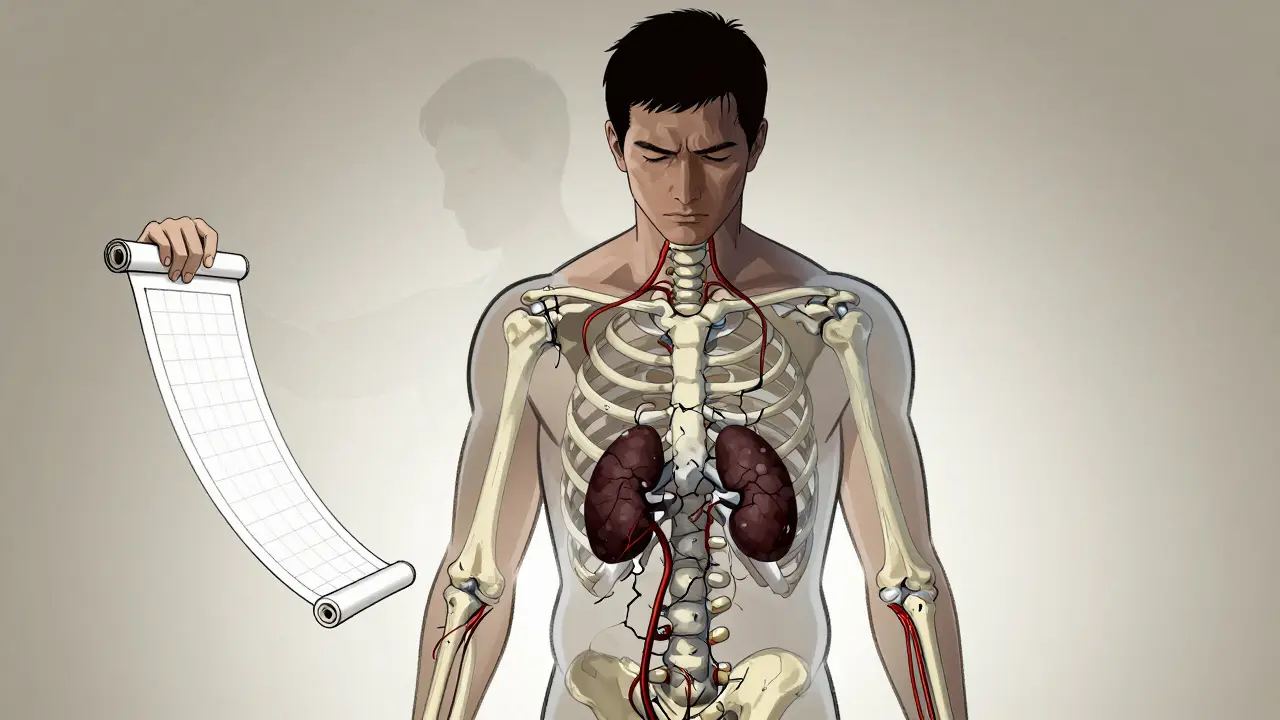
The real danger lies in taking these medications for months or years. The risk of serious adverse events increases exponentially when you stay above 7.5mg daily for more than three weeks. At 20mg daily for eight weeks, 40% of patients develop at least one significant side effect.
Osteoporosis and Bone Fractures Steroids interfere with calcium absorption and bone formation. Long-term users are at high risk for osteoporosis. Data from the Autoimmune Registry shows that 63% of patients developed osteoporosis after two years of use. The European League Against Rheumatism recommends bone density scans for anyone on more than 5mg daily for over three months. Weight-bearing exercise can help preserve bone mineral density by up to 22%.
Adrenal Suppression This is perhaps the most critical risk. Your adrenal glands produce cortisol naturally. When you flood the system with synthetic steroids, your adrenals "go on strike" and stop producing their own cortisol. If you stop the medication abruptly, your body has no cortisol to handle stress, leading to acute adrenal insufficiency-a life-threatening condition characterized by low blood pressure, shock, and coma. Always taper off slowly under medical supervision, usually over 2-4 weeks minimum.
Metabolic Changes Steroids induce insulin resistance. About 54% of non-diabetic patients on more than 20mg daily develop hyperglycemia (high blood sugar). This can lead to type 2 diabetes or worsen existing diabetes. Regular blood glucose monitoring is essential. Additionally, lipids (cholesterol and triglycerides) often rise, increasing cardiovascular risk.
Eye Problems Cataracts and glaucoma are well-documented long-term risks. Nearly 41% of long-term users in registry data required cataract surgery. Regular eye exams are crucial if you’re on chronic therapy.
Avascular Necrosis Also known as bone death, this occurs when blood supply to bone tissue is interrupted. It affects 9-40% of patients on high-dose steroids for more than three months, commonly hitting the hips and knees. Pain in the hip or shoulder should never be ignored.
Managing Side Effects: Practical Strategies
You can’t eliminate all side effects, but you can mitigate many of them with proactive habits. Here is how to protect yourself while on treatment:
- Time Your Doses: Take your medication in the morning with food. This aligns with your body’s natural cortisol rhythm and reduces insomnia.
- Watch Your Diet: Adopt a high-protein, low-sodium diet. Aim for less than 2,000mg of sodium daily to reduce fluid retention. Increase potassium intake to around 4,700mg daily (through foods like bananas and spinach) to counteract hypokalemia, which affects 31% of long-term users.
- Protect Your Bones: Ensure adequate Calcium (1,200mg) and Vitamin D (800-1,000 IU) intake. Discuss bisphosphonate therapy with your doctor if you’re on long-term steroids, as current regimens only prevent 55% of fractures.
- Monitor Blood Sugar: If you’re diabetic or pre-diabetic, check your glucose levels frequently. Non-diabetics on high doses should also monitor for spikes.
- Stay Active: Engage in weight-bearing exercises like walking or light jogging to maintain bone density and muscle mass. Muscle weakness is a common complaint, so resistance training is beneficial too.
- Never Stop Abruptly: Follow your tapering schedule exactly. Missing doses can trigger an adrenal crisis, while doubling up causes toxicity. Use medication apps to track adherence; studies show a 37% improvement in proper usage with digital reminders.
When Are Steroids Worth the Risk?
Despite the scary list of side effects, prednisone and prednisolone remain indispensable tools in modern medicine. A 2023 survey of rheumatologists showed that 94% consider them essential for acute disease control. In conditions like giant cell arteritis, steroids led to a 92% improvement rate compared to 58% with placebo. For acute asthma attacks, severe lupus flares, or organ transplant rejection, the benefits vastly outweigh the transient risks.
The key is the "lowest effective dose for the shortest possible time." Doctors are increasingly using biologics like tocilizumab to reduce long-term steroid dependence, cutting reliance by 28% in rheumatoid arthritis cases. New formulations, such as delayed-release prednisone, aim to minimize morning cortisol suppression and reduce mood side effects by 32%. Research into selective glucocorticoid receptor modulators promises even fewer metabolic side effects in the near future.
If you’ve been prescribed these medications, don’t panic. Be informed. Monitor your body, communicate openly with your healthcare provider, and adhere strictly to your tapering plan. With careful management, you can harness the power of these drugs without letting the side effects take control.
What is the main difference between prednisone and prednisolone?
Prednisone is a prodrug that must be converted into prednisolone by the liver to become active. Prednisolone is already in its active form. For people with healthy livers, they are essentially equivalent. However, patients with liver disease (like cirrhosis) cannot convert prednisone efficiently, so doctors prescribe prednisolone directly to ensure the medication works.
How long do steroid side effects last after stopping?
Short-term side effects like insomnia, increased appetite, and mood swings typically resolve within 1 to 2 weeks after discontinuing the medication. Fluid retention and facial swelling (moon face) often improve within 10 days. However, long-term effects like osteoporosis, cataracts, or adrenal suppression may be permanent or require extended recovery and management.
Can steroids cause permanent damage?
Yes, long-term use (months to years) can lead to permanent issues such as osteoporosis (bone thinning), cataracts, glaucoma, and avascular necrosis (bone death). Adrenal suppression can also be long-lasting, requiring lifelong hormone replacement therapy in some cases. This is why minimizing duration and dose is critical.
Why shouldn't I stop taking steroids suddenly?
Your body stops producing its own cortisol when you take synthetic steroids. If you stop abruptly, your adrenal glands haven't had time to restart production. This leads to acute adrenal insufficiency, a life-threatening condition causing low blood pressure, shock, and potentially death. Always taper off gradually under a doctor's supervision.
Do steroids affect mental health?
Yes, mood changes are very common. Over 50% of users report mood swings, anxiety, or irritability. High doses (above 40mg) can cause severe psychiatric effects, including mania, depression, or psychosis (hallucinations and paranoia). These effects usually reverse after stopping the drug, but they can be dangerous in the moment.
Is prednisolone better for children?
Pediatric gastroenterologists often prefer prednisolone for conditions like inflammatory bowel disease in children. It is available in liquid forms (like Pediapred) which are easier for kids to take. Since children’s bodies are still developing, avoiding the extra liver conversion step ensures consistent dosing and efficacy.
How can I prevent weight gain on steroids?
Most short-term weight gain is due to water retention, not fat. Limit sodium intake to under 2,000mg daily and increase potassium-rich foods. Maintain a balanced diet despite increased appetite, and engage in regular physical activity. Once you stop the medication, the water weight will drop significantly.

Write a comment