
Waking up feeling like you've run a marathon despite "sleeping" for eight hours is a common but frustrating part of pregnancy. While most people expect the midnight bathroom trips, many are blindsided by more serious issues like snoring, gasping for air, or the feeling of acid burning their throat. These aren't just "pregnancy quirks"; they are often signs of pregnancy sleep apnea is a condition where the airway partially or fully collapses during sleep, leading to drops in blood oxygen levels. Ignoring these signs can lead to complications like high blood pressure, but with the right gear and positioning, you can get your rest back.
The Hidden Struggle with Sleep Apnea and Pregnancy
It might seem strange that pregnancy affects breathing, but your body undergoes massive shifts. Hormonal changes cause the lining of your upper airway to swell, and as your baby grows, the diaphragm is pushed upward, leaving less room for your lungs to expand. According to the American Academy of Sleep Medicine, about 10.5% of women in their third trimester deal with Obstructive Sleep Apnea(OSA), a disorder characterized by recurrent episodes of upper airway obstruction during sleep. If you're struggling with a BMI of 30 or higher, that number jumps to nearly 27%.
Why does this matter? It's not just about being tired. Research from 2022 shows that untreated OSA can more than double your risk of preeclampsia. It also increases the likelihood of gestational diabetes and C-section deliveries. If you're snoring loudly or waking up with a dry mouth and a headache, it's time to talk to your doctor. Most clinics now use tools like the Berlin Questionnaire at the first visit to catch these risks early.
How to Treat Sleep Apnea While Expecting
The gold standard for treatment is CPAP(Continuous Positive Airway Pressure), a therapy that uses a machine to deliver a steady stream of pressurized air through a mask to keep the airway open. While the idea of wearing a mask to bed sounds daunting, the results are significant. Data shows that starting CPAP therapy between 24 and 28 weeks can cut the risk of preeclampsia by 30%.
Getting used to a CPAP machine usually takes about one to two weeks. To make it easier, look for "nasal pillows" instead of full-face masks, as they handle pregnancy-related facial swelling much better. Setting your humidifier to 37°C can also stop that annoying nasal dryness. Some newer devices, like the ResMed AirSense 11, even have a specific pregnancy mode that adjusts pressure automatically as your body changes each trimester.
| Method | Effectiveness (AHI Reduction) | Adherence Rate | Best For... |
|---|---|---|---|
| CPAP Therapy | High (approx. 78%) | Moderate (62%) | Moderate to Severe OSA |
| Positional Therapy | Low to Moderate (approx. 32%) | High (85%) | Mild OSA |
| Lifestyle Changes | Variable | High | General Wellness & Reflux |
Mastering Your Sleep Position
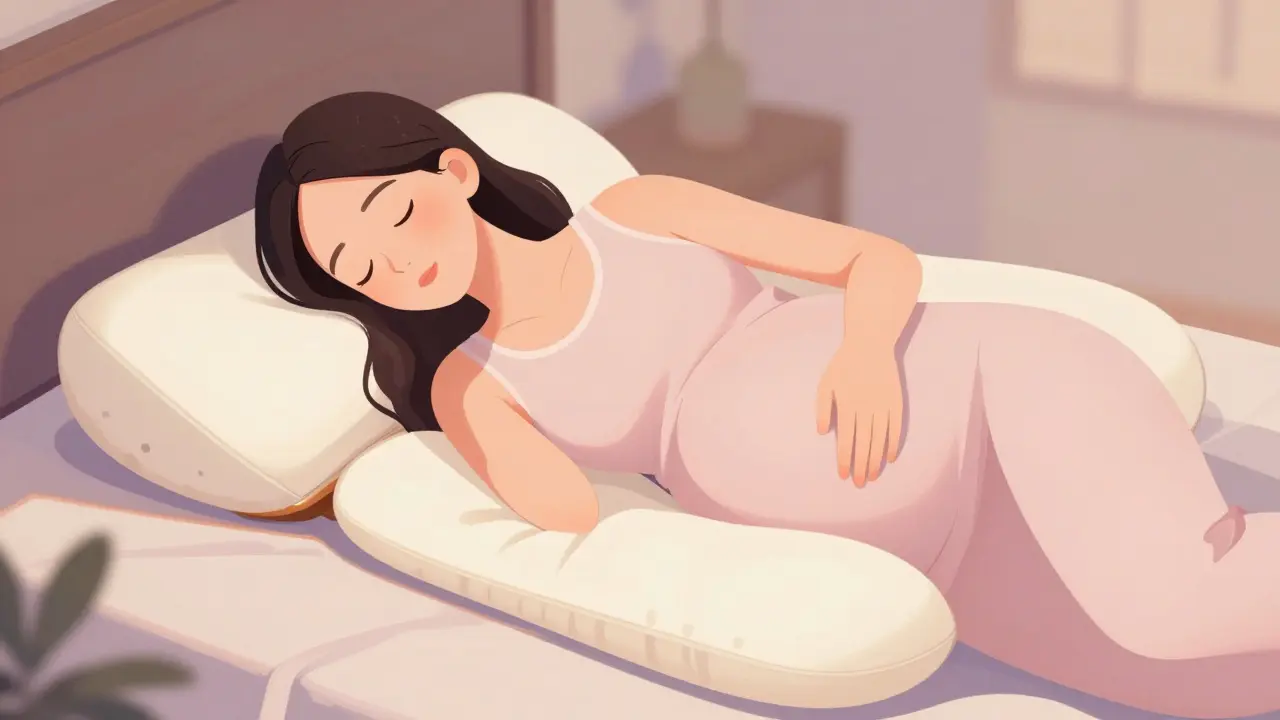
If your apnea is mild, or if you're using CPAP as a primary tool, how you lie down makes a world of difference. The left lateral position-sleeping on your left side-is widely recommended because it improves blood flow to the placenta and kidneys. More importantly, for those with breathing issues, staying off your back prevents the tongue and soft tissues from collapsing into the throat.
To stay in this position without waking up every time you shift, invest in a full-body pregnancy pillow. These aren't just for comfort; they act as a physical barrier to keep you from rolling onto your back. Studies from Brown Health suggest that dedicated positional therapy can reduce the apnea-hypopnea index (AHI) by over 20% in mild cases. Pro tip: Combine your side-sleeping with a wedge pillow to elevate your upper body by 15-30 degrees. This extra lift helps keep the airway open and eases the pressure on your lungs.
Stopping the Burn: Managing Pregnancy Reflux
Heartburn and acid reflux are almost like a rite of passage in pregnancy, but they can actually make sleep apnea worse by irritating the throat. When your stomach acid travels upward, it can cause inflammation that further narrows your airway.
The most effective way to stop this is to elevate the head of your bed by 6 to 8 inches. Be careful here-don't just stack four soft pillows under your head, as this can kink your neck and actually make apnea worse. Use a firm foam wedge instead. You should also stop eating at least three hours before you plan to hit the pillow. If the burn is still there, alginate-based antacids (like Gaviscon Advance) are a great choice because they create a physical foam barrier on top of your stomach acid without being absorbed into your bloodstream.

The Long Game: Postpartum and Beyond
Many women find that their sleep apnea disappears as soon as the baby is born and the pressure on their diaphragm is gone. However, you shouldn't just assume it's over. There is a concerning trend where nearly 60% of women who develop pregnancy-onset OSA go on to develop chronic hypertension within ten years.
Whether your symptoms vanished or persisted, keep an eye on your sleep quality. If you're still snoring or feeling exhausted, a follow-up sleep study around 12 weeks postpartum is a smart move. With the arrival of new tech, like the sleep apnea detection algorithms in newer smartwatches, it's easier than ever to monitor your breathing patterns from home and catch issues before they become long-term health problems.
Is it safe to use a CPAP machine during pregnancy?
Yes, CPAP is considered the first-line, safe treatment for obstructive sleep apnea during pregnancy. It not only improves the mother's sleep quality but has been shown to significantly reduce the risk of preeclampsia and gestational hypertension by ensuring the baby and mother receive consistent oxygen levels.
Can a pregnancy pillow actually treat sleep apnea?
A pillow alone cannot "cure" moderate to severe sleep apnea, but it is an effective tool for "positional therapy." By keeping you on your side, it prevents the airway collapse that happens when sleeping on your back, which can significantly reduce the number of apnea episodes in mild cases.
Why does my nose feel so congested with my CPAP mask?
Pregnancy causes increased blood flow and hormonal swelling in the nasal passages, known as pregnancy rhinitis. To fix this, use a heated humidifier set to around 37°C and consider switching to nasal pillows, which are generally more comfortable and less prone to leaking than full-face masks when facial edema is present.
What is the best position for both reflux and sleep apnea?
The ideal position is sleeping on your left side with your upper body elevated at a 15-30 degree angle using a wedge pillow. The left-side position keeps the stomach opening above the gastric acid level to stop reflux, while the elevation keeps the airway open and reduces pressure on the lungs.
When should I be screened for sleep apnea during pregnancy?
Current guidelines suggest screening at the first prenatal visit for high-risk patients and universal screening for all pregnant women around the 28-week mark. If you notice loud snoring, morning headaches, or excessive daytime sleepiness, you should request a screening regardless of your week of pregnancy.
Next Steps for Better Sleep
If you're feeling overwhelmed, start with one change tonight: try the left-side position with a wedge pillow. If you're still waking up exhausted, bring a list of your symptoms to your next OB-GYN appointment. Ask specifically about the STOP-Bang or Berlin Questionnaires to see if a formal sleep study is necessary. For those already using CPAP, a quick check-in with your sleep specialist to adjust your pressure settings for the third trimester can prevent the "mask leak" and discomfort that often lead people to quit the therapy.
Robin Walton
The wedge pillow tip is a total lifesaver for anyone dealing with that awful heartburn during the third trimester
Ben hogan
Imagine believing that a piece of foam and a plastic mask are the pinnacle of human health solutions. It is utterly pedestrian to assume that the biological complexity of pregnancy can be managed by following a rudimentary table of AHI reduction percentages. Truly, the modern obsession with quantifying existence through medical devices is a tragedy of the highest order, stripping the experience of its natural essence for the sake of a few hours of mediocre sleep. I find it laughable that people actually rely on these gadgets instead of cultivating a deeper understanding of their own physical being, though I suppose most are too intellectually lazy to do anything but read a list of recommendations and obey them like sheep
Victor Parker
Wait a minute... why are they pushing these CPAP machines so hard? 🤨 I bet these companies are just paying off the doctors to get us hooked on machines that monitor our every breath while we sleep! Total control move :)
danny Gaming
crap i tried one of those pillows and it didnt do squat lol these medical guidlines are usually garbage anyway just buy american made gear and stop listening to the fake experts
Kelly DeVries
honestly just use the left side rule it's literally the only thing that works and if you don't do it you're basically asking for reflux to ruin your whole night lol
Suchita Jain
It is imperative that one maintains a strictly disciplined dietary regimen before bedtime. I have observed many women neglecting the three-hour fasting window mentioned here, which is an absolute failure of self-control and discipline in one's lifestyle choices.
Lynn Bowen
The mention of Gaviscon Advance is helpful since different brands are available in different regions
Simon Stockdale
Man I remember when we just dealt with things the old fashioned way and didn't need a fancy machine from some corporate lab to tell us how to breathe but here we are in the land of the free where we're too soft to just push through a bit of snoring even though I'll admit my wife was practically shaking the whole house down in the third trimester and it was a total disaster zone in the bedroom for months on end!!
Franklin Anthony
actually its great that the machines are helping people stay healthy cuz the alternative is just ignoring the signs and then acting surprised when the blood pressure spikes which is just illogical tbh