
Living with Post-Traumatic Stress Disorder often feels like your brain is stuck on repeat. You might find yourself reliving a terrifying event through flashbacks or losing sleep to vivid nightmares. It’s exhausting, isolating, and frankly, it changes how you move through the world. If you’ve been told that "time heals all wounds," you know how frustrating that advice can be when the wound refuses to close.
The good news? You don’t have to just endure it. Modern medicine offers two powerful tools to help: trauma processing therapy, which helps your brain reorganize the memory of the event, and medication, which helps stabilize your nervous system so you can actually engage in that healing. Neither works perfectly on its own for everyone, but together, they form the backbone of effective PTSD care today.
Understanding the Core Problem: Why PTSD Persists
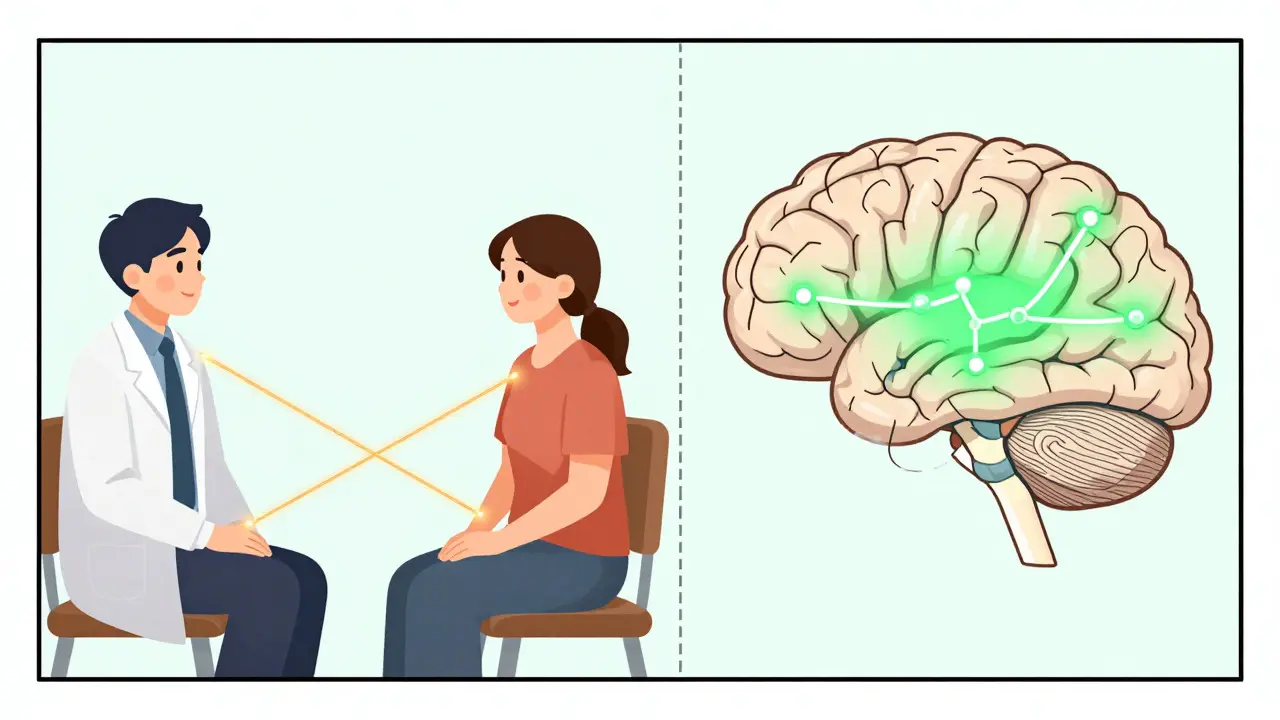
To understand why we treat PTSD the way we do, we first need to look at what happens in the brain during trauma. When you experience something life-threatening or deeply shocking, your brain’s alarm system-the amygdala-goes into overdrive. Normally, the hippocampus (the part responsible for context and memory) tags the event as "past tense" and files it away. In PTSD, this filing system breaks down. The memory stays raw, unprocessed, and feels like it’s happening right now.
This breakdown creates four distinct symptom clusters that define the disorder:
- Intrusion: Flashbacks, nightmares, and intrusive thoughts that pop up uninvited.
- Avoidance: Steering clear of places, people, or conversations that remind you of the trauma.
- Negative alterations in cognition and mood: Feeling detached, guilty, or unable to remember key parts of the event.
- Hyperarousal: Being constantly on edge, having an exaggerated startle response, or struggling to sleep.
According to the National Comorbidity Survey Replication, about 6.8% of adults will experience PTSD in their lifetime. That’s not a small group. It’s millions of people whose brains are essentially stuck in survival mode. The goal of treatment isn’t to erase the memory-it’s to change your relationship with it so it no longer controls your daily life.
Trauma Processing Therapy: Rewiring the Memory
If medication is the scaffold that holds you up, trauma processing therapy is the actual construction work. It’s considered the gold standard for treating PTSD because it addresses the root cause: the unprocessed traumatic memory.
The most widely recommended approach is Cognitive Processing Therapy (CPT). CPT helps you identify and challenge "stuck points"-beliefs about the trauma that keep you trapped. For example, if you believe "I am to blame" or "The world is entirely dangerous," CPT guides you to examine the evidence for these thoughts and develop more balanced perspectives. Studies show remission rates between 60% and 70% for patients completing CPT.
Another highly effective method is Prolonged Exposure (PE). PE involves gradually facing trauma-related memories and situations you’ve been avoiding. By staying with the anxiety instead of running from it, your brain learns that the memory itself isn’t dangerous. This process, known as habituation, reduces the emotional charge of the trigger.
Both therapies typically require 8 to 12 sessions. They aren’t easy. They ask you to sit with discomfort. But unlike medication, which manages symptoms while you take it, these therapies aim for lasting change even after treatment ends. The American Psychiatric Association strongly recommends these approaches as first-line treatments.
The Role of Medication in PTSD Care
While therapy rewires the brain, medication helps regulate the chemical environment so you can function well enough to do the work. As of 2023, the U.S. Food and Drug Administration (FDA) has approved only two medications specifically for PTSD: sertraline (Zoloft) and paroxetine (Paxil). Both are selective serotonin reuptake inhibitors (SSRIs).
SSRIs work by increasing the availability of serotonin, a neurotransmitter that helps regulate mood, sleep, and anxiety. Clinical trials involving thousands of participants show that SSRIs reduce PTSD symptoms significantly compared to placebo. Sertraline, for instance, shows a 53% response rate in reducing core symptoms. Paroxetine demonstrates similar efficacy, with about 60% of responders seeing meaningful improvement.
However, medication isn’t a cure-all. Only about 20-30% of patients achieve complete remission with medication alone. Furthermore, side effects can be a hurdle. Common issues include nausea, insomnia, and sexual dysfunction. A survey of Reddit users with PTSD found that 42% discontinued their SSRI due to side effects, particularly reduced libido and difficulty achieving orgasm. This is a crucial conversation to have with your doctor before starting.
Beyond SSRIs: Other Medication Options
When SSRIs don’t work or cause intolerable side effects, doctors often turn to other classes of drugs. One common alternative is venlafaxine (Effexor XR), a serotonin-norepinephrine reuptake inhibitor (SNRI). Though not FDA-approved specifically for PTSD, it shows comparable efficacy to SSRIs, with response rates of 50-60% in multiple studies.
For those suffering specifically from debilitating nightmares, prazosin is frequently prescribed off-label. Prazosin is an alpha-1 blocker that lowers blood pressure and blocks adrenaline receptors in the brain. Veterans Affairs studies have shown that prazosin can reduce nightmare frequency by 50% in combat veterans. Patients report being able to sleep through the night for the first time in years, which alone can dramatically improve daytime functioning.
Other options include mirtazapine, which can help with sleep and appetite, and low-dose atypical antipsychotics like risperidone or quetiapine, used as adjunctive treatments for severe hyperarousal. However, evidence for antipsychotics is mixed, and they carry risks of metabolic side effects, so they are usually reserved for complex cases.
| Treatment Type | Mechanism | Typical Response Rate | Key Considerations |
|---|---|---|---|
| Cognitive Processing Therapy (CPT) | Cognitive restructuring | 60-70% | Requires active participation; lasting effects post-treatment |
| Sertraline (Zoloft) | SSRI (Serotonin regulation) | 53% | FDA-approved; potential sexual side effects |
| Prazosin | Alpha-1 blocker | 50% reduction in nightmares | Off-label; specific to sleep disturbances |
| Venlafaxine (Effexor) | SNRI | 50-60% | Not FDA-approved for PTSD; withdrawal symptoms possible |
Combining Approaches: What Works Best?
You might wonder: should I take meds, go to therapy, or both? The answer depends on your specific situation, but research increasingly supports a combined approach. A 2021 study published in JAMA Psychiatry found that patients receiving both sertraline and Prolonged Exposure had a 72% response rate, compared to 58% for either treatment alone.
Medication can act as a bridge. If your anxiety is so high that you can’t focus in therapy, or if insomnia is preventing you from engaging in daily life, medication can lower the volume of your symptoms just enough to let therapy do its work. Once you’ve processed the trauma and stabilized, you may be able to taper off the medication under medical supervision.
However, timing matters. Starting therapy immediately while also adjusting to new psychiatric meds can be overwhelming. Some clinicians prefer to stabilize medication first, then introduce therapy. Others start therapy and add medication only if progress stalls. There is no one-size-fits-all protocol, which is why finding a provider who listens to your preferences is critical.

Navigating Side Effects and Expectations
Starting any PTSD treatment comes with realistic expectations. Medication takes time. SSRIs often require 8 to 12 weeks at an adequate dose before you see full benefits. Doctors typically start with a low dose (e.g., 25-50 mg of sertraline) and increase it gradually to minimize side effects like nausea or jitteriness.
Therapy also has a curve. In the early stages of CPT or PE, symptoms might temporarily worsen as you confront difficult memories. This is normal and expected. It doesn’t mean the treatment is failing; it means you’re doing the hard work of processing.
If you’re considering treatment, here are three practical steps:
- Track your symptoms. Keep a simple journal of sleep quality, anxiety levels, and triggers. This data helps your doctor adjust doses or therapy techniques accurately.
- Communicate openly about side effects. Don’t suffer in silence. If sexual dysfunction or emotional blunting occurs, tell your prescriber. There are alternatives.
- Be patient with the timeline. Healing from trauma is not linear. Relapses happen. Progress is often measured in months, not days.
Future Directions in PTSD Care
The landscape of PTSD treatment is evolving rapidly. New medications are in development, including brexpiprazole, which showed promise in phase III trials for augmenting SSRI treatment. More notably, MDMA-assisted psychotherapy has received Breakthrough Therapy designation from the FDA. Early results show remission rates as high as 67% at follow-up, suggesting that combining psychedelic-assisted therapy with traditional counseling could revolutionize how we treat resistant PTSD.
Digital therapeutics are also gaining ground. Apps like PTSD Coach provide coping skills and psychoeducation, complementing traditional care. For many, especially those in rural areas or with limited access to specialists, these tools offer immediate support while waiting for in-person appointments.
Ultimately, whether you choose medication, therapy, or both, the goal remains the same: reclaiming your life from the grip of trauma. With the right combination of tools, support, and patience, recovery is not just possible-it’s probable.
What is the best medication for PTSD?
The FDA has approved only two medications specifically for PTSD: sertraline (Zoloft) and paroxetine (Paxil). Both are SSRIs. However, venlafaxine (Effexor) is often used off-label with similar effectiveness. The "best" medication depends on individual factors like side effect tolerance, other health conditions, and personal response. Sertraline is frequently prescribed first due to its established safety profile and extensive research backing.
How long does it take for PTSD medication to work?
Most antidepressants used for PTSD, such as SSRIs and SNRIs, take 4 to 12 weeks to reach their full therapeutic effect. Initial side effects may appear within the first few days, but significant symptom reduction usually requires consistent use for at least 8 weeks. Doctors often start with low doses and titrate up slowly to manage side effects and find the optimal dosage.
Can trauma processing therapy cure PTSD?
While "cure" is a strong word, trauma-focused therapies like Cognitive Processing Therapy (CPT) and Prolonged Exposure (PE) have high remission rates, ranging from 60% to 70%. These therapies aim to reprocess the traumatic memory so it no longer triggers intense emotional or physical reactions. Many patients achieve significant relief and return to normal functioning, though some may continue to benefit from occasional maintenance sessions.
Does prazosin help with PTSD nightmares?
Yes, prazosin is widely used off-label to treat trauma-related nightmares. It is an alpha-1 blocker that reduces adrenaline activity in the brain. Studies, particularly among combat veterans, have shown that prazosin can reduce nightmare frequency by up to 50%. It is generally taken at bedtime and is considered safe for long-term use in many patients, though it can cause dizziness or low blood pressure.
Should I take medication and go to therapy at the same time?
Combining medication and therapy is often more effective than using either alone. Research shows that patients receiving both sertraline and trauma-focused therapy have higher response rates (around 72%) compared to those receiving only one modality. Medication can help stabilize mood and sleep, making it easier to engage in the challenging work of therapy. However, the decision should be made with your healthcare provider based on your specific symptoms and preferences.

Write a comment