
Steroid Taper Estimator & Risk Checker
Assessment Results
Estimated Tapering Strategy:
Critical Reminders:
- Take dose in the morning to mimic natural circadian rhythm.
- Pause taper if you develop a fever above 38.5°C.
- Request an ACTH stimulation test before the final dose.
- Consider a medical alert bracelet during recovery.
Enter your details to see the estimated risk level and tapering phases.
| Duration of Use | Risk Level | Typical Action |
|---|---|---|
| Less than 3-4 weeks | Low | Often safe to stop abruptly (consult doctor) |
| More than 4 weeks | High | Requires a structured, medical taper |
| Long-term (months/years) | Very High | Slower, physiological dose reduction (months) |
The Danger Zone: Understanding Adrenal Crisis
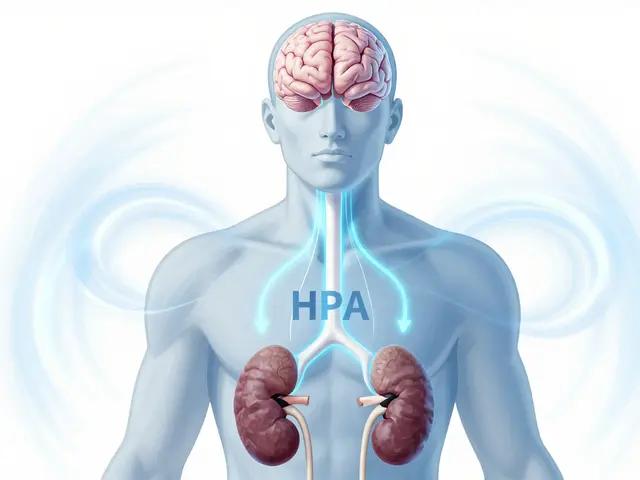
To understand why tapering matters, you have to understand the HPA axis is the feedback loop between your hypothalamus, pituitary gland, and adrenal glands that regulates cortisol . When you take synthetic Glucocorticoids is a class of steroid hormones used to reduce inflammation and suppress the immune system , your brain senses there is plenty of cortisol in the blood and tells your adrenal glands to stop working. Over time, those glands shrink and go dormant.
An adrenal crisis happens when your body needs a surge of cortisol-like during a severe infection or major surgery-but your dormant glands can't produce it and you aren't taking enough synthetic medication. This leads to a crash characterized by a sudden drop in blood pressure (systolic BP below 90 mmHg), persistent vomiting, and extreme weakness. It's a critical state that requires immediate IV fluids and steroid replacement.
Common Tapering Examples and Methods
There is no one-size-fits-all plan, but doctors usually follow a two-phase approach. First, they bring you down from a high therapeutic dose to a "physiological" dose (the amount a healthy body would naturally make). Then, they slowly nudge you toward zero.
For someone on a high dose of Prednisone is a synthetic corticosteroid used for a wide range of inflammatory and autoimmune conditions (e.g., 40 mg/day), a typical path might look like this:
- Phase 1 (Rapid Reduction): Drop by 5-10 mg every 3 to 7 days until you reach 10-15 mg per day.
- Phase 2 (Slow Glide): Reduce by 2.5 mg every 1 to 2 weeks until you hit 5 mg per day.
- Phase 3 (The Final Stretch): Reduce by 1 mg every 1 to 2 weeks until the dose is completely gone.
Some patients find fixed schedules too harsh. A more flexible approach is the "10% rule," where you reduce your current dose by 10% every 2 to 4 weeks. While this takes longer, many people report significantly fewer withdrawal symptoms like joint pain and crushing fatigue.
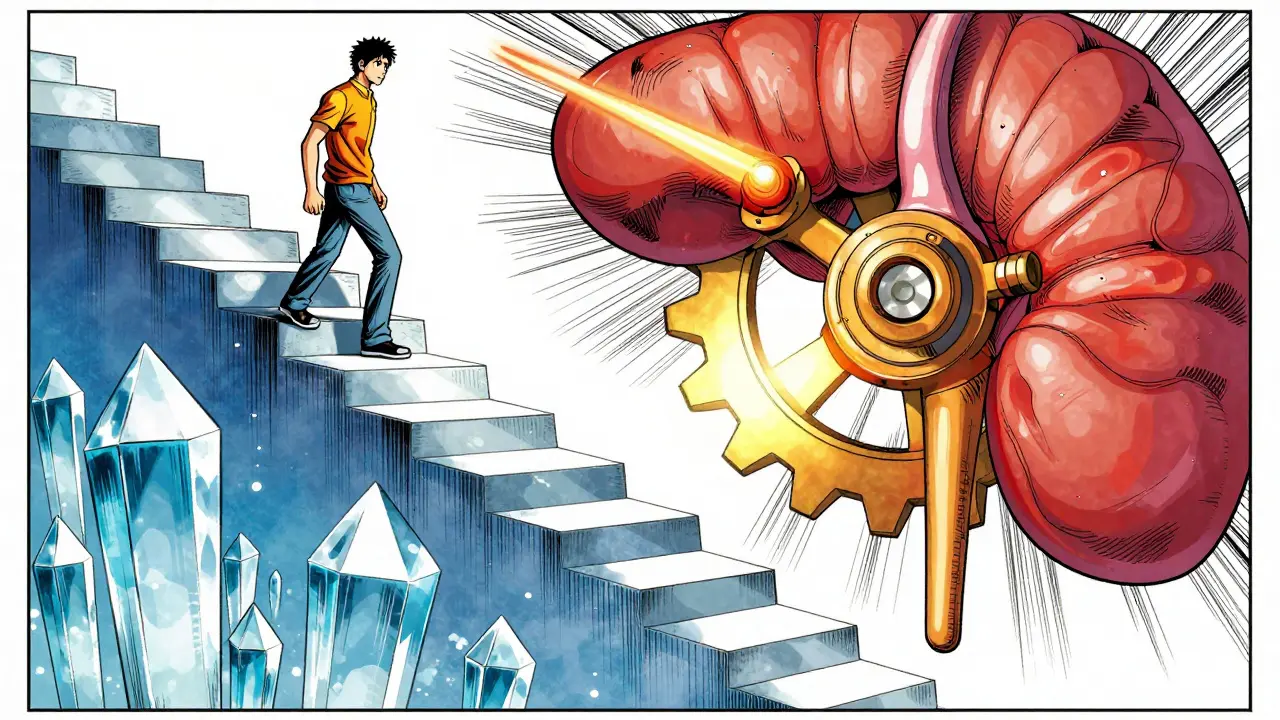
The "Physiological Dose" Hurdle
The hardest part of any taper is the end. For an average adult, a physiological replacement dose is roughly 2.5 to 5 mg of prednisolone or 20 mg of Hydrocortisone is a short-acting corticosteroid that closely mimics the body's natural cortisol production per day. This is where the HPA axis is most vulnerable.
Experts recommend switching to short-acting steroids during the final phase. Why? Because long-acting steroids like Dexamethasone is a potent, long-acting synthetic glucocorticoid with a half-life of 36-55 hours stay in your system too long, which keeps your adrenal glands suppressed and increases the risk of a crisis by about 37% compared to hydrocortisone.
Managing High-Stress Events During a Taper
Tapering doesn't mean you're totally safe. Even if you've successfully weaned off, your adrenal glands might not be at 100% capacity for a year or more. This is why many endocrinologists suggest wearing a medical alert bracelet for at least 12 months after stopping.
If you get a high fever (above 38.5°C), suffer a traumatic injury, or undergo surgery, you need "stress dosing." This means temporarily increasing your steroid intake to mimic the natural cortisol spike the body produces during stress. For major surgery, guidelines suggest a continuous IV infusion of hydrocortisone (around 200 mg over 24 hours) rather than intermittent bursts, as this approach has been shown to reduce the incidence of adrenal crisis by 28%.

Practical Tips for a Safer Transition
Tapering is as much about psychology and habit as it is about chemistry. Missing a dose for more than 24 hours can trigger a crisis, especially in those with significant HPA suppression. Here are a few rules of thumb for a smoother ride:
- Timing is everything: Take your dose in the morning. This mimics your body's natural circadian rhythm where cortisol peaks early in the day.
- Don't taper while sick: If you have an active infection or a flu, pause the taper. Reducing your dose while your body is fighting an illness increases the risk of a crash by over four times.
- Watch for "Steroid Withdrawal": It's common to feel nauseous or experience joint pain. If these become unbearable, your taper may be moving too quickly.
- Demand a test: Before the final dose is gone, ask your doctor for an ACTH stimulation test. This checks if your cortisol peaks above 18 mcg/dL, proving your glands are actually back online.
How do I know if I'm having an adrenal crisis?
Look for the "big three": severe vomiting, a sudden drop in blood pressure (feeling faint or fainting), and extreme muscle weakness. If your systolic blood pressure is below 90 mmHg and your heart rate is over 100 bpm, this is a medical emergency. Seek immediate help.
Can I just switch to a natural supplement to taper?
No. Natural "adrenal support" supplements cannot replace the precise hormonal action of prescription glucocorticoids. Attempting to replace a medical steroid taper with supplements can lead to a fatal adrenal crisis.
Why does my doctor want me to use hydrocortisone instead of prednisone at the end?
Hydrocortisone is short-acting. It leaves the body quickly, which gives your HPA axis a "window" each day to try and produce its own cortisol. Long-acting steroids stay in the blood too long, essentially keeping the "off switch" flipped on your adrenal glands.
How long does it actually take for the adrenal glands to recover?
It depends on how long you were on the meds. For short-term use, it might be weeks. For years of therapy, it can take several months or even a full year of very slow tapering before the glands are fully functional again.
What is "stress dosing" and when do I do it?
Stress dosing is the practice of increasing your steroid dose during periods of physical trauma or illness (like a high fever). Common practice involves doubling your maintenance dose when you have a fever over 38.5°C to prevent your body from crashing.
Next Steps and Troubleshooting
If you are starting a taper, your first step is to confirm exactly how many weeks you've been on a dose higher than 5 mg of prednisone. If it's been more than four weeks, you are in the high-risk category and should not change your dose without a written schedule from your endocrinologist.
For caregivers, the biggest risk is a missed dose. Set multiple alarms or use a pill organizer. If a dose is missed by more than 24 hours, contact your healthcare provider immediately to assess the risk of insufficiency.
If you feel "flu-like" symptoms (aches, fatigue, nausea) during the taper, don't assume it's just the weather. Document these symptoms and bring them to your next appointment; they are often the first signs that the taper is moving faster than your HPA axis can keep up with.
Jasmin Stowers
this is actually super helpful for anyone struggling with the end of a taper
Scott Lofquist
Imagine thinking a fixed schedule is the only way 🙄 Honestly, most people just panic over the "danger zone" because they don't actually understand how bio-individuality works. I've seen plenty of folks drop faster than this and be totally fine, though clearly the "experts" want you terrified so you keep coming back for more appointments 🤡📉
Mary Johnson
Of course they want you on a "medical taper" for months on end. It's just another way to keep you dependent on the pharmaceutical machine and under their thumb! They don't want you to know that these drugs basically hijack your endocrine system for profit. If you follow their "safe" schedules, you're just playing into their game of slow-motion control over your own biology and it's absolutely disgusting how they mask it as "safety" 💊💉
Clint Humphreys
Now, if we look at this from a systemic perspective, it's quite fascinating how the medical establishment frames the HPA axis recovery as a linear process, even though we know the regulatory capture of the FDA makes these "guidelines" more about liability management than actual patient wellness. It's a friendly reminder that while the science of cortisol is sound, the delivery of that science is often filtered through a lens of profit and control, making the slow glide phase almost a psychological tool for dependency rather than a biological necessity, but hey, just keep following the script and everything will be fine, right?
Princess Busaco
I simply cannot believe some people are actually arguing about the ethics of the pharma industry when we are talking about a literal medical emergency like an adrenal crisis, which is just so typical of the low-level discourse we see here. If you think you can just "wing it" with your hormones because you read some blog post about individuality, you are not only delusional but dangerously reckless, and frankly, it's an insult to those of us who have actually navigated the harrowing depths of chronic illness with a level of grace and spiritual alignment that you clearly lack in your frantic attempts to sound edgy!
Catherine Mailum
oh wow look at us having a little drama over steroid doses... so exciting... i'm just sitting here waiting for the joint pain to kick in and pretending i'm not totally terrified of a crash lol
Clare Elizabeth
Stay strong everyone!! You guys got this and just take it one day at a time... the recovery is totally possible and you're gonna feel so much better once you're off the meds!! keep pushing forward together no matter how slow it feels!!
Becca Suttmiller
I really appreciate the reminder about the medical alert bracelet. It seems like a small thing, but when you're in the middle of a crisis, you can't exactly explain your medical history to an EMT. Just wanted to mention that it's a lifesaver for peace of mind during that first year of recovery.