
Levothyroxine-Soy Interaction Calculator
How to Use This Tool
Enter when you take levothyroxine and what soy products you consume. We'll calculate the optimal separation time to maintain medication effectiveness based on clinical evidence.
Enter your details above to see when to take your medication
If you're taking levothyroxine for hypothyroidism, and you eat soy products like tofu, soy milk, or edamame, you might be unknowingly reducing how well your medicine works. This isn’t just a myth or old wives’ tale-it’s backed by clinical studies, case reports, and decades of patient data. The interaction is real, measurable, and can lead to untreated hypothyroidism even when you’re taking your pills exactly as prescribed.
How Soy Blocks Levothyroxine
Soy contains natural compounds called isoflavones-mainly genistein and daidzein. These molecules bind to levothyroxine in your gut, forming a complex that your body can’t absorb. Think of it like two magnets sticking together: the hormone and the soy compound latch on, and your intestines can’t pick up the hormone anymore.
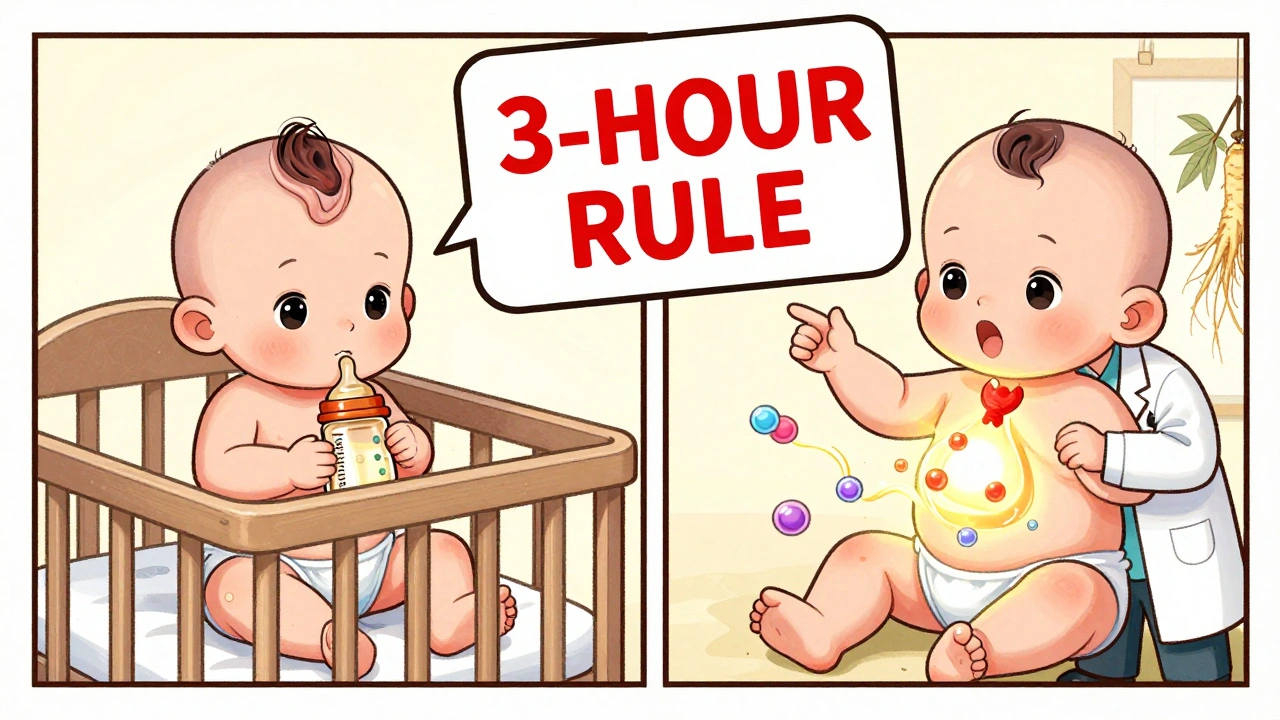
Studies show this cuts absorption by 20% to 40%. One 2021 review analyzed 63 studies and found soy reduced the amount of levothyroxine entering your bloodstream by an average of 25.3%. That’s not a small drop-it’s enough to push your TSH levels into the hypothyroid range. In one documented case, a baby on levothyroxine and soy formula had a TSH level of 216 µIU/mL (normal is under 5). Even doubling the dose didn’t fix it until the soy was removed.
This isn’t just about tablets. All forms of levothyroxine-Synthroid, Levoxyl, generic versions-are affected. Unlike coffee, which only interferes with some formulations, soy messes with every kind. The effect shows up in blood tests as lower peak hormone levels (Cmax) and less total hormone exposure over time (AUC). Your body isn’t getting the full dose, no matter how many pills you swallow.
Soy Isn’t the Only Culprit, But It’s a Big One
Calcium supplements reduce levothyroxine absorption by 35.2%. Iron? 32.1%. Soy? 25.3%. That puts it right behind those two, ahead of coffee (21.4%) and high-fiber foods (17.8%). But here’s the catch: calcium and iron are usually taken as pills you can easily avoid. Soy? It’s everywhere.
Soy lecithin is in 70% of packaged foods-bread, salad dressings, chocolate, protein bars. Soy protein isolate is in 68% of vegetarian meat substitutes. Even if you think you’re avoiding soy, you might be eating it without knowing. A 2024 Consumer Reports analysis found that most plant-based burgers, sausages, and veggie deli slices contain hidden soy. And if you’re vegetarian or vegan, your soy intake is likely much higher than the average person’s.
Women aged 30 to 50 are the biggest consumers-63% of them eat soy three or more times a week. That’s the same group most likely to be diagnosed with Hashimoto’s thyroiditis, the most common cause of hypothyroidism. So the overlap is high, and the risk is real.
Who’s Most at Risk?
Not everyone will see a big change in their TSH after eating soy. Some people report no issues at all-even after years of daily soy lattes. But that doesn’t mean it’s safe for everyone.
Infants with congenital hypothyroidism are the most vulnerable. Their brains are developing rapidly, and even a small drop in thyroid hormone can lead to permanent cognitive delays. In one heartbreaking case, a newborn on soy formula remained severely hypothyroid for six months despite being on the right dose of levothyroxine. Only after switching to a soy-free formula did their TSH normalize.
Older adults are also at higher risk. As we age, stomach acid drops, which makes absorbing any medication harder. Add soy into the mix, and the problem multiplies. About 45% of people taking levothyroxine are over 65. Many of them eat soy yogurt, soy milk, or tofu as part of a heart-healthy diet-unaware it’s sabotaging their treatment.
And then there’s the problem of unawareness. A 2022 poll on Reddit’s r/Hashimotos community showed 63% of 1,847 respondents didn’t know soy could interfere with their thyroid meds-even though 41% were consuming soy daily. That’s a massive knowledge gap.
What Should You Do?
You don’t need to quit soy cold turkey. But you do need to separate it from your medication.
The safest approach: take your levothyroxine on an empty stomach, first thing in the morning, with a full glass of water. Wait at least 3 to 4 hours before eating soy. That’s based on how long it takes soy to move through your stomach and intestines. Some experts say 3 hours is enough. Others recommend 4, especially if you’re eating a large serving like a whole block of tofu or a soy protein shake.
Don’t take your pill with breakfast if your breakfast includes soy milk, tofu scramble, or soy-based cereal. Wait until lunch or later. If you take your medication at night, make sure your last meal didn’t contain soy. Avoid soy snacks or desserts in the evening if you’re dosing before bed.
And here’s a pro tip: if you’ve recently changed your diet-started eating more soy, switched to plant-based milk, or added protein powders-check your TSH. If it’s suddenly higher than usual, soy might be the cause. Don’t assume your dose is wrong. Look at your food first.
What About Soy Alternatives?
If you’re trying to avoid soy, you have options. Almond milk, oat milk, rice milk, and coconut milk don’t interfere with levothyroxine. Just check the labels. Some brands add calcium or vitamin D, which can also reduce absorption. Look for unsweetened, unfortified versions if you’re being extra careful.
For infants, the American Academy of Pediatrics recommends switching from soy formula to a non-soy formula if a baby is diagnosed with hypothyroidism and isn’t responding to medication. Over 90% of infant formulas in the U.S. are soy-free. There’s no reason to risk developmental delays when safe alternatives exist.
There’s also a newer form of levothyroxine called Tirosint®-a softgel capsule. In one study, patients taking Tirosint with soy absorbed 18.3% more hormone than those taking regular tablets. It’s not a magic fix, but for people who can’t avoid soy, it might help.
Why Doctors Miss This
Many endocrinologists know about this interaction. But not all do. A 2023 survey found that only 67% of levothyroxine prescriptions in the U.S. include a warning about soy on the label. And even when they do, patients often don’t read them.
Some doctors still think the evidence is “limited” because population studies show no big TSH changes in adults who eat moderate soy. But those studies don’t capture the individuals who are highly sensitive. They also don’t account for infants or people with poor absorption due to age or gut issues. Case reports and pharmacokinetic data tell a different story.
The American Thyroid Association and Endocrine Society both say: separate soy and levothyroxine by at least 3 hours. That’s a Level B recommendation-meaning it’s based on solid clinical evidence, even if not all studies agree.
What’s Next?
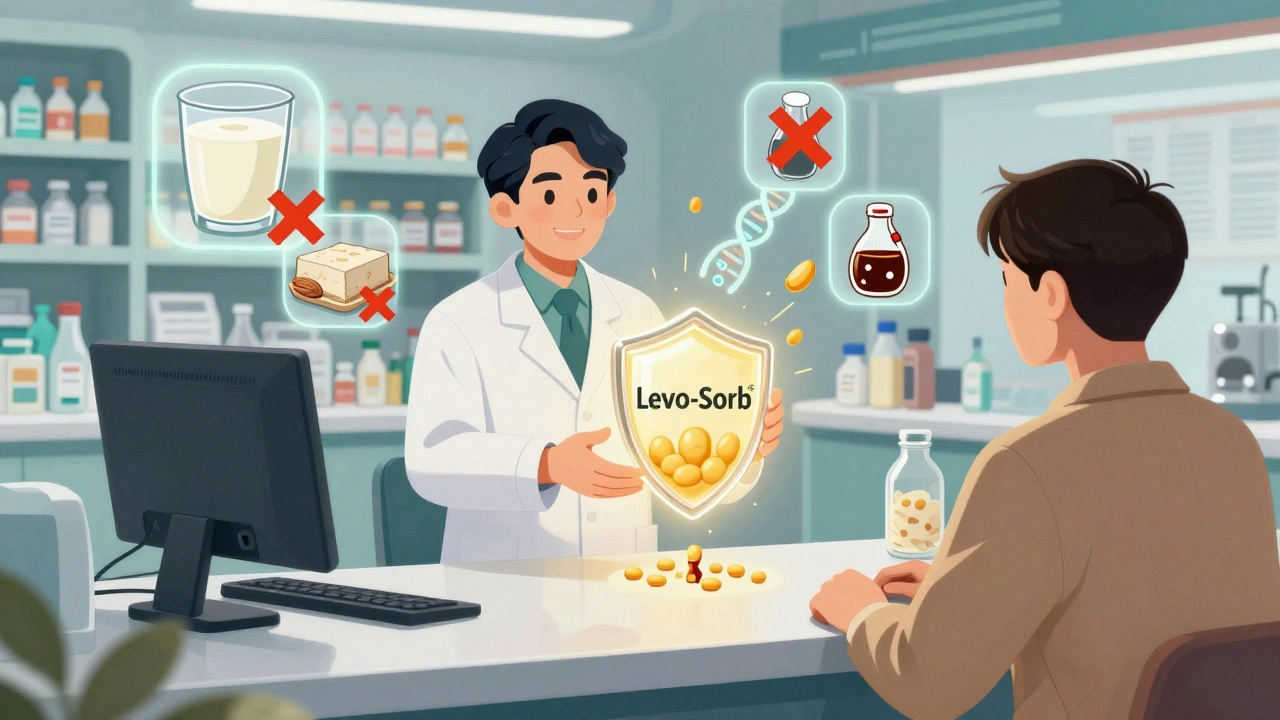
Researchers are working on solutions. A new formulation called Levo-Sorb®, currently in Phase III trials, includes an ingredient that blocks soy isoflavones from binding to levothyroxine. Early results show it maintains 92% absorption even with soy present. If approved, it could be a game-changer for people who rely on soy-based diets.
Another area of research looks at genetics. About 40% of Caucasians have a gene variant (CYP1A2*1F) that changes how they process soy. People with this variant may be more sensitive to its effects. In the future, genetic testing might help tailor advice-some people might need to avoid soy entirely, while others can manage it with timing.
For now, the advice is simple: know what you’re eating, time your meds, and don’t assume your thyroid levels are stable just because you’re taking your pill. If your TSH is creeping up for no clear reason, check your soy intake. It might be the missing piece.
Can I still eat tofu if I take levothyroxine?
Yes, but not at the same time. Wait at least 3 to 4 hours after eating tofu before taking your levothyroxine. If you take your pill in the morning on an empty stomach, eat tofu at lunch or dinner. Avoid soy-based meals right before or after dosing.
Does soy sauce interfere with levothyroxine?
Soy sauce contains very little soy protein and isoflavones-usually less than 1 mg per teaspoon. It’s unlikely to affect absorption. You don’t need to avoid it. But if you’re drinking large amounts of soy sauce daily, it’s worth monitoring your TSH.
I’ve been eating soy with my thyroid meds for years. Should I be worried?
If your TSH has been stable for years, you’re probably fine. But that doesn’t mean the interaction isn’t happening-it just means your body is compensating. Some people can handle it; others can’t. If your dose has been increased over time without explanation, or if your TSH recently jumped, soy could be the cause. Try separating them for 4 weeks and retest.
Is organic soy better or worse?
No. Organic soy has the same isoflavones as conventional soy. The problem isn’t pesticides or farming methods-it’s the natural compounds in the soybean itself. Whether it’s organic, non-GMO, or fermented (like tempeh), the interaction remains the same.
Can I take levothyroxine at night instead to avoid soy?
Yes, if your doctor agrees. Taking levothyroxine at bedtime, at least 3 hours after your last meal, can work well. Many people find it easier to avoid food interactions this way. Just make sure you’re not eating soy-based snacks before bed. Consistency matters more than timing-pick one time and stick with it.
My doctor says soy doesn’t matter. Should I get a second opinion?
If your TSH is stable and you feel fine, you may not need to change anything. But if your levels are fluctuating or you’re struggling with symptoms like fatigue, weight gain, or brain fog, and you eat soy regularly, it’s worth asking about this interaction. Bring up the 2021 Wiesner review or the American Thyroid Association guidelines. A good doctor will listen.
val kendra
I’ve been taking levothyroxine for 8 years and switched to oat milk last year after reading this. My TSH dropped from 7.2 to 2.1 in 6 weeks. No joke. Soy is sneaky. Don’t ignore it.
Also, if you’re vegan, try hemp protein instead of soy isolate. Same protein, zero interference.
George Graham
I used to eat tofu every morning with my pill. Felt like a zombie. Turns out my TSH was at 18. I didn’t know soy was the issue until my endo mentioned it. Now I take my pill at night and eat soy at lunch. Life changed. Thank you for this post.
John Filby
Wait so soy sauce is fine? 😅 I’ve been using it on everything and thought I was doomed. Glad to hear it’s not the same as tofu. Still avoiding the plant-based burgers tho - those are soy bombs.
Elizabeth Crutchfield
i had no idea soy could do this. my tsh has been climbing for months and i thought it was stress or my period. now im gonna try cutting soy for a bit. thanks for sharing this.
Ben Choy
Just moved from the UK to the US and realized how much soy is in everything here. Even the ‘healthy’ snacks. I’m a vegetarian and thought I was doing good. Turns out I was sabotaging my thyroid. Time to read labels like a detective.
Emmanuel Peter
This is just Big Soy pushing propaganda to make people feel guilty. You’re telling people to avoid plant-based foods because of one study? What about the benefits of soy for heart health? This is fear-mongering disguised as science.
Ashley Elliott
I’m so glad someone finally wrote this clearly. I’ve been telling my patients this for years, but most don’t listen until their TSH hits 15. The soy-in-everything culture makes it so hard. Just separate it by 3-4 hours. Simple. Effective. No need to panic - just be mindful.
Chad Handy
I’ve been on levothyroxine for 12 years and ate soy every day. My doctor told me it was fine. Now I’m fat, tired, and depressed. My TSH is 28. I didn’t know until I read this. I’m mad. So mad. I wasted a decade of my life because no one told me. And now I have to restart my whole life? I’m 47. I can’t do this again.
Augusta Barlow
This is all part of the pharmaceutical-industrial complex. They want you to believe soy is bad so you’ll keep buying expensive pills. The real cause of hypothyroidism is glyphosate in GMO soy. The isoflavones? A distraction. The FDA won’t tell you this because they’re paid off. Look up the 2018 whistleblower reports. They buried the truth. You’re being manipulated.
Joe Lam
Let’s be real - if you’re taking levothyroxine and eating soy, you’re not serious about your health. This isn’t a ‘maybe’ or ‘sometimes.’ It’s basic pharmacology. If you can’t follow a 3-hour window, maybe you shouldn’t be on thyroid meds. Your body’s not a science experiment.
Jenny Rogers
The ethical implications of this interaction are profound. We are living in a post-industrial food landscape where the commodification of plant proteins has superseded individual physiological sovereignty. The fact that a naturally occurring isoflavone can disrupt endocrine homeostasis speaks to a systemic failure of nutritional education and corporate transparency. One must ask: Who benefits from the normalization of soy in the American diet?
Rachel Bonaparte
I read this and immediately thought: this is why I’ve been gaining weight since I started my vegan journey. I thought it was just metabolism slowing down. Turns out I was drinking soy milk with my pill every morning. I switched to almond milk and lost 12 lbs in 3 months. Also, I think the government is hiding the truth about soy. Why do you think they don’t put warning labels on every soy product? Hmm? 🤔
Scott van Haastrecht
This post is garbage. You’re scaring people with cherry-picked data. I’ve been eating soy daily for 15 years and my TSH is 1.8. I’m healthy. You’re just another fearmonger trying to monetize thyroid anxiety. Get a life.
Chase Brittingham
I’m a vegan with Hashimoto’s and this post saved me. I thought I had to give up plant-based eating. Turns out I just needed to time things right. Now I take my pill at 7am, eat breakfast at 11am, and have tofu stir-fry at 6pm. No more brain fog. No more crashes. You’re not alone. This is fixable.