
Imagine the relief of jumping into a cool pool on a scorching July day, only to wake up a few days later with an ear that feels like it's being squeezed in a vice. That sharp, throbbing pain-which gets ten times worse if you accidentally bump your ear-is a classic sign of Swimmer’s Ear is an infection or inflammation of the skin lining the outer ear canal. Medically known as Otitis Externa, this condition isn't just for athletes; anyone who gets water trapped in their ears or tends to "deep clean" with cotton swabs is at risk. While it can feel like a crisis when you can't even touch your ear without wincing, the good news is that it's highly treatable if you know exactly what to do.
Quick Wins for Ear Health
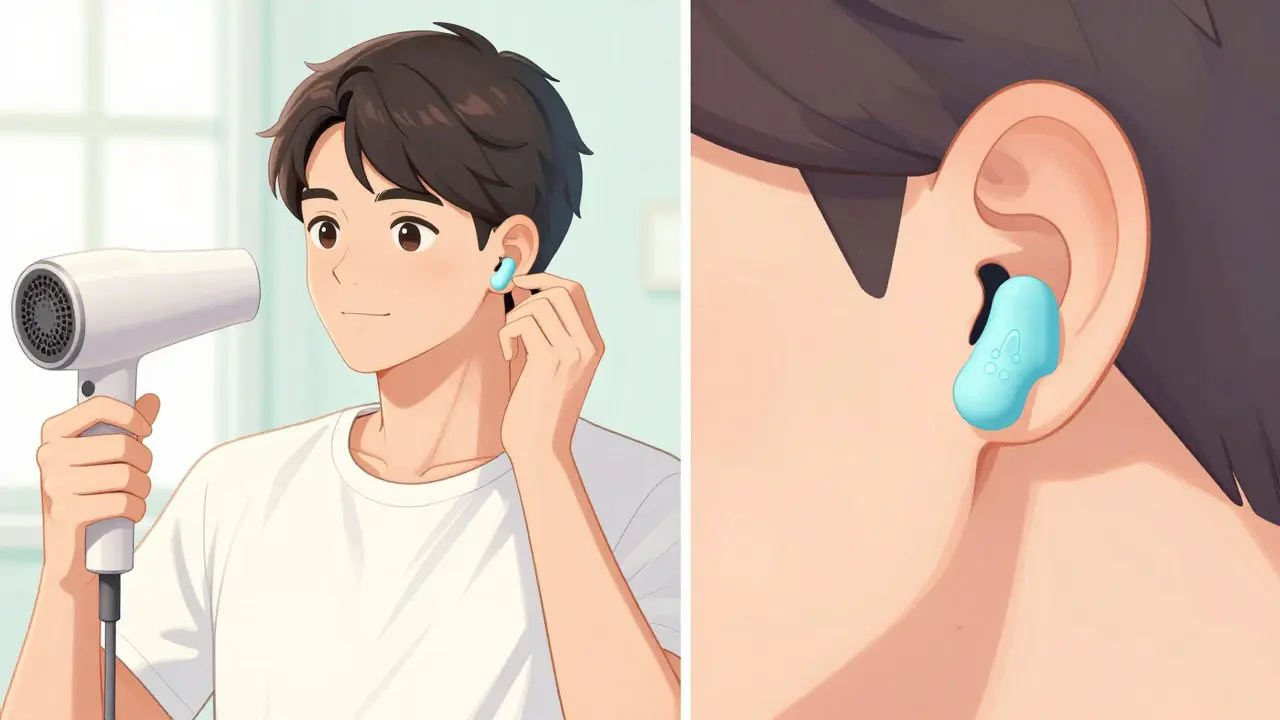
- Dry fast: Use a hairdryer on a cool setting 12 inches away from the ear for 30 seconds post-swim.
- The "No-Swab" Rule: Stop using cotton swabs; they create micro-tears that let bacteria in.
- Acidic Rinse: A mix of isopropyl alcohol and white vinegar can drop infection rates by 72%.
- Keep it Dry: Treatment fails 40% more often if water gets into the ear during recovery.
What Exactly is Happening in Your Ear?
Your ear canal is designed to be a protective tunnel, but when water lingers, it turns into a warm, dark petri dish. About 98% of these infections are caused by bacteria, specifically Pseudomonas aeruginosa or Staphylococcus aureus. The remaining 2% are fungal. When these pathogens take hold, your ear canal doesn't just get irritated; it swells. In moderate to severe cases, the canal can narrow by up to 75%, which is why you might feel like your hearing is muffled-often a loss of 20-30 decibels.
It usually hits fast, appearing within 48 to 72 hours of water exposure. This is why it peaks between June and August. If you notice clear fluid turning into yellow-green pus, you're looking at a textbook case of bacterial otitis externa. If you're wondering if it's a middle ear infection (otitis media) or swimmer's ear, try the "tragus test": gently press the small bump in front of your ear hole. If that hurts intensely, it's almost certainly the outer canal that's the problem.
How to Treat Swimmer's Ear Effectively
If you've already got an infection, the goal is to kill the bug and bring down the swelling. The gold standard is topical antibiotic therapy. A common and highly effective regimen is Cipro HC, which combines ciprofloxacin (an antibiotic) and hydrocortisone (a steroid to stop the itching and swelling). When used correctly, these drops have a resolution rate of over 92%.
However, the way you put the drops in matters more than the medicine itself. If you just tilt your head and drip, the medicine often never reaches the infection site. For adults, pull the top of the ear (the pinna) up and back. For children, pull it down and back. This straightens the canal. After putting the drops in, lie on your side for at least five minutes. This increases the contact time between the medicine and the infected skin from a mere 90 seconds to nearly five minutes.
One pro tip: warm your ear drops. Cold drops can trigger a sudden bout of vertigo (dizziness) in about 65% of people, which is a miserable way to start your treatment.
| Treatment Type | Common Example | Best For | Typical Success Rate |
|---|---|---|---|
| Fluoroquinolone Drops | Ciprofloxacin / Cipro HC | Bacterial infections & swelling | ~92% |
| Aminoglycoside Drops | Neomycin-Polymyxin | Budget-friendly bacterial care | High (slightly lower than Cipro) |
| Antifungal Solution | Clotrimazole 1% | Fungal infections (rare) | ~89% |
| Pain Relievers | Acetaminophen | Mild to moderate pain | Varies by severity |

The Secret to Preventing Recurrence
If you're a frequent swimmer, you can't just hope for the best. You need a system. The most effective method is using an alcohol-vinegar irrigation solution-roughly 70% isopropyl alcohol and 30% white vinegar. Using this within 30 minutes after leaving the pool changes the pH of your ear, making it a hostile environment for bacteria. This simple habit can cut your risk of infection by 72%.
Then there's the gear. Not all earplugs are created equal. While those cheap foam plugs you buy at the drugstore offer about 42% protection, custom-molded silicone plugs are the real deal, providing 68% efficacy by creating a tighter seal against water. If you're spending $45 to $120 on custom plugs, you're investing in a lot less pain down the road.
The biggest mistake people make? Inserting things into their ears. Whether it's a Q-tip, a finger, or a bobby pin, you're stripping away the protective wax and creating microscopic tears in the skin. In fact, 87% of people who get swimmer's ear three or more times a year are those who refuse to stop putting objects in their ears.
When to See a Doctor Immediately
While many people try to tough it out, some cases require urgent intervention. If you have a high fever, severe swelling that completely closes the ear canal, or if the pain is so intense it keeps you from sleeping, get to a clinic. In cases where the canal is too swollen for drops to enter, doctors may use a hydrogel ear wick. This is a tiny sponge-like strip inserted into the canal that holds the antibiotic against the skin for much longer than a liquid drop would.
Be wary of misdiagnosis. Some people are told they have a middle ear infection when they actually have otitis externa. The difference is huge: middle ear infections are inside the drum, while swimmer's ear is on the outside. Treating the wrong one leads to wasted days and lingering pain.
Can I use a hairdryer to dry my ears?
Yes, and it's actually one of the most recommended methods. Set your hairdryer to the lowest, coolest setting and hold it about 12 inches away from your ear for 30 seconds. This removes the moisture that bacteria love without burning your sensitive skin.
How long does it take for Swimmer's Ear to go away?
With proper antibiotic drops, most people see a full recovery within 7 days. However, the key is finishing the entire course of medication, even if the pain disappears after two days, to prevent the infection from coming back.
Is it safe to use vinegar in my ears?
A mixture of white vinegar and isopropyl alcohol is generally safe for prevention. However, you should NEVER put vinegar or alcohol in your ear if you suspect you have a perforated (burst) eardrum or if you have ear tubes, as this can cause severe internal irritation.
Why do my ear drops make me feel dizzy?
This is usually caused by the temperature of the drops. When cold liquid hits the inner ear, it can trigger the vestibular system and cause vertigo. To avoid this, warm the bottle in your hands for a few minutes before applying.
Can I shower while I'm treating an ear infection?
You can shower, but you must keep the affected ear completely dry. The best method is to place a cotton ball coated in petroleum jelly over the ear opening to create a waterproof seal. Getting water in the ear during treatment can reduce the effectiveness of the medicine by 40%.
Next Steps for Recovery
If you're currently in the middle of an infection, prioritize the "dry ear" protocol for the next week. Even if you feel 100% better, keep using the petroleum jelly method during showers. If your symptoms don't improve after 3 days of drops, go back to your doctor; you might have a fungal infection, which requires a different medication like clotrimazole.
For those who suffer from chronic episodes, consider seeing an ENT to check for underlying skin conditions like eczema in the ear canal. Managing those skin issues can be the final piece of the puzzle in stopping the cycle of recurrent infections.

Joel Bonstell
Man, the vertigo thing is so real. I remember the first time I used cold drops and literally felt like the whole room was spinning for a few minutes. Just warm the bottle in your hands like the post says, it makes a huge diffrence!
Tallulah Sandison
Custom plugs are a game changer!!
Allison Maier
why is this so long 🙄 just go to a doctor lol
Jimmy Crocker
It is frankly quite rudimentary to expect the general public to grasp the nuances of pH balance in the auditory canal, yet here we are, albeit the prose is slightly clunky and the formatting is an eyesore, it is almost as if the author thinks we don't know about isopropyl alcohol already, which is simply laughabel in its naivety.
Robert Cowley
Imagine actually paying for custom plugs just to avoid a little water in your ear 🤡 Absolute joke. I just deal with the pain and move on. Who actually follows this "dry ear" protocol? Sounds like a lot of work for nothing 🙄
Ken Baldridge
The hydrogel wick is a total lifesaver when you've got maximum inflammation and the canal is basically a closed door. It's all about that sustained delivery of the antibiotic to the epithelial lining to get the edema under control before the drops can even penetrate the lumen. Real MVP of ENT care.
Prudence Wesson
The sheer lack of discipline in people who use cotton swabs is appalling!!! It is a fundamental failure of basic hygiene education... truly tragic!!!!
Divya Patel
It is fascinating how our bodies react to the elements... water is the source of life, yet in the small sanctuary of the ear, it becomes a catalyst for distress... there is a poetic irony in how such a simple thing can disrupt our peace...!!!!
SWATI NAWANGE
I find the mention of Cipro HC to be an elementary observation. Any individual with a modicum of medical literacy would already be aware of fluoroquinolones as the primary line of defense. The inclusion of a table is a quaint touch for those who cannot comprehend a simple list.
Bradley Gusick
Wait, you're telling me the government wants us using "chemical rinses" in our ears? Wake up people! This is just another way to get us dependent on Big Pharma's drops. They probably put trackers in the custom silicone plugs too. Only a fool believes the "pH balance" story when it's clearly a plot to weaken our natural defenses!
Leah Sentz
OMG I hate when this happens!! 😭😭 It's literally the worst pain ever and I can't even sleep! 😡 I'm just going to use the vinegar thing and hope for the best 🤞✨
Sarah Mifsud
I've tried the petroleum jelly and cotton ball trick for showers and it works great! Just be careful not to push the cotton too deep or it's a pain to get out later lol
nikki paurillo
There's something so visceral about the feeling of water trapped in your head, like a tiny, stubborn ocean refusing to leave. Using the hairdryer is such a cozy way to banish those invisible intruders from your personal sanctuary.
princess lovearies
It's really just about finding what works for your own body and being patient with the healing process. We all have different sensitivities, so just be gentle with yourselves while you recover.