
TCA Side Effect Comparison Tool
Select a medication to see its specific side effect profile and clinical characteristics based on the article data.
Amitriptyline
Tertiary AmineHigher potency, more "messy" receptor binding, stronger sedation.
Nortriptyline
Secondary AmineMetabolite of Amitriptyline, generally better tolerated profile.
Amitriptyline Profile
TertiaryCommon Side Effects & Prevalence
💡 Management Tip:
Take your dose at bedtime to sleep through the heaviest sedation.
Clinical Note:
Strongly binds to histamine and muscarinic receptors, leading to intense "drying out" effects.
Imagine finding a medication that finally stops your chronic nerve pain or ends a decade of migraines, only to feel like your mouth is full of cotton and you're walking through a fog. That is the common trade-off with Tricyclic Antidepressants is a class of older medications used to treat major depressive disorder, neuropathic pain, and migraines by increasing serotonin and norepinephrine in the brain. Also known as TCAs, these drugs were the gold standard long before the arrival of modern SSRIs. While they are incredibly powerful, they are also "messy" drugs-meaning they hit many different receptors in your body, not just the ones responsible for mood.
Why TCAs Cause So Many Side Effects
Unlike newer drugs that target specific transporters, TCAs are like a master key that opens many doors. They don't just boost mood; they block cholinergic, alpha-1 adrenergic, and histamine H1 receptors. This wide-reaching action is exactly why they work for things like pain and sleep, but it's also why the side effect list is so long.
For example, Amitriptyline is a tertiary amine TCA often used for sleep and pain, known for its strong sedative and anticholinergic properties. Because it binds so strongly to histamine and muscarinic receptors, the sedation and "drying out" effects are much more intense than with other options.
On the other hand, Nortriptyline is a secondary amine TCA that is the active metabolite of amitriptyline, generally offering a more tolerable side effect profile. It has a lower affinity for those "off-target" receptors, which is why doctors often switch patients to it if they can't handle the heavy drowsiness of amitriptyline.
The Most Common Daily Struggles
If you are starting a TCA, you'll likely notice the "drying' effects first. These are called anticholinergic effects. Dry mouth, or xerostomia, happens to about 30% of amitriptyline users. It's not just a nuisance; without good dental care, it can lead to cavities and oral infections because you lose the protective saliva that washes away bacteria.
Then there is the digestive and urinary slowdown. About 20-25% of people experience constipation. In some cases, this can become a serious medical issue if the gut slows down too much. Similarly, 10-15% of users-especially men with enlarged prostates-might find it difficult to urinate, which in severe cases has required catheterization.
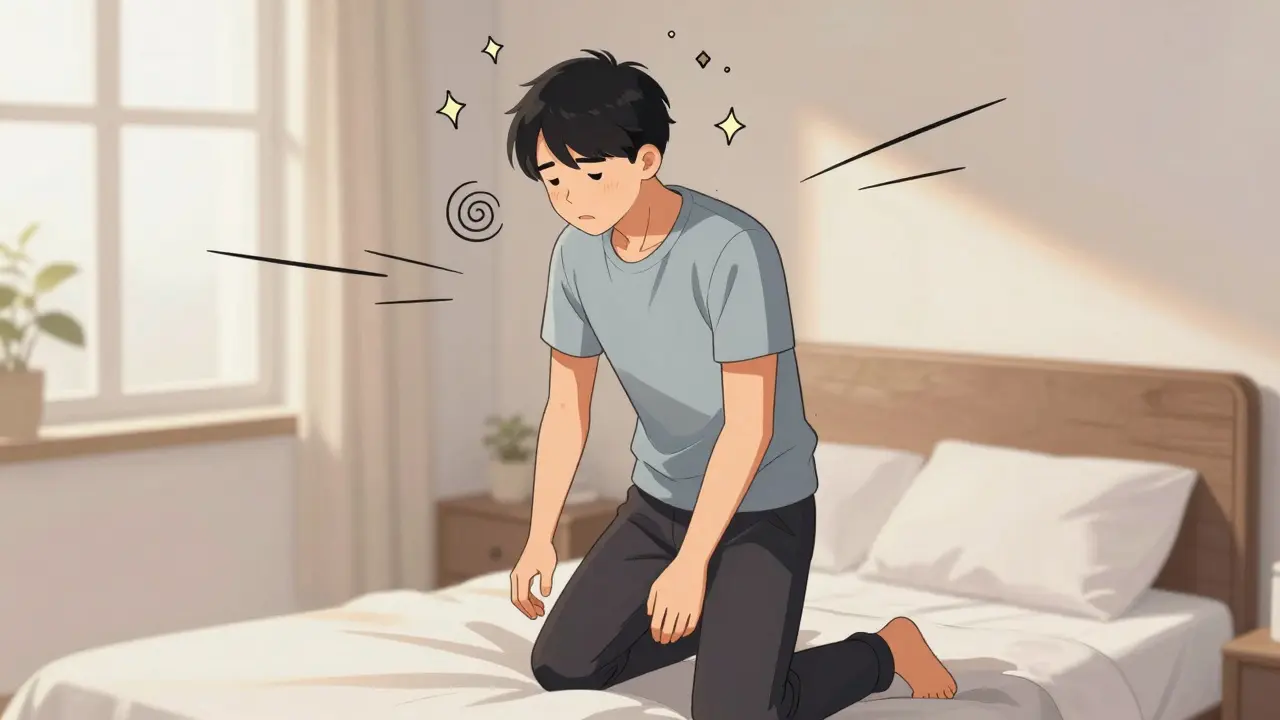
Physical stability is another concern. You might feel a sudden head rush or dizziness when you stand up quickly. This is called orthostatic hypotension, and it affects roughly 15-20% of users. It happens because the drug blocks alpha-1 receptors, making it harder for your blood vessels to constrict and push blood back up to your head when you change positions.
| Side Effect | Amitriptyline (Tertiary) | Nortriptyline (Secondary) |
|---|---|---|
| Sedation/Drowsiness | Very High (~40%) | Moderate (~25%) |
| Dry Mouth | Frequent/Severe | Moderate |
| Weight Gain | Common (10-15 lbs) | Less Frequent |
| Heart Rate Increase | More Pronounced | Less Pronounced |
Serious Safety Risks and Red Flags
Beyond the daily annoyances, there are systemic risks that require a doctor's close watch. The most significant concern is the cardiovascular system. TCAs can cause QTc prolongation, which essentially means the heart's electrical cycle takes longer to reset. For someone with a healthy heart, this might be negligible, but for those with pre-existing conditions, it can lead to dangerous arrhythmias.
The risk is even higher for the elderly. Patients over 65 face a 70% increased risk of falls when taking amitriptyline. This is due to a combination of sedation, blurred vision, and the cognitive confusion that affects about 25% of seniors on these meds. Because of this, many health guidelines, such as the Beers Criteria, advise against using high-anticholinergic TCAs in older populations.
Perhaps the most critical danger is the "narrow therapeutic index." In plain English, the difference between a dose that helps you and a dose that kills you is much smaller than with an SSRI. An overdose of TCAs is a medical emergency characterized by cardiovascular collapse, seizures, and respiratory failure. This is why these meds are rarely the first choice for depression anymore.
TCA vs. SSRIs: The Trade-Off
You might wonder why anyone would take these if SSRIs is a class of Selective Serotonin Reuptake Inhibitors, such as fluoxetine, which are the first-line treatment for depression due to fewer side effects. The answer is simple: some people just don't respond to the newer drugs.
For treatment-resistant depression, TCAs often have higher response rates (65-70%) compared to SSRIs (50-55%). Furthermore, for neuropathic pain-like the burning sensation in diabetic neuropathy-amitriptyline is often considered the gold standard. It provides significant relief to nearly 40% of patients, outperforming many newer alternatives.

Practical Tips for Managing Side Effects
If you are prescribed a TCA, you don't have to just suffer through the side effects. There are ways to make the experience much smoother:
- Timing is everything: Take your dose at bedtime. This allows you to sleep through the heaviest sedation and helps you wake up feeling less groggy.
- Rise slowly: To avoid that "head rush" from orthostatic hypotension, sit on the edge of the bed for a minute before standing up.
- Combat the dry mouth: Use sugar-free lozenges or over-the-counter oral rinses (like Biotene). Since you have less saliva, be extra diligent with brushing and flossing to avoid cavities.
- Stay hydrated: Drinking plenty of water and eating high-fiber foods can help mitigate the constipation that often accompanies these medications.
- Monitor your heart: If you have a history of heart issues, insist on an ECG before starting and periodically during treatment, especially if your dose goes above 100 mg.
Stopping the Medication
You cannot stop taking TCAs cold turkey. Doing so can trigger withdrawal symptoms, including "electric shock" sensations and severe irritability. A proper taper usually takes 4 to 6 weeks. Always work with your doctor to gradually lower the dose to let your brain chemistry adjust.
How long does it take for TCAs to work?
Most people start feeling the side effects immediately, but the actual antidepressant or pain-relieving effects usually take 2 to 4 weeks to become fully apparent. Patience is key during the first month.
Can I take amitriptyline if I have heart problems?
It is risky. Because TCAs can cause tachycardia and QTc prolongation, they are often avoided in patients with significant heart disease. If prescribed, an ECG is mandatory to monitor heart rhythm.
Why is nortriptyline often preferred over amitriptyline?
Nortriptyline is a secondary amine, meaning it doesn't bind as strongly to histamine and muscarinic receptors. This results in less sedation and fewer "drying" side effects like dry mouth and constipation.
Do TCAs cause weight gain?
Yes, many users report weight gain, often averaging 10 to 15 pounds in the first six months. This is largely due to the medication's effect on histamine receptors and changes in appetite.
What are the signs of a TCA overdose?
Signs include severe low blood pressure (systolic below 90 mmHg), heart arrhythmias, seizures, and extreme respiratory depression. It is a life-threatening emergency that requires immediate hospitalization.

william wang
Taking these at night is honestly a game changer. Most of the drowsiness just disappears by the time you wake up, and you can actually function during the day without feeling like a zombie.
Anna BB
The dry mouth is such a struggle!!! I've tried everything and those sugar-free lozenges really do help... it's just a weird feeling to always have a candy in your mouth, but hey, it's better than feeling like a desert in here!!!
Ben Ferguson
It is truly an odyssey of a medical journey when you realize that the very medication designed to lift the heavy shroud of clinical depression or quell the screaming nerves of neuropathy brings with it a laundry list of systemic alterations that make one feel as though their own body has become a stranger, especially the orthostatic hypotension which creates this dizzying, swirling sensation the moment you dare to stand up from a chair, and while the efficacy is undeniable for those of us who failed every single SSRI on the market, the trade-off feels like a complex negotiation with one's own biological autonomy where you are essentially trading a mental fog for a physical one, and I must say that the transition to nortriptyline was the only thing that saved my sanity because the sedation from amitriptyline was simply too oppressive for a functioning adult in a modern workplace.
Michael Lewis
Keep pushing through the first few weeks! The adjustment period is the hardest part, but once your body adapts, the pain relief is worth the hassle. Just stay disciplined with your hydration and dental hygiene!
Randall Barker
It's typical that people just accept these archaic drugs. We pretend this is a 'trade-off' when in reality it's just poor pharmaceutical evolution. Why are we still using 'master keys' that hit every receptor like a shotgun when we should be demanding precision medicine? It's a failure of the system that some people have to choose between nerve pain and feeling like they're 80 years old.
Maggie Graziano
big pharma keeps the old ones around because they know exactly how to hook you on the side effects to sell you the 'remedies' for the dry mouth and constipation too
Nathan Berlin
imagining americans struggling with basic meds 😂 just take a proper herbal supplement from india and stop relying on these toxic chemicals 🙄🤡
Kim Hyunsoo
Biotene is a lifesaver 💧✨
Autumn Bridwell
I can't believe people actually deal with the weight gain! I gained ten pounds in a month on these and I felt like my clothes were shrinking around me! It's absolutely devastating to feel your body change while you're just trying to stop the pain!
Nell O'Leary
The pharmacodynamics of tertiary vs secondary amines are actually super fascinating 🤓 the shift in receptor affinity really explains the clinical variance in sedation 💊
Colleen Tankard
Just be patient with yourselves everyone 🌸💖
Rock Stone
Honestly just ride the wave. If it stops the migraines, the dry mouth is a small price to pay. Just keep some water by the bed and you're golden.
Jon lee
For anyone struggling with the grogginess, maybe try talking to your doctor about adjusting the time you take it slightly earlier in the evening. It might help you wake up feeling a bit sharper.
Bonnie Piersall
Listen up, if you're feeling like a zombie, don't just tough it out. Get those meds sorted with your doc. It's a wild ride but you've got to advocate for your own brain health. Get that nortriptyline switch if you're crashing hard during the day because there's no point in being pain-free if you're too asleep to enjoy it!