
Warfarin Vitamin K Consistency Calculator
Today's Food Log
Safe Range Reference
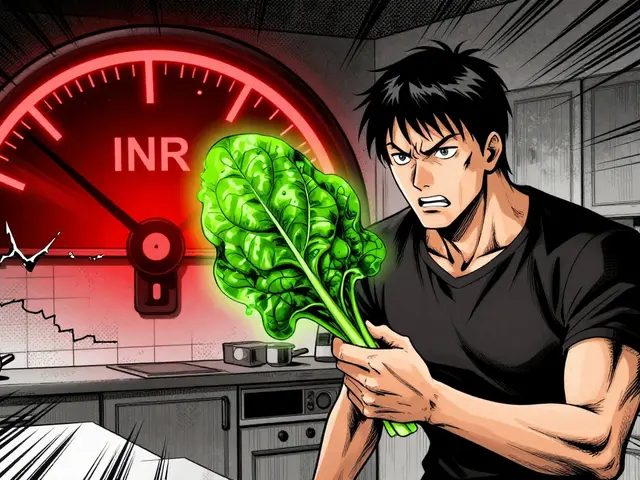
Imagine eating a salad one day and feeling fine, only to have your INR spike dangerously high the next because you added extra spinach. For anyone taking Warfarin, also known by the brand name Coumadin, this is not just a hypothetical worry-it is a daily reality that can lead to hospital visits or worse.
The core problem with Warfarin is its narrow therapeutic window. It works by blocking the recycling of Vitamin K, a nutrient your body needs to make blood clots. If you eat too much Vitamin K, your blood might clot (risking strokes or embolisms). Eat too little, and you risk dangerous bleeding. The goal isn't to eliminate Vitamin K from your life; it is to keep your intake steady so your doctor can keep your dose steady. This is where a food diary becomes your most powerful tool for survival and stability.
Why Consistency Beats Avoidance in Warfarin Management
A common myth among patients is that they must avoid green leafy vegetables entirely. This is incorrect and potentially harmful. Dr. Gary Raskob, a leading expert in hematology, emphasizes that maintaining your usual dietary pattern is far safer than making drastic changes. The American Heart Association states clearly that consistent Vitamin K intake is the single most modifiable factor affecting INR stability.
Think of your Vitamin K intake like a bank account balance. You do not need an empty account; you need a predictable one. If you usually eat 100 micrograms (mcg) of Vitamin K a day, sticking close to that number allows your Warfarin dose to work effectively. Deviating by more than 20% from your baseline can cause significant INR fluctuations. According to FDA data, inconsistent Vitamin K intake contributes to 32% of Warfarin-related emergency department visits. That is a staggering statistic that highlights why tracking matters more than restriction.
- Maintain Baseline: Identify your average weekly intake and stick to it.
- Avoid Spikes: Do not suddenly start juicing kale if you rarely ate it before.
- Report Changes: If you plan to change your diet significantly, tell your anticoagulation clinic immediately.
Identifying High-Vitamin K Foods: What Goes Into Your Diary
To track what you cannot see, you first need to know what to look for. Vitamin K exists primarily as phylloquinone (K1) in plants and menaquinones (K2) in animal products and fermented foods. The National Institutes of Health identifies green leafy vegetables as the primary source, but hidden sources exist in oils and supplements.
| Food Item | Vitamin K (mcg) | Category |
|---|---|---|
| Cooked Kale | 817 | Leafy Green |
| Cooked Spinach | 483 | Leafy Green |
| Cooked Broccoli | 220 | Cruciferous Vegetable |
| Raw Romaine Lettuce | 138 | Leafy Green |
| Soybean Oil (1 tbsp) | ~10-15 | Vegetable Oil |
| Ensure Nutrition Shake (8 oz) | 25 | Fortified Product |
Note how quickly these numbers add up. A single cup of cooked kale contains over eight times the daily recommended intake for adult women (90 mcg). While you do not need to hit zero, you must record every gram. Hidden sources are particularly tricky. Soybean oil, used in many processed foods and restaurant meals, contains measurable amounts of Vitamin K. Similarly, multivitamins often contain between 25 and 100 mcg of Vitamin K per dose. Failing to log a daily multivitamin can skew your INR just as much as eating a large salad.

Paper vs. Digital Diaries: Choosing the Right Tool
You have two main options for tracking: traditional paper logs or digital applications. Each has distinct advantages depending on your lifestyle, age, and tech comfort level. A 2022 study in the *Journal of Geriatric Cardiology* found that 82% of patients over 75 adhered better to paper diaries compared to 57% using digital tools. However, for younger users, digital apps offer precision and speed.
Digital Apps: The Vitamin K Counter & Tracker app is widely regarded as the gold standard for iOS users. It offers real-time tracking of over 1,200 foods with data verified against the USDA FoodData Central database. In a randomized controlled trial published in *Blood Advances*, patients using this specific app maintained their INR in the therapeutic range 72.3% of the time, compared to 61.8% for those using paper diaries. The visual feedback helps you see instantly when you are approaching your limit for the day.
Paper Diaries: Paper remains robust for those who struggle with smartphone literacy or prefer tactile logging. The Anticoagulation Forum developed a standardized format that includes columns for date, food item, portion size, estimated Vitamin K content, and INR value. The benefit here is simplicity-no batteries, no updates, no learning curve. However, paper diaries suffer from "soggy pocket syndrome" and lost data, which can disrupt continuity during clinic visits.
Regardless of the medium, accuracy is paramount. Research from the NIH shows that patients consistently underreport Vitamin K intake by 22-37%. To combat this, use visual portion guides. Estimating errors account for 33% of INR fluctuations. Using measuring cups or a kitchen scale initially can train your eye to recognize what 100 grams of broccoli actually looks like.
Implementing Your Diary: A Step-by-Step Protocol
Starting a food diary can feel overwhelming, but structure makes it manageable. The Anticoagulation Forum recommends a three-phase implementation strategy to ensure long-term success.
- Orientation Phase (Week 1): Spend 15-20 minutes with your anticoagulation specialist or dietitian. Learn how to estimate portions and identify high-risk foods. Set your baseline Vitamin K target based on your current habits.
- Active Tracking Phase (Weeks 2-4): Log every meal and snack. Be meticulous. Include condiments, cooking oils, and supplements. Check in weekly with your care team to review patterns. This phase is about building the habit, not perfection.
- Maintenance Phase (Month 2 onwards): Transition to monthly reviews. Pre-plan meals for the week to ensure consistent Vitamin K levels. Use your diary to predict potential INR shifts before they happen.
Meal planning is a pro-tip that yields significant results. The University of Michigan Health System reported a 15% improvement in Time in Therapeutic Range (TTR) when patients pre-planned five days of meals with consistent Vitamin K content. By deciding on Sunday that Monday through Friday will include moderate amounts of greens, you remove the guesswork from daily decisions.

Common Pitfalls and How to Avoid Them
Even diligent trackers make mistakes. Understanding common pitfalls can save you from dangerous INR swings.
- The "Healthy Salad" Trap: Adding arugula, spinach, and kale to a salad without realizing the cumulative Vitamin K load. Solution: Rotate your greens. Use lettuce varieties lower in Vitamin K, like iceberg or romaine, as your base, and treat high-K greens as a measured side dish.
- Supplement Surprise: Starting a new multivitamin or herbal supplement without checking its Vitamin K content. Solution: Always bring your supplement bottle to your INR appointment or check the label online before starting.
- Restaurant Blind Spots: Eating out without knowing what oil was used. Many Asian dishes use soybean or canola oil, which contain Vitamin K. Solution: Ask servers about preparation methods or choose grilled meats with steamed non-green vegetables.
- Inconsistent Timing: Taking your Warfarin at different times each day while eating consistent meals. Solution: Take Warfarin at the same time every day, ideally in the evening, to maintain steady drug levels in your bloodstream.
Dr. Evan Stein from the University of Chicago notes that simply avoiding high-Vitamin K foods is less effective than consuming them consistently. Patients who consumed a steady 150 mcg daily had 18% fewer INR fluctuations than those who varied their intake around the same average. Consistency is king.
The Future of Warfarin Tracking
Technology is evolving rapidly to support Warfarin patients. In January 2024, the FDA approved NutriKare, the first AI-powered dietary tracking system for Warfarin users. It uses smartphone cameras to estimate Vitamin K content from food photos with 89% accuracy. This reduces the burden of manual entry and minimizes underreporting.
Additionally, major Electronic Health Record (EHR) vendors like Epic Systems are integrating Vitamin K tracking directly into patient portals. The upcoming features aim to automatically predict INR trends based on logged food entries, providing proactive alerts before your INR goes out of range. These tools promise to bridge the gap between home management and clinical oversight, making safe Warfarin therapy more accessible than ever.
Do I need to stop eating green vegetables if I am on Warfarin?
No, you should not stop eating green vegetables. The goal is consistency, not elimination. If you normally eat spinach, continue to eat it in similar amounts. Suddenly stopping or drastically increasing your intake can cause dangerous INR fluctuations. Work with your dietitian to establish a baseline amount of Vitamin K that fits your lifestyle.
Which app is best for tracking Vitamin K on Warfarin?
The Vitamin K Counter & Tracker app is highly recommended due to its comprehensive database and clinical validation. It provides real-time feedback and has been shown in studies to improve Time in Therapeutic Range compared to paper diaries. Ensure you download a version that updates its database regularly to reflect accurate nutritional information.
How much Vitamin K is safe to eat daily on Warfarin?
There is no single "safe" number for everyone. The American Heart Association recommends 120 mcg for men and 90 mcg for women generally, but Warfarin patients must focus on their personal baseline. Some patients tolerate 150 mcg daily, while others may need less. The key is to stay within 20% of your established baseline intake to maintain stable INR levels.
Can hidden sources of Vitamin K affect my INR?
Yes, hidden sources are a major cause of INR instability. Soybean oil, canola oil, and certain multivitamins contain significant amounts of Vitamin K. Processed foods, restaurant meals, and fortified nutrition shakes like Ensure also contribute to your total intake. Always log these items in your food diary to get an accurate picture of your consumption.
What should I do if I accidentally eat a large amount of Vitamin K?
If you consume a significantly larger amount of Vitamin K than usual, monitor for signs of reduced anticoagulation effect, though symptoms may not appear immediately. More importantly, contact your anticoagulation clinic. They may advise you to test your INR sooner than scheduled or adjust your Warfarin dose temporarily. Do not skip your medication without medical advice.
Desirea Gaona
It is imperative that we acknowledge the profound importance of maintaining a consistent dietary regimen when managing anticoagulation therapy. The information provided herein is quite elucidating regarding the nuances of Vitamin K intake and its direct correlation with INR stability. I have found that establishing a structured routine for meal planning significantly mitigates the anxiety associated with potential fluctuations in therapeutic levels. Furthermore, the distinction between avoiding green vegetables entirely versus integrating them into a balanced diet is a critical point that often goes misunderstood by patients. It is my sincere hope that more individuals will embrace the use of digital tracking tools to ensure precision in their daily logs. The data presented regarding the efficacy of apps like the Vitamin K Counter & Tracker is particularly compelling for those who are technologically adept. We must foster an environment where patients feel empowered to take ownership of their health through meticulous record-keeping. Let us continue to support one another in this journey towards optimal health management.
Christina Moran
i think this is reallly helpful but i get so confused with all the numbers lol. like how do i know if my baseline is right? i just eat what feels good most days. maybe i should try the app thingy?
mardy duffy
boring
Yuvraj Singh
Hello everyone, I wanted to share some additional insights based on my experience working in clinical nutrition. It is fascinating how the body adapts to consistent Vitamin K intake over time. Many patients worry about small variations, but as long as you stay within that 20% margin of your established baseline, the risk is minimal. I often recommend keeping a simple spreadsheet for the first month to identify patterns. For instance, if you notice your INR drops slightly after meals containing soybean oil, you might want to adjust your cooking methods or choose alternatives like olive oil. Remember, the goal is predictability. If you are unsure about a specific food item, checking the USDA FoodData Central database can provide accurate micronutrient profiles. Do not hesitate to reach out to your care team if you observe any unusual trends in your readings. Consistency truly is the cornerstone of safe Warfarin management.
Tanya KLIMCHUK Klimchuk
You need to stop being lazy about tracking your food! It is literally life or death stuff here people! If you cannot be bothered to log your spinach then you deserve whatever happens to your INR! Get your act together and download the app immediately! No excuses!
Anthony Red
Hey folks, just chiming in to say that I started using the paper diary method because my phone battery dies too fast and I hate charging it constantly. Surprisingly, writing things down by hand makes me more mindful of what I am eating. I used to grab a salad without thinking, but now I pause to estimate the portion size. It has helped me keep my INR stable for the past three months. Also, tip of the day: ask your restaurant server about the oils they use. Most places don't mind telling you if they use soybean or canola oil. Stay chill and keep tracking!
Javier Arauz
This whole warfarin thing is a scam pushed by big pharma to keep us dependent on their meds! Why can't we just eat natural foods and heal ourselves? They want you scared so you buy their expensive tests and drugs. Wake up sheeple! America needs to take back control of its health from these globalist doctors!
Kris Wong
The FDA is lying to you about NutriKare 😡😡😡 They are testing it on us to collect our biometric data for AI training! Your photos of food are being stored on servers in China 🇨🇳🤡 Do not trust the government with your health info! Use cash and paper only! 🛑🛑🛑
Danny S
:( The elites are using Vitamin K tracking to monitor our population movements. It is not just about blood clotting; it is about control. Every time you log a meal, you are feeding the surveillance state. They know where you are, what you eat, and how healthy you are. This is dystopian horror disguised as medical advice. Do not fall for their trap. Keep your mouth shut and your data private. :)
Jeremiah Cassandra
Oh, brilliant. Another post telling us to count every leaf of lettuce like we are accounting for the Queen's jewels 👑📉 I suppose next we'll need a PhD in botany to order a sandwich. Just eat a burger and pray, eh? Much simpler than this bureaucratic nightmare of tracking micrograms. Cheers to the chaos! 🍾🤷♂️