
Depression isn’t just feeling sad. It’s a persistent weight that makes getting out of bed, answering texts, or even eating feel impossible. For over 280 million people worldwide, it’s a chronic condition that doesn’t vanish with willpower. The good news? We now have clear, science-backed ways to manage it - and they work best when used together.
Medications: Not a Quick Fix, But a Tool
Antidepressants aren’t happy pills. They don’t make you euphoric. Instead, they help restore the brain’s ability to regulate mood, sleep, and energy. The most common first-line options are SSRIs - like sertraline, citalopram, and fluoxetine. These are preferred because they’re generally well-tolerated and have fewer side effects than older drugs.
But side effects still happen. About 30-50% of people on SSRIs report sexual dysfunction. SNRIs like venlafaxine can raise blood pressure in 10-15% of users. Bupropion, on the other hand, has lower sexual side effects but carries a small seizure risk - about 0.4% at standard doses. That’s rare, but it matters if you have a history of seizures or eating disorders.
It takes time. Most people don’t feel better until 4-8 weeks on a full dose. If there’s no improvement by then, it’s not failure - it’s data. Doctors use that to adjust. About 30% of people don’t respond to the first medication. That’s normal. Switching or adding another drug - like lithium or an atypical antipsychotic like quetiapine - can boost response rates. In treatment-resistant cases, electroconvulsive therapy (ECT) works for 70-90% of patients, though temporary memory loss is common.
Therapy: Rewiring Thought Patterns
Therapy isn’t just talking. It’s training your brain to think differently. Cognitive Behavioral Therapy (CBT) is the most studied. In 8-28 weekly sessions, you learn to spot negative thought loops - like “I’m a failure” after one mistake - and replace them with evidence-based thoughts. Studies show CBT alone helps 50-60% of people with mild to moderate depression.
Interpersonal Therapy (IPT) focuses on relationships. If your depression is tied to grief, conflict, or isolation, IPT helps you rebuild connections. It works just as well as medication for moderate depression. Mindfulness-Based Cognitive Therapy (MBCT) is different - it’s designed to prevent relapse. For people who’ve had three or more depressive episodes, an 8-week group program cuts relapse risk by 31% over a year.
Combining therapy and medication works better than either alone. For moderate to severe depression, the combination boosts response rates to 55-60%. If your depression is tied to a troubled relationship, couples therapy can help. One study found 40-50% improvement in symptoms when both partners worked on communication - compared to 25-30% with individual therapy.
Lifestyle Changes: The Foundation You Can’t Ignore
Medications and therapy work better when your body is supported. Lifestyle isn’t an add-on - it’s part of the treatment plan.
Exercise is a proven antidepressant. Three to five sessions a week of brisk walking, cycling, or swimming - 30 to 45 minutes each - can match the effectiveness of medication for mild depression. It’s not about fitness. It’s about movement that gets your heart rate up and releases endorphins.
Sleep matters more than you think. Seven out of ten people with depression struggle with insomnia. Fixing sleep isn’t about sleeping more - it’s about sleeping better. Stick to the same wake-up time every day, even on weekends. Limit time in bed to only when you’re actually sleeping. No screens an hour before bed. These simple steps can cut depression severity by 30-40%.
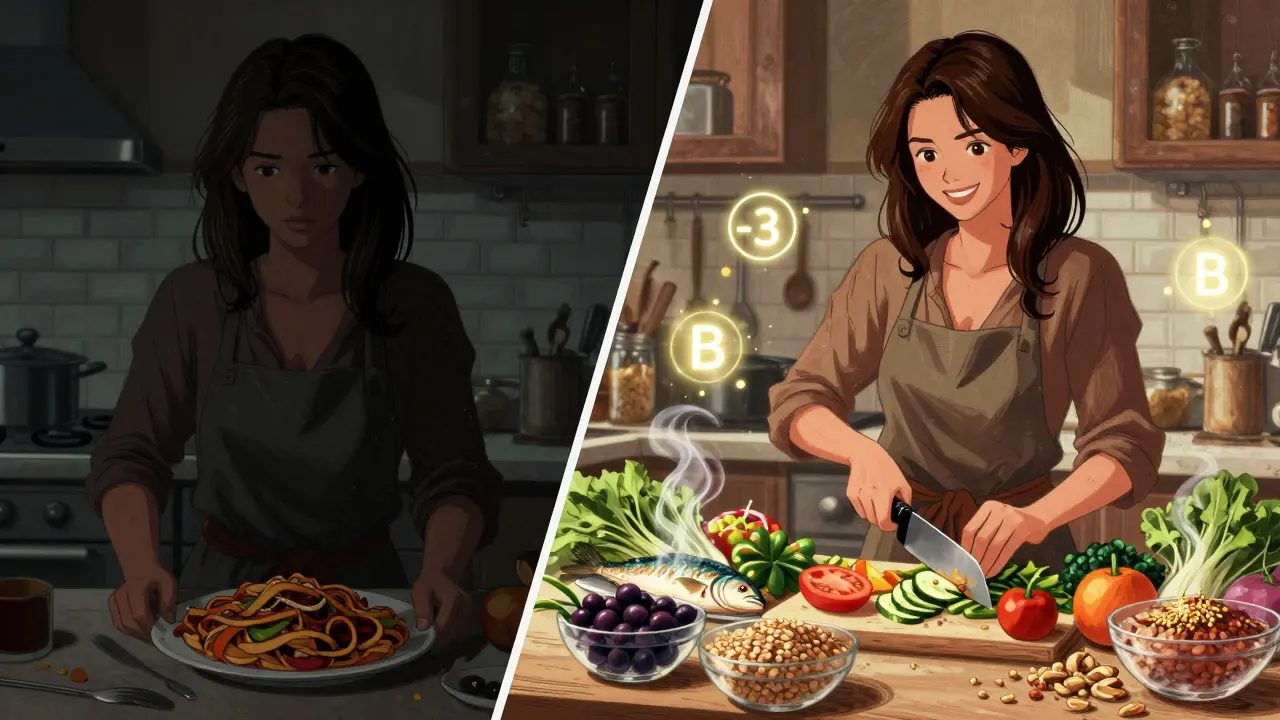
Diet plays a role too. The SMILES trial gave 67 people with moderate depression a 12-week Mediterranean diet - full of vegetables, fish, whole grains, nuts, and olive oil. After three months, 32% went into remission. Only 8% in the control group did. It’s not magic. It’s nutrients feeding brain function.
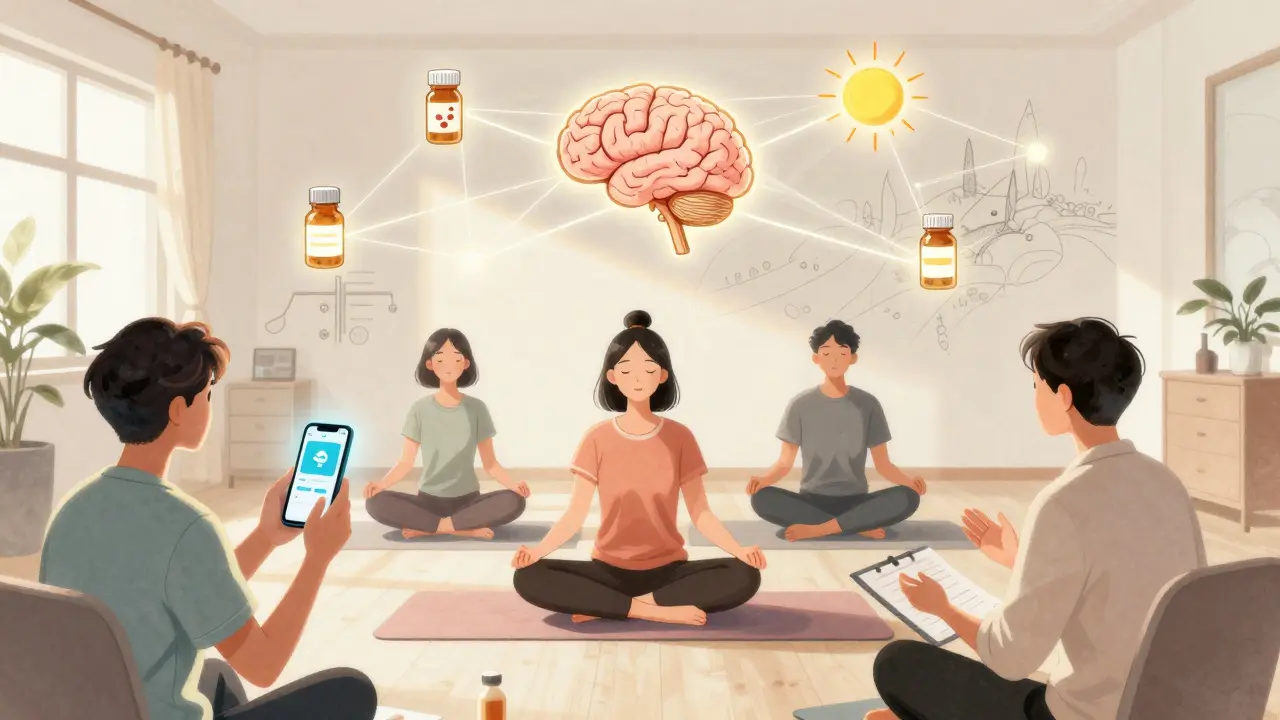
Stress reduction techniques like daily 10-20 minute mindfulness meditation, yoga twice a week, or tai chi also help. They don’t cure depression, but they reduce the intensity of symptoms. Think of them as lowering the volume on your anxiety.
What Works Depends on How Severe It Is
Not all depression is the same. Treatment should match the severity.
Mild depression (PHQ-9 score 5-9): Medication isn’t usually the first step. Instead, try guided self-help, structured exercise, or active monitoring with a doctor. Many people improve with just lifestyle changes and support.
Moderate depression (PHQ-9 score 10-14): You have two strong options: CBT or an SSRI. Pick based on what fits your life. If you’re resistant to pills, therapy is equally effective. If you’re too exhausted to commit to weekly sessions, medication might be easier to start.
Severe depression (PHQ-9 score 15+): Combination therapy is the standard. Antidepressants plus CBT or IPT. For psychotic depression - where someone loses touch with reality - ECT is often the fastest, most reliable option, with remission rates of 70-80%.
Chronic depression (lasting 2+ years): Standard treatments often fall short. That’s where CBASP - Cognitive Behavioral Analysis System of Psychotherapy - comes in. It’s designed specifically for long-term depression. One study found 48% of people improved with CBASP plus medication, compared to 28% with medication alone.
Barriers and Real-World Challenges
Knowing what works is one thing. Getting it is another.
In the U.S., only 35.6% of adults with depression get any mental health treatment. Why? Cost, stigma, and lack of providers. There are over 6,000 areas in the country with severe shortages of therapists. That’s why telehealth has exploded - 68% of providers now offer virtual sessions, up from 18% in 2019.
Digital tools are helping too. FDA-cleared apps like reSET offer CBT-style programs through your phone. In trials, they helped 47% of users. But adoption is still low - under 5% of clinics use them.
And then there’s the issue of access inequality. Depression rates are 50% higher among racial and ethnic minorities in the U.S. - yet they’re less likely to receive treatment. Addressing this isn’t just ethical - it’s essential for effective public health.
What’s Next? The Future of Depression Care
The field is moving fast. Psilocybin - the active ingredient in magic mushrooms - showed a 71% response rate in a 2021 trial. It’s not legal yet, but it’s close. Repetitive Transcranial Magnetic Stimulation (rTMS), a non-invasive brain stimulation technique, works for about half of people who don’t respond to meds.
Smartphones are becoming diagnostic tools. Apps that track your speech patterns, movement, and social activity can predict a depressive episode up to 7 days in advance with 82% accuracy. Imagine getting a nudge to call your therapist before you crash.
And the goal isn’t just symptom reduction anymore. It’s personalized care. No two people experience depression the same way. Your sleep issues, your relationship stress, your job demands - these matter. The future is matching treatment to you, not the other way around.
Can I manage depression without medication?
Yes, for mild to moderate depression, therapy and lifestyle changes like exercise, sleep hygiene, and diet can be just as effective as medication. The key is consistency. For severe depression, medication is usually part of the plan because symptoms are too intense to manage with lifestyle alone.
How long does it take for antidepressants to work?
Most people start noticing small improvements after 2-4 weeks, but full effects usually take 6-8 weeks. If there’s no change by then, your doctor may adjust the dose or switch medications. Don’t stop taking them just because you don’t feel better right away - that’s when side effects are strongest but benefits haven’t kicked in yet.
Is therapy better than medication for depression?
Neither is universally better. Therapy helps you build skills to handle future stress, while medication helps stabilize your brain chemistry. For moderate to severe depression, combining both gives the best results. For mild cases, therapy alone often works well. It depends on your symptoms, preferences, and life situation.
Can diet really affect depression?
Yes. The SMILES trial showed that switching to a Mediterranean-style diet - rich in vegetables, fish, whole grains, and healthy fats - led to remission in 32% of participants after 12 weeks. That’s more than triple the rate of the control group. Nutrients like omega-3s, zinc, magnesium, and B vitamins support brain function and reduce inflammation linked to depression.
What if nothing seems to work?
You’re not alone. About 30% of people don’t respond to first-line treatments. That doesn’t mean it’s hopeless. The STAR*D trial showed that with four steps of treatment adjustments - switching meds, adding therapy, trying new drugs, or using advanced options like rTMS or ECT - 67% of people eventually reached remission. Persistence matters more than perfection.
Are there side effects from long-term antidepressant use?
Long-term use is generally safe for most people. Common side effects like weight gain or sexual dysfunction can persist, but they often stabilize. Some people experience emotional blunting - feeling less intense emotions overall. If this happens, talk to your doctor. Adjusting the medication or adding therapy can help. Never stop abruptly - withdrawal symptoms can be severe.
Next Steps: What to Do Today
If you’re struggling with depression, start small. Pick one thing from each category:
- Medication: Talk to your doctor about whether an SSRI makes sense for you. Bring a list of your symptoms and what you’ve tried.
- Therapy: Look for a CBT or IPT therapist. Many offer sliding scale fees or telehealth. Even one session can help you feel less alone.
- Lifestyle: Walk 30 minutes three times this week. Go to bed and wake up at the same time every day. Eat one extra serving of vegetables today.
Depression management isn’t about fixing yourself overnight. It’s about building a toolkit - one that includes medicine, support, and daily habits. You don’t need to do it all at once. Just start. Then keep going.

Janette Martens
why do we keep pretending meds are some magic fix? my cousin was on 4 different SSRIs and still couldn’t get out of bed. the only thing that helped was moving back to her hometown and being around family. science my ass.
Marie-Pierre Gonzalez
Thank you for this comprehensive and deeply thoughtful overview. I appreciate the nuanced distinction between mild, moderate, and severe depression-it’s so often oversimplified. Lifestyle interventions, particularly sleep hygiene and nutrition, are underutilized yet profoundly impactful. I encourage everyone to consider these as foundational, not optional. 💪🥗
Louis Paré
So let me get this straight-you’re telling me the entire mental health industry is just a fancy way of selling pills and therapy sessions while ignoring that modern life is designed to make people miserable? We’re medicating symptoms of capitalism. Brilliant.
Also, ‘Mediterranean diet’? That’s just a fancy way of saying ‘eat like a Greek peasant.’
Sydney Lee
Interesting. But you’ve completely omitted the role of spiritual disconnection. Depression isn’t a chemical imbalance-it’s a soul crisis. No SSRIs can restore meaning. No CBT can heal existential dread. You can’t algorithm your way out of a culture that has forgotten how to grieve.
And yet, here we are, optimizing depression like it’s a faulty app update.
Debra Cagwin
This is exactly the kind of clear, compassionate guide we need. If you’re reading this and feeling overwhelmed-start with one thing. One walk. One deep breath. One text to someone you trust. Progress isn’t linear, and you’re not broken for needing help. You’re human. And you’re not alone. 🌱
Hakim Bachiri
Y’all act like ECT is some sci-fi horror show-when it’s literally the only thing that saved my sister’s life. Yeah, she forgot her high school prom-but she’s alive. And laughing. And cooking for her kids again. So shut up about ‘memory loss’ and get real.
Also, ‘Mediterranean diet’? My abuela ate this way before it was a ‘trial.’ She didn’t need a PhD to know fish and olive oil > processed crap.
Celia McTighe
Thank you for writing this. I’ve been on sertraline for 3 years and just started CBT last month-it’s been a game changer. I used to think therapy was for ‘broken’ people. Turns out, it’s just for people who are trying. ❤️
Also, walking outside for 20 minutes after work? Best decision I ever made. No meds, no apps. Just me, the trees, and my thoughts slowing down.
Ryan Touhill
Let’s be honest-this whole ‘lifestyle changes’ narrative is just corporate wellness propaganda. Big Pharma doesn’t want you eating kale. They want you on a subscription. And don’t get me started on telehealth-your therapist is a chatbot with a nice voice. They’re monitoring your ‘speech patterns’ to sell you ads. Wake up.
Liz MENDOZA
For anyone feeling like they’re failing because they haven’t ‘gotten better’ yet-this isn’t a race. Some days, just showering is a win. That’s okay. You’re doing better than you think. And if you need to try five different meds or seven therapists? That’s not weakness. That’s courage.
Teresa Marzo Lostalé
My grandmother said depression was ‘the soul’s winter.’ You don’t fight winter-you learn to live inside it. You light candles. You drink tea. You wait. And then, slowly, the snow melts. Medication? Therapy? Diet? They’re just the candles.
Don’t rush the season.