
Nocebo Risk Assessment Tool
Select the option that best describes you or your situation.
Did you know?
According to recent studies, fear is a stronger driver than hope. Negative expectations can trigger real physiological changes like increased cortisol and heart rate.
Analyzing...
Please wait while we calculate your susceptibility based on the latest clinical data.
Recommended Mitigation Strategies
You take a pill for your headache. Ten minutes later, you feel nauseous. Was it the drug? Or was it the warning label you read right before taking it? This isn't just imagination. It is biology.
We often think of medicine as a purely chemical interaction. You ingest substance A, it binds to receptor B, and symptom C disappears. But modern research shows that your brain plays a massive role in how your body reacts to treatment. This is where the concepts of placebo and nocebo come into play. These are not just tricks of the mind; they are measurable, physical changes driven by expectation.
Understanding the difference between these two forces is crucial. If you are a patient, it helps you separate real toxicity from psychological reactions. If you are a clinician or researcher, it explains why some drugs fail in trials despite working in labs. Let’s look at what the latest studies actually show about how our minds shape our physical health.
The Core Difference: Hope vs. Fear
To understand side effects, we first need to define the players. The term "placebo" comes from Latin, meaning "I shall please." It refers to beneficial improvements in health after receiving a dummy treatment, driven by positive expectations. Think of it as hope triggering healing.
The opposite is the nocebo effect, which means "I shall harm." Coined by Walter Kennedy in 1961, this describes negative symptoms or worsening conditions resulting from negative expectations. It is fear triggering sickness.
Here is the shocker: recent data suggests that fear is a stronger driver than hope. A 2025 study published in eLife Sciences by Kunkel demonstrated that nocebo effects are consistently stronger than placebo effects. The statistical significance was high (F(1,97)=53.93), showing that when patients expect bad outcomes, their bodies deliver them with greater intensity than when they expect good ones.
Why does this matter for side effects? Because many "side effects" reported in clinical trials are actually nocebo responses. When you read a list of potential risks, your brain primes your nervous system to detect those specific sensations. You don't just imagine the dizziness; your brain signals your inner ear and blood pressure regulation to create actual dizziness.
The Evidence: What Studies Show About Side Effects
If nocebo effects are so powerful, how much of the pain we attribute to drugs is actually self-inflicted? The numbers are staggering.
Meta-analyses show that 50-76% of systemic adverse events in clinical trials occur in the placebo groups. That means more than half of the people taking a sugar pill report feeling sick, tired, or dizzy. According to Colloca's 2011 systematic review, these aren't random complaints. Patients in placebo groups experience negative side effects that match the profile of the real drug they think they are taking.
Consider migraine treatments. In anti-migraine trials, 20-30% of patients on placebos reported side effects like nausea or tingling-symptoms identical to those caused by active triptan drugs. In cancer care, 25-40% of chemotherapy-induced nausea can be attributed to nocebo mechanisms. Even with vaccines, Meissner's 2022 research found that 76% of systemic side effects after the first dose of COVID-19 vaccines, such as headache and fatigue, also appeared in placebo groups.
This proves that the act of being warned about side effects creates a physiological reality. Your brain uses verbal suggestions, observational learning, and past experiences to predict pain. And once predicted, the body often complies.
| Feature | Placebo Effect | Nocebo Effect |
|---|---|---|
| Core Driver | Positive expectation / Hope | Negative expectation / Fear |
| Typical Outcome | Symptom improvement (30-60%) | Symptom worsening or new side effects (20-45%) |
| Persistence | Often diminishes over time | More persistent; stays strong across treatment periods |
| Primary Trigger | Trust in provider, ritual of care | Informed consent warnings, media reports, peer anecdotes |
| Clinical Impact | Enhances drug efficacy | Causes non-compliance (25-35% discontinuation) |
The Biology Behind the Belief
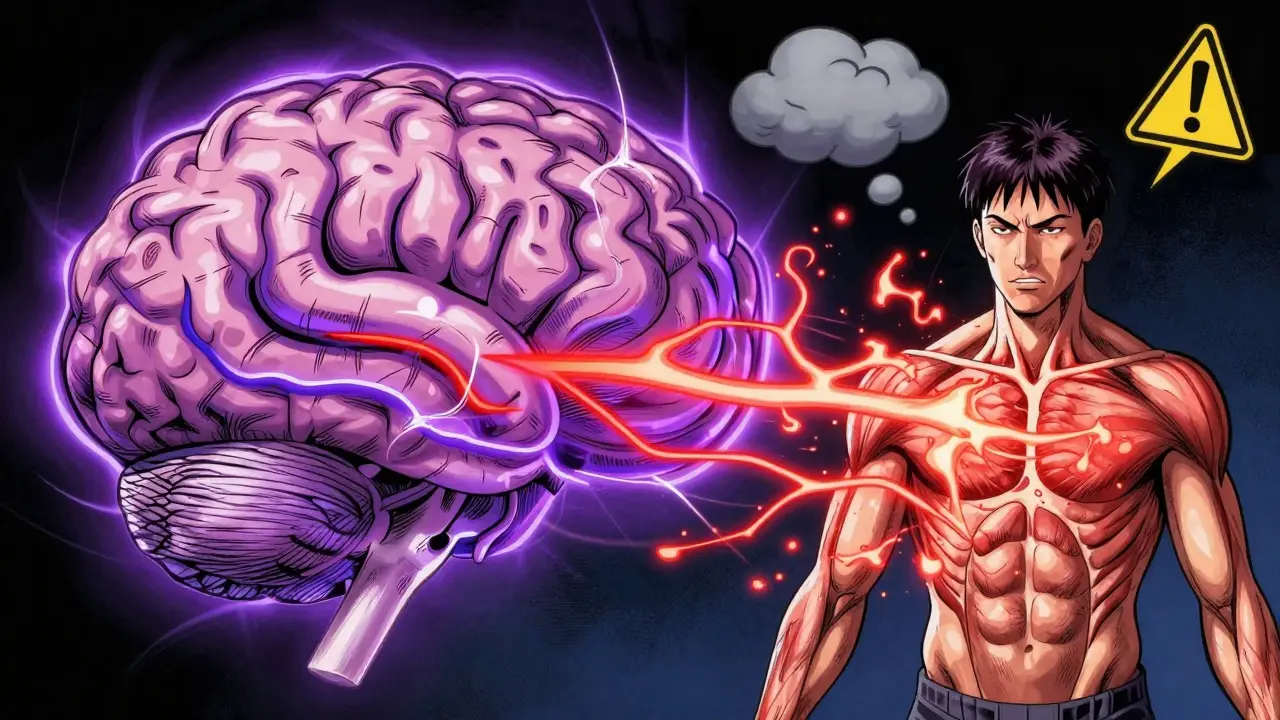
It is easy to dismiss these effects as "all in your head." But neuroscience shows they are very much in your body. The nocebo effect operates through specific brain regions, including the anterior cingulate cortex, insula, and prefrontal areas. These regions modulate pain perception and autonomic responses.
When you expect a side effect, your brain doesn't just visualize it; it activates the pathways that produce it. Meissner's 2022 research highlights that nocebo effects trigger measurable physiological changes:
- Cortisol levels: Can increase by 15-25%, flooding the body with stress hormones.
- Heart rate: Can elevate by 5-10 beats per minute.
- Immune response: Alterations in immune markers have been observed, suggesting the body prepares for inflammation.
This is why the delivery method matters. Verbal suggestions account for 70-80% of nocebo responses. If a doctor says, "This might cause some stomach upset," your gut-brain axis listens. Observational learning (seeing others suffer) accounts for 15-20%, and prior negative experiences make up the remaining 10-15%. Your brain is a prediction machine, and it prioritizes safety (avoiding harm) over reward.
Why Nocebo Is Harder to Shake Than Placebo
One of the most troubling findings from recent longitudinal studies is persistence. We used to assume that if a patient felt sick from a placebo, they would get used to it. Kunkel's 2025 study challenges this. It showed that nocebo effects decreased only marginally from day 1 to day 8, while placebo effects remained stable or diminished.
This persistence has huge implications for chronic illness management. If a patient starts a long-term medication for hypertension or depression, and they develop nocebo-induced side effects, those symptoms don't just fade away. They stick around, leading to frustration and eventual abandonment of the treatment.
Tu's 2022 article in Nature emphasizes that this leads to significant patient non-compliance. Discontinuation rates due to perceived side effects range from 25-35%. Patients stop taking life-saving drugs because they feel worse, even though the drug itself wasn't causing the issue. Instead of stopping, they might visit a doctor unnecessarily (accounting for 15-20% of primary care consultations) or take additional medications to counteract the fake side effects, creating a cascade of further health risks.
Condition-Specific Manifestations
Nocebo effects are not uniform. They vary significantly depending on the medical condition and the type of treatment. Understanding these patterns helps clinicians anticipate risks.
In neurological disorders like Parkinson's disease, 15-25% of symptom worsening can be linked to nocebo mechanisms. For psychiatric conditions, particularly depression, 25-35% of treatment-emergent symptoms are nocebo-related. This is critical because antidepressants already have a delicate balance of efficacy and tolerance.
Gynecological issues also show high susceptibility. Menopausal hot flashes see 30-40% reporting of nocebo-induced symptoms. In gastrointestinal disorders like irritable bowel syndrome (IBS), 22-32% of symptom exacerbations are tied to negative expectations. Interestingly, the "open-label placebo" approach-where patients knowingly receive inert treatments-has shown 25-35% symptom improvement in IBS, proving that the therapeutic context itself has power, even without deception.
Dermatological conditions like atopic dermatitis show 25-35% flare-ups linked to nocebo, while respiratory issues like asthma see 20-30% symptom reports driven by anxiety and expectation rather than allergen exposure alone.
How Doctors and Patients Can Minimize Nocebo Risks
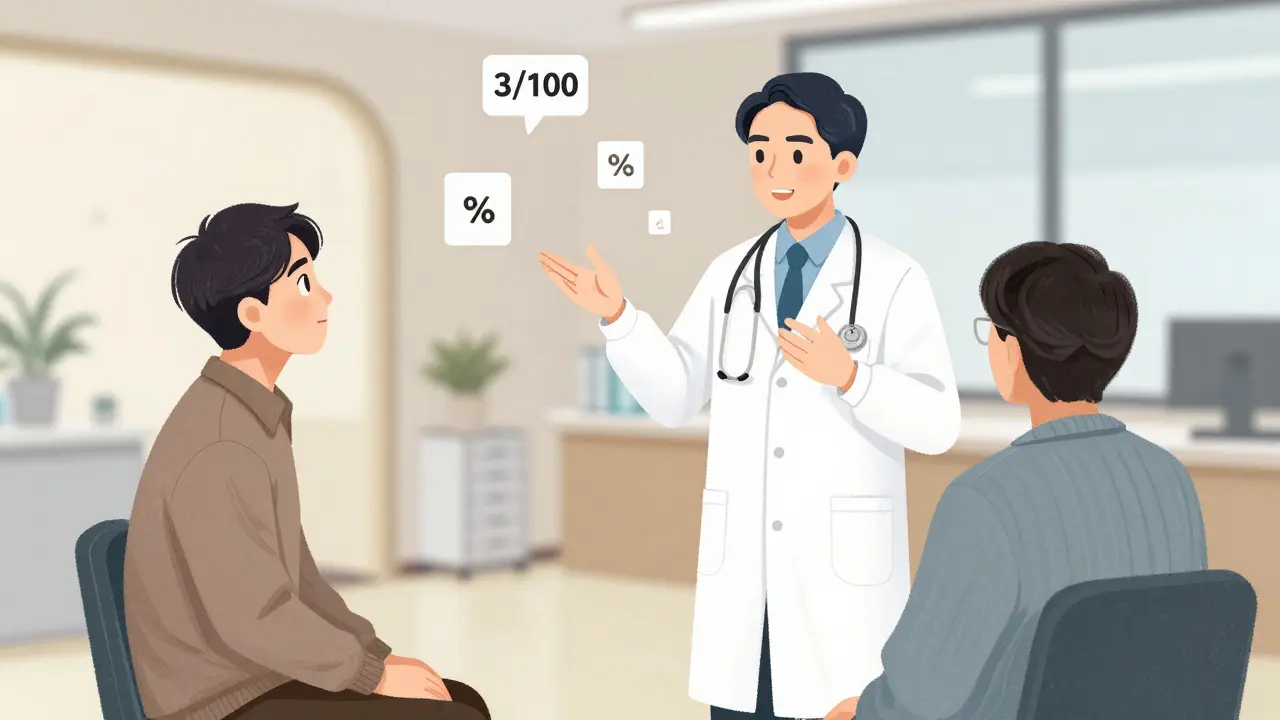
So, how do we fix this? We can't just lie to patients. Informed consent is a legal and ethical requirement. However, how we communicate risk matters immensely.
The American Medical Association's 2022 guidelines recommend using absolute percentages rather than relative ones. Saying "3 in 100 patients experience this" reduces nocebo responses by 15-25% compared to saying "there is a 3% risk." The former feels like a manageable statistic; the latter feels like a threat.
Dr. Karin Meissner advocates for "expectation reframing." This involves emphasizing positive treatment outcomes while acknowledging potential side effects as manageable and temporary. Training in this technique requires about 8-12 hours but can reduce nocebo responses by 30-40%.
For patients, awareness is the first step. If you know that your brain might amplify discomfort based on fear, you can consciously challenge those thoughts. Ask yourself: "Is this sensation new, or am I hyper-focusing on a normal bodily noise because I was warned about it?"
Technology is also stepping in. Electronic health records now incorporate "nocebo risk assessment" modules. These tools analyze patient history for anxiety disorders (which increase nocebo susceptibility by 2.3x) and catastrophizing tendencies (2.8x increased risk). This allows doctors to tailor their communication style to each individual.
The Economic and Industry Impact
The cost of nocebo effects is not just measured in patient suffering; it is measured in dollars. Tu's analysis of Medicare claims data estimates that nocebo effects contribute to approximately $1.2 billion annually in unnecessary healthcare utilization in the United States alone.
Pharmaceutical companies are taking notice. They now invest $50-75 million per major drug development program specifically to mitigate nocebo effects through optimized patient communication materials. Clinical trial design has evolved too. 65% of phase III trials now use "active placebos"-dummy drugs that mimic minor side effects of the active drug-to maintain blinding and prevent nocebo bias from skewing results.
Regulatory bodies are catching up. The European Medicines Agency implemented guidelines in 2021 requiring nocebo effect analysis in adverse event reporting. The FDA's 2023 draft guidance recommends separating true drug side effects from nocebo responses using statistical modeling. By 2025, the International Council for Harmonisation is likely to require pharmaceutical companies to report nocebo response rates alongside efficacy data. This transparency will help us understand which side effects are chemical and which are psychological.
Future Directions: AI and Genetics
Where do we go from here? Research is moving toward precision medicine for expectations. The NIH allocated $8.7 million in 2024 for nocebo mechanism research, focusing on neuroimaging biomarkers.
AI-powered communication tools are currently in beta testing at Massachusetts General Hospital. These tools analyze patient speech patterns during consultations to assess nocebo risk with 82% accuracy, allowing doctors to adjust their tone in real-time. Additionally, genetic research is identifying polymorphisms in the COMT gene that correlate with a 2.5x increased nocebo susceptibility. Soon, we may be able to screen for "nocebo-prone" patients and offer them tailored support strategies before starting treatment.
Integrating nocebo science into medical education could save $300-400 million annually in avoidable healthcare costs within the next decade, according to the Institute of Medicine. More importantly, it could restore trust between patients and providers, turning fear into partnership.
Can the nocebo effect cause death?
While rare, severe nocebo responses can lead to fatal outcomes in extreme cases, such as anaphylaxis-like reactions during allergy shots or cardiac events in highly anxious patients. However, most nocebo effects result in discomfort, nausea, or fatigue rather than life-threatening conditions. The key is distinguishing these from true allergic or toxic reactions.
How can I tell if my side effects are nocebo or real?
It is difficult to self-diagnose. However, if symptoms appear immediately after reading warning labels or hearing stories from others, they may be nocebo-driven. Real pharmacological side effects often follow a dose-dependent pattern and persist regardless of your mindset. Consult your doctor; they may suggest a short break or a gradual reintroduction to test the source of the symptoms.
Do open-label placebos work?
Yes. Studies show that even when patients know they are taking a placebo, they can still experience symptom relief, particularly for conditions like IBS and chronic pain. This works because the ritual of treatment and the therapeutic relationship activate the brain's endogenous healing systems, bypassing the need for deception.
Why are nocebo effects stronger than placebo effects?
Evolutionarily, humans are wired to prioritize avoiding harm over seeking reward. Negative information carries more weight in our cognitive processing. Recent studies confirm that negative expectations trigger stronger and more persistent physiological responses than positive expectations, making nocebo effects more robust and harder to dissipate.
Should doctors hide side effects to prevent nocebo?
No. Deception undermines trust. Instead, doctors should frame risks carefully. Using absolute numbers (e.g., "3 out of 100") instead of percentages, and emphasizing manageability, reduces nocebo activation while maintaining informed consent. The goal is balanced communication, not omission.

Paul Coar
honestly this explains why i felt sick after my last vaccine even though the doctor said it was normal. brain is crazy powerful stuff. makes u wonder how much of our health issues are just stress manifesting physically.
sonia rockett
THIS IS SO TRUE!!! I have been telling my friends for years that fear makes everything worse! If you believe you are gonna get sick you will! It is so important to stay positive and not listen to all the doom and gloom on social media about side effects. We need to take control of our minds!
Ankit Sinha
typical oversimplification by laymen. while expectation plays a role attributing 50-76% of adverse events solely to nocebo ignores pharmacokinetic variability and individual metabolic differences. the comt gene mention is cherry picked data to support a narrative rather than comprehensive clinical evidence. most people here dont understand basic physiology and think their thoughts can override chemistry. its cute but wrong.
Eunice Chen
i read this and thought about my migraines. sometimes i feel better just knowing im taking something even if its placebo. but then i read bad reviews and feel worse. its wild how our minds work. thanks for sharing this info it helps me understand my body better. hope everyone stays healthy and calm.
Vivek sharma
This is a profound insight into the human condition :) The mind-body connection has been known in eastern medicine for centuries. Ayurveda talks about 'Srotas' or channels being blocked by negative emotions. Western science is finally catching up with what we already knew. It is beautiful to see this validation. We must cultivate peace within to heal without. Namaste 🙏
Garry Hedges
so basically doctors are lying to us by scaring us? i mean they say watch out for these side effects and then we get them because they told us to look for them. seems like a scam to me. why not just tell us it works great and let us find out later? less anxiety more healing right?
Jamaal Johnson
The statistical significance cited from the Kunkel study is indeed compelling, yet one must remain cautious regarding the generalizability of such findings across diverse patient populations. The anterior cingulate cortex activation is well-documented in pain modulation, but extrapolating this to claim that 'fear is a stronger driver than hope' requires a nuanced understanding of neuroplasticity. Nevertheless, the implications for informed consent protocols are substantial and warrant immediate revision in clinical practice guidelines.
Usha Ranji
I found the section on expectation reframing particularly helpful. As someone who works in healthcare, we often focus too much on the risks without balancing it with the benefits. It is interesting to see the data on how absolute percentages reduce nocebo responses. I plan to share this with my colleagues to improve our communication strategies. Thank you for this detailed overview.