
You walk into your local pharmacy in Nottingham or anywhere else in the UK, hand over a prescription for a brand-name medication like Lipitor or Zoloft, and the pharmacist hands you a box with a different name on it. It’s cheaper. It looks slightly different. But is it actually the same medicine? This question keeps many patients up at night. We worry that saving money might mean compromising our health. The answer lies in a regulatory concept called therapeutic equivalence.
This isn’t just bureaucratic jargon. It is the scientific guarantee that ensures the pill you take today does exactly what the expensive original drug did yesterday. If you’ve ever hesitated to switch to a generic version of your heart medication or antidepressant, understanding how therapeutic equivalence works can put your mind at ease. Let’s break down what this means for your safety, why the system exists, and where the potential pitfalls lie.
What Is Therapeutic Equivalence?
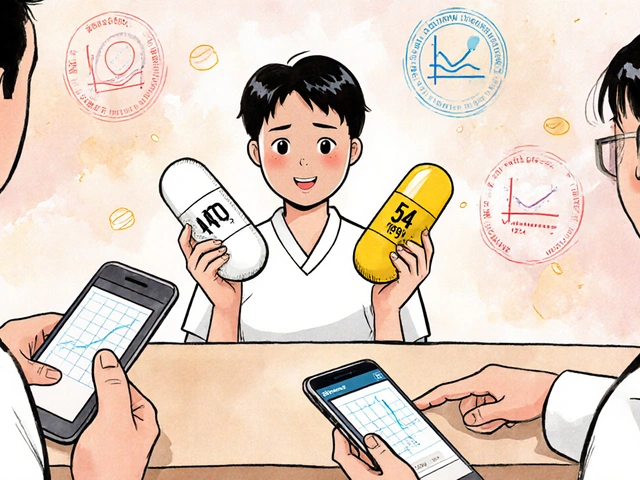
Therapeutic equivalence is a determination made by regulatory bodies, such as the U.S. Food and Drug Administration (FDA), stating that two drug products containing identical active ingredients will produce the same clinical effect and safety profile when administered under specified conditions. It goes beyond simply having the same chemical structure; it proves they behave identically in the human body.
The concept was formalized in the United States through the Hatch-Waxman Act of 1984, which created the framework for generic drug approvals. In the UK and Europe, while the terminology differs slightly-often referring to "bioequivalence" and "interchangeability" within the European Medicines Agency (EMA) framework-the core principle remains the same. A generic drug must prove it delivers the active ingredient to your bloodstream at the same rate and extent as the reference product.
Think of it like buying fuel for your car. You don’t care if the petrol comes from Shell or BP, provided it meets the same octane rating and burns cleanly. Therapeutic equivalence is the regulatory stamp confirming that the generic "fuel" powers your body’s systems just as efficiently and safely as the brand-name version.
The Three Pillars of Equivalence
For a drug to be deemed therapeutically equivalent, it must pass three rigorous scientific tests. It’s not enough to just look alike or have the same label.
- Pharmaceutical Equivalence: The products must contain the same amount of the identical active drug ingredient in the same dosage form (e.g., tablet vs. capsule) and route of administration (oral, topical, etc.). They can differ in inactive ingredients, color, shape, or packaging, but the active part must match exactly.
- Bioequivalence: This is the critical biological test. Studies compare the rate and extent of absorption of the generic drug against the brand-name drug. The FDA requires that the 90% confidence intervals for key metrics-specifically the Area Under the Curve (AUC) and Maximum Concentration (Cmax)-fall within an 80-125% range of the reference product. This statistical margin accounts for natural biological variation between individuals.
- Identical Clinical Effect: Ultimately, the drug must work the same way. If the brand-name lowers your blood pressure by 10 mmHg, the generic should do the same, without introducing new side effects due to formulation differences.
These criteria ensure that when you switch medications, your body doesn’t notice the difference. For most standard oral tablets, this process is highly reliable. However, the complexity increases with certain drug types, which we’ll discuss later.
How the FDA Orange Book Works
In the United States, the FDA maintains a database known as the Orange Book. This publication lists approved drug products and evaluates their therapeutic equivalence. Pharmacists and doctors use this book to determine if a generic substitution is safe and appropriate.
The Orange Book uses a two-letter code system to classify products. Understanding these codes helps clarify why some substitutions are automatic while others require caution.
| Code | Meaning | Patient Impact |
|---|---|---|
| A | Products considered potentially therapeutically equivalent. | Safe for substitution. Most generics fall here. |
| AB | Immediate-release products with documented bioequivalence. | Standard generics. Highly reliable. |
| B | Products with evidence suggesting therapeutic inequivalence. | Caution required. Often involves complex formulations. |
| C | Parenteral products (injectables). | Requires specific evaluation; often less interchangeable. |
If a pharmacist sees an "AB" code, they know the generic has passed all necessary tests to replace the brand-name drug automatically. An "B" code, however, signals that there might be issues with dissolution rates or other factors that could affect how the drug works in some patients. In those cases, a doctor’s approval might be needed before switching.

Narrow Therapeutic Index Drugs: A Special Case
Not all drugs are created equal. Some medications have a "narrow therapeutic index" (NTI). This means the difference between a helpful dose and a toxic dose is very small. For these drugs, even tiny variations in absorption can lead to serious problems.
Examples include warfarin (a blood thinner), levothyroxine (for thyroid issues), and phenytoin (for seizures). For NTI drugs, the FDA applies stricter standards. Instead of the standard 80-125% bioequivalence window, they may require a tighter range, such as 90-110%. This ensures that a patient’s blood levels remain stable after switching.
Dr. Jerry Avorn, a professor at Harvard Medical School, has noted that while the general bioequivalence margins are safe for most people, sensitive patients taking NTI drugs need extra vigilance. If you take one of these medications, always inform your pharmacist. They may choose a generic manufacturer with a proven track record of consistency or recommend sticking with the brand name if stability is critical.
Real-World Impact on Patient Safety
Does therapeutic equivalence actually keep us safe? The data suggests yes. A 2022 survey by UnitedHealthcare involving 12,500 patients found that 87% reported identical therapeutic effects after switching to therapeutically equivalent generics. Only 3.2% attributed adverse effects to the switch itself.
Furthermore, the Institute for Safe Medication Practices reviewed adverse event reports related to generic substitutions between 2018 and 2022. Out of 127 reported incidents, only 17 involved products with established therapeutic equivalence ratings. Many of the remaining cases were linked to patient anxiety, confusion about new pill appearances, or errors unrelated to the drug’s actual efficacy.
It’s also worth noting the economic context. Generic drugs account for over 90% of prescriptions dispensed in the US and similar high percentages globally. Without the assurance of therapeutic equivalence, healthcare systems would struggle to afford modern treatments. The trust placed in this system allows millions of patients to access life-saving medications at a fraction of the cost.

Challenges and Limitations
While robust, the system isn’t perfect. Complex drug products pose significant challenges. Inhalers, topical creams, and nasal sprays are difficult to measure using standard blood concentration tests because they act locally rather than entering the bloodstream directly. For these, regulators rely on more specialized testing methods, such as pharmacodynamic endpoints or clinical endpoint studies.
Another area of confusion is the difference between therapeutic equivalence and therapeutic interchange. Interchange refers to swapping drugs within the same class (e.g., switching from one statin to another). This is different from substituting a generic for a brand name of the same molecule. Studies show that adverse events are more common during therapeutic interchange than generic substitution, highlighting the importance of precise labeling and communication.
Drug shortages also play a role. When brand-name drugs run low, patients are often switched to available generics rapidly. While these generics are therapeutically equivalent, the sudden change in pill appearance can cause adherence issues. Patients might forget they’ve switched or misinterpret the new instructions. Clear communication from healthcare providers is essential here.
Practical Tips for Patients
So, how can you navigate this system confidently? Here are a few actionable steps:
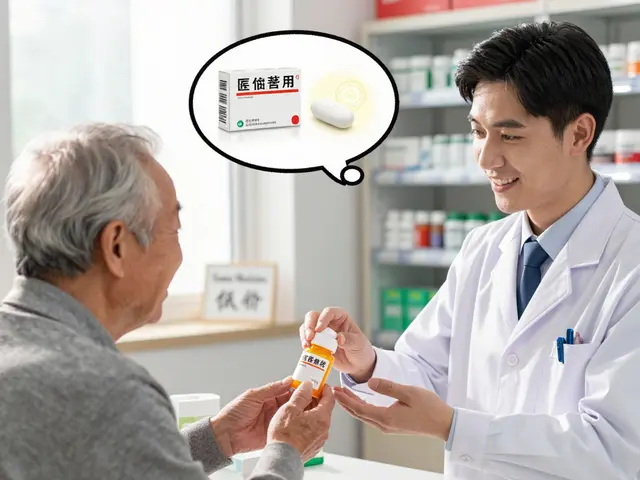
- Ask Your Pharmacist: Don’t hesitate to ask if the generic being offered is rated "AB" in the Orange Book (or its equivalent in your country). They can check the status instantly.
- Monitor Changes: If you switch to a generic, pay attention to how you feel for the first week. Note any changes in symptoms or side effects.
- Stick to One Manufacturer: If possible, try to get your refills from the same pharmacy chain. This reduces the chance of switching between different generic manufacturers, which can vary slightly in inactive ingredients.
- Read the Label: Ensure the active ingredient and dosage match your prescription exactly. Sometimes, different brands package the same drug differently.
- Report Issues: If you suspect a problem, report it to your doctor and consider filing a report with relevant health authorities. This data helps refine future safety assessments.
By staying informed and proactive, you turn a potential source of anxiety into a manageable aspect of your healthcare routine.
Is a generic drug less effective than the brand name?
No, generic drugs are not less effective. To be approved, they must demonstrate bioequivalence, meaning they deliver the same amount of active ingredient to your bloodstream at the same speed as the brand-name drug. Regulatory agencies require strict testing to ensure identical clinical outcomes.
Why do generic pills look different?
Generic manufacturers are allowed to use different inactive ingredients, such as fillers, binders, and dyes, which affect the color, shape, and size of the pill. These components do not influence the drug's effectiveness but help distinguish the product and protect trademark designs of the brand-name company.
Can I refuse a generic substitution?
Yes, in most jurisdictions, you or your prescriber can indicate on the prescription that you prefer the brand-name drug. This is often marked as "Dispense as Written" (DAW). However, this may result in higher out-of-pocket costs depending on your insurance plan.
What are narrow therapeutic index drugs?
These are medications where the difference between a therapeutic dose and a toxic dose is very small. Examples include warfarin, levothyroxine, and digoxin. For these drugs, even minor variations in absorption can impact safety, so stricter bioequivalence standards are applied.
Do biosimilars follow the same rules as generics?
Not exactly. Biosimilars are similar to biologics (complex drugs made from living organisms) rather than simple chemical generics. They undergo a separate regulatory pathway requiring extensive comparative studies. While they aim for equivalence, the term "interchangeability" is used instead of simple therapeutic equivalence, and additional data is often required.
Neil Martin
The reliance on the 80-125% bioequivalence window is frankly insufficient for narrow therapeutic index agents. While the regulatory framework permits this variance, the pharmacokinetic reality dictates that even minor deviations in Cmax or AUC can precipitate significant clinical toxicity or subtherapeutic outcomes. We must acknowledge that the statistical margins applied to standard formulations do not adequately account for inter-patient variability in metabolic enzyme activity, particularly regarding cytochrome P450 isoforms. Consequently, the assumption of automatic interchangeability without rigorous post-marketing surveillance remains a flawed paradigm in modern pharmacotherapy.
Mary Tait
This entire system is a testament to American regulatory superiority and efficiency.
While other nations struggle with bureaucratic inertia, the FDA’s Orange Book provides a clear, concise, and legally binding framework that ensures patient safety without stifling innovation. The distinction between AB-rated products and those requiring caution demonstrates a level of scientific rigor that European agencies often fail to match. It is precisely this commitment to precise standards that allows our healthcare system to function at such a high capacity while maintaining affordability. Any suggestion that these standards are lax ignores the decades of data supporting their efficacy.
Rob Alderman
I find the comparison to automotive fuel rather reductive.
Biology is not a combustion engine; it is a complex, adaptive system influenced by genetics, diet, and concurrent medications. To suggest that swapping chemical inputs yields identical outputs without accounting for the host's unique physiological context is intellectually lazy. The article glosses over the fact that inactive ingredients-excipients-can significantly alter absorption rates in sensitive individuals, a nuance lost in the broad-strokes narrative of 'equivalence'.
Rebecca Makayla Crane
Omg wait, so if I switch my antidepressant generic every time because the pharmacy changes suppliers, am I basically gambling with my serotonin levels?? 🤯 That feels so sketchy. I always thought generics were just cheaper copies but didn't realize the 'inactive' stuff could mess with how fast it hits your brain. Like, does the shape of the pill actually matter? Or is it just the fillers? I need more info before I trust my pharmacist blindly again 😬💊 #HealthAnxiety
Jim Bisesi
Ugh, another article explaining basic pharmacy concepts like we're five years old.
I already know what the Orange Book is. I already know why warfarin is tricky. This whole piece is just padding around common knowledge. Did anyone actually learn anything new here? Seems like filler content to me.
Louis Tarro
I completely agree with the sentiment that patients deserve transparency.
It is heartening to see an emphasis on the human element of medication adherence. When a patient sees a different colored pill, it can trigger genuine anxiety, regardless of the chemical equivalence. Healthcare providers must recognize that the psychological comfort of familiarity plays a crucial role in treatment success. We should strive to maintain consistency where possible, respecting the patient's emotional journey alongside their physical health needs.
Shu Chowdhury
good point about ntis
my mom had issues switching levothyroxine brands
she felt tired all the time until she went back to her original one
maybe the 80-125 range is too wide for some people
or maybe it was placebo/nocebo effect hard to say
Amy B
This is super helpful! 🌟
I never realized that 'therapeutic interchange' (switching drug classes) is riskier than 'generic substitution' (same drug, different brand). That distinction is key! Also, the tip about sticking to one manufacturer is gold. I’ve noticed my meds taste slightly different depending on which chain I go to, which makes me wonder about those excipients mentioned earlier. Does anyone else notice a difference in side effects when switching generic manufacturers for things like allergy meds?
Amanda SF
I must insist upon a correction regarding the tone of this discourse.
While the previous commenter raises valid points regarding NTIs, the general public lacks the sophisticated understanding required to navigate these nuances independently. It is imperative that we do not dismiss the robust nature of the FDA's approval process simply due to anecdotal evidence. The vast majority of patients experience no adverse effects, and to suggest otherwise is to ignore the overwhelming statistical consensus. Furthermore, the economic benefits cannot be overstated; without this system, many would face insurmountable financial barriers to essential care. Let us not allow fear-mongering to overshadow scientific progress.