
When your doctor talks about switching from a brand-name drug to a cheaper version, you might hear the words biosimilar or generic. At first glance, they sound like the same thing-affordable alternatives. But they’re not. Confusing them could mean missing out on savings, or worse, making a choice that doesn’t fit your health needs.
What’s the real difference between biosimilars and generics?
Generics are exact copies of small-molecule drugs. Think of them like a photocopy of a simple sketch. If your brand-name pill is atorvastatin (Lipitor), the generic is chemically identical-same atoms, same structure, same effect. The FDA requires generics to prove they work the same way in your body, down to the last detail. That’s why they’re often 80-85% cheaper than the original.
Biosimilars are different. They’re copies of biologic drugs-large, complex proteins made from living cells, not chemicals. These include drugs like Humira for arthritis, Herceptin for breast cancer, or insulin for diabetes. Because they come from living systems, no two batches are exactly alike. Even small changes in how they’re made-like the type of cell used or how they’re purified-can cause tiny differences. That’s why biosimilars aren’t called “identical.” They’re called “highly similar.” And that’s okay. The FDA says they work just as well, with no meaningful difference in safety or effectiveness.
Why cost savings aren’t the same
Generics save you a lot. If your brand-name drug costs $300 a month, the generic might be $50. That’s a huge drop. Biosimilars? They save less-usually 15-20%. So if your Humira costs $2,000 a month, the biosimilar might be $1,600. It still helps, especially if you’re paying out of pocket or have high insurance deductibles, but it’s not the same level of savings.
Why the gap? Making a generic is like baking a cake from a simple recipe. Making a biosimilar is like cloning a cow. It takes years, specialized labs, and hundreds of millions of dollars. A generic drug might cost $2-3 million to develop. A biosimilar? $100-250 million. That’s why the price drop isn’t as steep.
Which conditions use which type?
Generics cover most everyday medicines: blood pressure pills, cholesterol drugs, thyroid meds, antibiotics, and pain relievers. If you take levothyroxine for hypothyroidism or metformin for diabetes, you’re probably already on a generic.
Biosimilars only exist for biologics-drugs used for serious, chronic conditions. Think autoimmune diseases like rheumatoid arthritis, Crohn’s disease, or psoriasis. Or cancers treated with monoclonal antibodies like trastuzumab or rituximab. There are no generics for these. The molecules are too big and too complex to copy exactly. Biosimilars are the only affordable option.
Can your pharmacist switch you automatically?
With generics, yes-in 49 states, pharmacists can swap your brand-name drug for a generic without asking you or your doctor, unless your doctor specifically says “dispense as written.” It’s built into the system.
For biosimilars, it’s not that simple. Only biosimilars labeled “interchangeable” can be swapped at the pharmacy without extra steps. As of 2025, only a handful of biosimilars have this status-like Semglee (insulin) and Cyltezo (adalimumab). Even then, 28 states require the pharmacist to notify your doctor within 72 hours. Some insurance plans won’t cover the switch unless your doctor approves it first.
That means you might need to have a conversation with your doctor before switching. Don’t assume your pharmacist can just swap it out.
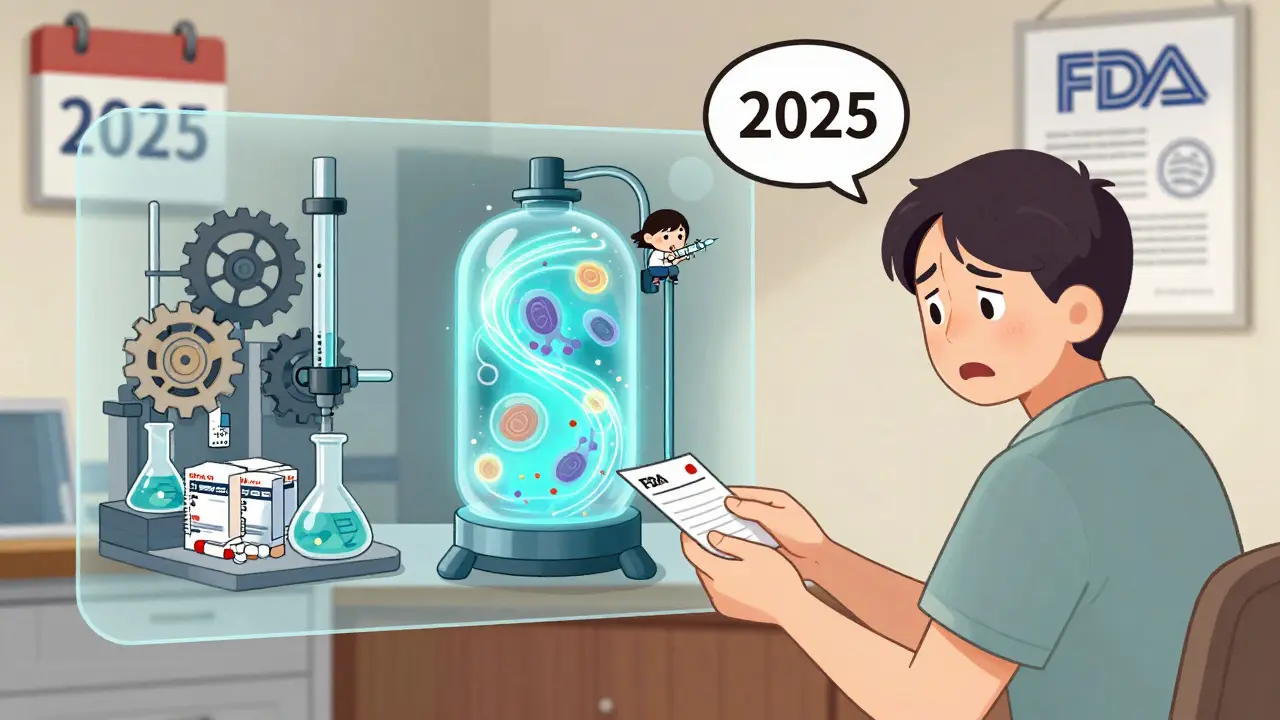
Are they safe? What do the studies say?
There’s a lot of fear around biosimilars. People worry: “What if my body reacts differently? What if it stops working?”
The data says otherwise. A 2022 review of 128 studies involving over 38,000 patients with rheumatoid arthritis found no difference in effectiveness or side effects between the original Humira and its biosimilars. A 2019 JAMA study of 47 trials showed generics for heart disease worked just as well as brand names. The FDA’s own safety database shows biosimilars have nearly identical rates of adverse events as their reference products.
Still, some patients report anxiety. One cancer patient on a forum wrote, “I was scared to switch to the bevacizumab biosimilar-but my tumor markers stayed the same, and my bill dropped from $450 to $75 per infusion.” Another patient with Crohn’s said, “I had panic attacks for weeks after switching. My symptoms didn’t change, but I still felt uneasy.” That’s real. Emotions matter. Education helps.
What should you do if your doctor suggests a switch?
Ask these questions:
- Is this a generic or a biosimilar?
- Why is this switch being recommended?
- Is it FDA-approved as interchangeable?
- Will my insurance cover it without extra paperwork?
- What happens if I have a reaction?
Don’t be afraid to ask for written materials. Many manufacturers-like Amgen and Sandoz-offer free educational resources, nurse hotlines, and even co-pay assistance programs. You’re not alone in this.
What about long-term use?
Generics have been around since the 1980s. We know how they behave over decades. Biosimilars? The first ones were approved in 2015. That’s less than 10 years of real-world data. Most studies show stability over 2-3 years, but long-term effects beyond 5-10 years are still being tracked.
That doesn’t mean they’re unsafe. It just means we’re still learning. If you’re on a biosimilar for a chronic condition like multiple sclerosis or lupus, your doctor may want to monitor you a bit more closely in the first year-especially if you’ve had bad reactions to biologics in the past.
How do you know which one you’re getting?
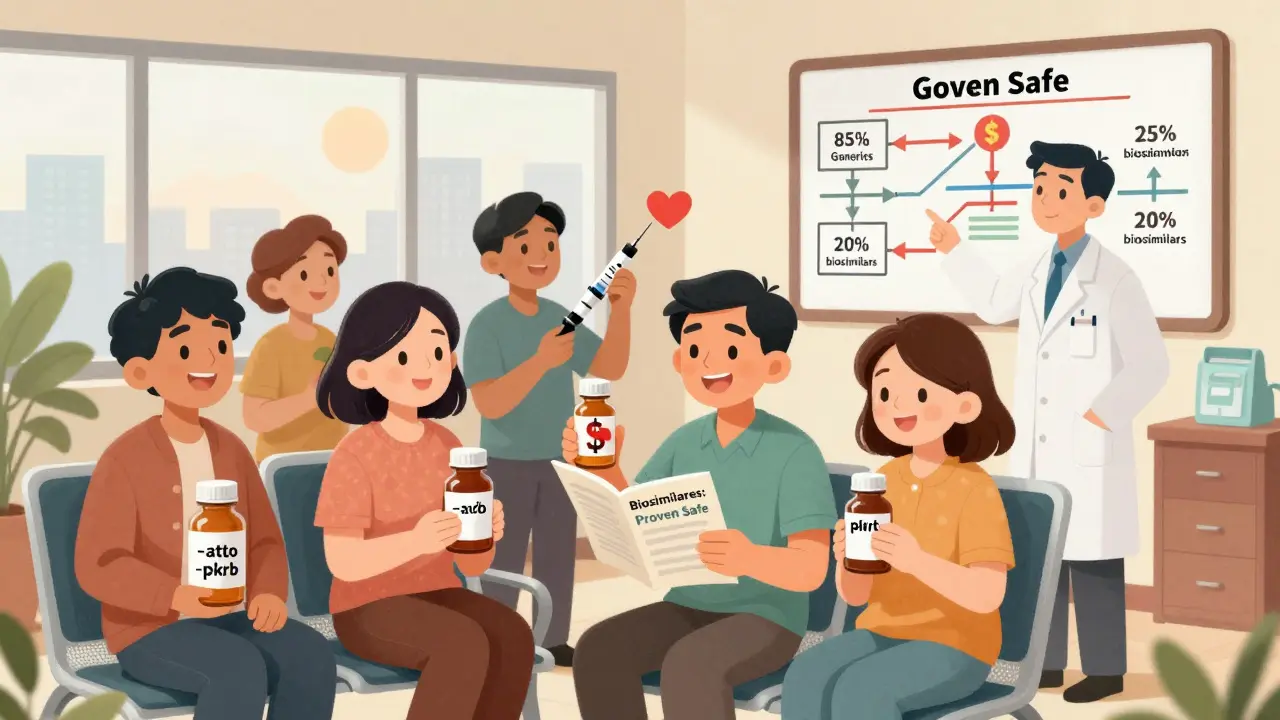
Check your prescription label. Generics will list the generic name-like “metformin” or “amlodipine.” Biosimilars often have a four-letter suffix added to the name, like “adalimumab-atto” (for Amjevita) or “trastuzumab-pkrb” (for Ontruzant). That’s required by the FDA to track which product you received in case of side effects.
Pharmacies are required to document what you received. If you’re unsure, ask your pharmacist to show you the box or bottle. You have the right to know exactly what’s in your medicine.
What’s changing in 2025?
The Inflation Reduction Act of 2022 removed financial penalties for doctors who prescribe biosimilars in Medicare Part B. That’s helping more oncologists and rheumatologists switch patients. In 2023, 83% of filgrastim prescriptions in Medicare were biosimilars. That number is climbing.
More biosimilars are coming. The first interchangeable biosimilar for ustekinumab (Stelara) is expected in late 2025. That could save patients over $5 billion a year in the U.S. alone. Meanwhile, generic versions of older biologics like insulin glargine are becoming more common, making diabetes care more affordable.
But barriers remain. Patent lawsuits delay biosimilar entry by an average of 4.7 years. And many doctors still aren’t confident prescribing them. A 2023 AMA survey found only 58% of non-specialists felt very confident with biosimilars-compared to 89% for generics.
Final thought: It’s not about cheap. It’s about right.
Choosing between a biosimilar and a generic isn’t just about saving money. It’s about matching the right tool to the right job. Generics are perfect for simple, well-understood drugs. Biosimilars are the only affordable path to life-changing biologics.
If your doctor suggests a switch, don’t panic. Ask questions. Get clear answers. And remember: millions of people have switched to biosimilars without issue. The science is solid. The savings are real. And with the right information, you can make a choice that protects both your health and your wallet.
Are biosimilars as safe as brand-name biologics?
Yes. The FDA requires biosimilars to undergo rigorous testing-including analytical studies, animal trials, and clinical trials-to prove they have no clinically meaningful differences in safety, purity, or potency compared to the original biologic. Real-world data from over 38,000 patients shows comparable side effect rates and effectiveness. The FDA’s adverse event database shows biosimilars have similar safety profiles to their reference products.
Can I switch from a brand-name drug to a biosimilar on my own?
No. Unlike generics, biosimilars can’t be automatically substituted unless they’re labeled “interchangeable” by the FDA-and even then, state laws often require your doctor to be notified. Always talk to your prescriber before switching. Your insurance plan may also require prior authorization. Never switch without medical guidance.
Why are biosimilars more expensive than generics?
Biosimilars are made from living cells, not chemicals. Producing them requires complex processes like cell culture, purification, and strict temperature controls. Development costs average $100-250 million and take 8-10 years. Generics are chemically synthesized, cost $2-3 million to develop, and take 3-4 years. That’s why biosimilars save 15-20%, while generics save 80-85%.
Do biosimilars work the same for every condition?
They’re approved for the same uses as the reference biologic. For example, an adalimumab biosimilar works the same for rheumatoid arthritis, Crohn’s disease, and psoriasis as the original Humira. But they’re not interchangeable with drugs for different conditions. A biosimilar for insulin won’t work for arthritis. Always confirm the approved uses with your doctor or pharmacist.
How do I know if I’m getting a biosimilar or a generic?
Check the prescription label. Generics use the generic drug name (e.g., “atorvastatin”). Biosimilars have a four-letter suffix added to the brand name (e.g., “adalimumab-atto”). Your pharmacist is required to document what you received. If you’re unsure, ask to see the packaging or call your pharmacy for clarification.
Are there any risks with switching from a brand-name biologic to a biosimilar?
For most patients, no. Clinical trials and real-world data show no increased risk of side effects or loss of effectiveness. However, some patients report anxiety or fear of change, which can affect adherence. In rare cases, immunogenicity (the body creating antibodies against the drug) has been studied, but no consistent pattern has emerged. If you have a history of severe reactions to biologics, talk to your doctor about monitoring after the switch.
Can I switch back to the brand-name drug if I don’t feel well on a biosimilar?
Yes. If you experience new or worsening symptoms after switching, contact your doctor immediately. Most insurance plans will cover a switch back to the original biologic if medically necessary. Keep track of any changes in symptoms, fatigue, or injection-site reactions. Documenting these helps your doctor make the best decision.

anthony epps
I never knew generics and biosimilars were so different. I thought they were just cheaper versions of the same thing. Now I get why my insulin cost still sucks even after switching.
Hadi Santoso
yo i just switched to a biosimilar for my adalimumab and honestly? my joints feel the same but my bank account does too. the four-letter suffix thing tripped me up at first tho - thought my pharmacist gave me the wrong stuff. turned out it was just adalimumab-atto. fyi, if you're scared like i was, talk to your nurse. they got you.
Aditya Kumar
whatever.
Billy Poling
It is imperative to note that the regulatory framework governing biosimilar approval, while ostensibly robust, still lacks the longitudinal, real-world pharmacovigilance infrastructure that has been painstakingly developed over decades for small-molecule generics. The absence of a comprehensive, nationwide adverse event tracking system specifically tailored to biosimilars introduces a nontrivial risk of delayed detection of immunogenicity events, particularly in polypharmacy populations with comorbid autoimmune conditions. Furthermore, the current state of provider education remains woefully inadequate, as evidenced by the 2023 AMA survey indicating that only 58% of non-specialists feel 'very confident' prescribing biosimilars - a statistically significant deficit compared to the 89% confidence level for generics. Until systemic reforms are enacted - including mandatory continuing medical education modules and standardized patient decision aids - the potential for suboptimal therapeutic outcomes remains unacceptably high.
Randolph Rickman
Big win for patients here. Biosimilars are not perfect, but they’re the best shot we’ve got at making life-saving drugs affordable. I’ve seen people skip doses because they can’t afford Humira - now, with biosimilars, they can actually stick to their treatment. Don’t let fear stop you. Talk to your doc, ask questions, and if you’re still nervous, start with a small dose or get a second opinion. You’re not alone. Millions are doing this and doing fine.
Tiffany Machelski
i read this whole thing and still dont know if im on a biosimilar or not. my label says 'adalimumab' but the bottle has a weird suffix. maybe i should call my pharmacy again...
Souhardya Paul
My cousin switched from Enbrel to a biosimilar for psoriasis and was terrified - cried for a week. But after 3 months, her skin cleared up just as good. She still checks the label every time. That’s smart. Knowledge is power. If you’re unsure, ask for the package insert. Most companies give them out free. Also, if your insurance denies it, call them. Sometimes they just need a letter from your doc saying ‘this is medically necessary.’
Josias Ariel Mahlangu
People these days trade safety for savings. I’ve seen too many patients get worse after switching. The FDA says it’s fine, but they’re not living with the side effects. If it ain’t broke, don’t fix it. Brand-name drugs exist for a reason.
Andrew Sychev
I switched to a biosimilar and my body went full rebellion. Hives. Swollen throat. Panic attack in the parking lot. My doctor said 'it's fine, just coincidence.' COINCIDENCE? I was fine on Humira for 5 years. Now I'm on disability. Thanks, capitalism. Thanks, FDA. Thanks, big pharma for letting this happen. I hope you're proud.
Dave Alponvyr
So you're telling me the only reason biosimilars cost less is because they're harder to make? That’s like saying a Tesla is cheaper than a bike because it’s harder to build. Nope. It’s still a ripoff.