
Imagine your child’s asthma is perfectly under control. They breathe easily, sleep through the night, and play without wheezing. Then, a routine pharmacy refill results in a different colored pill or a slightly altered inhaler canister. It looks like the same medicine, but for a growing body, that small change can disrupt delicate chemical balances. This is the reality of pediatric medication switches, where brand-name drugs are replaced by generic alternatives to save money. While this practice saves billions in healthcare costs, it poses unique risks for children that are often overlooked in standard regulatory frameworks.
The core issue isn't that generics are bad. In fact, they account for roughly 90% of all prescriptions filled in the United States. The problem lies in how we define "equivalent" for kids versus adults. When a doctor prescribes a generic for a child, they are relying on standards designed primarily for adult physiology. But a three-month-old infant metabolizes drugs differently than a thirty-year-old. A teenager's liver processes chemicals at a different rate than a toddler's. These developmental differences mean that a switch which is safe for an adult might not be as predictable for a child, leading to potential gaps in therapeutic effectiveness or unexpected side effects.
Why Pediatric Physiology Makes Switching Complex
To understand why switching medications for children requires extra caution, you have to look at how their bodies handle drugs. Adults have fully matured metabolic pathways. Children do not. Their livers and kidneys are still developing, meaning the enzymes that break down medication work at varying speeds depending on age. For example, proton pump inhibitors (PPIs) like omeprazole are cleared mostly by the CYP2C19 enzyme. This enzyme isn't fully mature until around three months of age. If you switch a young infant from a specific brand formulation to a generic, the absorption rate might change just enough to alter the drug's impact, even if the active ingredient is identical.
This concept is central to the Biopharmaceutics Classification System (BCS), which the FDA uses to approve generic drugs. The BCS was specifically designed for adults. It assumes that certain drugs will behave predictably across a population. However, pediatric populations differ significantly in both physiologic and pharmacokinetic characteristics. When these adult-based assumptions are applied to children, we run into what experts call "therapeutic uncertainty." It’s not that the generic is necessarily inferior; it’s that we lack the specific data to guarantee it works exactly the same way in a smaller, developing body.
The Bioequivalence Gap: What the Numbers Mean
The FDA established bioequivalence standards for generic drugs in 1984 through the Hatch-Waxman Act. The rule is straightforward: a generic must contain the same active ingredient as the brand-name drug and demonstrate 80-125% bioequivalence in pharmacokinetic parameters. For most adult medications, this range is considered safe. But for children, especially those taking drugs with narrow therapeutic indices (NTIs), this margin can be risky.
Narrow therapeutic index drugs have a very small difference between a dose that works and a dose that causes harm. Examples include tacrolimus (used after heart transplants), phenytoin (for seizures), and warfarin (a blood thinner). Research published in Pediatric Transplantation found that pediatric heart transplant recipients experienced, on average, a 14% lower blood trough concentration after switching to generic tacrolimus compared to the brand-name version. In an adult, a 14% drop might be manageable. In a child recovering from a major organ transplant, that drop could increase the risk of rejection. This isn't a theoretical fear; it's a documented clinical outcome that highlights the gap between adult standards and pediatric needs.

Real-World Impact: Asthma and Adherence Challenges
Asthma affects approximately 6.2 million US children, making it one of the most common chronic conditions in pediatrics. For these families, consistency is key. PolicyLab research has shown that children with asthma are particularly vulnerable to negative health impacts from formulary switches. Why? Because adherence drops significantly when the medication changes. Studies indicate that adherence rates can fall by 15-20% following a switch, largely due to caregiver confusion.
Caregivers aren't confused because they don't want to take the cheaper option. They are confused because the physical appearance of the medication changes. A blue pill becomes white. An inhaler canister changes shape. These seemingly small details matter immensely in pediatric care. If a parent thinks the new medication is a different drug, they might hesitate to administer it, double-dose it out of worry, or stop it altogether. Furthermore, inhaler devices require precise technique. Errors in using a new device can reduce drug delivery by 50-80%. If the generic comes in a different type of inhaler, the child needs retraining. Without proper education, the "same" medicine doesn't deliver the same effect.
Regulatory Variations and State-Level Differences
If you think medication rules are consistent across the country, you’d be wrong. State regulations vary dramatically in how they handle generic substitution for children. A 2020 study in JAMA Internal Medicine examined all 50 states and Washington, DC, finding substantial variation in generic substitution rules. In 19 states, pharmacists are required to perform generic substitution automatically. In 7 states and DC, patient consent is required before a switch can happen. In 31 states and DC, patients must be notified independently of the drug's packaging.
This patchwork of laws creates a confusing landscape for families moving between states or traveling. Research by Shrank et al. demonstrated that states requiring patient consent had 25% lower generic substitution rates. This suggests that giving families a voice in the decision process leads to more stable medication regimens. For parents, this means you need to know your local laws. Are you in a state where the pharmacist can swap your child's epilepsy medication without asking you? In some places, yes. In others, no. Understanding your jurisdiction is a critical part of managing your child's health.
Practical Steps for Parents and Caregivers
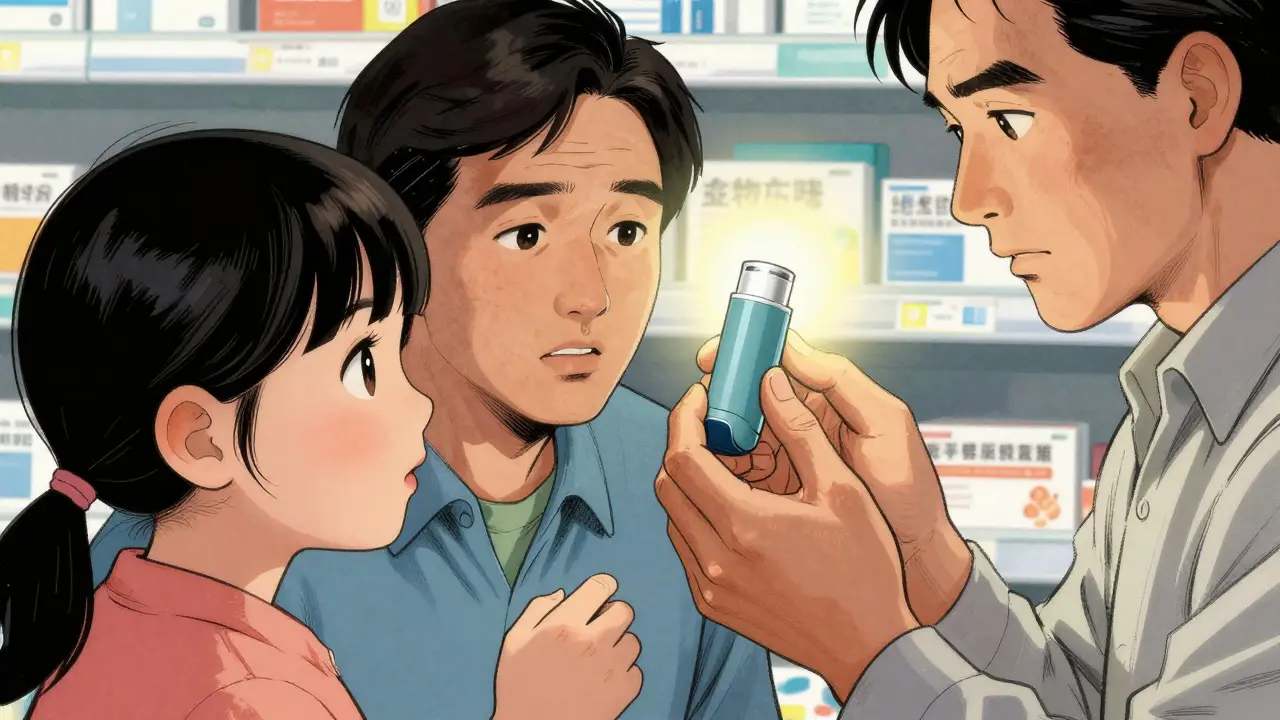
So, how do you protect your child during these inevitable switches? First, treat every prescription refill as a verification point. Don't assume the bottle is the same just because the label says so. Check the manufacturer name and the physical appearance of the pills or liquid. If something looks different, ask the pharmacist directly. Second, keep a record of which brand or generic your child responds best to. If you notice increased symptoms, mood changes, or side effects after a refill, note the date and the specific product name. This data is invaluable when speaking to your pediatrician.
Third, communicate with your healthcare team about the importance of stability. The American Academy of Pediatrics (AAP) has highlighted that switching from brand to generic can present a lost opportunity for pediatric research. By staying on a consistent regimen, you contribute to clearer long-term data. Finally, ensure that any new device, like an inhaler or auto-injector, comes with a demonstration. Ask the pharmacist to show you how to use the new version. Don't rely on memory from the previous device. Technique errors are the silent killer of effective pediatric treatment.
| Factor | Adult Population | Pediatric Population |
|---|---|---|
| Bioequivalence Standard | 80-125% range generally accepted | Same range, but higher risk for NTI drugs |
| Metabolic Maturity | Fully developed enzymes | Developing enzymes (e.g., CYP2C19 immature <3 months) |
| Adherence Impact | Moderate impact from visual changes | High impact; 15-20% drop in adherence possible |
| Device Training | Usually self-managed | Critical; technique errors reduce efficacy by up to 80% |
| Regulatory Consent | Varies by state (consent/notification) | Often grouped with adult rules despite higher risk |
Future Directions and Current Initiatives
The tide is slowly turning. The FDA’s 2022 Pediatric Formulation Initiative targets improving the availability of appropriate formulations for children. Meanwhile, the 2023 PREEMIE Reauthorization Act includes provisions for pediatric medication development. PolicyLab recommends seamless communication among prescribers, pharmacists, insurers, and families to minimize disruption. The AAP is also working on updated clinical practice guidelines for generic prescribing in pediatrics. While only 12% of generic drug approvals between 2010 and 2020 included pediatric-specific bioequivalence studies, the pressure for change is growing. California’s 2022 legislation requiring pediatric-specific formulary review committees for Medicaid plans is a step in the right direction. As evidence accumulates linking switching to higher hospitalization rates-up to 18% higher for children with chronic conditions-the case for stricter pediatric standards becomes undeniable.
Are generic medications always safe for children?
Generally, yes, but with caveats. For most common conditions, generics are safe. However, for drugs with narrow therapeutic indices (like anti-seizure meds or transplant drugs) or for infants under 3 months, the risk of variability is higher. Always consult your pediatrician if your child is on a complex medication regimen.
What should I do if my child’s pill color changes after a refill?
Don’t panic, but do verify. Ask the pharmacist to confirm the manufacturer and batch number. If your child is sensitive to inactive ingredients, check the label for excipients. If you notice any change in behavior or symptoms, contact your doctor immediately and note the date of the switch.
Do I need to pay more to stay on the brand-name drug?
It depends on your insurance plan. Many plans now require prior authorization for brand-name drugs if a generic is available. You may need to request an exception from your insurer, citing the history of adverse reactions or instability with the generic. Your doctor can help write this justification.
How does state law affect my child’s medication switch?
State laws dictate whether a pharmacist can substitute a generic without your explicit consent. In some states, substitution is mandatory; in others, you must agree. Knowing your state's rules helps you anticipate when a switch might happen and prepare to discuss it with your provider.
What is a narrow therapeutic index (NTI) drug?
An NTI drug is one where the difference between a therapeutic dose and a toxic dose is very small. Examples include warfarin, phenytoin, and tacrolimus. Small changes in absorption or metabolism can lead to significant clinical consequences, making these drugs high-risk for generic switching in sensitive populations like children.
Write a comment