
Switching from a brand-name medication to a generic version isn’t just about saving money-it’s a common, often necessary step for people managing chronic conditions long-term. If you’re on daily pills for high blood pressure, diabetes, thyroid issues, or depression, chances are you’ve been offered a generic alternative. But what happens when you make the switch? Do you feel different? Is it safe? And why do some people swear their brand-name drug works better?
What Are Maintenance Medications?
Maintenance medications are the drugs you take every day-or most days-to keep a long-term condition under control. These aren’t for quick fixes. They’re for life. Think of them like a daily tune-up for your body. Common examples include atorvastatin for cholesterol, metformin for diabetes, levothyroxine for thyroid function, lisinopril for blood pressure, and sertraline for depression.
The U.S. Food and Drug Administration (FDA) requires these drugs to meet strict standards. For generics, that means they must deliver the same active ingredient, in the same strength, at the same rate into your bloodstream as the brand-name version. This isn’t guesswork-it’s science. The FDA’s bioequivalence rules require generic drugs to match brand-name drugs within 80-125% of the blood concentration levels. That’s a tight window. Most people won’t notice any difference.
Why Generics Cost So Much Less
Brand-name drugs cost more because the company that created them spent years and millions developing, testing, and marketing them. Once the patent expires, other companies can make the same drug without those upfront costs. They don’t need to repeat clinical trials. They just need to prove their version behaves the same way in your body.
The result? A 30-day supply of brand-name Lipitor (atorvastatin) used to cost over $378. Now, the generic version costs less than $1 at many pharmacies. For insulin, the brand-name Lantus runs around $345, while the authorized generic version is under $100. That’s not a small difference-it’s the difference between being able to afford your medication or skipping doses.
Studies show people who take generics stick to their treatment plans 12-15% more often than those on brand-name drugs. Why? Because they can actually afford them. And that leads to fewer hospital visits. One study found patients on generics had 23% fewer emergency visits for complications like heart attacks or diabetic ketoacidosis.
When Generics Might Cause Problems
For most people, switching to a generic works perfectly. But there are exceptions. Some drugs have what’s called a narrow therapeutic index-meaning the difference between a helpful dose and a harmful one is very small. Even tiny changes in how the drug is absorbed can throw things off.
Drugs like levothyroxine (for thyroid), warfarin (a blood thinner), and phenytoin (for seizures) fall into this category. For these, switching between different generic manufacturers-even if they’re both FDA-approved-can sometimes cause small fluctuations in blood levels. One study found 5-8% of patients on levothyroxine saw changes in their TSH levels after switching manufacturers. That’s not a lot, but for someone already feeling fine, even a slight imbalance can mean fatigue, weight gain, or brain fog.
Some patients report feeling worse after switching, especially with thyroid or antidepressant meds. Reddit threads and patient surveys show about 8-10% of users say they noticed a change after switching. But here’s the key: in most cases, doctors and pharmacists can’t find a biological reason for it. The active ingredient is identical. The issue often comes down to inactive ingredients-fillers, dyes, or coatings that don’t affect how the drug works, but might irritate someone with sensitivities. For example, one person might react to a red dye in a generic version of sertraline, while another has no problem with it.
What to Do When You Switch
If your pharmacy switches your prescription from brand to generic, don’t panic. But do pay attention. Here’s what to do:
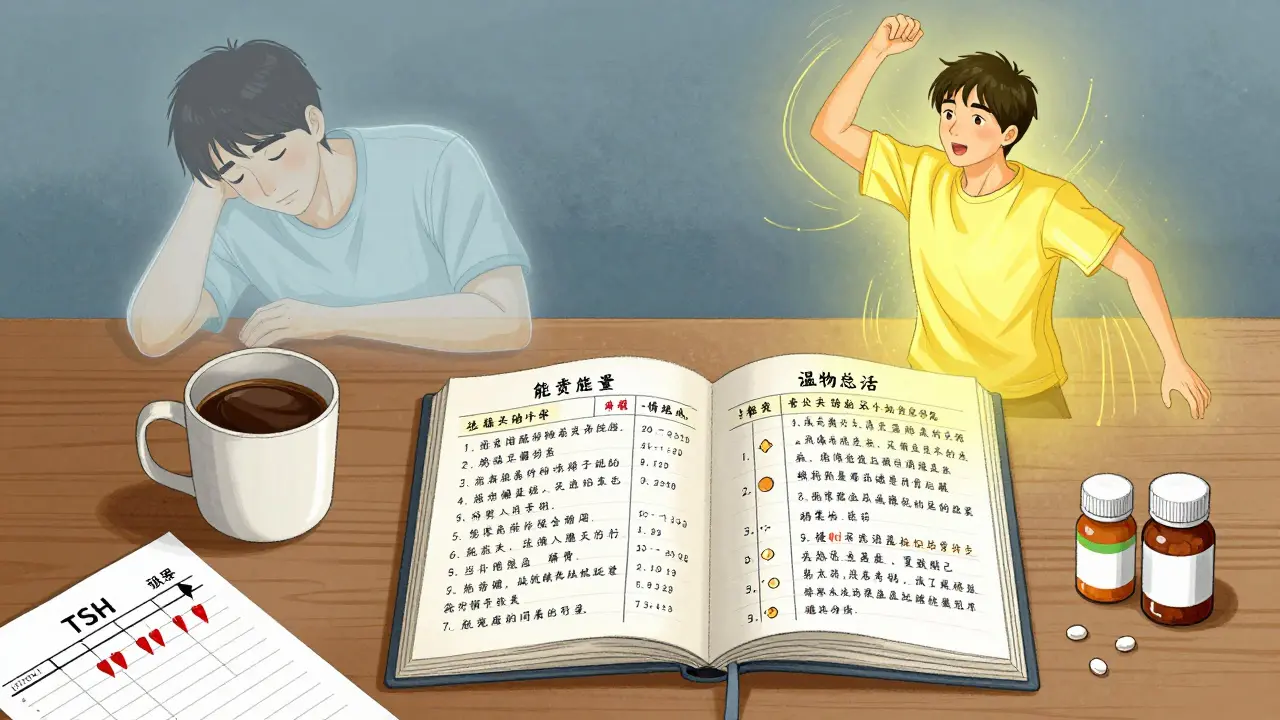
- Track your symptoms for the first 30 days. Keep a simple log: energy levels, mood, sleep, any new side effects like headaches or stomach upset. You don’t need an app-just a notebook or phone note.
- Don’t assume it’s the drug. Chronic conditions change over time. Your thyroid might naturally slow down. Your blood pressure might rise due to stress or weight gain. A change in how you feel doesn’t automatically mean the generic isn’t working.
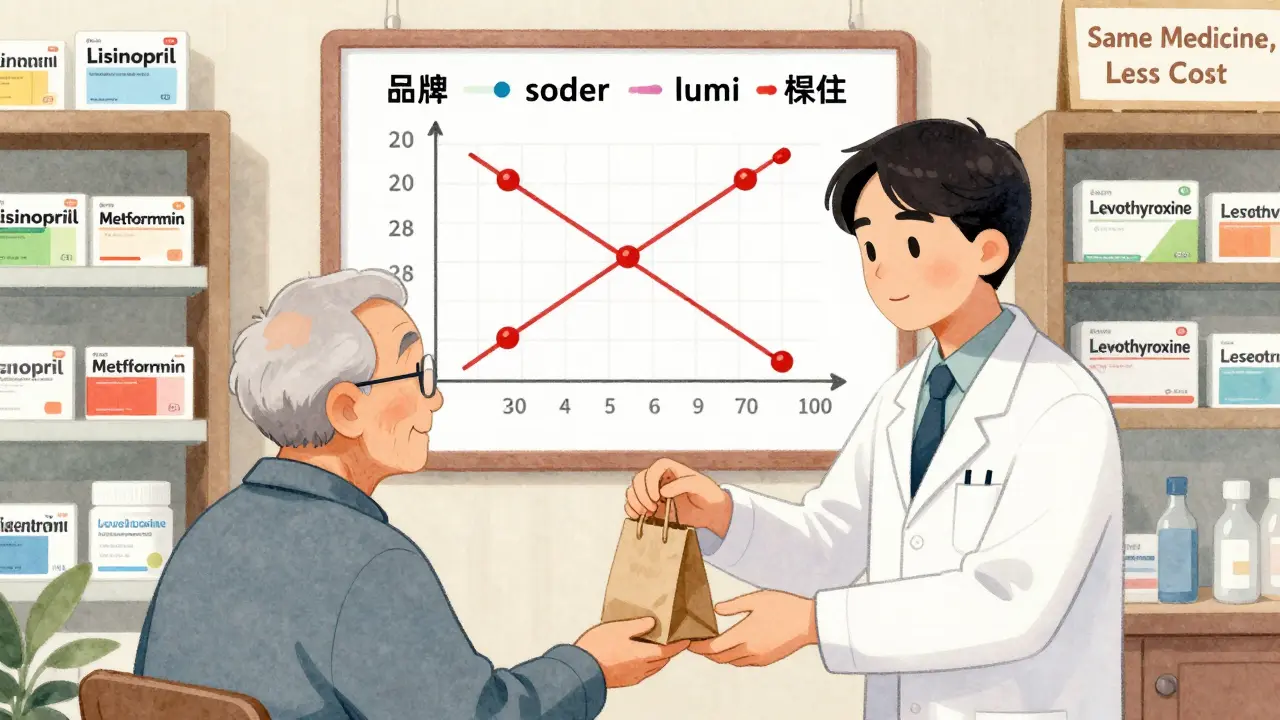
- Ask your pharmacist. They know which generic manufacturer your prescription came from. If you feel off, ask if you can stay on the same brand of generic. Some pharmacies will let you request a specific manufacturer to avoid switching back and forth.
- Give it time. It can take 4-6 weeks for your body to fully adjust. Many people who thought the generic didn’t work ended up feeling fine after a month.
- Don’t stop taking it. If you’re worried, call your doctor. Don’t quit cold turkey. That’s riskier than any generic switch.
Insurance, Prior Authorization, and What You Can Request
Your insurance plan likely pushes generics because they save money-for them and for you. Most plans require you to try generics first. If you want to stick with the brand, you’ll need a prior authorization from your doctor. But approval rates are low-only about 14% get approved for maintenance meds unless there’s clear proof the generic didn’t work.
If you’ve tried two different generics and still feel worse, your doctor can submit documentation to your insurer. They’ll need lab results (like TSH levels for thyroid meds) showing instability after switching. Some states, like those with Medicaid programs, already have rules requiring pharmacies to stick with the same generic manufacturer unless you or your doctor asks for a change.
For complex meds like inhalers or injectables, talk to a specialist. An asthma patient switching from brand-name Advair to a generic might need a respiratory therapist to check their inhaler technique. Sometimes, it’s not the drug-it’s how it’s delivered.
Real Stories, Real Results
A 68-year-old woman in Ohio switched from brand-name Synthroid to generic levothyroxine and felt sluggish for two weeks. She checked her TSH-slightly elevated. Her doctor adjusted her dose by 12.5 mcg. Within a month, she felt better than before. She now saves $280 a year.
A 42-year-old man with type 2 diabetes switched from brand-name Lantus to the generic insulin glargine. He saw no change in his blood sugar, but his out-of-pocket cost dropped from $345 to $98. He started checking his levels more often because he could afford the test strips.
On the other hand, a woman with multiple sclerosis reported increased fatigue and muscle spasms after switching from a brand-name disease-modifying drug to a generic. Her neurologist reviewed her MRI scans and found no new lesions. The timing matched a recent increase in stress and lack of sleep. Her symptoms improved after rest and hydration-not by switching back.
These stories aren’t outliers. They’re the norm. Most people do fine. A few need tweaks. Very few need to go back to brand.
What’s Changing in 2026
The FDA approved 79 new generic maintenance drugs in the first half of 2023 alone-including the first generics for Jardiance and Entresto, two major drugs for diabetes and heart failure. More are coming in 2026 as patents expire for drugs like Eliquis (apixaban), which could cut costs by over 90%.
The Inflation Reduction Act now caps insulin costs at $35 per month for Medicare patients. That’s making generics even more attractive. And the FDA’s new GDUFA III rules mean stricter oversight for complex generics like inhalers and patches-so quality is improving, not getting worse.
Still, supply chain issues remain. A few years ago, a shortage of a key ingredient caused delays for generic metformin. That’s why it’s smart to keep a 30-day supply on hand and know your pharmacy’s backup options.
Final Thoughts: You’re Not Alone
Switching to generic maintenance medications is one of the smartest health decisions you can make-if you do it right. It’s not about distrust. It’s about understanding how your body responds. Most people save hundreds, even thousands, a year without losing control of their condition. A small number need minor adjustments. Very few need to go back.
If you’re nervous, talk to your pharmacist. Ask them to explain the difference between the brand and the generic. Ask if you can stick with the same manufacturer. Keep track of how you feel. And remember: the goal isn’t to find the perfect pill. It’s to stay healthy, affordably, for the long haul.
Are generic maintenance medications as effective as brand-name ones?
Yes, for the vast majority of people. The FDA requires generics to deliver the same active ingredient at the same rate and strength as the brand-name version. Studies show they work just as well in controlling chronic conditions like high blood pressure, diabetes, and high cholesterol. The only differences are in inactive ingredients-fillers, dyes, or coatings-which rarely affect how the drug works.
Why do some people feel worse after switching to a generic?
In most cases, it’s not the drug itself. For drugs with a narrow therapeutic index-like levothyroxine or warfarin-small changes in absorption can cause temporary imbalances. Sometimes, it’s a reaction to a new filler or dye in the generic version. Other times, it’s coincidence: your condition naturally fluctuates, or stress, diet, or sleep changed around the same time. Tracking symptoms for 4-6 weeks usually clarifies whether the generic is the issue.
Can I ask my pharmacy to always give me the same generic manufacturer?
Yes. While pharmacies often switch between manufacturers to get the best price, you can request to stay on the same one. Many pharmacies will honor this, especially if you’ve had a bad reaction before. Ask your pharmacist to note your preference in your profile. Some states, including those with Medicaid programs, already require this by law.
What if my insurance won’t cover the brand-name drug?
Most insurance plans require you to try generics first. If you believe the brand is necessary, your doctor can file a prior authorization request with evidence-like lab results showing instability after switching. Approval rates are low (around 14%), but they’re higher if you’ve tried at least two generics and still had issues. Don’t give up if it’s denied the first time.
Are there any chronic conditions where generics are not recommended?
Generics are approved for nearly all chronic conditions. But for drugs with a narrow therapeutic index-like levothyroxine, warfarin, and phenytoin-some doctors prefer patients stay on the same version (brand or generic) to avoid small variations in absorption. This doesn’t mean generics aren’t safe-it means consistency matters more. If you’re stable on a brand, talk to your doctor about staying on it.
How long does it take to adjust to a generic medication?
Most people adjust within 2-4 weeks. For thyroid or psychiatric meds, it can take up to 6-8 weeks for your body to fully stabilize. During that time, monitor your symptoms. If you feel worse after a month, talk to your doctor. But don’t assume the drug is the problem right away-your body may just be adapting.

jay patel
so i switched from synthroid to generic last year and honestly? i felt like a zombie for two weeks. like my brain was wrapped in cotton wool. i thought it was stress or my cat dying or whatever. turns out? the generic had a different filler. my pharmacist said they switched manufacturers and i was lucky i caught it. now i request the same brand every time. saves me $280 a year but my sanity? priceless. also, why do pharmacies even switch unless we ask? they dont care if we feel like a ghost.
Ansley Mayson
the FDA says its the same so its the same. if you feel different its your head. stop blaming the pill. america has better meds than your third world generics. get over it.
phara don
hmm interesting. so if you switch generic manufacturers and your TSH goes wonky, is that a bioequivalence failure or just individual variation? i’m curious about the pharmacokinetic variance thresholds. also, does anyone have data on the exact excipient differences between brands? 😊
Dan Pearson
oh wow so the FDA says its safe but people are still crying? what a surprise. next thing you know someone will say their ibuprofen made them cry because the tablet is shaped differently. i swear if you dont like generics go live in canada where they charge $3 for insulin. also my cousin took generic metformin for 10 years and now runs marathons. you people need to stop being dramatic and start being grateful.
Eli Kiseop
i switched to generic sertraline and felt like my emotions got turned down to 50% for a month. i thought i was depressed again but my doc said my dose was fine. turned out the new generic had a dye i reacted to. now i only take the one with the blue pill. weird right? also my pharmacy charges extra if i ask for the same maker. why is that a thing
larry keenan
the bioequivalence criteria established by the FDA for narrow therapeutic index drugs remain a subject of ongoing pharmacovigilance inquiry. while the 80–125% confidence interval is statistically robust, interindividual variability in absorption kinetics may yield clinically significant deviations in subpopulations. it is therefore prudent to maintain therapeutic consistency, particularly in geriatric and polypharmacy cohorts.
Nick Flake
we are all just trying to survive on a planet that turns medicine into a lottery. 🤍 some of us get the lucky generic that lets us breathe. others get the one that makes us feel like we’re slowly dissolving. but here’s the thing - we’re not broken. we’re just trying to stay alive while corporations count pennies. i’m not mad. i’m just… tired. and i see you. you’re not alone. 🌱
Chinmoy Kumar
bro i switched to generic levothyroxine and felt like i got hit by a truck for 3 weeks. i was so tired. then i found out my pharmacy switched from teva to sandoz. i asked them to stick with teva and boom. back to normal. also saved like 300 bucks. so yeah its not always the drug its the filler. and yeah i have typos im from india and typing on my phone at 2am
Brett MacDonald
if you believe in science then you believe in generics. if you dont believe in science then why are you even reading this. also the word is pharmacokinetics not pharma whatnow. just saying
Sandeep Kumar
indians know generics are the real deal. we have been using them for decades. you americans think your brand name pills are magic because you pay 10x for them. its not the pill its your ego. also my uncle takes generic warfarin and still lives to fight. you people need to chill
Bridget Molokomme
so you’re telling me my brain fog after switching to generic sertraline is because of the dye? not the actual drug? wow. that’s wild. like i’m allergic to the color blue now? 🤡
Brittany Marioni
Thank you for this thoughtful, well-researched, and compassionate article. I really appreciate the emphasis on patient autonomy, the importance of tracking symptoms, and the reminder that small changes in inactive ingredients can have real-world effects. We need more voices like yours in this space. 💜
Monica Slypig
so you admit that some people feel worse after switching but you still say its all in their head? what a typical american response. i had a cousin who went into seizures after switching generic phenytoin. they blamed her stress. she died. your science is not perfect. your system is broken. and you dont care
Becky M.
my mom switched to generic insulin and now she can afford to test her sugar twice a day instead of once. she’s been stable for a year. i know people say they feel different but sometimes its just life getting harder. and the generic? it saved her life. so stop being so dramatic. also i have typos im typing on my phone while holding my baby
Hannah Gliane
you people are so dramatic. if you feel worse after switching, you’re just weak. i’ve been on generics for 20 years and i’m still alive. also your doctor probably just wants to save money. and if you can’t afford your meds? get a better job. or move to a country that doesn’t have free healthcare. 🤷♀️