
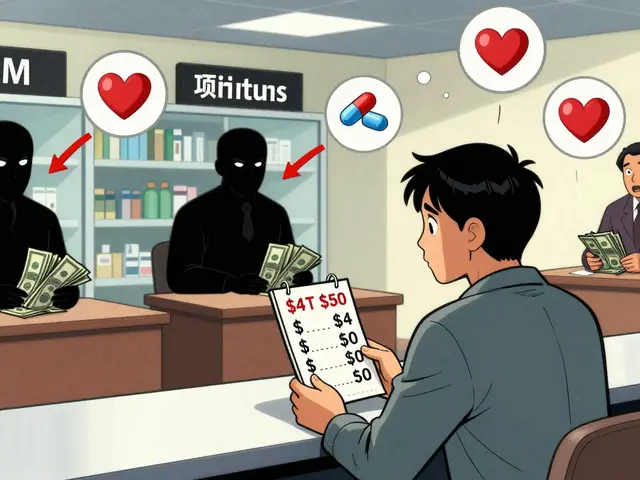
When you fill a prescription for a generic drug, you expect it to be cheap. But in the U.S., the price can jump from $4 to $50 overnight-sometimes even more. Why? Because generic drug pricing isn’t controlled like it is in most other countries. Instead, it’s a patchwork of rules, market forces, and hidden middlemen that leave patients guessing what they’ll pay at the pharmacy counter.
How Generic Drugs Are Priced in the U.S.
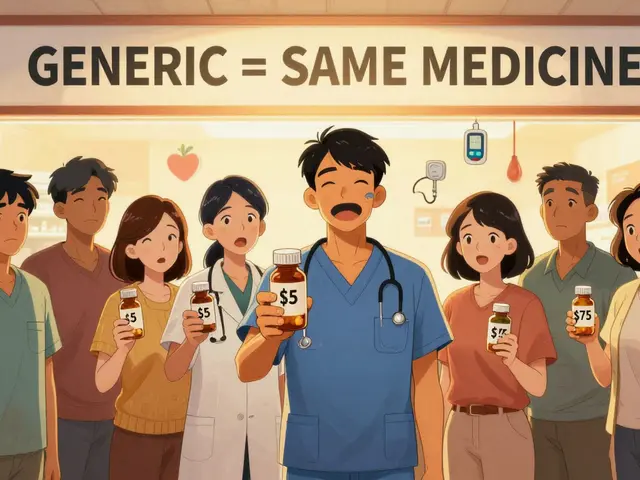
Unlike brand-name drugs, which are protected by patents and can cost hundreds per month, generic drugs are copies of expired medications. Once a patent expires, any qualified manufacturer can make the same drug. Theoretically, that should drive prices down. And it does-on average, generics cost 80-85% less than their brand-name equivalents. But that’s not the whole story.
The U.S. doesn’t set a maximum price for generics. Instead, it relies on competition. If five companies make the same generic pill, they’ll undercut each other to win contracts with pharmacies, insurers, and government programs. But when only one or two manufacturers are left? Prices can spike. In 2024, a generic heart medication called pyrimethamine jumped 300% after just two companies remained in the market. No one was left to compete.
So how does the government even influence these prices? Not by setting them directly-but by using leverage. The biggest tool is the Medicaid Drug Rebate Program (MDRP). Since 1990, drugmakers have been required to give rebates to Medicaid for every generic drug sold. The rebate is either 23.1% of the Average Manufacturer Price (AMP), or the difference between that price and the lowest price offered to any private buyer. In 2024, these rebates totaled $14.3 billion, making up 78% of all Medicaid drug rebates.
Medicare Part D and Out-of-Pocket Caps
For seniors on Medicare Part D, the system is even more complex. In 2025, beneficiaries pay 25% coinsurance for generic drugs during the initial coverage phase. But here’s the key change: the Inflation Reduction Act (IRA) of 2022 capped out-of-pocket drug spending at $2,000 per year starting in 2025. That’s huge for people taking multiple generics. Before, someone on five or six generic meds could hit $8,000 in out-of-pocket costs before catastrophic coverage kicked in. Now, they’re protected.
Low-Income Subsidy (LIS) beneficiaries-those with limited income-pay nothing or up to $4.90 per generic prescription. That’s down from $12.15 for brand-name drugs. But even with these protections, many seniors still struggle. A 2024 CMS report found the average Medicare beneficiary spent $327 a year on generic drugs, down from $412 in 2022. Still, for fixed incomes, that’s a lot.
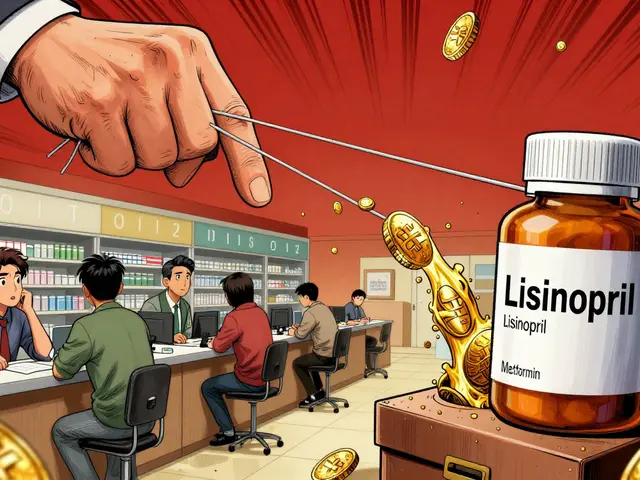
And here’s the twist: what you pay at the pharmacy isn’t always what the system “saved.” Pharmacy Benefit Managers (PBMs)-the middlemen between insurers, manufacturers, and pharmacies-collect rebates and discounts, but often don’t pass them along. A July 2025 Senate report found that 68% of generic drug “savings” from rebates vanish into PBM profits. Patients see the higher price. The insurer sees the rebate. Nobody else knows where the money went.
340B Program: Hidden Savings for the Vulnerable
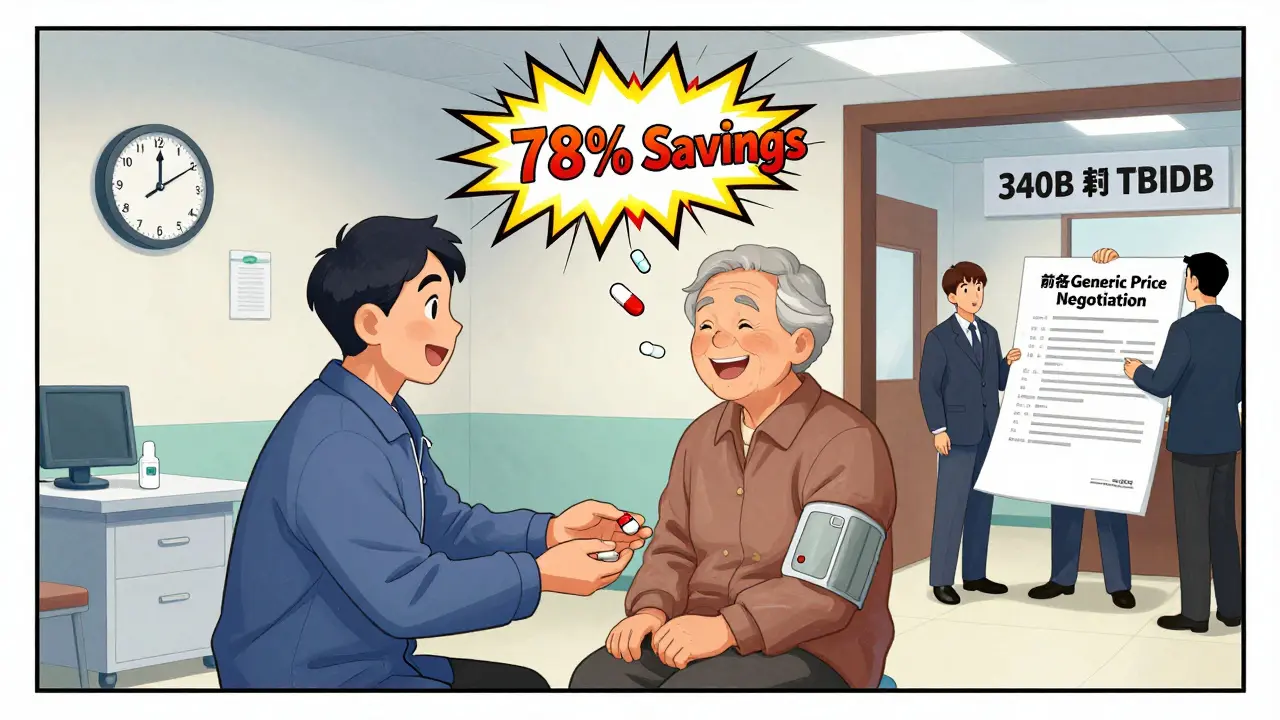
While most people pay full price or coinsurance, a critical safety net exists for low-income patients through the 340B Drug Pricing Program. This program forces drugmakers to sell outpatient drugs-including generics-at steep discounts (20-50% below AMP) to hospitals and clinics that serve vulnerable populations. Community health centers, rural clinics, and safety-net providers rely on this.
According to the Community Health Center Association, 87% of these clinics report better patient adherence because of lower generic prices. One clinic in rural Kentucky saw diabetes medication costs drop from $45 to $8 per month after enrolling in 340B. That’s life-changing. But the program only covers certain providers. If you don’t get care at a 340B site, you don’t benefit.
Why U.S. Generic Prices Are Higher Than Elsewhere
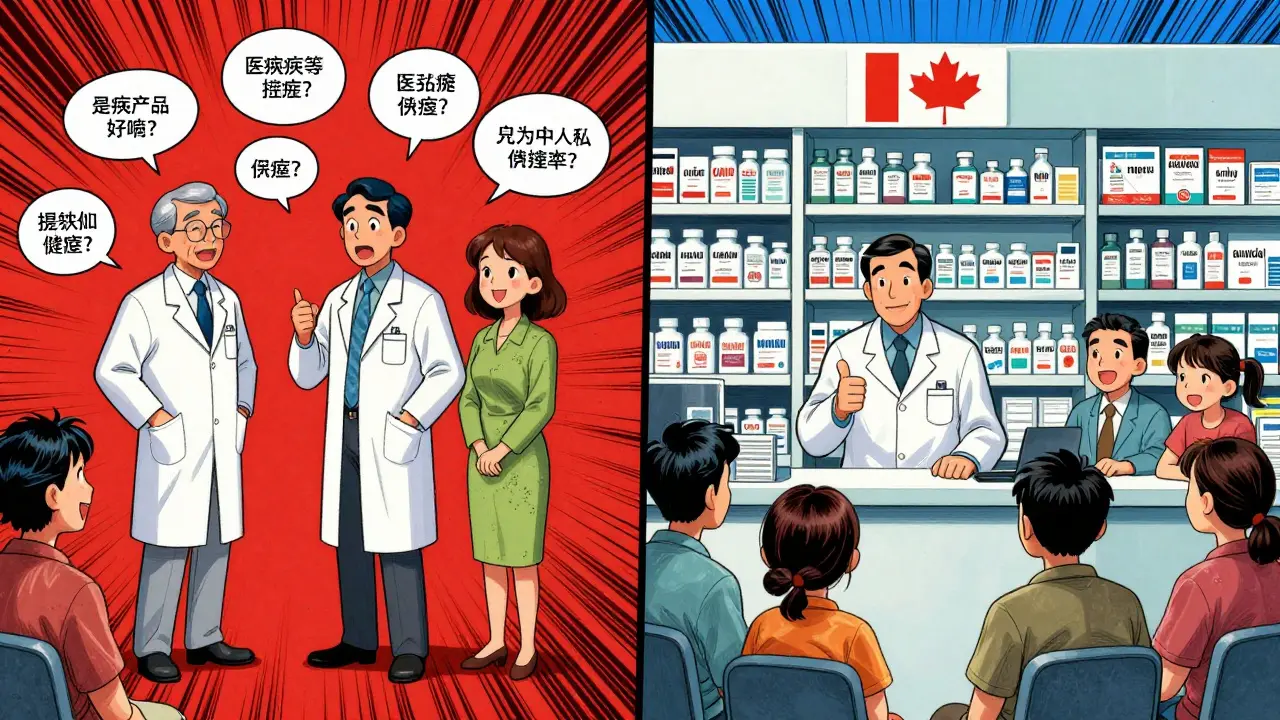
Compare the U.S. to Canada, the U.K., or Germany. In those countries, the government negotiates prices directly. The U.K.’s NICE sets what a drug is worth based on health outcomes. Germany evaluates cost-effectiveness before allowing reimbursement. The result? U.S. generic prices are 1.3 times higher than the average of 32 other OECD countries.
Why? Because we don’t have a central buyer. In Canada, the government buys for the whole country. In the U.S., Medicare, Medicaid, private insurers, and 340B sites each negotiate separately. That fragmentation weakens bargaining power. Dr. Peter Bach of Memorial Sloan Kettering testified in 2025 that the U.S. pays 138% more for generics than other high-income nations because of this.
But the U.S. does have one advantage: speed. Once a patent expires, generics flood the market faster here than anywhere else. Over 90% of prescriptions are filled with generics, compared to 65% in Europe. The FDA’s Drug Competition Action Plan cut approval times for complex generics by 37% since 2017. That’s good news for patients who need fast access.
Who’s Winning and Who’s Losing?
Big generic manufacturers like Teva, Mylan, and Sandoz control nearly 40% of the market. But 65% of the market is made up of smaller players-some with just one or two products. These companies often operate on margins under 15%. That’s why they can’t afford to lose money on a single drug. If one competitor exits, the others raise prices to cover their losses.
Meanwhile, patients are caught in the middle. A 2025 KFF survey found 18% of Americans say generic drug costs make them skip doses. One woman in Florida, Mary Johnson, pays $15 a month for her generic blood pressure pill-until her pharmacy switches to a different manufacturer with a higher copay. Suddenly, it’s $90. No warning. No explanation.
And then there are the legal battles. In May 2025, PhRMA sued over a proposed “Most-Favored-Nation” rule that would have tied U.S. generic prices to what other countries pay. The lawsuit claims it violates constitutional property rights. Courts are still deciding.
What’s Changing in 2026 and Beyond
The biggest shift coming? Medicare will start negotiating prices for select generic drugs in 2027. For the first time, CMS picked 15 Part D drugs for negotiation-including generic versions of Eliquis and Xarelto. These are high-volume medications used by over 5 million seniors. Analysts predict prices could drop 25-35%.
That’s not a cure-all. These 15 drugs account for $40.7 billion in spending-only a fraction of the $127 billion generic market. But it’s a start. The Congressional Budget Office estimates this could save $12.7 billion over ten years.
At the same time, the FDA is pushing to prevent “product hopping”-when brand companies make tiny changes to a drug to delay generic entry. And new transparency rules, effective April 2025, require manufacturers to disclose actual costs before dispensing. No more hiding behind “list prices.”
What You Can Do
If you’re on Medicare, use the Medicare Plan Finder. It’s free. Compare plans every year. Some plans have $0 copays for certain generics. If you’re on Medicaid, check if your pharmacy is in-network-some states limit which generics they cover.
Ask your pharmacist: “Is there another generic version of this drug with a lower copay?” Sometimes switching brands saves $20 a month. And if you get care at a community health center, ask if they’re enrolled in 340B. You might qualify for big savings.
Most importantly: don’t assume your price is fixed. Generic prices change daily. What you paid last month might not be what you pay next month. Stay alert. Stay informed. And don’t be afraid to ask questions.
Laura Gabel
Generic drugs cost what now? My cousin pays $3 for hers and she's on like 7 of them. This whole system is a joke. 🤡
Jeremy Van Veelen
The U.S. system is a masterclass in market inefficiency. We have the most advanced pharmaceutical R&D in the world, yet we let a handful of middlemen siphon off billions while patients are left to scramble. The PBM model is a Ponzi scheme disguised as healthcare logistics. And don't even get me started on how the 340B program is exploited by hospitals that aren't even safety-net providers. This isn't capitalism-it's rent-seeking with a stethoscope.
jerome Reverdy
I’ve been following this for years. The real issue isn’t just pricing-it’s fragmentation. We’ve got Medicaid, Medicare, private insurers, 340B, VA, all negotiating separately. Meanwhile, in Canada, they just say ‘this is the price.’ No drama. No rebates. No PBM shenanigans. We could fix this overnight if we stopped treating drug pricing like a poker game and started treating it like public infrastructure. But hey, at least we get generics fast. 🤷♂️
Andrew Mamone
The IRA’s $2,000 cap is a game-changer for seniors. 🙌 No more choosing between insulin and groceries. And the fact that CMS is finally negotiating prices? Long overdue. I know people say ‘government can’t do anything right’ but this? This is actually working. 📉📉📉
MALYN RICABLANCA
Wait-so you’re telling me that the same drug I bought for $12 last month is now $78 because ‘the manufacturer changed’? And no one’s accountable? And the FDA lets this happen? And PBMs are laughing all the way to the bank? And Congress is too busy arguing about TikTok bans to fix this? I’m not mad-I’m just disappointed. And honestly? I think this is why people are dying in parking lots outside pharmacies. 😭
gemeika hernandez
I work at a pharmacy. People come in every day crying because their blood pressure med went from $4 to $47. No warning. No notice. Just a new box with a new price tag. We can't help them. We're just the messengers. And the worst part? They don't even know it's the same pill. They think we switched it on purpose.
Nicole Blain
I just found out my clinic is 340B. My insulin went from $65 to $12. I cried in the parking lot. 🥹❤️
Kathy Underhill
The fragmentation of purchasing power is the structural flaw. Centralized negotiation isn’t socialism-it’s basic economics. When you have multiple buyers competing against the same seller, the seller wins. When you have one buyer, the buyer wins. The U.S. chose to be the buyer with the weakest leverage. That’s not ideology. That’s incompetence.
Srividhya Srinivasan
This is all part of the globalist agenda. The WHO and Big Pharma are working together to make Americans pay more so they can fund bioweapons research. The FDA approves generics faster because they want you to get sick quicker. And don’t forget-PBMs are owned by Chinese investors. That’s why your price jumps overnight. They’re testing supply chain disruptions. 🕵️♂️💣
Justin Archuletta
You’re all overthinking this. Just ask your pharmacist for a different generic. There’s always another one. And if you’re on Medicare, use the Plan Finder. It’s free. Done. 🙌