
When you pick up a prescription for a generic drug like lisinopril or metformin, you might assume the price is low because competition keeps it that way. But here’s the truth: generic drug prices in the U.S. aren’t just shaped by market forces-they’re heavily influenced by government rules, hidden rebates, and complex programs that most patients never see. Unlike in Canada or the UK, where prices are set directly, the U.S. system is a patchwork of mandates, loopholes, and unintended consequences. And right now, it’s changing faster than ever.
How Medicaid Shapes Generic Drug Prices
The biggest lever the government pulls on generic drug pricing isn’t through public outcry or price caps-it’s through Medicaid. Since 1990, the Medicaid Drug Rebate Program (MDRP) has forced drugmakers to pay rebates on every generic pill sold to state Medicaid programs. The formula? Manufacturers must pay the higher of either 23.1% of the Average Manufacturer Price (AMP), or the difference between that price and the lowest price they give to any private buyer. This isn’t optional. Skip reporting, and you lose access to Medicaid entirely. In 2024, these rebates totaled $14.3 billion, with generics making up 78% of that total. That’s billions pulled out of drug company profits and back into state health budgets. But here’s the catch: those savings don’t always reach patients. The rebate goes to the state, not the pharmacy or the person holding the prescription. So even if a generic costs $2 at the pharmacy counter, the manufacturer might have paid $1.50 in rebates to Medicaid just to get the drug on the formulary.Medicare Part D and the $2,000 Cap
For seniors on Medicare Part D, the game changed in 2025. Before then, beneficiaries paid 25% coinsurance for generics during the initial coverage phase, and could hit catastrophic costs of over $8,000 out-of-pocket. Now, thanks to the Inflation Reduction Act (IRA), there’s a hard cap: no Medicare beneficiary pays more than $2,000 per year on all drugs, generic or brand. That’s huge. A 72-year-old taking five generics monthly might have been paying $412 a year in 2022. In 2024, that dropped to $327. And for those enrolled in the Low-Income Subsidy (LIS) program, the copay is often $0. But the system is still messy. One patient might pay $4.90 for lisinopril under their plan, while another with the same drug but a different insurer pays $15. Why? Because each Part D plan negotiates its own formulary, and pharmacy benefit managers (PBMs) decide which generic versions get preferred status.The 340B Program: Hidden Discounts for the Vulnerable
While most people think of Medicare and Medicaid when they hear about government drug pricing, the 340B Drug Pricing Program is quietly one of the most effective tools in the system. It requires manufacturers to sell outpatient drugs-including generics-at steep discounts (20-50% below AMP) to safety-net hospitals, community health centers, and clinics that serve low-income and uninsured patients. In 2025, 87% of clinics using 340B reported improved patient adherence to medications because costs dropped so sharply. A patient with diabetes on metformin might pay $5 instead of $40. But this program doesn’t help everyone. It only applies to specific providers. If you don’t get your care through a 340B site, you don’t get the discount. And manufacturers aren’t required to offer the same discount to private insurers or pharmacies.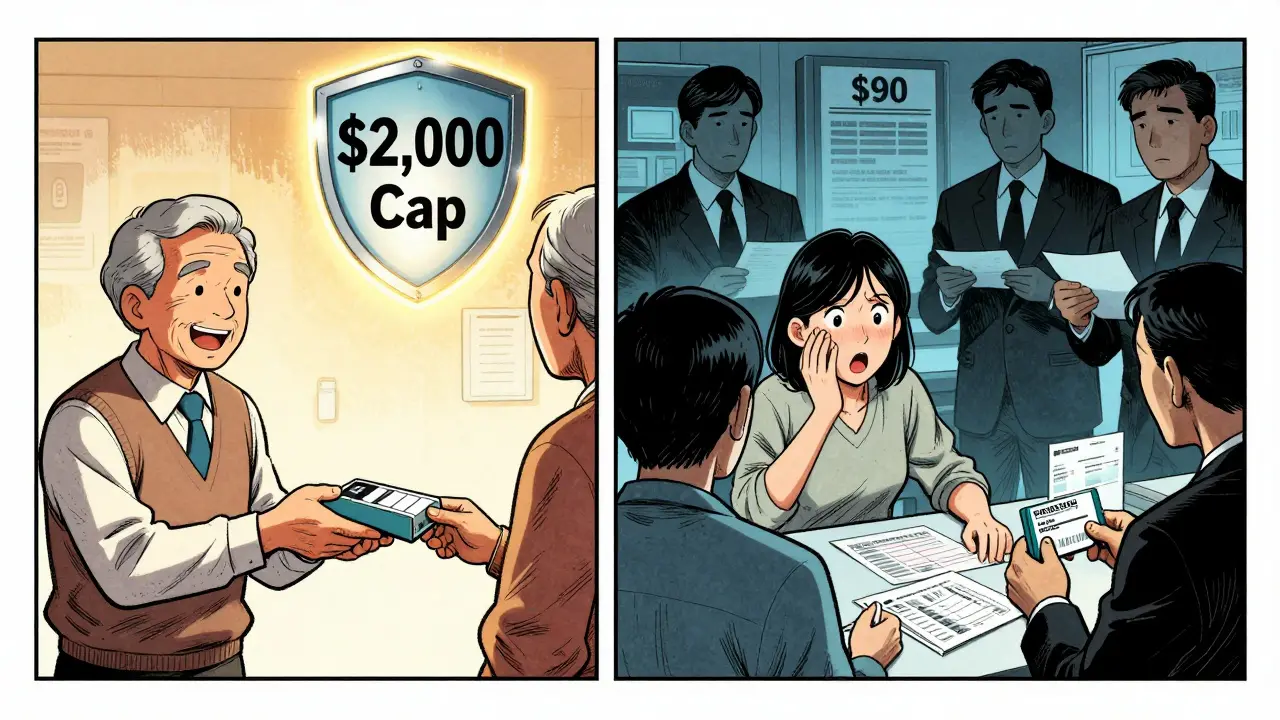
Why Generic Prices Jump-And How Competition Fails
You’d think that when a brand-name drug loses its patent, dozens of companies rush in to make the generic, driving prices down. And usually, they do. Statins and ACE inhibitors? Prices dropped 75-90% after generics entered the market. But not always. In 2024, pyrimethamine (Daraprim), a drug used for toxoplasmosis, saw its price spike 300%-not because of inflation, but because only two manufacturers remained. No competition. No pressure to lower prices. The FDA approved the drug in 1953. It’s been generic for decades. Yet, with so few makers, the market collapsed. This happens more often than you think. The FDA approved 1,247 generic drugs in 2024, but many are for small patient populations or complex formulations. When only one or two companies make a drug, prices can rise 500% or more. And the government doesn’t step in to prevent it-unless it’s a drug with massive Medicare spending.What’s Changing in 2026 and Beyond
The biggest shift coming? Medicare will start negotiating prices for a handful of generic drugs starting in 2027. Yes, you read that right. After years of excluding generics from negotiation, CMS selected 15 drugs for 2027 pricing talks-including generic versions of Eliquis and Xarelto. Together, these drugs cost Medicare $40.7 billion last year. Analysts predict prices could drop 25-35% once the new rates kick in. This isn’t a full overhaul. Only drugs with high spending and no meaningful competition will be targeted. But it’s a precedent. If it works, the program could expand. Meanwhile, the government is pushing for more transparency. New rules in April 2025 require manufacturers to disclose actual costs before a drug is dispensed. That means pharmacies will soon have to show you what the drug really cost the manufacturer-not just what your insurance says it’s worth.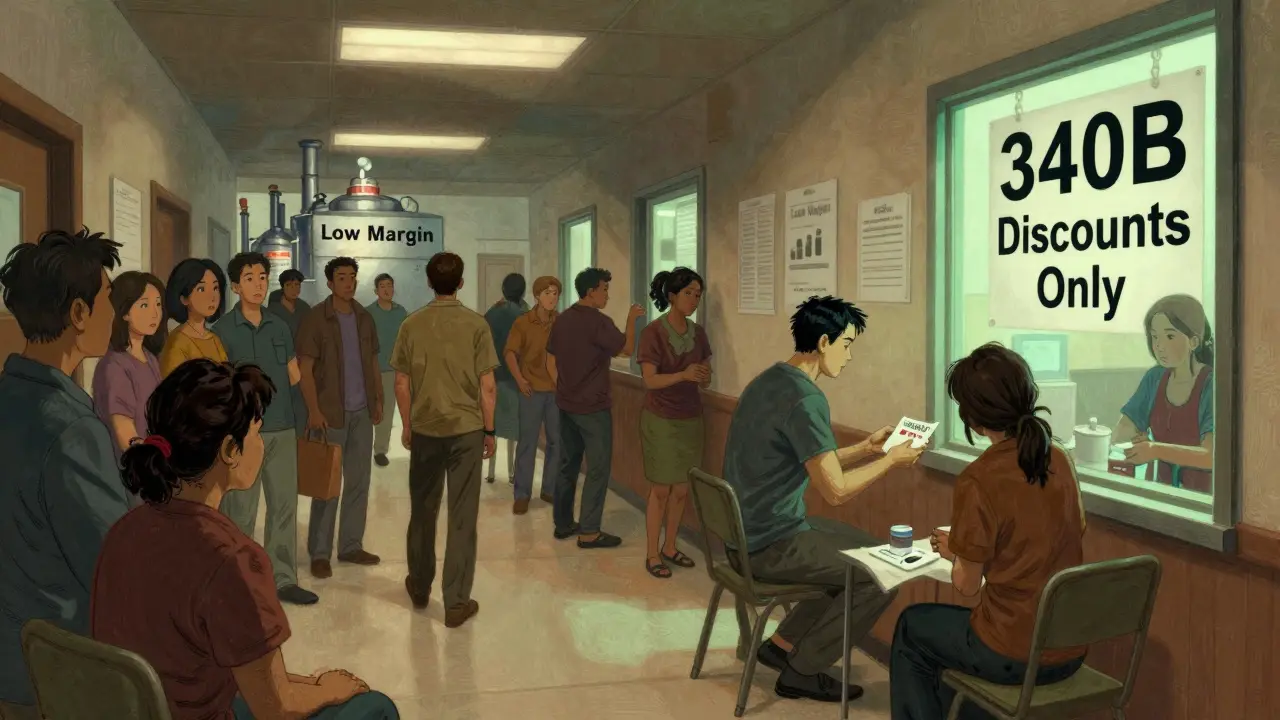
Who’s Winning and Who’s Losing
Patients on Medicare with LIS benefits? They’re winning. Their out-of-pocket costs have dropped sharply. Safety-net clinics using 340B? They’re winning too. Their patients are taking meds they couldn’t afford before. But what about the rest? A 2025 KFF survey found 18% of Americans struggle to afford generics. One woman in Florida paid $15 for her lisinopril one month, then $90 the next because her pharmacy switched to a different generic version with a higher copay. No one warned her. No one told her she could ask for a different brand. Pharmacists are caught in the middle. Independent pharmacies spend over 11 hours a week just managing Medicaid and Medicare claims. PBMs pocket 68% of the rebate money without passing it to patients. And manufacturers? Many operate on margins below 15%. If prices drop too far, some may stop making the drug altogether.The Bigger Picture: U.S. vs. the World
The U.S. fills 90% of prescriptions with generics-the highest rate in the world. We get them fast. But we pay more. A 2025 KFF analysis found U.S. generic prices are 1.3 times higher than the average of 32 other OECD countries. In Canada, the government sets prices directly. In Germany, they evaluate whether a drug is worth the cost before allowing it on the market. Here? We rely on competition, rebates, and luck. Some experts argue we need to do more. Dr. Peter Bach from Memorial Sloan Kettering says the U.S. pays 138% more for generics than other rich countries because we lack centralized buying power. He points to the VA system, which gets 40-60% discounts by negotiating as one giant buyer. The Congressional Budget Office estimates extending Medicare negotiation to more generics could save $12.7 billion over ten years. That’s not a fortune-but for patients paying $50 a month for a lifesaving pill, it matters.What You Can Do Today
You can’t change the system overnight. But you can work within it:- Use the Medicare Plan Finder tool every year. Formularies change. Your plan might have a better deal next year.
- Ask your pharmacist: “Is there a different generic version of this drug?” Sometimes switching brands cuts your cost in half.
- If you’re on Medicaid or have low income, check if you qualify for LIS. It can drop your copay to $0.
- For chronic conditions, ask about 90-day supplies. They often cost less per pill.
- Use 340B clinics if you’re eligible. Many community health centers offer them.
Generic drugs are supposed to be the answer to high drug costs. But without smart, transparent regulation, they’re just another piece of a broken system. The government isn’t setting prices directly-but it’s pulling strings behind the scenes. And those strings are starting to tighten.
Write a comment