
Have you ever stared at a pill bottle or a medicine box and felt completely lost? You are not alone. Most of us grab our meds, swallow them with water, and hope for the best. But that small piece of paper on your prescription bottle or the back of an over-the-counter pain reliever holds the difference between getting better and ending up in the emergency room.
Drug labeling is more than just fine print; it is a critical safety tool regulated by the Food and Drug Administration (FDA), which defines these labels as essential articles intended to inform both healthcare professionals and patients about proper usage and risks. According to data from the Institute of Medicine, medication errors account for approximately 7,000 deaths annually in the United States. A huge chunk of those errors happens because people simply do not know how to read the label correctly.
This guide breaks down exactly what you need to look for, why certain sections matter, and how to spot red flags before they become problems. Whether you are picking up a new prescription or buying ibuprofen at the pharmacy, understanding these details puts you in control of your health.
The Difference Between Prescription and Over-the-Counter Labels
Not all drug labels are created equal. The first thing you need to realize is that there are two distinct worlds here: prescription medications and over-the-counter (OTC) drugs. They follow different rules, speak different languages, and serve different audiences.
Prescription Drug Labels
When you get a prescription, you are dealing with the United States Prescribing Information (USPI). This document is primarily designed for doctors and pharmacists, not necessarily for you. It consists of three main parts:
- Highlights of Prescribing Information: A quick summary for providers. The FDA explicitly states this should not be used as a stand-alone document because it lacks context.
- Table of Contents: Helps professionals find specific data quickly.
- Full Prescribing Information (FPI): This is the meat of the label, divided into 17 standardized sections covering everything from dosage to clinical studies.
However, the label on the actual bottle you take home is different. That sticker includes your name, the medication name, dosage instructions, the date filled, and the pharmacy’s contact info. The problem? Research shows only 36% of patients can correctly interpret standard prescription labels. The language is often dense, using abbreviations like "q.d." (once daily) or complex medical terms that confuse even experienced nurses.
Over-the-Counter (OTC) Drug Facts
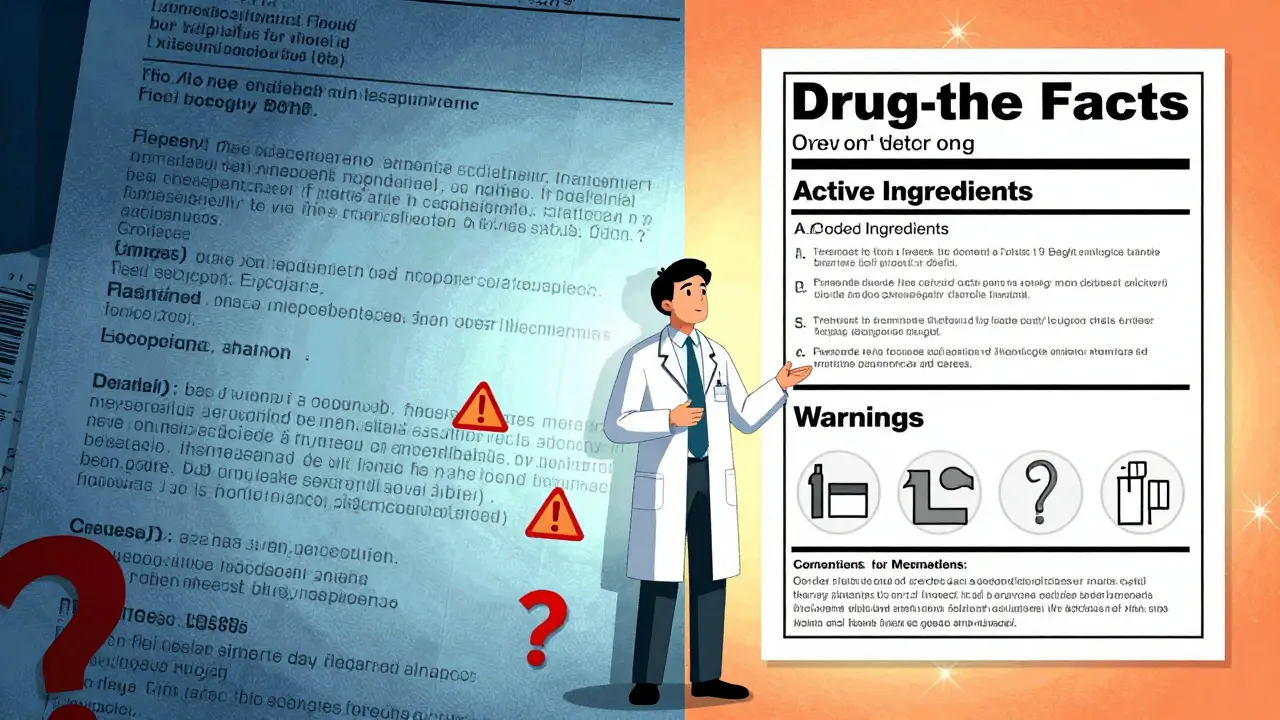
OTC medications, like Tylenol or Advil, use a format called the "Drug Facts" label. This was designed specifically for consumers. It is simpler, uses plain English, and focuses on immediate safety. If you are buying something off the shelf without a doctor’s note, look for these four key sections:
- Active Ingredients: The chemical name of what makes the drug work (e.g., acetaminophen).
- Purpose: What the ingredient does (e.g., pain reliever).
- Uses: Which symptoms it treats (e.g., headaches, fever).
- Warnings: When it is unsafe to use (e.g., liver disease, alcohol consumption).
The contrast is stark. Prescription labels assume a professional intermediary will explain the risks. OTC labels assume you are making the decision yourself. This gap is where many errors occur.
Decoding the Prescription Bottle: What Matters Most
Let’s talk about the plastic bottle sitting on your kitchen counter. While the full prescribing information is buried online or in a packet, the label on the container is your daily reference. Here is what you must verify every time you pick it up.
| Label Component | What It Means | Why It Matters |
|---|---|---|
| Patient Name | Your legal name as registered with the pharmacy. | Ensures the right person gets the right med. Double-check spelling. |
| Medication Name | Both generic (e.g., fentanyl) and brand/trade names (e.g., Abstral). | Prevents confusion with similar-sounding drugs like hydroxyzine vs. hydralazine. |
| Dosage Instructions | How much to take and when (e.g., "Take 1 tablet by mouth twice daily"). | Incorrect dosing is a leading cause of adverse reactions. |
| Strength | The amount of active drug per unit (e.g., 100 micrograms). | Helps you distinguish between mild and strong versions of the same drug. |
| Expiration Date | The last day the manufacturer guarantees potency. | Taking expired meds can lead to reduced effectiveness or toxicity. |
| Pharmacy Contact | Name, address, and phone number of the dispensing pharmacy. | Crucial for calling if you have questions or side effects. |
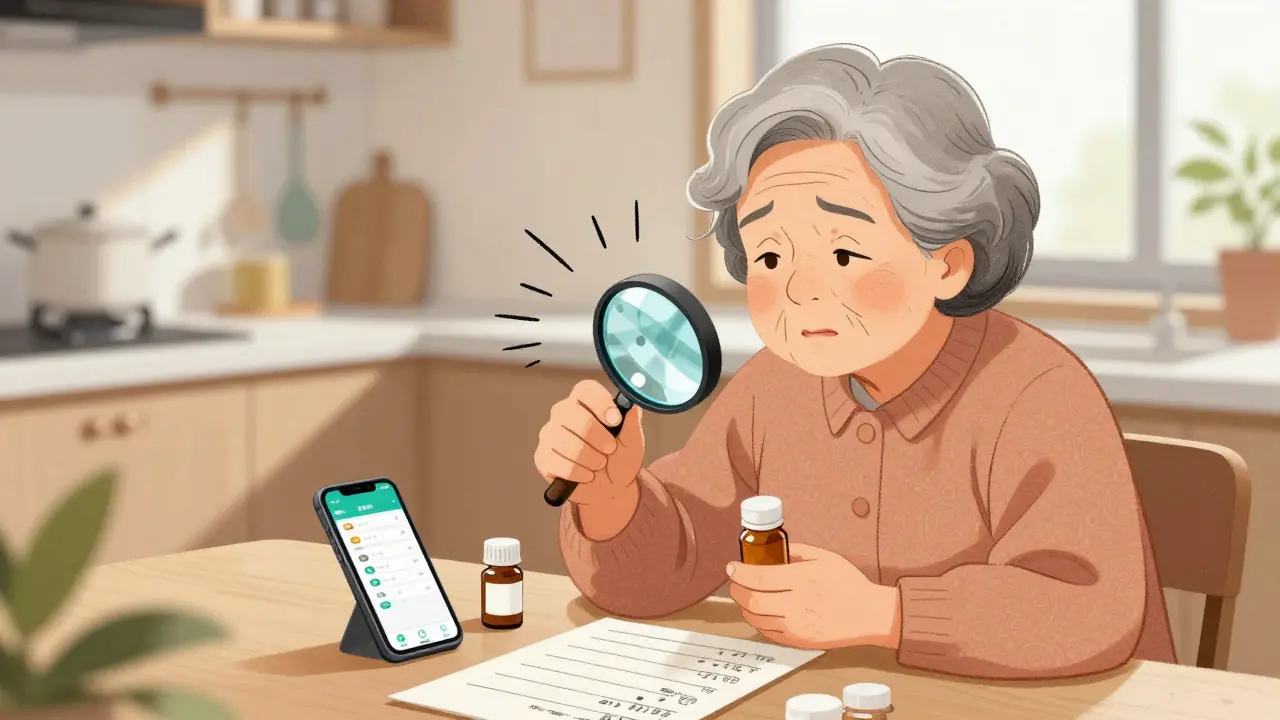
A major issue here is readability. A 2022 survey by the American Pharmacists Association found that 68% of patients struggle to understand their prescription labels. For seniors, the problem is worse: 54% of Medicare beneficiaries aged 65+ report difficulty reading small print, leading to a 22% higher risk of errors. If the text is too small or the font is confusing, ask your pharmacist to reprint it or write the instructions out clearly on a separate card.
The 17 Sections of Full Prescribing Information
If you want to dig deeper, the Full Prescribing Information (FPI) contains 17 standardized sections mandated by the FDA. You won’t see all of these on the bottle, but they are available in the Patient Package Insert (PPI) or online via the FDA website. Knowing which sections to scan can save you from nasty surprises.
- Section 1: Indications and Usage: What the drug is officially approved to treat. If your condition isn’t listed, it might be an "off-label" use, which is common but worth discussing with your doctor.
- Section 2: Dosage and Administration: Detailed instructions on how to take it, including adjustments for kidney or liver issues.
- Section 4: Contraindications: Situations where you should NEVER take this drug. This is critical for allergies or specific health conditions.
- Section 5: Warnings and Precautions: Serious risks that require monitoring. For example, some antidepressants carry a warning about increased suicidal thoughts in young adults.
- Section 6: Adverse Reactions: Side effects reported during clinical trials. Note that "common" doesn’t mean "likely for you," but it helps set expectations.
- Section 16: How Supplied/Storage: Does it need refrigeration? Is it light-sensitive? Storing insulin at room temperature for weeks can ruin it.
- Section 17: Patient Counseling Information: Tips for patients, such as "take with food" or "avoid grapefruit juice."
Dr. David Bates from Harvard Medical School has argued that medication errors would drop significantly if we standardized these labels for patients. Currently, they are written for experts. Until that changes, you have to learn to translate them yourself.
Common Pitfalls and How to Avoid Them
Even smart, educated people make mistakes with meds. Here are the most common traps and how to sidestep them.
Look-Alike Sound-Alike Drugs
Drug names can be terrifyingly similar. Think predniSONE vs. predniSOLONE. One is a steroid for inflammation; the other is a blood pressure med. Taking the wrong one can be disastrous. The Institute for Safe Medication Practices (ISMP) recommends looking for "tall man lettering" on labels, where capital letters highlight the differences. If you don’t see it, ask your pharmacist to circle the key difference.
Dangerous Abbreviations
Avoid relying on shorthand. "QD" means once daily, but it can look like "QID" (four times daily) if written poorly. The ISMP reports that confusing abbreviations account for about 15% of labeling-related errors. Always spell out "once a day" instead of trusting a scribble.
Ignoring the "Why"
Many patients forget why they are taking a pill. The United States Pharmacopeia (USP) recommends adding the indication (reason for use) to the label. Studies show this reduces errors by up to 42%. If your label doesn’t say "for high blood pressure," write it on the bottle yourself. It keeps you focused and prevents accidental double-dosing.
The Future of Patient-Centered Labeling
Things are slowly changing. The FDA recognizes that current labels are not patient-friendly. Their 2023-2027 strategic plan includes enhancing clarity for patients. We are seeing the rise of Patient Medication Information (PMI)-a proposed one-page document with standardized, easy-to-read formats. Additionally, Instructions for Use (IFU) documents now provide step-by-step visual guides for complex devices like inhalers or injectables.
Hospitals are also adopting electronic medication administration records that incorporate standardized labeling. By 2026, we expect to see more widespread adoption of these PMI templates, especially for high-risk medications. Until then, the burden falls on you and your healthcare team.
Practical Steps for Safer Medication Use
You don’t need to be a pharmacist to stay safe. Follow these simple steps every time you get a new medication:
- Verify the Five Key Elements: Check your name, drug name, dose, date filled, and pharmacy number against your prescription slip.
- Ask Questions: If the label says "take BID," ask "Does that mean morning and night?" Pharmacists are there to help. A 2021 study showed a 29% reduction in errors when pharmacists verbally explained labels to patients.
- Use Technology: Apps like Medisafe or Apple Health can sync with your prescriptions to remind you when to take meds and flag interactions.
- Keep a List: Maintain an updated list of all your meds, including OTC drugs and supplements, and share it with every doctor you see.
- Check Expirations Regularly: Set a reminder to check your cabinet every six months and toss anything old.
Understanding your drug label is not just about reading words; it is about protecting your health. Take the time to decode the information, ask for clarification, and never hesitate to call your pharmacist. Your life depends on it.
What is the difference between generic and brand names on a drug label?
The generic name is the official medical name of the active ingredient (e.g., acetaminophen), while the brand name is the trademarked name given by the manufacturer (e.g., Tylenol). Generic drugs contain the same active ingredients and work the same way as brand-name drugs but are usually cheaper. Both names may appear on the label to ensure clarity.
Why do some prescription labels have small print?
Historically, prescription labels were designed for pharmacists and doctors, not patients, leading to dense text and small fonts. However, due to complaints and safety concerns, many pharmacies now offer larger print options. If you have trouble reading your label, ask your pharmacist to reprint it with larger text or simplified instructions.
What does "contraindication" mean on a drug label?
A contraindication is a specific situation or condition where a drug should NOT be used because it could be harmful. For example, if you have a severe allergy to penicillin, taking amoxicillin (which is related) might be contraindicated. Always check Section 4 of the prescribing information for these warnings.
Are over-the-counter (OTC) drug labels safer than prescription labels?
OTC labels are designed to be more consumer-friendly with plain language and clear sections like "Warnings" and "Uses." However, "safer" is relative. OTC drugs can still cause serious harm if misused or combined with other meds. Always read the entire Drug Facts panel before taking any OTC medication.
How can I reduce medication errors at home?
You can reduce errors by verifying the five key elements on your label (name, drug, dose, date, pharmacy), asking your pharmacist to explain unclear instructions, using pill organizers or apps for reminders, and keeping an updated list of all your medications. Writing the reason for each drug on the bottle also helps prevent confusion.
Write a comment