
OTC Supplement Safety Risk Analyzer
Product Evaluation Checklist
Select all statements that apply to the product you are considering or currently taking.
Risk Assessment
Select options and click "Analyze Safety Risk" to see your result.
You trust the pharmacy shelf. You pick up a bottle of pain relievers or a jar of 'natural' weight loss pills, assuming that because it’s over-the-counter (OTC), it’s safe. But what if I told you that some of these products contain hidden prescription drugs, banned substances, or dangerous contaminants? It sounds like a conspiracy theory, but it is a documented reality affecting thousands of consumers every year.
The assumption that OTC means harmless is one of the biggest health risks facing modern consumers. Unlike prescription medications, which undergo rigorous clinical trials before reaching shelves, many dietary supplements and certain OTC products operate in a regulatory gray area. This gap allows unsafe ingredients to slip through, leading to severe drug interactions, hospitalizations, and even death. Understanding the landscape of OTC medication safety isn't just about reading labels; it's about knowing what *isn't* on the label.
The Regulatory Gap: Why Supplements Are Different from Drugs
To understand why hidden ingredients exist, we have to look at how regulations work. In the United States, the Food and Drug Administration (FDA) regulates drugs and supplements differently. Prescription drugs must prove they are safe and effective *before* they can be sold. Dietary supplements, however, fall under the Dietary Supplement Health and Education Act of 1994 (DSHEA).
Under DSHEA, the burden of proof is reversed. Manufacturers do not need FDA approval to market their products. Instead, they are responsible for ensuring safety themselves, and the FDA only steps in *after* a product has been proven harmful. This creates a system where the fox guards the henhouse. The result? A massive industry-worth over $55 billion globally in 2022-that operates with minimal pre-market scrutiny.
This regulatory loophole is exploited by bad actors who add undeclared pharmaceutical ingredients to boost perceived effectiveness. A landmark 2022 study published in the Journal of Clinical Pharmacology by University of Connecticut researcher Pieter Cohen analyzed the FDA’s Health Fraud Product Database. The findings were stark: between 2007 and 2021, researchers identified 1,068 unique dietary supplement products containing active ingredients found in prescription drugs or deemed too dangerous for human use.
Hidden Dangers: What’s Really Inside Your Pills?
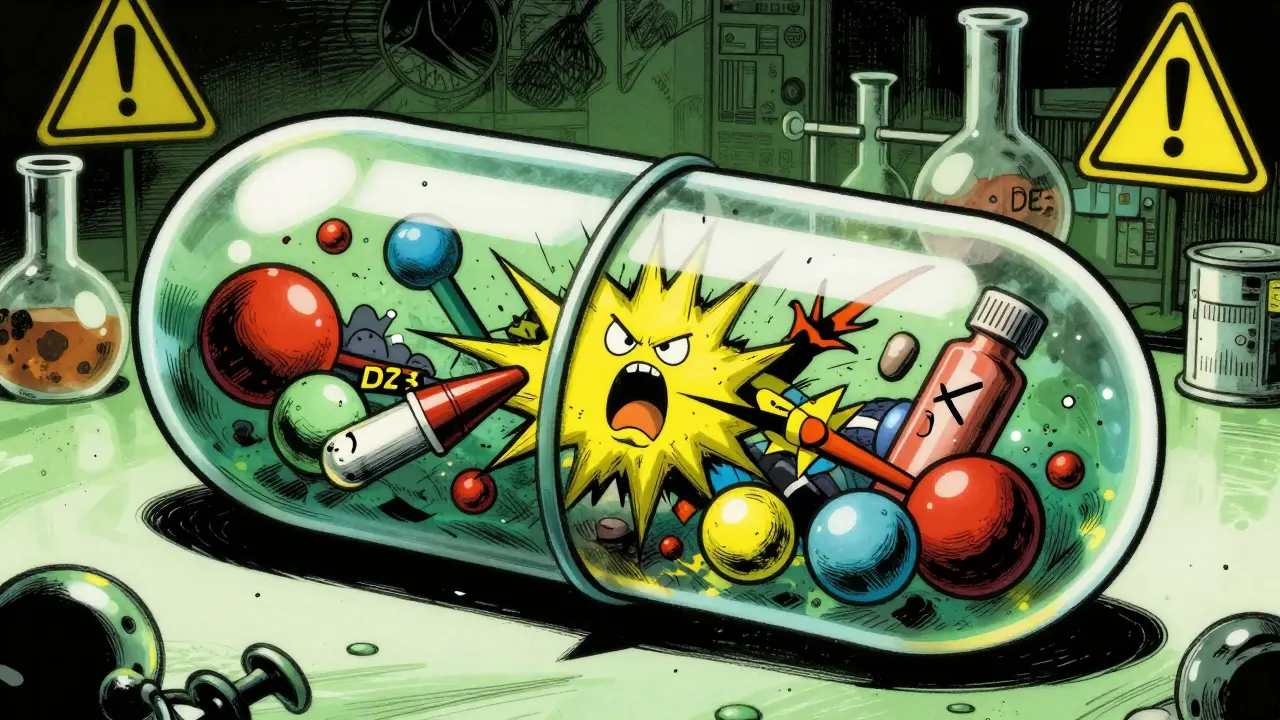
When manufacturers cut corners, they don’t just use low-quality fillers. They often spike products with potent, unapproved drugs. These hidden ingredients pose severe health risks, especially when combined with other medications. Here are the most common culprits found in contaminated OTC and supplement products:
- Sibutramine: An appetite suppressant banned by the FDA in 2010 due to increased cardiovascular risks. The 2010 SCOUT trial involving 10,744 patients showed a 16% higher risk of heart attack and stroke. Yet, 397 sibutramine-containing products were identified in the FDA database between 2009 and 2021, mostly marketed as natural weight loss aids.
- Phenolphthalein: Once a common laxative, this ingredient was reclassified as "not generally recognized as safe" in 1999 due to carcinogenic potential. It was still found in 124 weight loss products during the same analysis period.
- PDE5 Inhibitors (Sildenafil/Tadalafil): These are the active ingredients in Viagra and Cialis. Sexual enhancement supplements frequently contain these drugs without listing them. Between 2007 and 2021, 289 products contained these prescription drugs. This is particularly dangerous for men taking nitrates for chest pain, as the combination can cause a fatal drop in blood pressure.
The danger multiplies when products contain multiple adulterants. A 2019 NIH study found that 20.2% of adulterated products contained more than one hidden drug. Some products contained three or more different pharmaceuticals, turning a simple supplement into a chaotic chemical cocktail.
Real-World Consequences: From Social Media Trends to Hospital Beds
These aren't just theoretical risks. The consequences of hidden ingredients and OTC misuse are visible in emergency rooms across the country. Consider the "Benadryl challenge," a social media trend where adolescents intentionally overdosed on diphenhydramine (an antihistamine) to achieve hallucinogenic effects. This misuse led to seizures, cardiac arrhythmias, and at least three documented fatalities.
For older adults, the risk comes from unintentional interactions. The average elderly person takes 4.9 prescription medications plus supplements. When a "natural" joint pain relief pill contains hidden NSAIDs or steroids, it can exacerbate kidney failure, stomach ulcers, or bleeding risks. The American College of Gastroenterology reports that NSAID-related complications alone cause approximately 100,000 hospitalizations and 16,500 deaths annually in the U.S.
The FDA has documented severe adverse events linked to contaminated sexual enhancement products, including priapism (prolonged erections requiring surgery), acute liver toxicity necessitating transplantation, and sudden, life-threatening spikes in blood sugar for diabetic patients. One Reddit user reported their blood pressure spiking to 180/110 after taking a "natural" weight loss pill, which independent testing later confirmed contained undisclosed sibutramine.
How to Protect Yourself: A Practical Safety Checklist
You might feel overwhelmed by these statistics, but there are concrete steps you can take to protect your health. You don't need to be a chemist to spot red flags; you just need to be vigilant.
- Check the FDA Health Fraud Product Database: Before buying any supplement, search the FDA’s online database. If a product is listed, do not buy it. However, remember that absence from the list doesn’t guarantee safety-it just means it hasn’t been caught yet.
- Look for Third-Party Verification Seals: Reputable organizations like USP (United States Pharmacopeia), NSF International, and ConsumerLab.com test products for label accuracy and contaminants. Look for their seals on the packaging. These companies verify that what’s on the label is actually in the bottle, and that no hidden drugs are present.
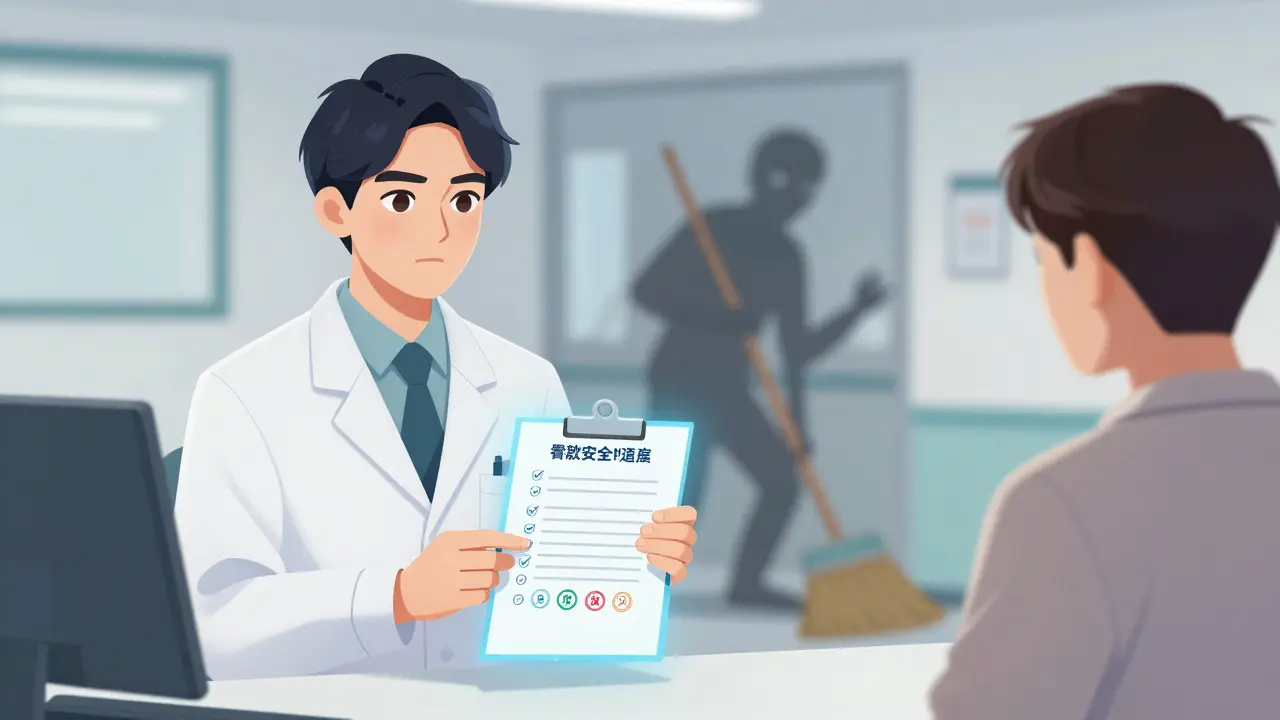
- Apply the "5-5-5 Rule": Pharmacists recommend spending 5 minutes researching the product online, 5 minutes checking the FDA database, and 5 minutes discussing it with a pharmacist before purchase. It’s a small investment of time for a huge payoff in safety.
- Beware of "Miracle" Claims: If a weight loss supplement promises rapid results or a sexual enhancement product claims to be "all-natural" yet works instantly, it’s likely hiding a prescription drug. According to a 2018 analysis, 87% of "all-natural" sexual enhancement products contain hidden PDE5 inhibitors.
- Maintain a Complete Medication List: Share a full list of all prescriptions, OTC meds, and supplements with every healthcare provider. A 2021 JAMA Internal Medicine study found that 63% of adverse drug events involving supplements resulted from patients failing to disclose their supplement use.
Comparison: Regulated Drugs vs. Unregulated Supplements
| Feature | Prescription/OTC Drugs | Dietary Supplements |
|---|---|---|
| Pre-Market Approval | Required by FDA | Not Required |
| Safety Proof | Manufacturer must prove safety/effectiveness | FDA acts only after harm is reported |
| Ingredient Disclosure | All active ingredients must be listed | Proprietary blends may hide specific amounts/types |
| Contamination Risk | Low (strict manufacturing standards) | Higher (self-regulated manufacturing) |
| Adverse Event Reporting | Mandatory for manufacturers | Voluntary (only 0.3% of events reported) |
The Future of OTC Safety: Progress and Persistent Challenges
Is the situation improving? There are signs of progress. The FDA updated its guidance on New Dietary Ingredient notifications in 2022, requiring more rigorous safety documentation. Additionally, the OTC Medication Safety Act (H.R. 2509) introduced in Congress proposes mandatory adverse event reporting and increased enforcement authority. However, implementation remains slow.
The core issue persists: underreporting. The Government Accountability Office reported in 2021 that only 0.3% of dietary supplement adverse events are reported to the FDA. This massive data gap obscures the true scope of safety issues. With e-commerce sales growing, McKinsey & Company projects that hidden ingredient contamination could increase by 15-20% annually through 2025, as online platforms bypass traditional retail safeguards.
Consumer awareness is rising-improving 22% since 2018 according to FDA surveys-but vigilance must remain personal. Don’t rely solely on brand reputation or influencer endorsements. Do your homework, check the seals, and talk to your pharmacist. Your health is worth the extra five minutes.
Are all over-the-counter medications unsafe?
No. Traditional OTC drugs like acetaminophen, ibuprofen, and antacids are regulated by the FDA and must meet strict safety standards before sale. The primary risk lies within dietary supplements and certain "natural" remedies that operate under less stringent regulations, allowing for potential contamination or hidden pharmaceutical ingredients.
How can I tell if a supplement contains hidden drugs?
You cannot tell by looking at the bottle. Hidden ingredients are deliberately omitted from labels. To minimize risk, look for third-party verification seals from organizations like USP, NSF International, or ConsumerLab.com. These groups independently test products for label accuracy and contaminants. Also, avoid products making "miracle" claims or promising immediate, dramatic results.
What should I do if I suspect a drug interaction?
Stop taking the supplement immediately and contact your healthcare provider or pharmacist. Bring the product packaging with you. Be honest about everything you are taking, including vitamins and herbal remedies. If you experience severe symptoms like difficulty breathing, swelling, rapid heartbeat, or extreme dizziness, seek emergency medical attention right away.
Why are weight loss and sexual enhancement supplements most commonly contaminated?
These categories are highly competitive and driven by consumer desire for quick, noticeable results. Natural ingredients often act slowly or subtly, so fraudulent manufacturers add potent prescription drugs (like sibutramine for weight loss or sildenafil for sexual function) to create an immediate effect that keeps customers coming back, despite the severe health risks.
Does the FDA approve supplements before they are sold?
No. Under the Dietary Supplement Health and Education Act of 1994 (DSHEA), supplement manufacturers are responsible for ensuring their products are safe before marketing. The FDA does not review supplements for safety or effectiveness prior to sale. The agency only takes action against a product after it has entered the market and evidence of harm or fraud is discovered.
What is the "5-5-5 Rule" for OTC safety?
The "5-5-5 Rule" is a practical checklist recommended by pharmacists. Before purchasing any new OTC product or supplement, spend 5 minutes researching the product online, 5 minutes checking the FDA’s Health Fraud Product Database, and 5 minutes discussing the product with a pharmacist or doctor to ensure it won’t interact with your current medications.

Write a comment